
A thrilling ride above the valley
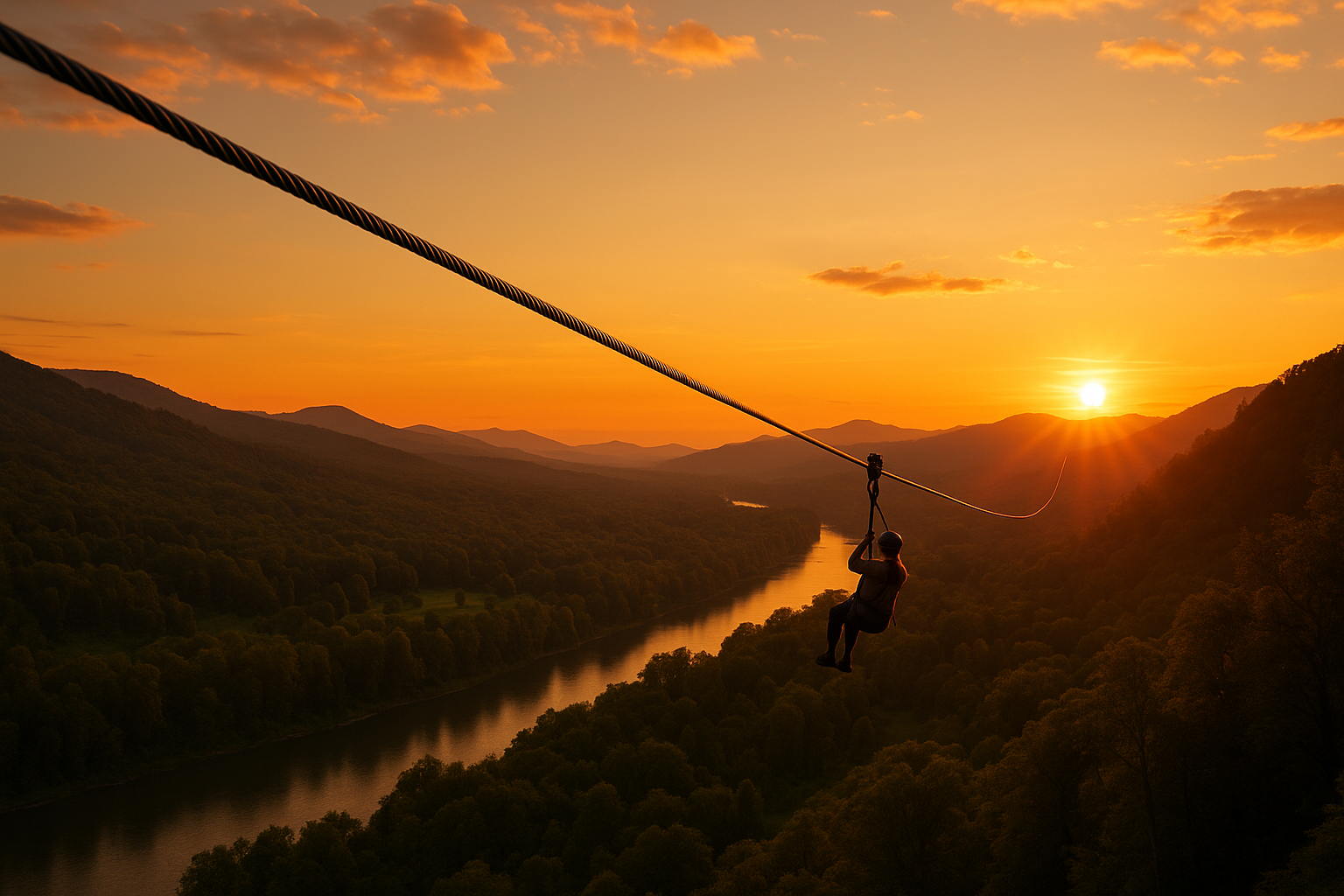
Experience Caledon's thrilling new zip-line! Soar over the Overberg at 70 km/h and discover a town transformed by adventure.
Caledon's Gravity Highway is a super cool zipline that changed the town from just a spa place to an awesome adventure spot. You fly through the air on a steel cable, going super fast and seeing amazing views. They even care for nature while you're having fun, teaching you about plants and animals. This zipline turned Caledon into a fresh, exciting playground, making it famous for thrills and helping the environment at the same time!
What is the Caledon Gravity Highway?
The Caledon Gravity Highway is a zipline adventure in the Western Cape, South Africa, featuring a 22-millimetre steel cable that allows riders to travel at up to 70 km/h. It has transformed Caledon from a traditional spa town into an aerial playground, offering unique thrills and contributing to local conservation efforts.
Get Cape Town news in your inbox
Stay updated with the latest stories from the Mother City.
1. Victorian Steam Meets Adrenaline Mist
For 130 years the postcard image of Caledon was simple: a white-gabled bathhouse exhaling mineral clouds above tired travellers’ heads. Coaches, cars and later kombis pulled in, filled tanks, soaked joints for twenty minutes, then roared toward the coast. That predictable script cracked the day a 22-millimetre cable was pinned between two quartzite crowns west of town. Suddenly the smell of sulphur competes with hot galvanised steel; the soundtrack of trickling spa water now duets with the metallic song of trolleys racing at highway speed. Weekend traffic jams once caused by diesel queues are now created by roof-rack bikes and double-ristretto orders. The pit-stop has become the destination, and the oldest spa town in the Cape finds itself rebranded as the Western Cape’s youngest aerial playground.
Locals who once shrugged and said, “We’re on the way to somewhere else,” now point skyward with proprietary pride. Farm kids rattle off data - 412-metre launch altitude, 70 km/h top speed - like batting averages. Grandmothers sell koeksisters from roadside tables positioned for the best spectator angle, and the spa gift-shop stocks wind-proof beanies next to the traditional face-cloths. Caledon still welcomes the sore-back brigade, but the thermal that once only lifted steam now lifts paying humans into a brand-new narrative.
2. Engineering that Respects Both Rock and Renosterveld
Every bolt and beam arrived with an environmental chaperone. Botanists tagged endangered bulbs; raptor observers mapped black harrier flight paths. The result is an adventure node that doubles as a living laboratory. Riders are briefed on quartzite origins, then urged to spot geometric tortoises before they launch. Thus, geology and conservation slip into the adventure lexicon, ensuring that each scream overhead also plants a seed of ecological respect in the valley below.
3. From Railway Shed to Launch-pad Ritual
The journey begins inside a 1904 goods shed repainted terracotta and teal. Here, guides - former citrus packers turned certified aerialists - fit European-standard harnesses and walk guests through a sandbox rehearsal zip a metre off the ground. That whisper of pulley on steel is foreshadowing; the real line will sound the same, only louder. A four-wheel-drive then grinds up a farm track that smells of crushed fynbos and diesel, stopping at a 12-metre pine tower that sways gently in the prevailing south-easter.
On the deck the Overberg unwraps like a colour wheel: canola yellows, lupine blues, the matte olive of renosterveld. Thermals exhale from the valley, gifting a hidden elevator effect that can add three metres of free-hang time - just enough to flip the stomach while eyes remain wide as camera lenses. Cameras click, podcasts pause, city swagger dissolves into helmeted grins. One step off the edge and the town’s Victorian roofs shrink to Monopoly dimensions; gravity becomes negotiable for forty-five seconds of distilled freedom.
4. Sensory Shock and Citizen Science 70 Metres Up
Sound collapses into a doppler whine, then blossoms into cathedral silence when the cable dips. Nostrils fill with rain-dusted renosterveld and a faint tractor aroma drifting from the landing zone. Eyes align rider and distant Kogelberg peaks into parallel vectors, an optical illusion that makes human and mountain co-authors of the horizon. Touch arrives late: a glove brushes the lanyard, brain calculates - faster than the swallows beneath - that land is a long way down.
While suspended, guests are also unpaid field assistants. Laminated cards show the white-rumped flash of black harriers; sightings are logged into an app co-managed by the Overberg Crane Group. In its first year the zip-line delivered 312 verified harrier records - data the provincial biodiversity vault previously lacked. Every ticket therefore buys both dopamine and dataset, turning thrill seekers into crowd-sourced rangers. The same revenue funds the removal of invasive blue-gums once popular with paragliders, proving that an aerial toy can undercut its own historical carbon shadow.
5. Night Scorpions, Winter Storms and Dynamic Pricing Tricks
Full-moon weekends switch the cockpit lights off. Harnesses glow with crimson LEDs, ultraviolet torches ignite scorpion shells in the sandstone like neon popcorn. Winter’s infamous “black south-easter” - a wind wet as a dunked blanket - becomes a marketing hook branded the “Storm Run.” Riders don neoprene armour, get spat out into 40 km/h headwinds, and land grinning through rain-beards. Thermometers may show 7 °C, but Norwegians book months ahead for the privilege.
Behind the scenes, algorithms gnaw weather models every thirty minutes. Gusts above 35 km/h shave 15 % off the fare; cloud-free calm hikes it 20 % upward. Locals stalk the price widget like commodity traders, cramming bakkies with teenagers the moment a R100 discount appears. The system gamifies meteorology, turning the capricious Cape weather into a real-time stock exchange where the currency is altitude and adrenaline.
6. Wheat Becomes Beer, Fear Becomes Fuel
Barley once destined for feedlots now travels 6 km to a micro-maltings, re-emerging as Swaarmoed Pale Ale served at the ticket office. Every draught triggers a 50-cent maintenance rebate, stitching agriculture to adventure in a closed fiscal loop. Harvest visitors can “adopt” a sheaf, return weeks later to taste a single-batch beer whose microscopic label prints their surname - slow food accelerated to 70 km/h.
Accessibility also gets airborne. A counter-weighted winch hauls wheelchairs to the tower in under four minutes, broadening the demographic of who can flirt with gravity. Guides track a metric they call “fear revenue”: roughly two in ten climbers bail on the final plank yet pay a 40 % “courage fee.” The withheld slice funds tandem paraglider flights for quadriplegic teenagers, converting cold feet into someone else’s sky. Thus an aborted launch still purchases genuine lift, keeping the emotional economy in constant circulation.
7. Ripple Effects from Napier to the Hemel-en-Aarde
Napier’s letterpress studio now prints cotton-rag boarding passes by hand; Villiersdorp orchards sell “zip-and-pick” baskets of Cripps Pink apples. Hermanus whale boats register a 7 % mid-week bump because travellers fold Caledon into a coastal loop that used to bypass the interior. The steel thread acts as a keystone prize in a regional poker game no town realised it was playing.
Engineers already dream louder: a 2.3-kilometre span vaulting the Hemel-en-Aarde valley, dropping 320 vertical metres from 550 m into a Pinot Noir farm. The environmental impact statement alone weighs 400 pages and includes an owl air-traffic chapter. If approved it will become the southern hemisphere’s longest ground-to-ground ride outside Madagascar, complete with laser-timed “Adrenalium” races. Even the night sky stands to gain: a R5 levy per ticket finances a 3,000-hectare dark-sky buffer, and the Overberg has formally petitioned the International Dark-Sky Association. Red-filtered lanterns on abandoned rail tracks already host “sky suppers,” where amateur astronomers point out Magellanic Clouds to riders whose hair still smells of zinc and speed.
8. A New Mental Map Written in Steel and Zinc
Ask a teenager what Caledon meant five years ago and the answer was prison courts and hot water. Ask now and watch their arm spear skyward, describing how rooftops shrink to toys, how the Victorian clock tower becomes a mere waypoint in a three-dimensional atlas. Infrastructure - once passive tarmac and pipes - has become an active diagonal of possibility, converting gravitational potential into exportable narrative.
The bathhouse still steams, but the signature scent of home is no longer only sulphur; it is hot zinc and wind-speed, a mineral rush that lingers in ponytails and hoodie drawstrings long after the ride ends. Every ticket holder carries that aroma back to Copenhagen, Lagos or São Paulo, turning a small inland town into a transferable story about human flight. Caledon’s gravity highway has proved that a single steel thread, rigged with care and imagination, can re-stitch an entire region’s identity - one scream, one sighting, one sip of barley-to-beer at a time.
What is the Caledon Gravity Highway?
The Caledon Gravity Highway is an exhilarating zipline adventure located in the Western Cape, South Africa. It features a robust 22-millimetre steel cable that propels riders at speeds up to 70 km/h, offering breathtaking views of the Overberg region. This attraction has transformed Caledon from a quiet spa town into a vibrant adventure destination, combining thrilling experiences with environmental education and conservation efforts.
How does the Caledon Gravity Highway incorporate environmental awareness?
The zipline project was developed with a strong focus on environmental protection. Before construction, botanists identified endangered plants and raptor observers mapped bird flight paths to minimize ecological impact. Riders are educated about geology and encouraged to spot local wildlife like geometric tortoises. The initiative also supports citizen science, with guests logging sightings of black harriers, contributing valuable data to organizations like the Overberg Crane Group. Revenue generated also funds the removal of invasive plant species.
What is the journey like from start to finish?
The adventure begins in a refurbished 1904 goods shed, now painted terracotta and teal, where guides provide European-standard harnesses and a practice run on a small sandbox zipline. Guests are then transported via a four-wheel-drive vehicle up a farm track to a 12-meter pine tower. From this launch platform, riders get a panoramic view of the Overberg's diverse landscape before launching into a 45-second flight, experiencing a unique blend of sensory input and freedom.
Can you describe the sensory experience of riding the zipline?
While soaring 70 meters in the air, riders experience a dramatic sensory shift. Sound transforms from a doppler whine to a serene silence as the cable dips. The air fills with the scents of rain-dusted renosterveld and distant tractor aromas. The visual experience aligns the rider with distant Kogelberg peaks, creating an optical illusion where human and mountain become co-authors of the horizon. The feeling of being suspended high above the ground, with land seemingly far below, is a powerful and memorable part of the adventure.
What unique features or special events does the Caledon Gravity Highway offer?
The Caledon Gravity Highway offers several unique experiences beyond the standard ride. During full-moon weekends, riders can experience the zipline at night with harnesses glowing with crimson LEDs, and ultraviolet torches reveal scorpions in the sandstone. In winter, the infamous "Storm Run" embraces 40 km/h headwinds, attracting adventurous riders who don neoprene gear. The attraction also employs dynamic pricing based on weather conditions, gamifying meteorology for visitors and locals.
How has the Caledon Gravity Highway impacted the local economy and community?
The zipline has significantly boosted the local economy and fostered community pride. It has transformed Caledon into a destination rather than just a stopover. Local businesses have adapted, from grandmothers selling koeksisters at spectator points to the spa gift shop stocking wind-proof beanies. The project also supports local agriculture, with barley from nearby farms used to brew Swaarmoed Pale Ale, connecting farming to adventure. Furthermore, it has improved accessibility with a counter-weighted winch for wheelchairs and uses "courage fees" from those who don't ride to fund tandem paraglider flights for quadriplegic teenagers, ensuring a positive emotional and financial ripple effect.

Tumi Makgale is a Cape Town-based journalist whose crisp reportage on the city’s booming green-tech scene is regularly featured in the Mail & Guardian and Daily Maverick. Born and raised in Gugulethu, she still spends Saturdays bargaining for snoek at the harbour with her gogo, a ritual that keeps her rooted in the rhythms of the Cape while she tracks the continent’s next clean-energy breakthroughs.
View all articles →