
Amnesty and identity documents
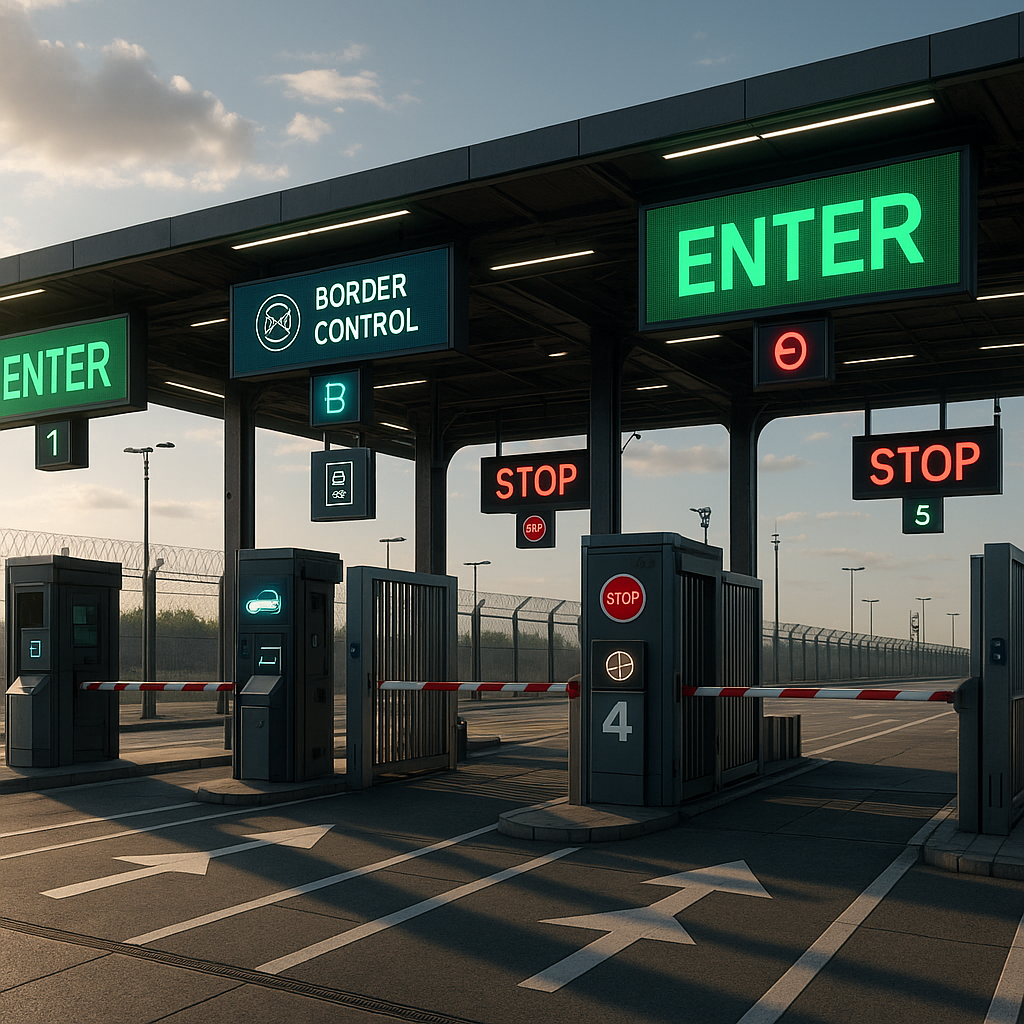
Lesotho & South Africa revolutionize their border with a single ID card, cutting wait times to minutes and boosting trade & security.
Imagine a world where crossing borders is as easy as tapping your ID card! South Africa and Lesotho are making this a reality with a super-smart new system. No more long lines or endless passport checks – just a quick tap and a smile. This cool tech will make life so much easier for thousands of people, turning a frustrating journey into a swift, smooth ride.
What is the new smart card system for the Lesotho–South Africa border?
The new smart card system redesigns the Lesotho–South Africa border crossing using digital signatures, corridor e-gates, and facial-matching algorithms. It aims to cut crossing times to seven minutes, formalize informal trade, and provide a secure, efficient solution for daily commuters, replacing traditional passport checks with a quick tap of a domestic ID.
Get Cape Town news in your inbox
Stay updated with the latest stories from the Mother City.
1. Dawn at the Caledon
A Queue That Costs More Than Time
Every weekday, headlights pierce the pre-dawn darkness on the Maseru bank of the Caledon River at 04:30 sharp. By six o’clock the queue – taxis, refrigerated trucks, and pedestrians clutching rolled blankets – snakes for two kilometres. The river itself stopped being the problem after the twin bridges went up in 1973; the chokepoint is the pair of mirrored passport halls that sit forty metres apart. Travellers must surrender fingerprints twice: once in the South African exit booth and again in the Lesotho entry booth. During the December peak the wait balloons past five hours; even in June it rarely drops under ninety minutes.
For the 38,000 Basotho who clock in daily at Ladybrand’s wineries and potato farms, those lost minutes often translate into lost jobs. Milk sours inside idling trucks, warehouse managers run out of patience, and the footbridge dwellers who once helped travellers for now hawk sugarcane at double price. On a sweltering March afternoon Home Affairs Minister Leon Schreiber watched a young mother jugglele a baby on her hip while fishing a plastic-bagged passport from the bottom of a bucket. He turned to Lesotho’s Minister Lebona Lephema and said, “We can out-think this.” They gave themselves six months to prove it.
2. The 180-Day Design Race
A Warehouse, a Wi-Fi Hotspot and Three Borrowed Ideas
Rather than hiring a multinational consultancy, the ministers locked thirty-two specialists – coders, immigration lawyers, data guardians, and the mayors of both border towns – into a disused customs shed at Cape Town’s Waterfront. Their brief was ruthless: cut the crossing to seven minutes, stay inside R200 million, and craft a solution that could survive a constitutional challenge in either country. The final blueprint stitches together three technologies never before merged on an African frontier.
First, Ghana’s public-key infrastructure lets a gate confirm that a digital signature is genuine without ever phoning home to a master server. Second, the Singapore–Malaysia “corridor e-gate” concept shows how citizens can tap a domestic ID on one reader and stroll through paired turnstiles twelve metres apart. Third, South Africa’s HANIS facial-matching algorithm, already certified by ICAO at 99.87 % accuracy, guarantees that the face on the chip belongs to the person at the barrier.
Enrolment happens once, at a rapid-deployment kiosk in Maseru’s central post office or at Ladybrand’s pop-up NPR centre. Dual cameras snap an ICAO-compliant portrait, the kiosk reads the NFC chip in your green South African or or turquoise Lesotho ID, and writes an encrypted border token back to the chip. The token is nothing but a 256-bit hash – it holds no birthdate, no address, no names. When you tap the card at the new single-roof hall, both countries quiz the hash; if the answers agree, a green light flashes for 0.8 seconds and you walk.
3. Amnesty: Flushing Out the Paper Trail
How 42,000 Names Disappear from a Blacklist
South Africa’s “undesirable persons” list carries roughly 42,000 Basotho who overstayed between 2014 and 2023. Until now the only escape hatch was a five-year ban plus a R1 520 fine. A joint amnesty, announced on the same Cape Town afternoon, offers a clean slate provided three boxes are ticked: register on a pop-up web portal hosted inside Maseru’s Setsoto Stadium for sixty days starting July 2026, upload a police clearance (issued free during the same window), and sit through a fifteen-minute eligibility interview conducted jointly by officials from both states.
Successful applicants leave with a QR-coded clearance certificate; during later token-enrolment the overstay flag is erased from South Africa’s Movement Control System. The timing is deliberate – Lesotho’s mid-year harvest lull coincides with Free State grain-silo peak demand. Ministers Schreiber and Lephema expect at least 28,000 people to step forward, thinning the pool of undocumented migrants and starving the human-smuggling rings that currently charge R450 for a moonlit crossing near Ficksburg.
4. Who Still Needs a Passport – and Why
Toddlers, Goats and the Last Paper Stub
The new rules deliberately keep the burgundy booklet alive for two groups. Children under sixteen receive no domestic smart ID in either republic, so South Africa will open “family lanes” where a parent taps their own card and then scans the child’s passport; the software links guardian and minor for that calendar day, blocking unaccompanied kids from slipping across. Livestock herders moving prize bulls or Merino rams under the century-old SACU veterinary protocol still require tamper-proof travel documents that can carry vaccination stickers. They will use the existing counters, but a new mobile app lets them pre-file animal manifests, shrinking inspection time by sixty percent.
5. Who Pays for the Invisible Turnstiles
R200 Million, Zero New Hardware
The bill is split three ways: R120 million from the SADC Trans-Border Customs kitty, R50 million from South Africa’s Border Management Authority capex budget, and R30 million from Lesotho’s royalties under Phase II of the Lesotho Highlands Water Project. Crucially, no traveller will buy new hardware. The contactless readers are the same Thales units already humming at OR Tambo; a firmware flash retasks them for dual-verification duty.
Labour unions on both sides feared retrenchments, so the agreement locks in zero layoffs. Instead, 300 immigration officers will swap stamps for tablets, becoming “digital concierges” who reboot frozen readers and guide elderly travellers – a role modelled on the yellow-jacket helpers now common in European rail hubs.
6. The Data-Custody Stand-Off
Hashes, Not Names
Whenever two sovereign states flirt with shared biometrics, ownership becomes the sticking point. The solution is a zero-knowledge setup: the hash never leaves the card’s secure element. Border gates ask only yes/no questions, meaning no central pan-border vault is ever built – sidestepping the legal swamp that capsized India’s Aadhaar neighbourhood-permit experiment in 2021.
Privacy sceptics still fret about mission creep. The enabling memorandum therefore carries a blunt sunset clause: after seven years the lights go off unless both parliaments vote for an extension. Each country’s auditor-general pockets a quarterly log of every hash query, stripped of names and dates, ensuring no bulk downloads occur.
7. Beyond the River, Beyond the Headlines
Gaborone, Maputo and a Blockchain of Trust
Botswana’s cabinet is already pencilling a feasibility study for the congested Pioneer gate. Mozambique’s migration chief has requested a briefing on rolling the model out at Ressano Garcia. In diplomatic corridors officials whisper about a “string-of-pearls” corridor from Walvis Bay to Maputo where citizens could travel on little more than their domestic IDs.
The deeper play is economic. By baking Ghana-style PKI into every national card, southern Africa is weaving a web of cryptographic trust that chips away at costly ICAO-compliant passports printed in Frankfurt or Milan. Over a decade, passport subsidies could fall by USD 180 million – cash that could bankroll malaria-elimination drives or cross-border fibre links.
8. A Bridge with Fibre in Its Bones
825 Metres of Concrete, One Gigabit of Light
While the policy world went digital, engineers poured 825 metres of basalt-fibre-reinforced concrete. The Senqu Bridge, to be opened on 22 April 2026, can shrug off a once-in-two-century flood. Hidden beneath the tarmac runs a fibre-optic spine that funnels encrypted biometric queries to Pretoria’s data centre even if Lesotho’s landlines blink out. The bridge, in other words, doubles as the corridor’s redundant back-haul, guaranteeing that the digitised border never sleeps.
9. How Small Traders Win, Too
R280 Million in Legalised Informal Trade
For decades Basotho women have snuck consignments of Ficksburg blankets across the footbridge, dodging VAT and the R450 runner fee. The new facility will force every traveller to file an electronic pre-arrival declaration, but it also quietly adds a “micro-trader concession”. Tap your ID more than 22 times in a month and the system labels you a commuter, unlocking a R5,000 duty-free basket every thirty days.
The University of the Free State calculates that the tweak could formalise 38 % of today’s informal trade, adding R280 million to Lesotho’s fiscus in voluntary VAT – revenue earmarked for women-owned cooperatives.
10. Guards in Third-Country Uniforms
24-Hour Security Without a Neighbourhood Feud
Because the gates will run around the clock for the first time, 120 SADC standby-force police from Namibia, Tanzania and Zambia will patrol a five-kilometre radius on rotating six-month tours. Third-country officers were chosen precisely because they carry no family ties on either bank; their body-cam footage will be stored for thirty days on a Rwandan cloud server, kept outside the bilateral chain of command yet inside the AU data-sovereignty pact.
11. Teaching a Nation to Tap
Airtime Vouchers and a Rap Single
Between 1 May and 30 June 2026 a travelling roadshow called “Border Literacy Month” will pitch up at every major district in Lesotho and the Free State. Participants test-drive the glass gates, pocket a R20 airtime voucher, and leave clutching a trilingual leaflet (Sesotho, isiZulu, English). Taxi-association marshals, shebeen owners and church-guild presidents will serve as “digital shepherds”, guiding first-timers through the one-second tap. Lesotho’s ministry has even bankrolled a rap single, “Tap ’n Go”, whose chorus is destined to echo from van speakers: “Tap, look, smile – cross the river Nile!”
12. The Wallet-Sized Calendar
Every Date You Actually Need
| Date | Milestone |
|---|---|
| 1 Jul–31 Aug 2026 | Amnesty registration in Maseru and Harrismith |
| 1 Sep 2026 | Free token enrolment starts; passports still honoured |
| 1 Dec 2026 | Soft launch of e-gates for early adopters |
| 1 Mar 2027 | Mandatory ID-card crossing foradults |
| 1 May 2027 | First privacy audit published |
| 22 Apr 2033 | Sunset clause review – renew or retire |
Until that final date arrives, the only question commuters really care about is whether they can finally abandon their 04:30 alarms. Stress-tests using 5,000 volunteers in March 2026 suggest they can: even if every daily traveller arrived at the same hour, the queue would evaporate in eleven minutes – less time than a domestic airport security shuffle, and short enough for a Maseru warehouse worker to grab a same-day shift in Bloemfontein without praying the border gods are in a generous mood.
What is the new smart card system for the Lesotho–South Africa border?
The new smart card system aims to revolutionize the Lesotho–South Africa border crossing experience. It utilizes digital signatures, corridor e-gates, and advanced facial-matching algorithms to dramatically reduce crossing times, with a target of just seven minutes. This system will replace traditional passport checks for daily commuters with a quick tap of a domestic ID, formalize informal trade, and provide a secure and efficient solution for thousands of people.
How will the new system address the long queues and wait times at the border?
The current system at the Maseru border post often leads to queues stretching for two kilometers and wait times exceeding five hours during peak seasons, and rarely less than ninety minutes. The new smart card system is designed to eliminate these delays by replacing double fingerprinting and passport checks with a single tap of an ID card at e-gates. Stress-tests suggest that even with all daily travelers arriving at the same hour, the queue would clear in just eleven minutes, significantly reducing the burden on commuters.
What are the key technologies behind this smart card system?
The system integrates three innovative technologies. Firstly, it uses Ghana's public-key infrastructure for authenticating digital signatures without needing to contact a master server. Secondly, it adopts the Singapore–Malaysia "corridor e-gate" concept, allowing citizens to tap their domestic ID and walk through paired turnstiles. Thirdly, it incorporates South Africa's highly accurate HANIS facial-matching algorithm (99.87% accuracy) to ensure the person at the barrier matches the face on the ID chip. These technologies work together to create a seamless and secure crossing.
How will the amnesty program for "undesirable persons" work?
South Africa's "undesirable persons" list currently includes around 42,000 Basotho who overstayed between 2014 and 2023. A joint amnesty program, announced for July 2026, will offer a clean slate. To qualify, individuals must register on a pop-up web portal, upload a police clearance (issued free during the amnesty window), and complete a joint eligibility interview. Successful applicants will receive a QR-coded certificate, and their overstay flag will be removed from South Africa's Movement Control System during token enrollment. This initiative aims to reduce undocumented migration and disrupt human-smuggling rings.
Who still needs a passport with the new system?
The new rules keep the burgundy passport active for two specific groups. Children under sixteen, who do not receive domestic smart IDs in either country, will use "family lanes." A parent will tap their own card and then scan the child's passport, linking them for the day to prevent unaccompanied minors from crossing. Additionally, livestock herders transporting animals under the SACU veterinary protocol will still require passports with vaccination stickers. However, a new mobile app will allow them to pre-file animal manifests, reducing inspection times by sixty percent.
What measures are in place to protect data privacy and ensure sovereignty?
The system employs a zero-knowledge setup, meaning the hash (a 256-bit encrypted border token) never leaves the card's secure element. Border gates only ask yes/no questions, preventing the creation of a central pan-border data vault and avoiding the legal complexities seen in other shared biometric initiatives. To further ensure privacy, the enabling memorandum includes a sunset clause: the system will automatically be retired after seven years unless both parliaments vote for an extension. Each country's auditor-general also receives a quarterly log of hash queries (stripped of names and dates) to prevent bulk data downloads.

Lerato Mokena is a Cape Town-based journalist who covers the city’s vibrant arts and culture scene with a focus on emerging voices from Khayelitsha to the Bo-Kaap. Born and raised at the foot of Table Mountain, she brings an insider’s eye to how creativity shapes—and is shaped by—South Africa’s complex social landscape. When she’s not chasing stories, Lerato can be found surfing Muizenberg’s gentle waves or debating politics over rooibos in her grandmother’s Gugulethu kitchen.
View all articles →