
Durbanville and Polokwane teens bound for Taiwan
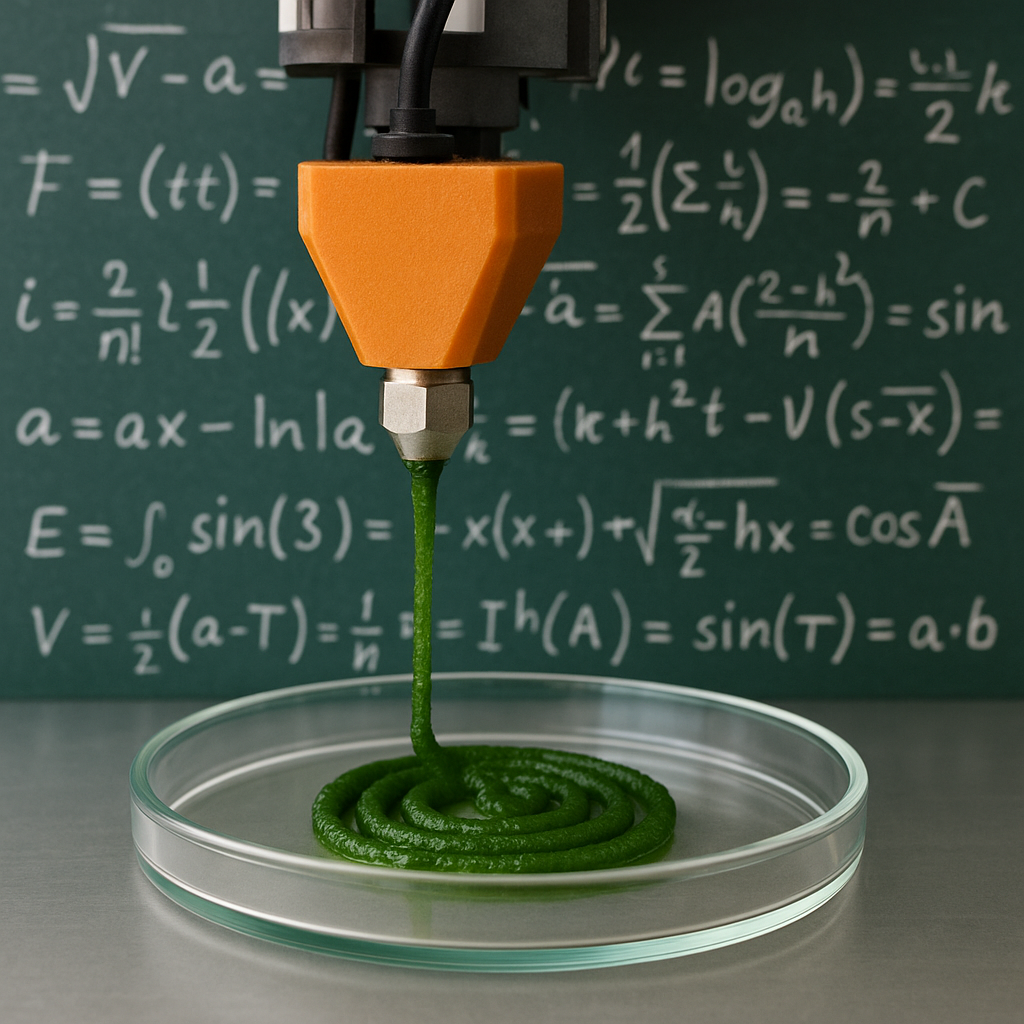
Two teens head to Taiwan with innovative science projects: a seaweed-based medical device & a math algorithm to speed up exams.
Two South African teens, Yu-Yao Chen and Karabo Mpuru, have created amazing inventions despite tough conditions. Yu-Yao made a special wound patch from algae, which works better than normal bandages. Karabo developed a fast math trick to solve tricky number problems, saving students lots of time. Facing challenges like power cuts, their smart ideas earned them a trip to the Taiwan International Science Fair, showing the world that clever solutions can come from anywhere.
What is the main achievement of the two South African teenagers mentioned in the article?
Two South African teenagers, Yu-Yao Chen and Karabo Mpuru, developed a biomedical patch made from algae for wound care and a mathematical algorithm that significantly speeds up solving arithmetic-sequence problems. They achieved these innovations despite challenges like limited resources and frequent power outages, earning them a spot at the Taiwan International Science Fair.
Get Cape Town news in your inbox
Stay updated with the latest stories from the Mother City.
Dawn in the Departure Hall: Passports, Pond-Scum and a Pocket-Sized Proof
The fluorescent lights of OR Tambo are still warming up when two seventeen-year-olds shuffle through security with ice-cream tubs of freeze-dried algae and a thumb-drive so small it could hide behind a house key. Yu-Yao Chen and Karabo Mpuru have never left the continent, yet their luggage now contains a living biomedical patch and a maths engine that erases eight minutes from every senior-certificate paper in the country. Their boarding passes read Johannesburg–Taipei, but the real itinerary is: leave the garage, survive Changi, convince Nobel-ranked judges that frugal science can still outrun well-funded labs.
Both learners qualified through the Eskom Expo, a feeder chain that starts under corrugated-iron roofs and ends on 28-nation judging floors. Between them they have R 4 000 in pocket money, one borrowed Huawei, and a solar panel scrounged from a garden light. They also carry an unlisted variable in every experiment: “load-shedding o’clock”, the rolling blackouts that decide when printers may hum and when code must be written in a parked car.
The flight boards at dusk; their countdown is already running. In the cargo bay a polystyrene cube exhales tiny oxygen bubbles whenever sunlight hits the fuselage. In the cabin two teenagers rehearse pitches that must fit inside eight minutes, four questions, and the two square metres of booth space that could redraw what African school science looks like.
Seaweed Surgery: Printing Breathing Bandages on a Shoestring Budget
Durbanville’s vineyards usually make headlines for chenin blanc, not wound care. Inside a disused art room at Curro High, however, Yu-Yao Chen spent half a year blending supermarket nori, agar and a R 300 aquarium pump into a palm-sized photobioreactor. The goal sounded simple - keep green micro-algae happy while squeezing them through a 0.4 mm nozzle at body temperature - until standard alginate gels collapsed from acidity and oxygen crash inside ninety minutes.
Her hack came from the rocky intertidal zone. Ulva compressa, the sea-lettuce that bakes on 40 °C boulders, became the cellular engine. She embedded filaments in low-weight agarose laced with fumed silica, creating an ink that stands still while printing yet slips under gentle back-pressure. A strip of 635 nm red LEDs - wavelengths that fire photosystem I without cooking the plastic dish - keeps the lattice alive and exuding oxygen. Dissolved O₂ stays above 100 mm Hg for seventeen straight hours; commercial fibrin manages barely one-and-a-half.
Ethics red tape forbids animal trials, so she built a desk-top circulatory loop: peristaltic pump, silicone tubing, heparinised sheep blood from a local abattoir. Forty-eight hours later haemolysis is zero and lactate dehydrogenase barely twitches, the first green light for cytocompatibility. The dressing still needs to survive a 747 cargo hold, so she redesigned the cold chain: phase-change packs locked at 8 °C, a rehydration protocol that fits on an aircraft windowsill, and a South African kelp cousin, Ecklonia maxima, that tolerates 15 °C so rural clinics can stock pouches without refrigeration.
One-Tap Maths: Erasing Minutes from the National Matric Clock
While Yu-Yao coaxed algae to exhale, Karabo Mpuru faced a different enemy - South Africa’s three-hour maths Paper 1. A single scrambled arithmetic-sequence question can devour twelve laborious minutes. Her teacher’s throwaway line - “find the common difference in thirty seconds or donate marks to the marker” - became an after-hours obsession: can any subset of an arithmetic progression reveal its stride, consecutive or not?
Textbook shortcuts buckle when terms are shuffled. Karabo re-cast the set as unordered numbers, proved the classic gcd formula fails for gaps larger than one, and derived two replacements. The first, dubbed the “pairwise-mean identity”, needs only the average of the smallest and largest clusters. The second is a probabilistic gcd: draw seven random pairs, iterate until the greatest common divisor stabilises, and you hit the true stride 99.7 % of the time for sequences under ten thousand terms. Twenty million Monte-Carlo runs on a Dell held together by a desk fan verified the claim.
Python turned the maths into an Android app smaller than a selfie. Offline, multilingual, ad-free, Seq-Sprint trimmed peer solution times from eight minutes forty-five to fifty-four seconds while boosting accuracy twelve per cent. Next stop: USSD code for basic Nokia handsets, a partnership brewing with UCT data scientists that could plant the algorithm inside 20 million non-smartphones.
Taipei or Bust: Judgement Day for the World’s Most Frugal Tech
Taiwan’s International Science Fair is no enrichment vacation. Booth real estate is exactly one by two metres, power is capped at three amps, judges allocate eight minutes before moving on. Yu-Yao will reanimate her kelp lattice under 220 V supermarket LEDs, photograph oxygen micro-bubbles and defend sterility after a fungal speck almost ended her run at provincials. Karabo will lock a borrowed tablet to flight mode, demo sub-second gcd extraction, and hope no examiner asks for the formal convergence proof she hand-wrote at 02:13 on fourteen A4 sheets.
They compete against garage fusion reactors and CRISPR-verified Illumina data, yet African low-input hacks have pedigree: Kenyan bicycle-spoke centrifuges, Ghanaian clay-pot fridges. The South Africans’ edge is context - dressings printed in blackout, algorithms compiled in a parked Toyota. Whether the judges smile, frown or pose the killer question never rehearsed, the teenagers know the seat-belt sign will dim, the shweshwe lab-coats will emerge, and one oxygen-rich scaffold, one lightning-fast sequence, will export home-grown ingenuity to the world - load-shedding, layovers and all.
What are the key inventions developed by Yu-Yao Chen and Karabo Mpuru?
Yu-Yao Chen developed an innovative biomedical wound patch made from algae, specifically Ulva compressa, that continuously produces oxygen, significantly outperforming commercial fibrin dressings in oxygen delivery. Karabo Mpuru created a fast mathematical algorithm, dubbed "Seq-Sprint," that quickly solves arithmetic-sequence problems, reducing solution times from minutes to seconds and improving accuracy for students.
What challenges did the teens face in developing their inventions?
Both teens faced significant challenges, including frequent power outages due to "load-shedding o’clock" in South Africa, which impacted their ability to work and use equipment. They also operated with limited resources, using everyday items like supermarket nori, aquarium pumps, and a borrowed Huawei phone. Yu-Yao had to overcome issues with standard alginate gels and ethical restrictions on animal trials, while Karabo worked with a Dell computer held together by a desk fan.
How does Yu-Yao Chen's wound patch work, and what makes it unique?
Yu-Yao Chen's wound patch uses a special type of green micro-algae, Ulva compressa (sea-lettuce), embedded in a low-weight agarose gel with fumed silica. This setup, illuminated by 635 nm red LEDs, allows the algae to continuously produce oxygen, maintaining dissolved O₂ levels above 100 mm Hg for seventeen hours. This is significantly longer than commercial fibrin, which only manages about one-and-a-half hours. The patch also incorporates a rehydration protocol and can be stored without refrigeration, making it suitable for rural clinics.
What is Karabo Mpuru's mathematical algorithm, and how does it help students?
Karabo Mpuru's algorithm, "Seq-Sprint," is designed to quickly find the common difference in arithmetic sequences, even when terms are shuffled. It uses two methods: a "pairwise-mean identity" and a probabilistic gcd approach that achieves 99.7% accuracy for sequences under ten thousand terms. This algorithm, deployed as an Android app and potentially as USSD code for basic phones, significantly reduces the time it takes to solve these problems (from over eight minutes to under a minute) and increases accuracy, freeing up valuable time during exams like South Africa's three-hour maths Paper 1.
What is the Taiwan International Science Fair, and what does it mean for the teens?
The Taiwan International Science Fair is a prestigious global competition where students from various nations showcase their scientific innovations. For Yu-Yao Chen and Karabo Mpuru, attending this fair represents a significant achievement, allowing them to present their "frugal science" inventions on an international stage and demonstrate that brilliant solutions can emerge from challenging environments. It's an opportunity to compete against well-funded labs and potentially redefine perceptions of African school science.
What broader message do Yu-Yao and Karabo's achievements convey?
Their achievements convey a powerful message that innovation and clever solutions can originate from anywhere, regardless of socio-economic conditions or resource limitations. Despite facing significant hurdles like frequent power outages and limited equipment in South Africa, their ingenuity allowed them to develop world-class inventions. Their journey to the Taiwan International Science Fair highlights the potential of

Aiden Abrahams is a Cape Town-based journalist who chronicles the city’s shifting political landscape for the Weekend Argus and Daily Maverick. Whether tracking parliamentary debates or tracing the legacy of District Six through his family’s own displacement, he roots every story in the voices that braid the Peninsula’s many cultures. Off deadline you’ll find him pacing the Sea Point promenade, debating Kaapse klopse rhythms with anyone who’ll listen.
View all articles →