
Expats returning home despite Trump claims
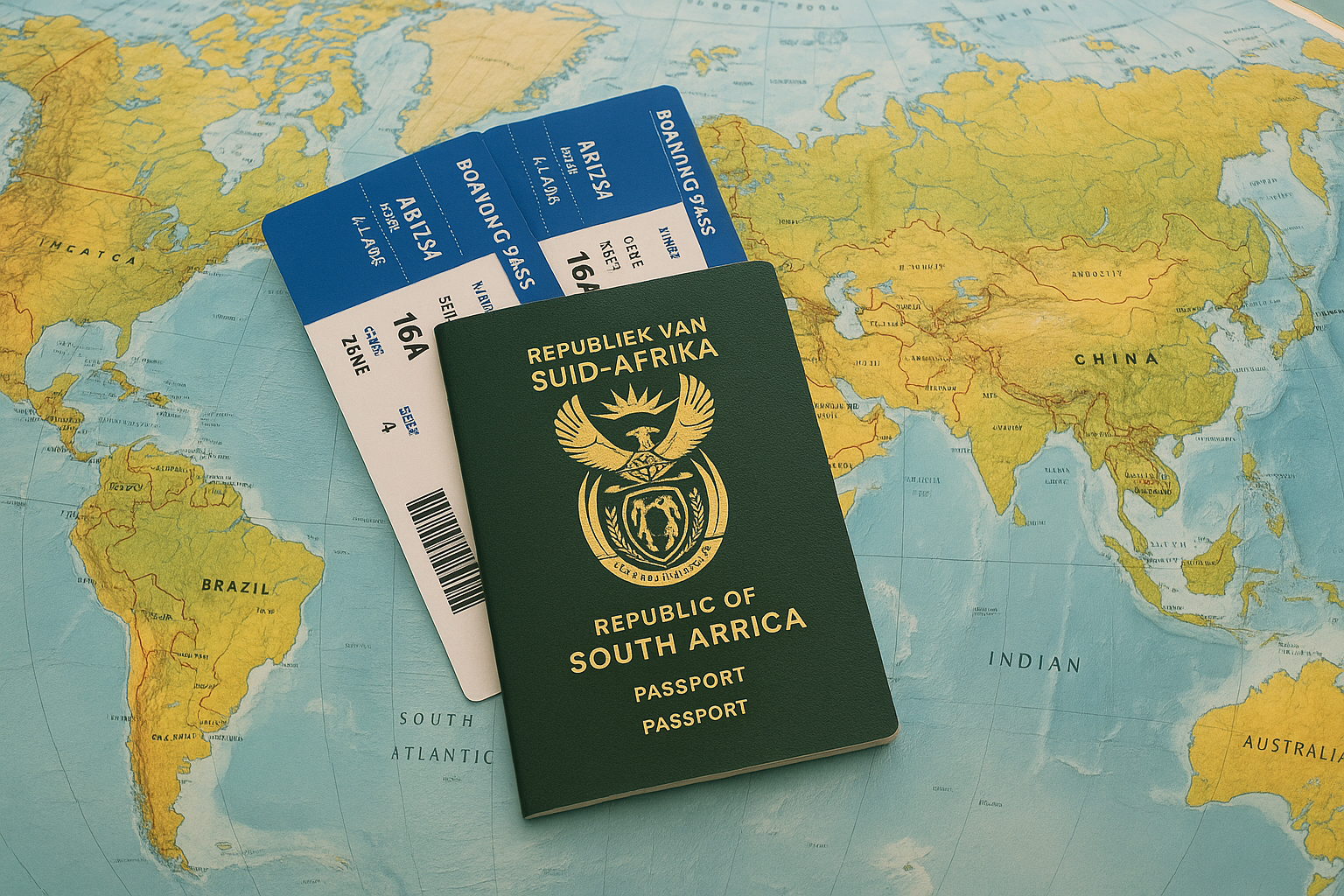
White South Africans are returning home from abroad, driven by economic shifts, crime, and lifestyle factors, reversing a decades-long diaspora.
White South Africans are quietly returning home, a surprising 'reverse tide.' This isn't just about missing home; it's because places like the US feel less safe with high crime, and Europe's bills are sky-high. South Africa now offers better job chances for skilled people and has made it easier to get citizenship back. Many are finding that the old worries they fled from are now worse in the 'safe' countries they moved to, making South Africa feel like a better, more affordable place to live again.
Why are white South Africans returning to their home country?
White South Africans are returning due to various factors, including perceived safety concerns in countries they emigrated to, such as higher violent crime rates in the US compared to South Africa. Economic shifts, like surging living costs in Europe, also make South Africa an attractive, more affordable option. Additionally, policy changes simplifying citizenship reacquisition and a high demand for skilled professionals further incentivize their return.
Get Cape Town news in your inbox
Stay updated with the latest stories from the Mother City.
1. Airport Pulse: Where Goodbye Turns Into Hello
The single-direction emotional current at OR Tambo has flipped. Where relatives once hugged travelers disappearing up the escalator to Heathrow or Perth, the same hall now greets trolleys stacked with snowboards, Nespresso pods and fistfuls of foreign adaptors rolling in the opposite direction. Biometric turnstiles quietly log a 40 % surge in one-way arrivals from the United States, Britain and Australia since late-2022.
Recruiters in branded polo shirts have replaced the teary send-off parties. Banks, hospitals and engineering outfits lean against the car-hire counter brandishing cardboard signs that read “Welcome Home - We’re Hiring.” Within minutes of touchdown, returnees are fielding salary questions instead of fumbling for roaming data.
The building that used to feel like South Africa’s exit wound is beginning to resemble a talent marketplace. The tears are still there, only now they arrive with relief instead of loss.
2. Anatomy of the 1994-2019 Drain - and the Digital Trail That Rebuilt a Bridge
Roughly 600 000 predominantly white South Africans emigrated during the first 25 years of democracy. Violent crime, affirmative-action pressure and a plummeting rand pushed them toward anglophone suburbs in Australia, Britain and North America. “Pack-for-Perth” entered the lexicon as a verb; container ships grew familiar with the Johannesburg-to-Melbourne route.
While they rebuilt lives abroad, their digital footprints - blogs, shipping lists, recipe swaps - became an accidental archive. A Facebook group created to source Mrs Ball’s Chutney in Vancouver is today a classified page for repatriation jobs and container-sharing. The same corrugated metal boxes that once hauled heirlooms out of Durban now head back half-price because shipping giants need ballast on the south-bound leg.
The outward flow created a scaffolding for return: contacts, price lists, even pet-shippers already vetted. Nothing was planned, yet everything was ready when sentiment turned.
3. When the Perceived Safe Havens Lost Their Shine
Andrew Veitch left Johannesburg in 2003 after a pistol was jammed against his windscreen at a red light. Colorado Springs felt like salvation - until he found himself crouched between grocery aisles while an AR-15 cut down ten shoppers at King Soopers. His children now rehearse mass-shooting lockdowns instead of the electric-fence drills he hoped to escape.
FBI statistics show that white, middle-class Americans now face a higher rate of violent death than white families who stayed in South Africa. Add medical costs - one weekend in a US trauma centre can swallow an entire year of South African private-school fees - and the risk spreadsheet starts to invert.
Europe delivered its own shock waves. Russia’s invasion of Ukraine sent heating oil up 180 % in Portugal and Ireland, while German forecasts of gas rationing at minus-twenty made Stage-6 load-shedding feel almost manageable. A viral spreadsheet from a Galway couple showed refuse tax exceeding their old Johannesburg bond repayment. They landed in Cape Town in March 2023, container in tow, and still felt they had upgraded.
4. Citizenship, Pay-Cheques and the Logistics of U-Turning
4.1 Getting the Green, Gold, Black - and Blue ID - Back
A 1995 law quietly cancelled South African citizenship when citizens naturalised elsewhere without prior permission. November 2023 repealed that clause; within 24 hours 12 000 hopefuls crashed the Home Affairs server uploading selfies and braai photos. Successful applicants receive a PDF titled “Welcome Back to the Nation” plus an ID number that unlocks voting rights.
4.2 Work, Wages and the Remote Arbitrage
Grey-listing and black-outs have created ironic demand for people who understand both FICA rules and how to calm New York correspondent banks. Renewable developers want project managers who built solar farms in Arizona and can still read a local municipal agenda. Homecomers.co.za promises interviews within ten days and a “bakkie, a butcher and broadband” within a week. A Ballito-based coder billing in dollars rockets into the country’s top 1 % of earners.
4.3 Shipping, Pets and the Tax Man
Returner-loops have sliced container prices 30 % since 2022; packers market a “braai-to-braai” door service that reassembles your Weber on a Hermanus patio. Beagles require rabies titres and a three-night Amsterdam kennel lay-over, but the real maze is SARS: timing your foreign share disposal wrong can gift Pretoria a slice of a UK primary-residence gain. Specialist accountants now offer an “un-emigration” package to dodge the residence-based net that landed in 2021.
5. Re-entry Reality: Accent, Accent-Reduction and Accepting the New Tapestry
Grandparents who sold in Illovo for R600 000 during the 1998 exodus now repurchase comparable homes for the sterling value of R3 million, pocketing the gap as an early-retirement fund. Their UK-raised grandchildren attend Bishops or St Stithians for one-third of a mediocre London comprehensive’s all-in cost, while Stellenbosch University charges R60 000 a year - cheaper than a single US college semester.
Afrikaans children’s books sell out in Toronto as parents crave Ouma-level taal around the campfire; isiZulu and isiXhosa courses on Udemy move units at R299, proof that many come back determined to integrate rather than fortify. Suburban WhatsApp groups swap inverter tips, not border-war stories; trail-running estates flaunt “single-track on your doorstep” the way 1990s golf resorts marketed tee times.
Township entrepreneurs cash in: a Soweto tour operator sells “Returnee Welcome Braai” evenings under solar fairy-lights, while memes of multiracial airport welcomes counter jibes about “imported whites with ama-dollars.” The President’s 2024 plea - “We want your skills, not your skillets” - captures official caution and optimism in equal measure.
6. The Circle Will Widen - and the Country Is Practising Its Inhale
Crime hasn’t disappeared; it has shifted to SIM-swap fraud and phishing. Returnees arrive fluent in VPNs, only to watch parents fall for WhatsApp hacks. The difference is data-rich defence: camera feeds, geo-located security apps and insurance-linked smart devices shrink the old home-invasion odds. The debate is no longer “safe or not” but “which set of headaches am I happier managing?”
Hotels in Rosebank register six-month “test-the-water” stays; car-hire fleets scramble for left-hand-drive refresher vehicles. OR Tambo’s carousel spits out Dutch ovens and ski gear - relics of lives half-lived elsewhere - while departure boards flicker between Doha, Dubai and Dallas. Analysts forecast that by 2027 the majority of returnees will be Indian-origin or black professionals watching the white experiment unfold from Dubai or London.
Between the forex desk and the rental-car queue, the idea of home changes its accent once again. No billboard promises paradise, but the gate is open, the Wi-Fi works, and the first craft beer costs less than a London Tube fare.
[{"question": "
Why are white South Africans returning to their home country?
", "answer": "White South Africans are returning due to a confluence of factors. They perceive countries they emigrated to, particularly the US, as less safe with higher violent crime rates. Europe's high cost of living, especially surging utility bills, has made South Africa an increasingly affordable option. Furthermore, policy changes have simplified the reacquisition of South African citizenship, and there's a strong demand for skilled professionals within the country, making repatriation economically and logistically attractive."}, {"question": "How has the return of white South Africans impacted airports and recruitment?
", "answer": "OR Tambo International Airport, once a symbol of emigration, has seen a significant shift, with a 40% surge in one-way arrivals from the US, UK, and Australia since late 2022. The airport has transformed into a 'talent marketplace' where recruiters from various sectors like banking, healthcare, and engineering actively meet returnees, offering immediate job opportunities and salary discussions upon arrival. This indicates a strong demand for their skills and a streamlined reintegration process."}, {"question": "What factors initially led to the 'brain drain' of white South Africans and how did digital tools facilitate their return?
", "answer": "From 1994 to 2019, approximately 600,000 predominantly white South Africans emigrated, driven by concerns over violent crime, affirmative action policies, and a depreciating rand. While abroad, their digital activities like blogs and Facebook groups, initially used for community and sourcing familiar products, inadvertently created a network for repatriation. These platforms now serve as classifieds for jobs and shared shipping, demonstrating how unforeseen digital connections laid the groundwork for their eventual return."}, {"question": "How have perceived safe havens abroad lost their appeal for returning South Africans?
", "answer": "Many 'safe havens' lost their luster due to unforeseen challenges. The US, for instance, experienced mass shootings, making some areas feel less secure than anticipated, with FBI statistics indicating a higher violent death rate for white, middle-class Americans than for their counterparts in South Africa. Europe faced economic shocks, such as a 180% increase in heating oil prices due to geopolitical events, making the cost of living exorbitant. These issues made South Africa's existing challenges, like load-shedding, seem more manageable by comparison."}, {"question": "What administrative and logistical changes are facilitating the return of South Africans?
", "answer": "Significant changes have eased the return. A 1995 law that revoked citizenship for those naturalizing elsewhere was repealed in November 2023, leading to a surge in citizenship applications. For employment, grey-listing and blackouts have ironically created demand for professionals skilled in both international finance regulations and local infrastructure. Services like Homecomers.co.za facilitate job interviews within ten days. Shipping costs have decreased by 30%, and specialist accountants offer 'un-emigration' packages to navigate tax implications, making the logistical aspects smoother."}, {"question": "What is the cultural and social impact of this 'reverse tide' in South Africa?
", "answer": "The return is reshaping the social landscape. Grandparents are leveraging property value differences to fund early retirements, while their grandchildren attend local private schools at a fraction of international costs. There's a renewed interest in local languages, with Afrikaans children's books selling out abroad and isiZulu/isiXhosa courses gaining popularity, indicating a desire for integration. Local businesses are adapting, with 'Returnee Welcome Braai' events and memes reflecting a multi-racial welcome, demonstrating a shift towards a more inclusive and adaptive society.", "additional_info": {"key": "value"}}]
Amanda Wilson is a Cape Town-born journalist who covers the city’s evolving food scene for national and international outlets, tracing stories from Bo-Kaap spice shops to Khayelitsha micro-breweries. Raised on her grandmother’s Karoo lamb potjie and weekend hikes up Lion’s Head, she brings equal parts palate and pride to every assignment. Colleagues know her for the quiet warmth that turns interviews into friendships and fact-checks into shared laughter.
View all articles →