
Final call! Kirstenbosch Summer Sunset Concerts set to close with a bang
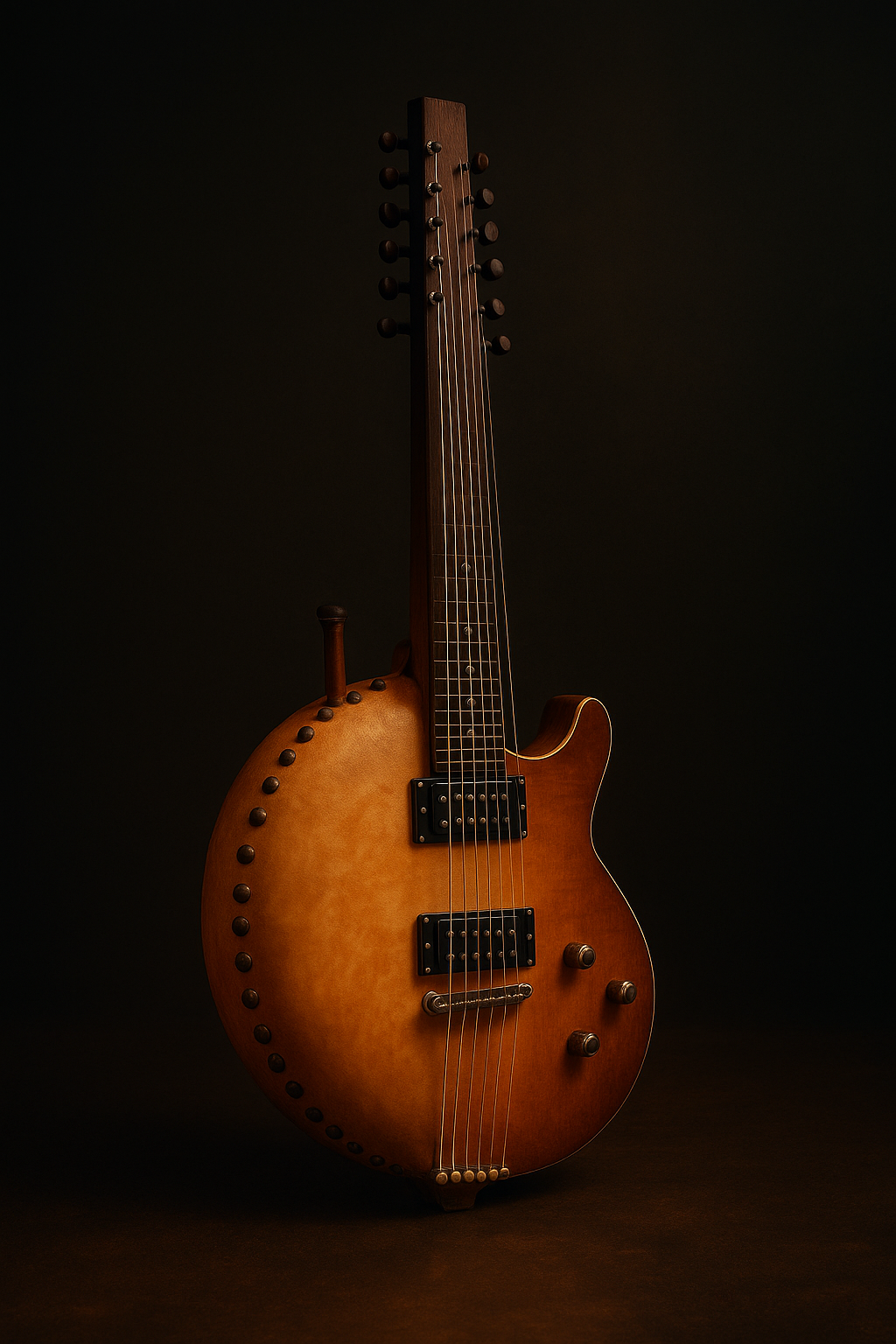
Experience Kirstenbosch's Summer Sunset Concerts in March. From Derek Gripper's kora-inspired guitar to orchestral storytelling, South African music blossoms.
Kirstenbosch hosts the "March Sonata," a special series of five Sunday concerts. These shows capture the fresh, new sounds of South African music as summer turns to autumn. Imagine listening to amazing bands outdoors, with Table Mountain as your backdrop, creating unforgettable musical memories. Each concert is like a live recording, making an archive of today's music that the garden itself seems to grow.
What is the "March Sonata" at Kirstenbosch?
The "March Sonata" at Kirstenbosch is a series of five Sunday sunset concerts held in March, marking the transition from summer to autumn. These 70-minute performances showcase contemporary South African music, creating an archive of the moment where music evolves. Attendees enjoy unique musical experiences, blending natural surroundings with diverse genres.
Get Cape Town news in your inbox
Stay updated with the latest stories from the Mother City.
I. The Turning Fork of March
Kirstenbosch in March feels like a struck tuning fork whose note is still summer, yet every echo carries the chill of approaching autumn. By five o’clock Table Mountain’s eastern flank exhales cool air, shadows stretch like cat yawns across the grass, and the king protea’s first rust-red bracts flash their quiet warning. Still, the garden refuses to fade; instead it cranks the volume, scheduling five final Sunday sunsets that freeze-frame the precise instant South African music tips from today into tomorrow.
Each concert is cut as a 70-minute vinyl side: no filler, no nostalgia, just the raw moment pressed into memory. The season’s last fireflies blink overhead like faulty stage lights, while the mountain itself becomes a subwoofer, its granite ribs vibrating to double-bass heartbeats. Audience members arrive as early as 3:45 p.m., staking rectangles of lawn with the precision of surveyors, knowing that every centimetre affects sightline, sound cone, and the late-afternoon slap of sun on neck.
By the time April’s first mist rolls in, these five evenings will have seeded an invisible orchard: riffs trapped in spider silk, lyrics dissolved into irrigation water, chord progressions packed inside grains of pollen. The garden keeps no master tape; instead it grows one.
II. Three Snapshots of Becoming
1. Strings, Keys, and Borrowed Feathers – 1 March
Derek Gripper walks on cradling a six-string guitar that thinks it’s a 21-string kora. He strikes a low G and Kyle Shepherd answers on a slightly detuned piano so their shared overtone settles in the chest like warm brandy. Bassist Shane Cooper slaps the bare wood of his instrument, a contact mic turning the thud into talking-drum code, while Jonno Sweetman drags a clutch of fynbos twigs across his snare, channelling Cape jazz legend Monty Weber’s 1978 brush trick.
The quartet launches “Watercolours for the Oliphant,” a single 70-minute river of sound named for the river that sneaks past the garden’s fence. Halfway through, a formation of hadedas splits the sky in perfect 7/8 time; the crowd applauds, certain the birds are cued. Gripper merely smiles and notates the pattern later, gifting the birds a composer credit in the coda.
When the final harmonic fades, the mountain answers: a low granite murmur caught by the geophone that techs use daily to calibrate the PA. Music and geology trade frequencies; no one can tell where one ends and the other begins.
2. Rugs, Suitcases, and Choirs – 8 March
Matthew Mole’s stage is a patchwork of Persian carpets scooped up at dawn from a Milnerton warehouse. Centre-stage sits a battered suitcase: kick drum, biscuit tin, memory box. He flips the lid to reveal the set list inked on the back of his 2014 Kirstenbosch ticket, then launches into “Take Yours, I’ll Take Mine,” changing one pivotal verb so the line proclaims arrival instead of yearning.
Mid-set he beckons the original Kirstenbosch Youth Choir - now undergrads in faded hoodies - to deliver the counter-melody of “Holding On.” Their voices feather on the high F, the precise wobble that makes strangers grab one another’s hands. For the encore Mole steps beyond the rope barrier, singing an unreleased lullaby while a half-speed recording of Muizenberg surf sighs through the speakers. Four hundred voices return the chorus, becoming a human delay pedal that hangs in the dark longer than the notes themselves.
As the crowd disperses, the rugs exhale dust and sun, their colours now stained with shadow, gum-leaf bruises, and the faint salt of happy tears.
3. Leather, Loops, and Liberation – 15 March
Thandiswa Mazwai strides out in a leather bomber hand-painted with white Ndebele lattice, the garment clashing gloriously with her ochre-red isikhakha dress. Behind her a Rhodes, pedal-steel and uhadi bow merge decades: 70s mbaqanga, 80s bubble-gum, 90s kwaito, 2000s Afro-soul - then she detonates the timeline.
“Nizalwa Ngobani” becomes a 160 bpm punk manifesto; a horn section materialises among the blankets, four buskers she drilled at 3 a.m. outside Cape Town Station. Later, poet Koleka Putuma steps into silence looped with uhadi throb to deliver a new piece about domestic workers’ fingerprints on glass doors; when the groove returns it is in 5/4, a quiet curtsey to Abdullah Ibrahim’s “Mannenberg.”
The sun drops five degrees, yet jackets stay tied around waists; the set is a controlled burn, heat generated by reclaimed history and lung-powered futures.
III. Pop Labs and Symphonic Fairy-Tales
1. Disposable Cameras and 808 Cajóns – 22 March
Will Linley and Ben Rodrigues merge bands, share one wireless mic, and crowd-source the key of “Last Thing” after reading @lara_ct’s Instagram plea. Two hundred yellow Kodak FunSavers rain into the lawn; fans click away, feeding the buckets that will birth a stop-motion video for the brand-new single “Summer, Slightly Out of Frame.”
A string quartet steps from behind the aloes, instruments plugged like electric guitars, bow hairs frizzing into silver halos under LED bars. The moment is pure now - no looking back, no rehearsal, just the giddy realisation that the present tense can still surprise itself.
When the last shutter snaps, the mountain’s granite reflects only mid-range sweetness; engineers have rolled off everything above 12 kHz for listeners beyond row 40, proof that science can be kind to ears and hearts alike.
2. Glow-Stick Batons and Galactic Tubas – 29 March
The Cape Town Philharmonic storms in with colour-coded instruments: crimson cellos, turquoise flutes, a tuba wrapped in galaxy vinyl. Conductor Brandon Phillips flips his reversible mylar cape to become a mini cinema for laser cartoons while Rob van Vuuren narrates Peter and the Wolf in four languages - English, Afrikaans, isiXhosa, and semaphore - switching every sentence so the tale turns into relay race.
Children under twelve queue to conduct, glow-stick batons synced to their own heartbeats via cheap pulse sensors. The tempo map ricochets between 72 and 180 bpm, yet the pros track every spike through discreet earpiece clicks. The closing chord triggers biodegradable seed-paper confetti; next spring, caretakers will mow blades stamped with faint quavers and clefs.
Parents laugh, toddlers twirl, and somewhere in the pollen haze the garden quietly files another sheet in its spiral binder titled “Songs from Spores.”
IV. Lore, Loopholes and Living Echoes
Gates open at 4 p.m., but veterans know to join the queue by 3:30, picnic tables slung over shoulders like collapsible surfboards. They count sprinkler heads - legs fit exactly between them - and trust the 4.7-degree slope to keep chilled sauvignon upright. A little-known re-entry rule lets runners stash cooler boxes in car boots before 5 p.m., dodging the R50 ice-cream levy and keeping glass far from security’s eagle eyes.
Dark-sky lanterns fitted with red filters glow behind the tea house, protecting astrophotographers who plant tripods beside telescopes trained on Orion. Meanwhile, silent “vape angels” glide in electric carts the colour of Kirstenbosch leaves, handing out nicotine gum and QR codes instead of fines. Beneath the sound desk, a geophone listens to granite breathe; each afternoon its 73 Hz seismic sigh becomes the tuning note for delay towers, ensuring the mountain and the mixer stay on speaking terms.
When the last encore finishes, the garden stays open for “green encores”: torch-lit walks to ancient cycads whose male cones exhale pineapple-scented pollen. Shake the cone, pocket the dust, and legend says a melody will follow you home - scribbled on a boarding pass, beer mat, or once, memorably, on the back of a parking fine.
March slips into April, the mountain’s shadow crawling uphill like a slow tide. Amplifiers fall silent, yet nothing ends; sound simply changes costume - becomes chlorophyll, compost, cricket chirp, memory. Strike the tuning fork again next year and the note will rise, older by twelve notes, richer by five Sundays, still unmistakably Kirstenbosch.
What is the "March Sonata" at Kirstenbosch?
The "March Sonata" is a special series of five Sunday sunset concerts held at Kirstenbosch National Botanical Garden during March, marking the transition from summer to autumn. These 70-minute performances showcase contemporary South African music, creating a live archive of the current musical landscape. Attendees can enjoy unique musical experiences with Table Mountain as a stunning backdrop.
When do the concerts take place and how long are they?
The concerts are held on Sundays throughout March. Each performance is designed to be exactly 70 minutes long, described as a "70-minute vinyl side" – concise and without filler. Gates open at 4 p.m., but experienced attendees often arrive by 3:30 p.m. to secure a good spot.
What kind of music can I expect to hear?
The "March Sonata" features a diverse range of contemporary South African music, capturing the "fresh, new sounds." Past performances have included everything from kora-inspired guitar and jazz fusions with artists like Derek Gripper, Kyle Shepherd, Shane Cooper, and Jonno Sweetman, to indie-folk from Matthew Mole, and powerful Afro-soul, mbaqanga, and kwaito blends by Thandiswa Mazwai. There are also unique collaborations like Will Linley and Ben Rodrigues with a string quartet, and even orchestral performances by the Cape Town Philharmonic with interactive elements.
Can I bring food and drinks to the concerts?
Yes, picnicking is a popular tradition at the Kirstenbosch concerts. Many attendees bring picnic tables and food. There's even a re-entry rule that allows people to stash cooler boxes in their car boots before 5 p.m. It's advisable to check specific rules regarding glass containers and alcohol, though chilled sauvignon is mentioned as a common item. "Vape angels" are also present, offering nicotine gum and QR codes instead of fines.
What makes these concerts unique?
Beyond the stunning natural setting of Kirstenbosch and Table Mountain, the "March Sonata" aims to create an "archive of now" – a snapshot of current South African music. Each concert is treated like a live recording, with unique elements such as birds cued into performances, choirs joining artists, poets collaborating with musicians, and even interactive fan participation like disposable cameras for a music video. The natural environment itself plays a role, with the mountain's seismic sighs used for tuning and the garden itself metaphorically "growing" the music.
What happens after the concerts conclude?
While the amplified music ends, the experience doesn't immediately. The garden remains open for "green encores," allowing torch-lit walks to ancient cycads. Legend has it that shaking a male cycad cone and pocketing the dust will inspire a melody to follow you home. The sound of the concerts is said to transform into the natural sounds of the garden – chlorophyll, compost, cricket chirps, and lasting memories, awaiting the next year's "tuning fork" moment.

Michael Jameson is a Cape Town-born journalist whose reporting on food culture traces the city’s flavours from Bo-Kaap kitchens to township braai spots. When he isn’t tracing spice routes for his weekly column, you’ll find him surfing the chilly Atlantic off Muizenberg with the same ease he navigates parliamentary press briefings.
View all articles →