
Mamma Mia! returns to SA stage with all-star cast and ABBA hits
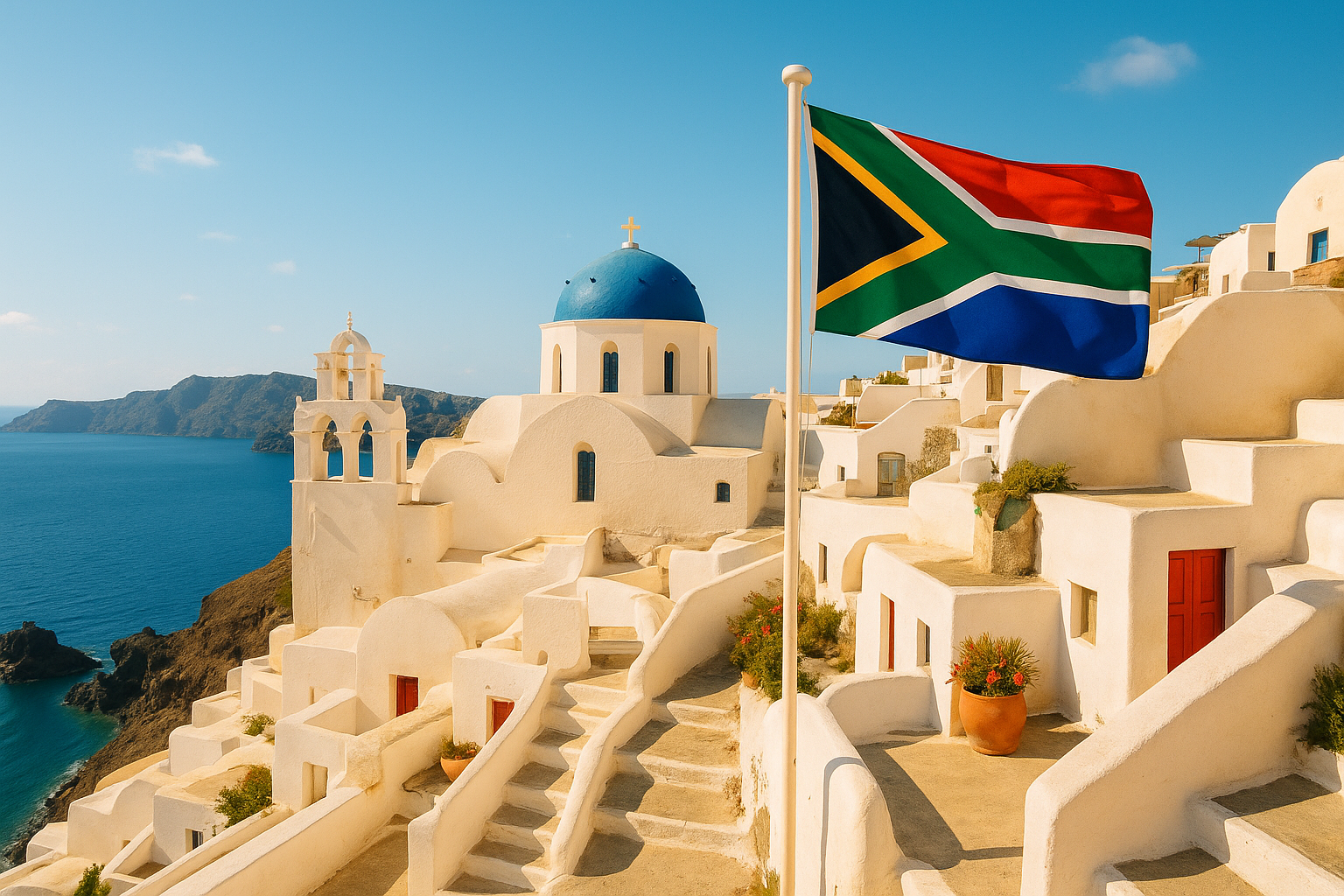
MAMMA MIA! returns to South Africa! Experience the sun-drenched spectacle of ABBA's hits, live on stage in Cape Town and Johannesburg.
Get ready, South Africa! MAMMA MIA! is coming back in 2026, hitting Cape Town in September and then Johannesburg. This isn't just any return; it's a super special version with local South African touches mixed into the classic ABBA songs. You'll hear familiar tunes with a cool Mzansi vibe, and see amazing local stars bringing the beloved characters to life. It's going to be a vibrant, unforgettable show filled with music, laughter, and a whole lot of dancing, making it feel like it truly belongs here.
When is MAMMA MIA! returning to South Africa?
MAMMA MIA! is returning to South Africa in 2026. The production will open in Cape Town on September 3, 2026, at the Artscape Theatre, followed by performances in Johannesburg at the Teatro at Montecasino. In total, there will be eighty consecutive nights across both cities.
Get Cape Town news in your inbox
Stay updated with the latest stories from the Mother City.
Count-down to Curtain: Two Cities, One Island, 80 Nights of Echoing Choruses
Inside Cape Town’s Artscape, lamps are already tilted to catch the first cymbal crash of “Dancing Queen,” while 1 400 km north the Teatro at Montecasino is quietly stacking enough azure Lycra to outfit a small navy. On 3 September 2026 the Cape doors swing open; six weeks later Johannesburg takes the relay. Between the two venues South Africans gain eighty consecutive chances to roar “SOS” with 1 800 strangers or watch a life-size fishing skiff glide across the boards while thirty-two voices attack “Money, Money, Money” in accented perfection. By then the global juggernaut will have pocketed more than four billion dollars since 1999 and conquered forty-six cities; Cape Town becomes number forty-seven, yet the creative team promises the stop will feel anything but touristy.
The producers are gambling on local pride: 78 % average occupancy is required for the Mother City leg, a figure most straight plays reach only in their dreams. Entire Tuesday and Wednesday blocks have been pre-sold to corporates hungry for disco-flavoured team-building, mirroring the on-stage fantasy of middle managers letting their hair down. Weekend seats are governed by an algorithm that inflates the price 12 % the moment the final chorus of any performance ends - capitalism borrowing ABBA’s own trick of slipping a hook in while you’re still smiling. Load-shedding contingencies exist: should the grid blink, the cast switches to an acoustic, candle-lit mini-set that past critics have called “more bewitching than the full electrified version,” complete with refund voucher and bragging rights.
From Stockholm to the Southern Tip: How Three-Minute Miracles Became a Passport
ABBA’s catalogue was engineered for export in 1974: 4/4 stomp, English chorus, heartbreak and euphoria welded into exactly 180 seconds. Playwright Catherine Johnson simply treated each single as archaeological evidence, reverse-digging a plot that feels as though it had lain dormant inside the vinyl all along - daughter, mother, three possible fathers, wedding on a sunburnt dot of Aegean earth where every revelation lines up with a key change. The musical never re-interprets the Swedes; it releases the songs into dramatic moments that feel simultaneously pre-ordained and freshly discovered, a trick that keeps Tokyo accountants and Toledo mechanics buying tickets two decades on.
Producer Bernard Käfer insists the South African incarnation will sound recognisably home-grown. The reed section slips the opening riff of “Umqombothi” under a boutique scene; the brass segues from “Waterloo” into the first eight bars of “Shosholoza” before the encore bow. Even the key change in “Voulez-Vous” jumps one bar early, a wink at local house music’s habit of premature modulation. These Easter eggs are brief enough for global visitors to miss, long enough for locals to feel seen - sonic fingerprints proving that export pop can, in the right hands, echo back like a tribute from the Karoo.
Donna, Tanya & Rosie: Home-grown Dynamos Rewrite the Mediterranean
Amra-Faye Wright, born in Durban, has sung Velma Kelly more than 4 000 times on four continents; now she slips into Donna Sheridan’s dungarees. Where Velma was switch-blade steel, Donna carries sun-baked vulnerability, terrified her daughter will recycle her own mistakes. Rehearsal whispers say Wright drops “The Winner Takes It All” by a minor third, turning the climactic high B-flat into a cracked plea instead of a victory lap - distinction that separates visiting celebrity from artist coming home. Audiences who remember her 2012 Artscape turn in CHICAGO will hear consonants that once landed like hatchets now softened into ABBA’s silver-tinged alto.
Samantha Peo completes a 21-year loop, reuniting with Wright after their 2005 Chicago face-off. As Tanya she weaponises Camps-Bay couture - imagine a cabinet minister in stilettos clutching a limitless black Amex - delivering comic mortar shells from the mezzanine of “Does Your Mother Know.” Lindy Abromowitz, fresh from Kinky Boots’ six-inch patent leather mayhem, rounds out Donna & the Dynamos; watch the micro-beat she steals before declaring “He’s the love of my life” during “Super Trouper,” a heartbeat that lets the house recall Tanya’s expertise in short-lived romance.
The Next Generation: Sophie, Three Dads, and a Diary Written in Morse
Twenty-three-year-old Kim Visser steps straight out of Stellenbosch’s Musical Theatre programme into the professional spotlight as Sophie Sheridan - rare fidelity in an industry fond of 28-year-old teenagers. Sharing scenes with Wright, she mines real-time generational chemistry; their blend on “I Have a Dream” braids innocence and regret into one vocal thread. The trio of potential fathers is cast colour-conscious rather than colour-blind: Sam, rendered by Cape tenor Deon van der Merwe, colours “Knowing Me, Knowing You” with Afrikaans vowels that add local ache; Harry, reimagined as a former Lund lecturer now based in Mauritius, justifies UK actor Jonathan Kisson’s British-Swedish lilt. The device is subtle, but it bounces Mzansi’s polyglot reality back into the auditorium, proving that heritage can be both global and unmistakably regional.
Designer Dicky Longhurst ignores cookie-cutter Greek postcard blue. Her taverna borrows palette and texture from West Coast fishing hamlets: sun-bleached corrugated iron, ochre cliffs, geraniums in up-ended paint tins. The deck is painted the precise hue of dried kelp; when the ensemble drags the jetty on during “Lay All Your Love on Me,” the wood exudes a faint pine-tar aroma caught by lighting legend Mannie Manim in late-afternoon gold shafts. The illusion plants an island somewhere between Mykonos and Melkbos - geographically impossible yet emotionally familiar, proof that escapism lands best when it feels like a neighbour’s backyard braai under foreign moonlight.
Insider Intel: Tickets, Parking, Storms and the 45-Minute Secret Set
Optimal sound hides in the first two mezzanine rows; front stalls earn you Spandex perspiration and a workout for your neck. Wednesday matinees cost 30 % less, pack school choirs who will outsing you - surrender and harmonise. Anniversary celebrants should beg for seat J-17 where Wright fires the final “Thank you for the music” directly overhead. Artscape’s underground garage shuts thirty minutes after curtain; the Civic Centre alternative stays open until 1 a.m. at half the tariff. Merch tables take SnapScan; ironic Gen-Z operatives snap up ABBA fanny packs first, so queue early if retro nylon defines your aesthetic.
Cape winter adores sabotaging August evenings; should rolling blackouts hit, the company pivots to a candle-lit 45-minute acoustic sampler arguably more transcendent than the plugged version. Refund vouchers and lifelong bragging rights accompany the impromptu intimacy. Whatever ticket you hold, stay rooted after the house lights rise: the band reprises the opening piano vamp of “The Winner Takes It All” at half speed, a private requiem audible only to stragglers willing to feign a key search. It is the softest souvenir - proof that three-minute miracles can, when handled with local hands, stretch into a lifetime of echo.
[{"question": "When is MAMMA MIA! returning to South Africa?", "answer": "MAMMA MIA! is returning to South Africa in 2026. The production will open in Cape Town at the Artscape Theatre on September 3, 2026, and then move to Johannesburg at the Teatro at Montecasino. There will be eighty consecutive nights of performances across both cities."}, {"question": "What makes this return of MAMMA MIA! in South Africa special?", "answer": "This return is a super special version with unique local South African touches integrated into the classic ABBA songs. You'll hear familiar tunes with a Mzansi vibe, see amazing local stars bringing the beloved characters to life, and experience a vibrant, unforgettable show that truly feels at home in South Africa. Expect subtle musical nods, such as the opening riff of \"Umqombothi\" under a boutique scene or \"Shosholoza\" segueing from \"Waterloo\"."}, {"question": "Who are some of the key cast members for the South African production?", "answer": "Amra-Faye Wright, born in Durban, will be starring as Donna Sheridan. Samantha Peo will play Tanya, and Lindy Abromowitz will round out Donna & the Dynamos. Twenty-three-year-old Kim Visser will take on the role of Sophie Sheridan, and the trio of potential fathers will include Deon van der Merwe as Sam and UK actor Jonathan Kisson as Harry."}, {"question": "Will the set design also have local South African influences?", "answer": "Yes, designer Dicky Longhurst has created a taverna set that deviates from the typical Greek postcard blue. It will borrow its palette and texture from West Coast fishing hamlets, featuring sun-bleached corrugated iron, ochre cliffs, and geraniums in up-ended paint tins. The aim is to create an illusion of an island somewhere between Mykonos and Melkbos, making it feel geographically impossible yet emotionally familiar."}, {"question": "What measures are in place for load-shedding during performances?", "answer": "Should load-shedding occur, the grid blinks, the cast will switch to an acoustic, candle-lit mini-set. Past critics have described this impromptu performance as even more bewitching than the full electrified version. Attendees will also receive a refund voucher and bragging rights for experiencing this unique event."}, {"question": "Are there any tips for buying tickets or enhancing the viewing experience?", "answer": "Wednesday matinees are 30% cheaper, though you might be joined by enthusiastic school choirs. Optimal sound is found in the first two mezzanine rows. For a unique experience, seat J-17 is where Amra-Faye Wright delivers the final \"Thank you for the music\" directly overhead. Artscape's underground garage closes 30 minutes after curtain, but the Civic Centre alternative stays open until 1 a.m. at half the tariff. Merch tables accept SnapScan, and retro ABBA fanny packs are a popular item, so queue early. Also, stay rooted after the house lights rise for a private, half-speed reprise of \"The Winner Takes It All\" piano vamp."}]

Emma Botha is a Cape Town-based journalist who chronicles the city’s shifting social-justice landscape for the Mail & Guardian, tracing stories from Parliament floor to Khayelitsha kitchen tables. Born and raised on the slopes of Devil’s Peak, she still hikes Lion’s Head before deadline days to remind herself why the mountain and the Mother City will always be her compass.
View all articles →