
Cape Town’s immersive art experience comes alive this May
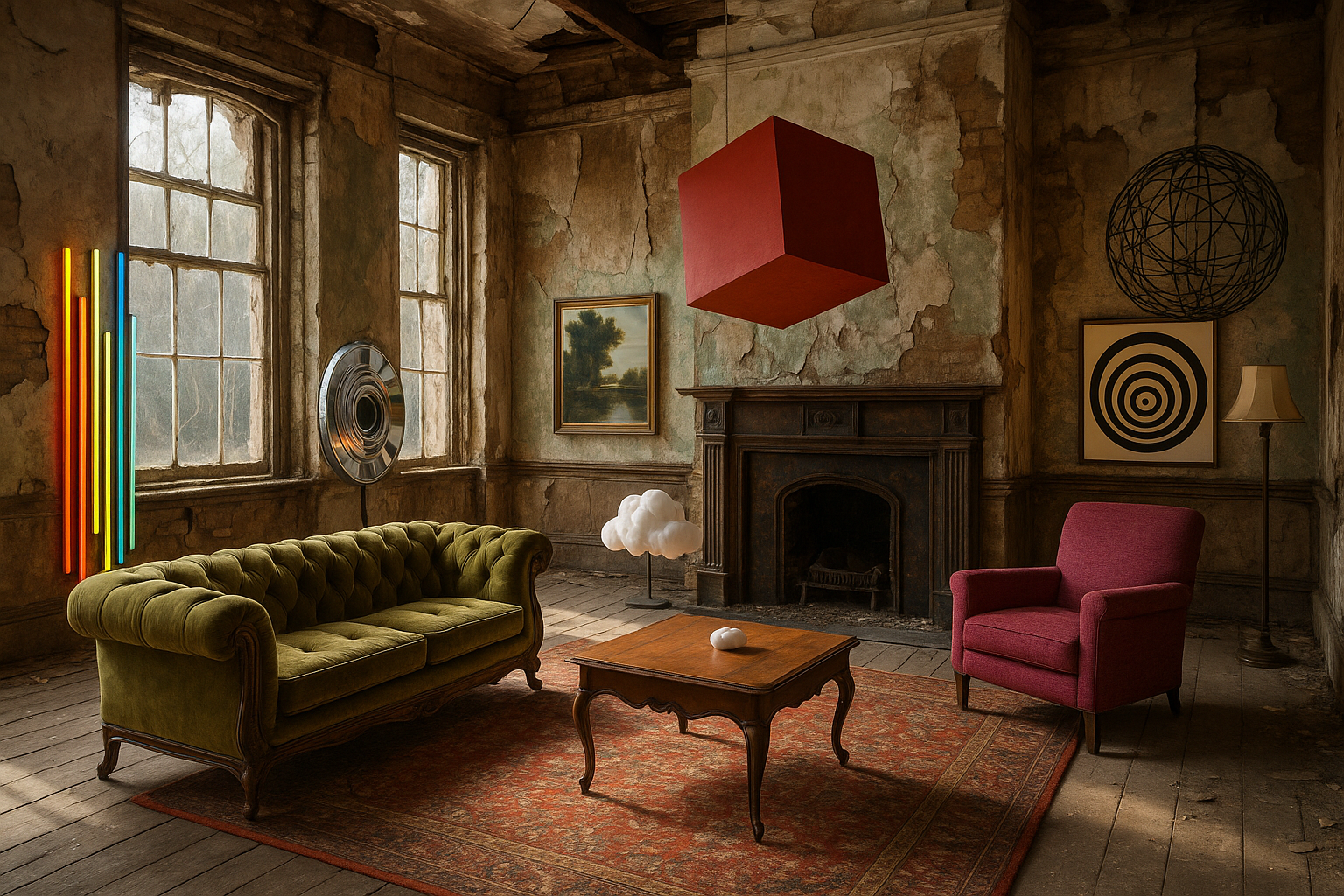
Cape Town's "Beyond the Screen" redefines art, transforming a Victorian home into a living exhibition. Experience domestic spaces as dynamic canvases.
"Home Is the Gallery" is a super cool art show happening in a regular house in Cape Town. They turn everyday stuff, like making tea or doing dishes, into amazing art. Imagine your sofa becoming a stage or your fridge showing a snowy scene! It mixes art with daily life, making every switch and sound part of the fun. It's a fresh take on art, breaking all the old rules and making you a part of the show.
What is "Home Is the Gallery"?
"Home Is the Gallery" is a unique art exhibition in a Cape Town Victorian house where everyday domestic items and household chores are transformed into interactive art installations. Curated by Sar La Rouge, it merges art with daily life, using technology and found objects to create a multi-sensory experience that challenges traditional gallery norms.
Get Cape Town news in your inbox
Stay updated with the latest stories from the Mother City.
1. A Victorian House That Refuses to Behave
Step through the carved Victorian door in Tamboerskloof on 8 May and you will not find a white-washed cube. You will walk into a Tuesday that is still breathing: kettle breathing, newspaper half-done, naartjie balanced on a sofa that has already surrendered to family life. By sunset that same sofa turns into a pedestal; its cushions are swapped for a lightbox that hammers magenta shadows into the wall. The shadows are born from an AI that gorged for weeks on dusty family photos rescued from charity-shop shoeboxes. The naartjie itself is arrested mid-decay, entombed in crystal-clear resin, promoted to relic of pre-digital boredom.
The brain behind the takeover is Sar La Rouge, a self-taught maker who paints, codes and parents in the same 24-hour cycle. She harvests ideas between bedtime stories and the 2 a.m. hum of the fridge. “My clearest images arrive while I’m elbow-deep in dishwater,” she laughs. Those small-hour cut-and-paste experiments - paper first, then Midjourney, finally laser-etched mirror - now hide in every room like well-mannered poltergeists.
One series, Load-shedding Lullabies, prints Eskom’s blackout timetables over lullaby lyrics; the grid glows behind the bathroom glass so brushing your teeth becomes involuntary remembrance of power gone missing. Another work weaves WhatsApp voice-note waveforms into aluminium strips sewn through the living-room rug. Stand on the sweet spot and a motion sensor wakes Roos’s cello, bowing the same voice notes back as stretched, grieving drones. Every creaking plank is charted on a hand-drawn treasure map so no visitor misses the pantry where a toddler’s first steps stutter in infinite loop, knees wobbling but never arriving.
2. Every Switch, Tap and Crunch Is Part of the Show
Open the fridge and a pressure plate knocks the house lights down a notch; inside, a pixellated clip of rare Cape snow flickers where the butter belongs. Twist the garden nozzle and a buried speaker in the plum tree rumbles out a wind called the Cape Doctor, pitch-lowered until it quakes like distant thunder beneath noon sun. The curators label these moments “micro-concessions,” meaning the art borrows your chores and hands them back as poetry.
Domestic space has hosted art before - think Walter Benjamin prowling bourgeois parlours, or 1970s feminists projecting rage onto suburban wallpaper - but Cape Town’s cocktail of water rationing, colonial hangover and rolling blackouts gives the gesture fresh voltage. Houses here double as fortresses and confessionals; asking strangers to wander through is both daring and everyday. “We wanted to delete the velvet-rope psychology,” explains Lauren Rhode, the architect-turned-producer. “If you can work out how to flush the loo - yes, the chain is part of the piece - you earn an opinion.”
Security, normally the elephant in every house-museum, is handled with comic frankness. Guests receive a pocket-sized floor plan; heirlooms are tagged “museum-grade: whisper only,” while toys are stamped “please squeeze.” An honesty bar runs on a “pay what you stole” honour code: finish the homeowner’s 1998 KWV brandy, drop R50 into a jam jar; sniff it, and a polite note suggests a R5 contemplation fee. Even neighbourhood alarms are conscripted: at 18:00 sharp they chime a three-note motif in one key, turning the block into a short-lived carillon. Residents received advance warning printed as a buttermilk-rusk recipe in four languages; most signed on because, as one neighbour shrugs, “beats the usual dog-choir.”
3. Friday Night: Chenin, Cello and Chopstick Percussion
Friday’s programme caters to grown-ups who still want civilised volume with their art. Cellist Roos plays three sets, sampling the building itself: the microwave’s ping becomes a hi-hat, the garage-door motor supplies bass, the electric fence is scraped - gently, with a chopstick - for extra grit. Canapés are engineered for one-handed grazing so conversation never competes with a plate; imagine bobotie spring rolls, goat-cheese profiteroles dusted in biltong, micro-herbs snipped from the planter box that doubles as a projector screen. Only forty people may enter each hour, preventing the queue for the guest bathroom from accidentally becoming performance art.
Saturday morning flips the focus to shorter humans. Collage stations glow beneath a chandelier whose bulbs have been swapped for low-heat amber LEDs that never quite reach full brightness, flattening the visual field so a four-year-old’s zig-zag scissor work feels equal to laser-cut precision upstairs. Off-cuts of mirrored perspex become “self-portrait shards,” decorated with oil pastels and slotted into chicken-wire that will, by four o’clock, curve around the bonsai-lined stoep like a reptile of reflected light.
A toddler-height trampoline hides piezo sensors; every bounce triggers a splash of colour on the courtyard wall, generated in real time from an algorithm trained on old Cape Guild flags. The longer the jumping marathon, the deeper the palette drifts toward mauve and ochre - pigments once financed by colonial mining now released hop-by-hop. Parents waiting their turn can read a wall text linking childhood energy to empire, heavy history served in bite-size hops.
The Hout Bay link is more than optics. The Bridge, a youth orphanage, has rolled hundreds of paper beads threaded between doorways; buy a bracelet-length strand for R30 and the curtain slowly disappears - an economy of literal give-and-take. On Sunday, leftover beads will be restrung as key-rings for the kids, ensuring the art object’s second life stays inside the community that funded it.
4. Exit Through the Kitchen, Re-enter Through the Feed
Arrive by Uber and the app will pin you to the lavender bush topiaried into the shape of Africa. Cyclists may chain frames to a clothesline whose pegs have been replaced by tiny 3-D-printed hands flashing peace signs. Metered parking lines the street, but longtime car-guard Ephraim has been promoted to weekend valet; tips go straight to his daughter’s university fund, verified in advance by the risk-assessment spreadsheet.
Stage-6 blackouts are pre-empted by a stack of rented lithium batteries humming in the old maid’s quarters. If Eskom cancels the lights, the works simply dim, turning the viewing experience into twilight nostalgia no Instagram filter can fake.
There is no grand finale, no closing speech - just a live-feed camera above the kitchen door that projects the front steps onto the back of the same door. Leaving feels like re-entering; the loop devours itself. Somewhere in that spiral you realise the naartjie, now embalmed in resin, is the only resident that will never update, rot or buffer - an analogue constant in a house where everything else refreshes.
What is "Home Is the Gallery"?
"Home Is the Gallery" is a unique art exhibition held in a Victorian house in Cape Town. It transforms everyday domestic items and household activities into interactive art installations, curated by Sar La Rouge. The exhibition blends technology and found objects to create a multi-sensory experience that challenges traditional art gallery conventions by integrating art directly into daily life.
Where and when is "Home Is the Gallery" taking place?
"Home Is the Gallery" is happening in a Victorian house located in Tamboerskloof, Cape Town, starting on May 8th. The exhibition takes over the entire house, turning every room and even the garden into part of the artistic experience.
Who is the curator and brain behind "Home Is the Gallery"?
Sar La Rouge, a self-taught artist who paints, codes, and parents, is the creative mind behind "Home Is the Gallery." Her inspiration often comes from everyday moments, like doing dishes or during the quiet hours of the night. Lauren Rhode, an architect-turned-producer, also plays a key role in bringing the exhibition to life.
What kind of art can visitors expect to see at "Home Is the Gallery"?
Visitors will encounter a variety of interactive and innovative art. This includes a sofa transforming into a pedestal with an AI-generated lightbox, a naartjie preserved in resin, and digital installations like "Load-shedding Lullabies" that print blackout schedules over lullaby lyrics. Even mundane actions like opening the fridge or flushing the toilet become part of the art, with motion sensors triggering sounds or visual effects.
Are there special events for different audiences?
Yes, "Home Is the Gallery" caters to different audiences. Friday nights are designed for adults, featuring cellist Roos performing with the house's sounds as instruments, accompanied by canapés. Saturday mornings are dedicated to children, with collage stations, a toddler-height trampoline that creates art with every bounce, and activities linked to local youth initiatives like The Bridge orphanage.
How does "Home Is the Gallery" challenge traditional art spaces and norms?
"Home Is the Gallery" breaks down the conventional barriers between art and daily life by integrating installations directly into a functioning home. It encourages active participation rather than passive observation, making visitors interact with household items to experience the art. The exhibition also redefines security and etiquette, replacing velvet ropes with humorous instructions and an honesty bar, aiming to "delete the velvet-rope psychology" and make art accessible and engaging.

Hannah Kriel is a Cape Town-born journalist who chronicles the city’s evolving food scene—from Bo-Kaap spice routes to Constantia vineyards—for local and international outlets. When she’s not interviewing chefs or tracking the harvest on her grandparents’ Stellenbosch farm, you’ll find her surfing the Atlantic breaks she first rode as a schoolgirl.
View all articles →