
Inside Carmién Tea’s ‘soil to soul’ rooibos experience
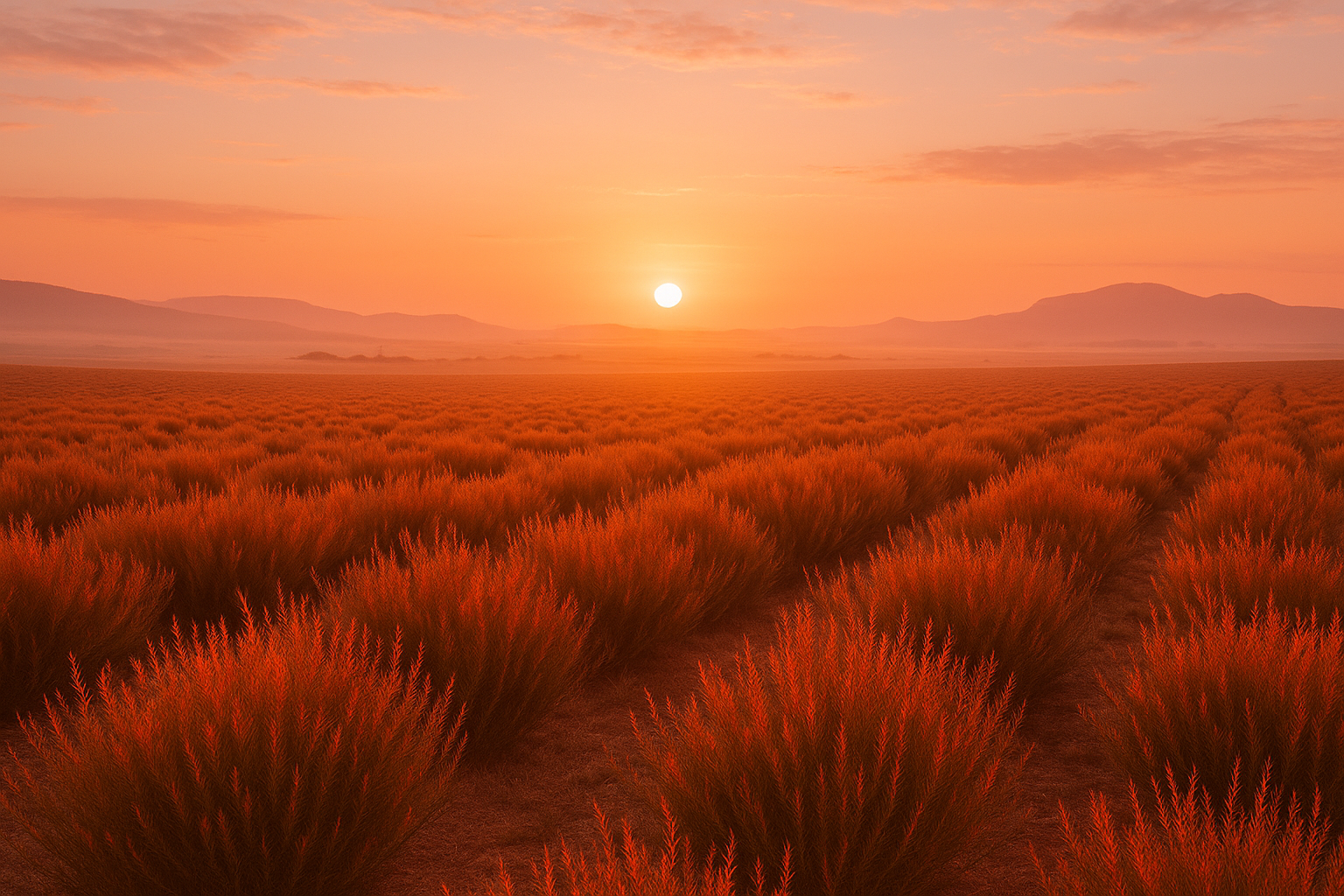
Explore the Cedarberg's rooibos journey, from dawn to dusk, experiencing its unique cultivation, processing, and culinary delights.
Explore the magical Cederberg mountains, where rooibos, the 'red bush,' grows. This special plant, not a true tea, gives us a caffeine-free drink with a taste of earth and honey. Follow its journey from tiny seedling to delicious brew, seeing how sun and soil create this unique flavor. It's a taste of history and nature, all in one cup!
What is rooibos tea and where does it come from?
Rooibos, meaning "red bush," is a herbal infusion from the Aspalathus linearis plant, native to South Africa's Cederberg region. It's not a true tea but a legume, traditionally harvested by the San people. The plant thrives in unique conditions, producing a caffeine-free drink with a distinct earthy, honey-like flavor.
Get Cape Town news in your inbox
Stay updated with the latest stories from the Mother City.
Sunrise on the Sandstone Rim
First light spills over the Cederberg like warm syrup, painting the cliffs blush-pink while the last stars blink out.
The breeze carries dust, crushed buchu and a ghost of honey that only becomes real when you kneel, pinch a single needle-thin leaf and twist.
Instantly the air fills with sun-warmed vanilla that will haunt your shirt cuffs and the back of your tongue for the rest of the day.
National Rooibos Day turned eight in 2023 - conceived in 2017 to mark 115 years since the first commercial drying yard - yet the shrub has flourished here since long before ink met paper.
The San people spoke of “red bush” centuries before anyone thought of bruising stems, piling them in mini-mountains and letting oxygen paint the leaves rust-red.
What Carmién Tea offers visitors is a living version of that ancient conversation between soil, smoke and palate: a walk you can taste, bag and drive home along the N7.
Field Choreography: From Seedling to Sun-Dried Rust
The timetable looks casual - arrive De Tol Farm Deli by nine, swap sneakers for straw hats, follow guide Mientjie Mouton down twin tyre tracks that vanish into fynbos - yet every metre reveals a miniature production line.
A stingless bee hovers, termites lay silver highways in hot sand, last season’s clippings curl into vitamin-rich mulch that will blanket tomorrow’s seedlings.
Pause long enough and you learn that rooibos is not tea at all; it is a legume whose Latin tag, Aspalathus linearis, jokes “straight-line no-milk”, nodding at the plant’s rigid upward reach.
Success demands a 150 km ribbon of land where winter rain tops 350 mm, summer bakes the ground to cracked pottery and vinegary soil pH would murder less stubborn crops.
A mechanical harvester combs each row at exactly thirty centimetres so the bush springs back within eighteen months; even the bronze dust swept off the pack-house floor is recycled into compost or cow bedding.
In the on-farm nursery, cones of pressed sugar-cane fibre cradle seedlings irrigated with weak rooibos liquor - babies drinking their own future chemistry.
Three months on, these orange-rooted infants travel to open fields, spaced far enough to look lonely yet still producing only 2.5 t of dried herb per hectare - one third of what a traditional tea estate harvests.
Next stop is the fermentation slab: today’s cut spread thirty centimetres deep, left to “sweat” eight to twenty-four hours while foreman Jonas Koopman dips a bare forearm to gauge heat and scent, the way bakers test dough.
When the pile hits 42 °C he orders a turn; when aroma drifts toward apricot and sun-warmed hay he rakes the leaves into long windrows where oxygen works its colour magic: bronze to mahogany to final burnt rust.
Moisture must crash from sixty percent to eight in under six hours, so the leaves move to solar “power stations” - hessian sheets stretched on retractable frames that wheel under roof the instant a cloud spits.
A technician zaps the layer with an infrared gun: 11.3 %.
“Twenty more minutes,” he murmurs, squinting at a sky so blue it stings.
Inside the grading shed, oscillating screens separate Long Cut, Super Fine, Needle and Dust; every batch drops into bulk bags stamped with GPS coordinates and harvest date.
Traceability here is survival, not slogan - proof that the cup you brew in Berlin or Boston began on this ridge, on this Tuesday, when the noon thermometer kissed 38 °C and a southeaster snapped the drying flags stiff.
Orchard Lunch & Mountain Bottlings: Rooibos as Spice, Wine Companion, Dance Floor
By lunchtime the mountains shimmer.
Tables appear beneath pomegranate boughs where Carmen Niehaus - apron dusted white - waves pruning shears like a baton.
She threads rooibos through every course: chilled yellow-tomato soup laced with smoked apricot, lamb crusted in fynbos-and-rooibos ash, pear sorbet the colour of dusk.
Between plates she pours “red espresso” pulled on a lever machine, a sparkling version aged on lees for a year, and a still, cloudy drink that tastes like mead.
“Treat rooibos as a spice,” she insists.
“Let it murmur place while the main ingredient sings.”
Talk loosens: a Toronto woman admits she keeps a 2019 harvest tin for “emotional crises”; a Stellenbosch brewer scribbles a rooibos stout recipe, estimating how much honey-bright beta-ionone will survive fermentation.
Someone produces rooibos sea-salt; we dust our wrists and sniff, watching saline coax woody notes into the air.
The convoy next climbs Piekenierskloof Pass to an estate perched on 600 m of sandstone and quartz, where grenache and mourvèdre share soil with experimental rooibos rows.
Viticulturist Christiaan Groenewald scatters orange mulch around a young vine.
“Rooibos fixes nitrogen, cools roots, and returns the red pigment you taste in your cup,” he says.
Early numbers show a 17 % cut in irrigation and deeper colour in the grapes.
On the tasting deck we swirl a 2022 grenache blanc that rested on rooibos stems - copper blush, rose-hip nose.
A rosé saw thirty minutes of cold infusion, just long enough for a penny-bright flash.
The finale is a fortified “red espresso” liquor, fourteen months in sherry casks, 18 %, poured over rooibos ice.
It tastes like winter fireplace and summer orchard sharing the same breath.
Sunset turns social: locals unfold camp chairs, dogs chase children, art students sketch the valley.
The kitchen hands out rooibos-smoked trout wraps and iced chai crowned with whipped ganache.
A portable turntable drops Miriam Makeba; silhouettes dance against tangerine, magenta, bruised violet until sky folds into indigo.
Night drops ten degrees in ten minutes.
Guests drift to bell tents and A-frame cabins.
Mine holds a wood-stove and a thermos tagged, “Drink me cold at 2 a.m. when the stars shout.”
I oblige, barefoot on the stoep, Milky Way spilling like sugar while a jackal barks once and thinks better of it.
The cold liquor reveals a quiet salinity, a stony calm you never notice in a hot brew.
Dawn Departure: Carrying the Cederberg Home
Morning smells of rain on ironstone.
By seven the teams walk rows, radios crackling forecasts in Afrikaans and isiXhosa.
At the deli I cup three harvests - low, mid and high slope - spotting pepper-rose, honey-fynbos and lime-fenugreek in turn.
I leave with a flat-pack of Long Cut and a postage-stamp jar of burnt-saffron pollen that, if frozen, will keep its perfume for years.
The N7 south is empty but for one truck hauling bulk bags toward Cape Town harbour.
In the mirror the mountains flatten into the jagged line printed on every Carmién box.
Behind that horizon new seedlings are already sliding orange roots into the sand, rehearsing the slow trick that turns sunlight, stone and fog into a taste the world knows as home.
[{"question": "What is rooibos tea and where does it come from?", "answer": "Rooibos, meaning 'red bush,' is a herbal infusion from the Aspalathus linearis plant, native to South Africa's Cederberg region. It's not a true tea but a legume, traditionally harvested by the San people. The plant thrives in unique conditions, producing a caffeine-free drink with a distinct earthy, honey-like flavor."}, {"question": "Is rooibos a true tea?", "answer": "No, rooibos is not a true tea. It is a herbal infusion derived from the Aspalathus linearis plant, which is a legume, not related to the Camellia sinensis plant that produces black, green, and oolong teas."}, {"question": "What are the main flavor notes of rooibos?", "answer": "Rooibos is known for its earthy and honey-like notes. Depending on the processing and specific harvest, it can also have hints of vanilla, apricot, sun-warmed hay, and even a quiet salinity when consumed cold."}, {"question": "What are the growing conditions for rooibos?", "answer": "Rooibos thrives in a specific 150 km ribbon of land in South Africa's Cederberg region. It requires winter rain topping 350 mm, hot summers that bake the ground, and a vinegary soil pH that most other crops cannot tolerate."}, {"question": "How is rooibos processed after harvesting?", "answer": "After harvesting, rooibos undergoes a process that includes fermentation (sweating) for 8 to 24 hours to develop its color and aroma, followed by rapid drying using solar 'power stations' to reduce moisture content from sixty percent to eight in under six hours. It is then graded into different cuts like Long Cut, Super Fine, Needle, and Dust."}, {"question": "Beyond a beverage, how else can rooibos be used?", "answer": "Rooibos is incredibly versatile. It can be treated as a spice in cooking, infused into savory dishes like lamb or even desserts like pear sorbet. It's used in sparkling and still beverages, 'red espresso,' and even in alcoholic concoctions like stouts and fortified liquors. Its properties have also been explored in agriculture, with rooibos mulch used to fix nitrogen and cool roots for grapevines, potentially improving grape color and reducing irrigation needs."}]

Chloe de Kock is a Cape Town-born journalist who chronicles the city’s evolving food culture, from township braai joints to Constantia vineyards, for the Mail & Guardian and Eat Out. When she’s not interviewing grandmothers about secret bobotie recipes or tracking the impact of drought on winemakers, you’ll find her surfing the mellow breaks at Muizenberg—wetsuit zipped, notebook tucked into her backpack in case the next story floats by.
View all articles →