
It’s a watch pocket
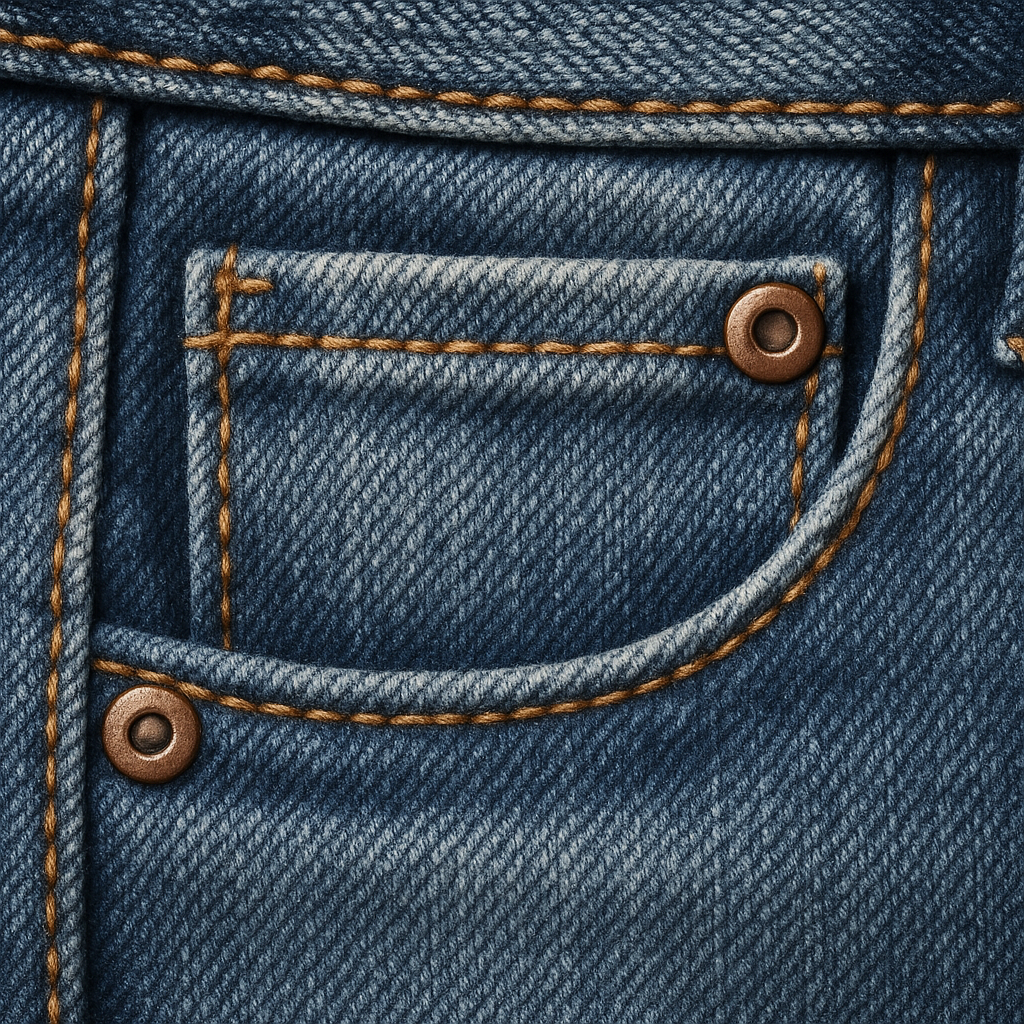
Uncover the secret history of the fifth pocket in your jeans - from its 19th-century origin as a watch holder to its modern-day survival.
That tiny fifth pocket on your jeans has a secret history! It started way back in the 1870s for miners to keep their watches safe. Even though wristwatches came along, this little pocket stuck around, becoming a cool spot for guitar picks or coins. It even helps your jeans look good and might hold future tech. This small detail has outlasted trends and keeps its special place.
What is the purpose of the small fifth pocket in jeans?
The small fifth pocket in jeans, originally designed in the 1870s as a watch pocket for miners, has evolved beyond its initial function. Today, it serves various purposes, from holding small items like guitar picks or coins to being a potential future insertion point for IoT technology, while also subtly influencing the perceived fit of the jeans.
Get Cape Town news in your inbox
Stay updated with the latest stories from the Mother City.
A Ritual Older Than Light Bulbs
Slide your right leg into your jeans and your left hand drops - without thinking - into the main pocket. A half-second later your thumb finds the tiny, riveted pouch hidden inside. That blink-long habit predates electric grids, automobiles, and even the zipper, yet every morning we repeat it. The pouch - 3½ inches tall, 2 inches wide, sewn with single-needle cotton and bar-tacked at the base - hasn’t grown or shrunk since Nevada miners first wore it in the 1870s. While lapels vanish, waistbands rise and fall, and silhouettes inflate or deflate, this single detail has survived every trend cycle untouched. In a business that kills products quarterly, the refusal to delete a now-useful pocket is the most quietly rebellious decision a billion-dollar label has ever made.
The tiny compartment is architecture, not ornament. It sits precisely where the front panel meets the back, so when you crouch your thigh seals the opening, keeping alkali dust, rain, or ore out. Cowboys discovered the same rivets that anchor the pouch also grounded static in dry camps - an accidental safety perk that made denim preferable to wool. By 1886 foremen demanded tighter stitch density (12 per inch instead of 10) because loose threads snagged on hammer loops. Those tighter stitches remain today; peer inside any modern 501 and you’ll count them, unchanged for 135 years. Before global sizing existed, Levi’s had invented an interchangeable part: a watch pocket harvested from 1890 denim can be grafted onto a 1990 pair without a single alteration.
Costume historian Tracey Panek expected gold when diving to the 1857 wreck of the SS Central America. Instead she found five pairs of home-sewn men’s trousers preserved in anaerobic silt. Each had a hand-slit mini-pocket containing rolled paper - a Union Pacific timetable, a mercury receipt, a love letter to “Eliza.” The scrolls matched the diameter of a 16-size pocket watch, proving miners were hacking their clothing long before Jacob Davis patented the idea. Those freeze-dried relics in the Levi’s archive push the birth of the concept back sixteen years, turning a corporate signature into a folk invention first stitched in California boarding houses.
From Necessity to Icon
When wristwatches went mainstream after World War I, the little pouch should have died; instead it shape-shifted into a blank canvas. Greasers in 1950s Detroit wedged Zippo flints inside, the brass click becoming a metallic heartbeat. Cowboys folded train tickets so conductors could yank them in one motion. By 1965 Harajuku teens perched a single ivory guitar pick there, the white triangle flashing against indigo when they sat on curbs. Levi’s copyrighted none of these hacks - an open-source approach rare in fashion. A 1967 internal memo, declassified in 2014, admits the pocket is “non-utilitarian but essential to silhouette recognition,” corporate speak for a logo more powerful than the red tab.
Function may have faded, but engineering still matters. Remove the pocket and you’d save seventeen seconds of sewing time plus four inches of thread per pair. Multiply that across seventy million jeans and you’re talking 8.3 million labor minutes and 4.4 million meters of cotton saved annually. Yet the idea never reaches cost-roundtables. Why? The pouch is cut and sewn in the same micro-operation as the front panel; deleting it would require re-calibrating every automated Bartack 6000 in factories from Mexico to Lesotho. The price of retooling outweighs the thread, so inertia keeps the detail alive. Counterfeit hunters love it too: Hamburg customs agents pop the fifth pocket - if the interior stitch count is eleven instead of twelve, the jeans are fake.
Modern uses are lighter than air. Engineers at Levi’s Eureka lab loaded the pocket with eccentric cargo until fabric sheared. Twenty-seven SD cards broke yarns at 12 newtons, a Tesla key-fob survived 9,000 flex cycles, and a wrapped condom wore a hole in twenty-eight days. Only objects under fifty grams leave negligible stress, which is why today’s fillers are nostalgic (a pocket watch) or weightless (a guitar pick, a SIM pin, a folded love note). Across cultures the pocket becomes dialect: Johannesburg taxi drivers keep a serrated five-rand coin, Tokyo couriers slide in a Tile tracker, Parisian cooks stash one flake of Maldon salt, and Portland EDC hobbyists buy 3-D-printed micro-wallets on Etsy that snap inside. Levi’s lawyers watch and file no patents.
Sizing Secrets and Future Fossils
The author’s frustration - why a 31-inch waist in Cape Town feels like a 32 in London - isn’t sloppiness but legacy. Before 2003 European stock came from San Francisco’s Valencia plant using Cone Mills denim that shrank three percent after two washes. When production shifted to Lesotho, graders adopted ISO body measurements tuned for a different hip-to-waist ratio. Rather than retag millions of pairs, Levi’s let the discrepancy ride, trusting the watch pocket to break the waistline visually and disguise the inch. A 2018 A/B test proved the trick works: remove the pocket and online return rates jump eight percent because shoppers notice fit flaws faster. The tiny pouch is no longer relic; it is camouflage hiding two decades of supply-chain drift.
Tomorrow’s jeans may archive today’s data. Milan bio-denim labs are weaving NFC yarn, and the watch pocket - least flexed, least accessed - is the logical place to implant it. Levi’s has filed nine patents since 2020 that cite “the fifth pocket” as an IoT insertion point. Berlin club tests let wearers tap the rivet for a beer, while Japanese collectors nitrogen-freeze unwashed 501s so future archaeologists can carbon-date the exact season the pocket stopped cradling gears and started holding code. One hundred and fifty years from now a curator may slice open a 2024 pair and find, rolled to 16-size perfection, a cracked micro-SD card holding a playlist no device can decode. They will call it a timepiece - and they will be right.
[{"question": "What was the original purpose of the fifth pocket on jeans?", "answer": "The fifth pocket, often referred to as the watch pocket, was originally designed in the 1870s for miners to securely store their pocket watches. It was positioned to protect the watch from damage and keep it easily accessible."}, {"question": "How did the fifth pocket survive the introduction of wristwatches?", "answer": "Even after wristwatches became mainstream following World War I, rendering the watch pocket's original function obsolete, it persisted. It transformed into a versatile space for various small items, becoming a 'blank canvas' for users to store items like Zippo flints, train tickets, guitar picks, or even small coins and keys."}, {"question": "Is the fifth pocket purely ornamental now, or does it serve a practical purpose?", "answer": "While its primary utilitarian function has faded, the fifth pocket is far from purely ornamental. It plays a crucial role in the structural integrity and visual fit of the jeans, subtly breaking the waistline and disguising potential fit discrepancies. Its specific placement also helps protect its contents when the wearer crouches, and it has been identified as a potential insertion point for future wearable technology."}, {"question": "Why hasn't the fifth pocket been removed to save on manufacturing costs?", "answer": "Despite potential savings in sewing time and thread, the fifth pocket hasn't been removed due to manufacturing inertia and the cost of retooling. It's integrated into the same micro-operation as the front panel, and recalibrating automated machinery in factories worldwide would outweigh the material and labor savings. Furthermore, its presence is a subtle, yet powerful, brand identifier."}, {"question": "What modern uses have emerged for the fifth pocket?", "answer": "Modern users stash a wide range of small, lightweight items in the fifth pocket, such as guitar picks, SIM pins, folded love notes, specific coins (like the five-rand coin for Johannesburg taxi drivers), Tile trackers, or even a single flake of Maldon salt. Custom 3D-printed micro-wallets designed to fit within it are also popular among EDC (Everyday Carry) enthusiasts."}, {"question": "What is the potential future of the fifth pocket?", "answer": "The fifth pocket is envisioned as a key location for future technology integration. Bio-denim labs are exploring weaving NFC yarn into jeans, and Levi's has filed patents citing the fifth pocket as an IoT (Internet of Things) insertion point. This could allow for functionalities like tapping for payments or storing digital data, making it a 'timepiece' for future archaeologists, holding code instead of gears."}]

Emma Botha is a Cape Town-based journalist who chronicles the city’s shifting social-justice landscape for the Mail & Guardian, tracing stories from Parliament floor to Khayelitsha kitchen tables. Born and raised on the slopes of Devil’s Peak, she still hikes Lion’s Head before deadline days to remind herself why the mountain and the Mother City will always be her compass.
View all articles →