
PepsiCo responds to backlash over new ProNutro taste
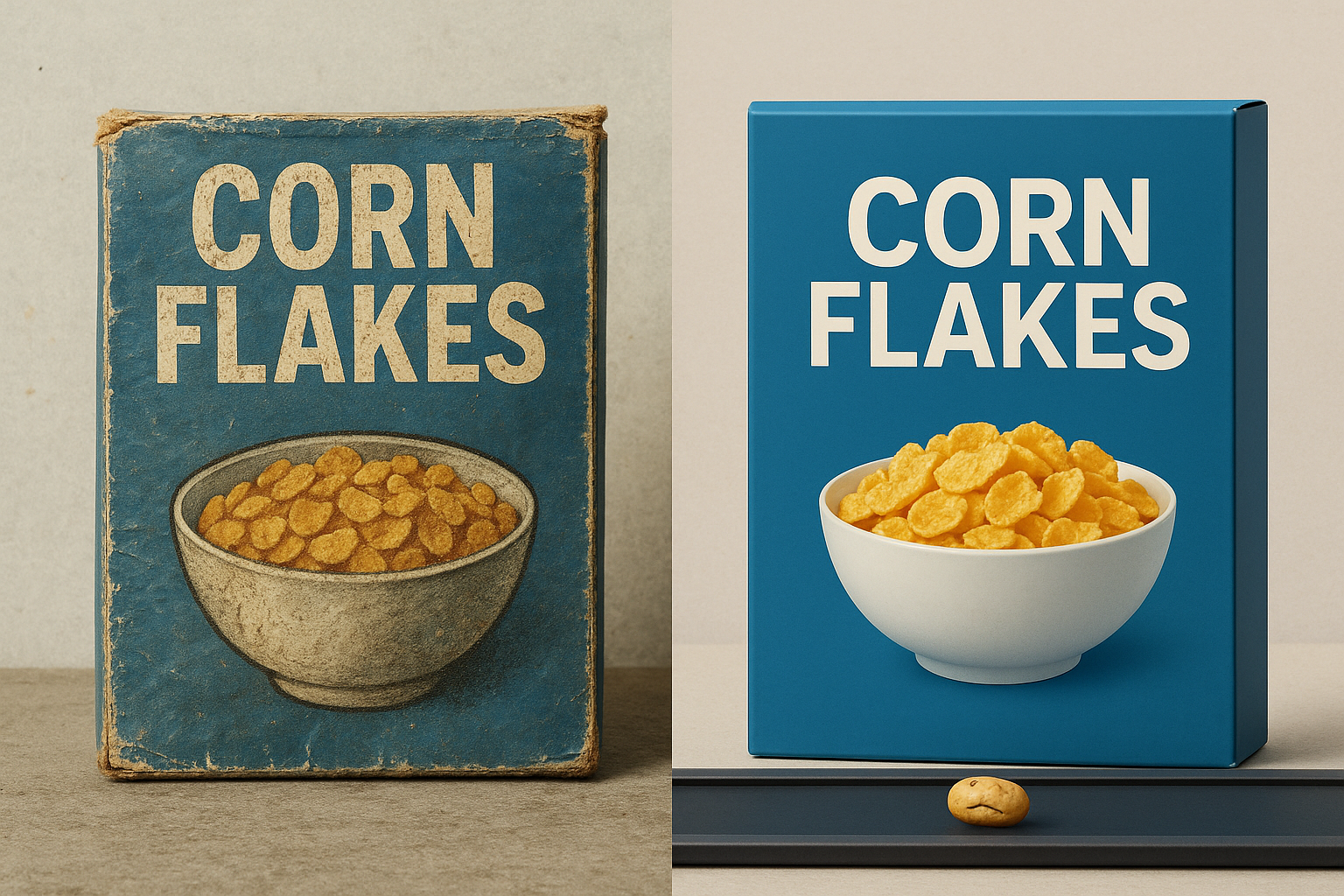
South Africa's beloved breakfast cereal, ProNutro, underwent a controversial reformulation, sparking nationwide debate between memory and progress.
South Africa's beloved ProNutro porridge changed its taste, sparking a national debate. The company updated its old machines and switched ingredients due to global sugar rules and climate issues affecting peanuts. Now, some people miss the old taste, while others welcome the healthier, modern version, showing how food connects to our memories and how things change.
Why did the taste of South Africa's favorite porridge change?
ProNutro's taste changed due to an overhaul of its production process. Obsolete machinery, climate-affected peanuts, global sugar guidelines, and a R700 million production line upgrade led to new ingredients like tapioca-based isomaltulose and acacia fibre, and changes in peanut sourcing and processing to meet modern health and manufacturing standards.
Get Cape Town news in your inbox
Stay updated with the latest stories from the Mother City.
1. 4 a.m. in Gauteng – The Ritual That No Longer Tastes Like Home
Every weekday Thandiwe Mokoena’s alarm buzzes at four, long before the Jo’burg sky decides what colour it wants to be. She flicks the kettle, grabs the cobalt-blue carton her mother first carried home in 1989, the year Madiba walked out of Victor Verster. Thirty-five years of choreography: shake twice, pour, stir, watch the familiar nut-brown flakes open like winter veld after rain. On 6 March 2024 the spoon hits something paler, perfumed with candy-like vanilla; the nuttiness vanishes before she reaches the bottom of the bowl. By sunrise #ProNutroGate has knocked Eskom’s loadshedding roster off the top of the trend list and the breakfast table has become a national Rorschach test: memory versus progress, township childhood versus wellness-culture future.
Inside the cardboard walls of Twitter, strangers trade tasting notes the way their parents once traded struggle songs. Someone posts a barcode from 2003 beside the 2024 code and asks followers to “sniff the difference”; 1,4 million people watch a man huff empty boxes. A Durban DJ samples the 2003 crunch, drops it into a gqom beat and lands on the Spotify SA Top 50. Overnight the porridge graduates from pantry staple to pop-culture palimpsest, proof that flavour can carry the weight of history when democracy itself is still only thirty years young.
Yet the uproar is only the foam on the coffee. Behind the outrage lies a spreadsheet story: obsolete machinery, climate-battered peanuts, global sugar guidelines and a R700 million production line that will not run on nostalgia. The spoon that once stirred comfort now stirs questions no one at the breakfast table can answer – who decided the taste of our childhood was negotiable, and what else are we prepared to trade for “better-for-you”?
2. The Machinery of Memory – Why the Factory Had to Choose “Evolve or Die”
The first ProNutro extruder arrived in Isando in 1960, a Swiss marvel that held maize and peanut flour at 130 °C just long enough to turn starch into silk. Engineers loved its precision; they hated the 36-hour shutdowns needed to scrape burnt specks from the screws. By 2010 that same line was grinding 120 hours straight, metal weary enough to shrug off an 8 % density swing – the difference between velvet mouthfeel and sandy sludge. PepsiCo’s due-diligence squad worked the sums: refurbish for USD 27 million, stare at 14 weeks of silence and still risk a product that might drift out of spec the next humid summer. “Re-engineer the cereal or kill the brand” became the only slide that mattered.
Sugar was the easiest bullet to bite. Stripping 12 g of sucrose from every 100 g pleased dietitians and the Department of Health’s 2023 labelling law, yet sucrose had never been only sweetness; its crystals acted like microscopic scaffolding, propping protein fibres apart so the porridge did not clag into paste. Tel-Aviv start-ups offered hi-maize dextrins, Wageningen pitched pea maltodextrin, but neither supplier could promise Durban docks in February. The answer came from Thailand and Nigeria: tapioca-based isomaltulose and acacia fibre, both stable at 90 % humidity and both legally “intrinsic” sugars, letting the front-of-pack scream “–63 % added sugar” while still keeping the spoon moving.
Peanuts proved messier. Southern Africa’s 2023 crop lost 40 % to La Niña’s lingering rains and the attendant aflatoxin cloud. To hit the <2 ppb safety spec PepsiCo’s buyers looked west – Argentinian blanched meal, clean but stripped of the russet testa that once gave ProNutro its tannic growl. Colour chemists roasted barley malt to order, caramelised a whisper of apple fibre, and tucked both inside the catch-all line “natural flavouring”. The result looks like the old friend in dawn light, yet tastes like the friend who went overseas and came back speaking with an accent you cannot quite place.
3. The R50 Million marriage of German steel and Indian code – Physics versus Feeling
Prospecton’s new Buhler TwinLab 1200 is the size of a commuter bus and twice as talkative. Torque sensors twitch the screw speed 200 times each second, compensating for maize that arrives at 11 % moisture on Monday and 15 % on Friday. A near-infrared eye above the die watches protein molecules dance; drift outside bandwidth and an AI model drips more steam or peanut slurry to herd them back. The flakes exit thinner than before – 0,2 mm separates yesterday’s floating island from today’s sinking swirl – but particle-size distribution is now tighter than ground espresso. Engineers call it Extrusion 4.0; grandmothers call it “the porridge that drowned in the milk”.
Numbers alone cannot close the sensory chasm. In Cape Town’s cloaked tasting booths the new bowl scored 6,8 for “healthy” against the legacy 5,1, yet only 4,9 for “emotional comfort” where the old recipe hit 8,2. The divorce line is age 34 – South Africa’s median – meaning half the country thinks the cereal is finally keeping pace, while the other half senses an impostor in a familiar jersey. Tweaks are already queued: 0,3 % toasted rice grit will be added in August to bring back the bass-note crunch consumers swear is missing, proof that engineering can chase memory only by infinite, expensive steps.
The vegan tweak removed the last speck of dairy from the vitamin premix, unlocking Woolies’ “free-from” bay and 18 000 first-time shoppers in April. Yet the same edit scraped away the creamy roundness that once cushioned peanut and grain, the reason some focus-group notes carry the single word “hollow”. Progress giveth and progress taketh away, all in the same spoonful.
4. Shelves, Stokvels and Side-Hustles – Where the Past Is Sold by the Scoop
Formal retail is voting with facings. Shoprite data show Gauteng unit sales down 38 % but the Western Cape up 12 %, a graph that overlays income, education and probably Bluetooth-enabled kitchen scales. Limpopo shoppers simply walked to cheaper private-label maize, shrinking the whole category 9 % and reminding marketers that loyalty ends where the stokvel budget snaps. Pick n Pay plays both sides: it cut local facings to two rows but imports the 75 g “heritage” multipack from Lesotho’s mothballed line – grey-zone stock that turns every eleven days and is technically not sold here, only here.
Where supermarkets retreat, the informal sector advances. At Bara taxi rank a reused 25 kg Zimbabwean school-feeding sack becomes 1 kg clear bags sold for R120 a pop – triple the shelf price, untouched by barcode. Lab tests say the product is 2019 vintage plus 0,8 % extra salt to mask age, yet queues form because memory has its own economy. WhatsApp stokvels trade tips on where the old Lesotho packs surfaced this week; suburban mommy groups share GPS pins like wartime spies. PepsiCo’s lawyers chase intellectual property they can no longer physically make, a paradox worthy of a philosophy lecture.
Government watches from the mezzanine. The 2023 fortification rules demand 5 mg iron per 100 g to fight teen anaemia; the new formula delivers 6,2 mg, high enough to save an estimated 1,7 million deficiency cases if children keep swallowing it. NGOs applaud; flavour chemists add Madagascan vanilla to bury the metallic whisper. Somewhere between public health and private memory the country negotiates what “better” actually means: a micronutrient bullet or the lingering taste of Saturday cartoons before anyone had heard of glycaemic load.
What remains when the shouting dies down? Thirty-eight ingredients gone, nineteen new ones enlisted, nine suppliers swapped for strangers. A 22 % lighter glucose hit, 15 % less salt, 11 % fewer emissions per bowl. Vanilla, apple and toasted barley enter the lexicon; musty peanut skin exits stage left. Price per gram rises 6 %, yet price per gram of protein falls 9 % – numbers that circulate on phone screens like share-price tips, fragments of data trying to rebuild a flavour no algorithm has yet captured. The spoon goes back into the bowl at 4 a.m., the kettle still hums, but the conversation between memory and machinery is only beginning.
[{"question": "
Why did the taste of South Africa's favorite porridge change?
", "answer": "ProNutro's taste changed due to an overhaul of its production process. Obsolete machinery, climate-affected peanuts, global sugar guidelines, and a R700 million production line upgrade led to new ingredients like tapioca-based isomaltulose and acacia fibre, and changes in peanut sourcing and processing to meet modern health and manufacturing standards."}, {"question": "What factors led to the decision to upgrade ProNutro's production line?
", "answer": "The company faced a choice to 'evolve or die' due to several factors. The original extruder, installed in 1960, was prone to 36-hour shutdowns for cleaning and by 2010 was operating for 120 hours straight, leading to inconsistent product density. Refurbishing the old line would cost USD 27 million with 14 weeks of downtime and still risk product quality issues. This led to the decision for a R700 million upgrade to a new, modern production line."}, {"question": "How did sugar and peanut sourcing changes impact the new ProNutro recipe?
", "answer": "To comply with new health regulations and consumer demand for healthier options, 12g of sucrose per 100g was removed, which previously acted as a 'scaffolding' for protein fibres. New ingredients like tapioca-based isomaltulose and acacia fibre were introduced. For peanuts, climate change (La Niña) severely impacted the 2023 Southern African crop, leading to aflatoxin concerns. PepsiCo began sourcing blanched peanut meal from Argentina, which lacked the 'tannic growl' of the original, necessitating the addition of roasted barley malt and caramelized apple fibre for flavor."}, {"question": "What is the public's reaction to the new ProNutro taste?
", "answer": "The change sparked a national debate dubbed #ProNutroGate. While some welcome the healthier, modern version, many miss the old taste, associating it with childhood memories. Sensory tests showed the new recipe scored higher for 'healthy' but significantly lower for 'emotional comfort.' The divide appears to be around age 34, with older generations feeling the new taste is an 'impostor' and younger consumers being more accepting."}, {"question": "How has the new recipe affected sales and market positioning?
", "answer": "Sales data from Shoprite indicates a significant decline in Gauteng (down 38%) but an increase in the Western Cape (up 12%), suggesting a correlation with income and education. The whole category shrunk by 9% as some consumers switched to cheaper private-label maize. Interestingly, the informal sector has seen a rise in the sale of older 'heritage' multipacks from Lesotho, often at triple the shelf price, indicating a strong demand for the original taste, even if it's technically 'grey-zone stock'. The new recipe also allowed the brand to enter 'free-from' aisles at retailers like Woolworths, attracting new vegan customers."}, {"question": "What are the health benefits and nutritional changes in the new ProNutro?
", "answer": "The new formula delivers notable health improvements. It has 63% less added sugar, 22% lighter glucose hit, and 15% less salt. It also boasts a higher iron content, delivering 6.2mg per 100g compared to the previous 5mg, which is crucial for combating teen anaemia and is projected to save 1.7 million deficiency cases. Although the price per gram increased by 6%, the price per gram of protein decreased by 9%."}]
A Russian-Spanish journalist and Cape Town native, channels his lifelong passion for South Africa into captivating stories for his local blog. With a diverse background and 50 years of rich experiences, Serjio's unique voice resonates with readers seeking to explore Cape Town's vibrant culture. His love for the city shines through in every piece, making Serjio the go-to source for the latest in South African adventures.
View all articles →