
Protecting the ocean and inspiring people with the Trash Bash beach clean-up
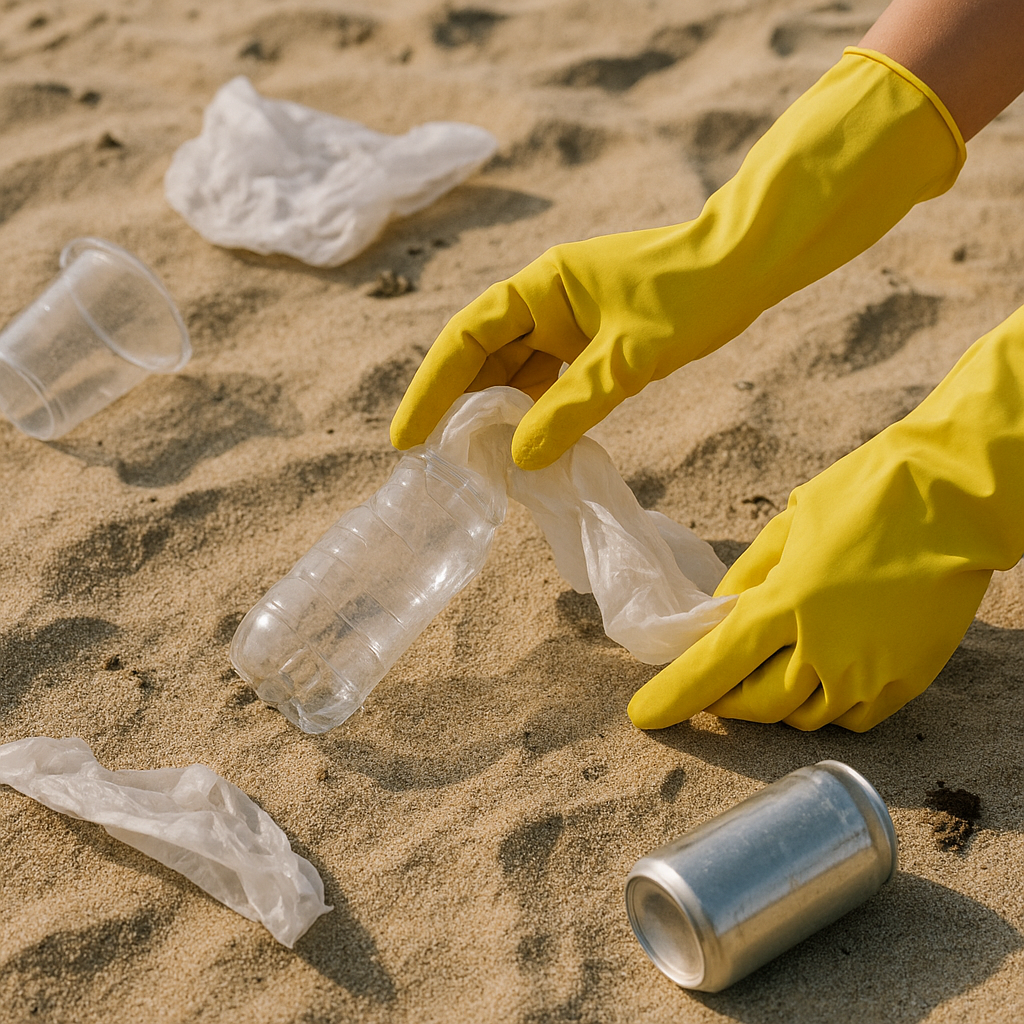
Cape Town's Trash Bash transforms beach clean-ups into a city-wide movement, fostering ocean love, scientific data, and community action.
Trash Bash is a special event in Cape Town where people clean beaches. It's not just about picking up trash; it's like a fun treasure hunt for litter. Volunteers wear yellow vests, gather data on what they find, and learn about ocean pollution. This event helps the ocean and teaches everyone, even kids, how important it is to protect our planet. It turns cleaning into a big community party with games and prizes, making everyone excited to help save the sea.
What is Trash Bash?
Trash Bash is a quarterly beach clean-up event organized by the Two Oceans Aquarium in Cape Town. It transforms litter collection into a civic habit and educational experience for thousands of Capetonians, combining environmental action with data collection, community engagement, and fun activities to combat ocean pollution.
Get Cape Town news in your inbox
Stay updated with the latest stories from the Mother City.
Dawn of the Yellow Bib
Just after sunrise, Cape Town’s Atlantic seaboard normally belongs to joggers, latte-wielding dog walkers and surfers waxing boards in the half-light. Four Saturdays a year, however, the choreography flips. Neon-yellow bibs ripple like a human sunrise, clipboards replace surfboards, and every gaze drops to the sand. This is Trash Bash, a quarterly ritual run by the Two Oceans Aquarium that has quietly re-invented “going to the beach” for thousands of Capetonians.
The Aquarium didn’t invent beach clean-ups - ocean lovers have been hauling rubbish since the 1970s - but it realised Cape Town’s geography is a giant storyboard. Where the icy Benguela current meets the warm Agulhas swirl, nutrients rocket up, feeding penguins, abalone, dolphins and the occasional whale shark. Regrettably, those same watery highways ferry bottle caps, lollipop sticks and ghost nets straight onto postcard-perfect beaches. Instead of moaning about the irony, staff turned the shoreline into an open-air classroom and invited the whole city to enrol.
What began as a small staff picnic in 2016 has mushroomed into a civic habit. The inaugural crew numbered 120, used a borrowed pick-up, and weighed loot on a bathroom scale pilfered from the quarantine room. That first haul - 87 kg of trash, roughly one adult Cape fur seal - has since ballooned into four-tonne mornings that feel more like festivals than chores. Permits are locked in months ahead, traffic cones protect registration tents, and trained “data captains” spend half a day learning the Dirty Dozen counting method devised by the University of Cape Town. Every item larger than a matchbox is logged; everything smaller is sieved through 5 mm mesh and classified as micro-litter. The spreadsheet is uploaded within 48 hours to an open portal used by plastics manufacturers, city councillors and curious thirteen-year-olds alike.
Games, Gear & Gentle Peer Pressure
Registration opens at 08:30 sharp. Volunteers collect a stainless-steel water bottle - sponsored by a retailer atoning for packaging sins - and a bingo card titled “Find the Unusual.” Squares to tick include a toothbrush, a left shoe, a 1980s cassette and, once, a rusted hotel key from a chain that folded in 1998. Children sprint across dunes squealing when they spot a Lego brick or a nurdle, those lentil-sized plastic pellets that look deceptively cute. Nearby, scuba staff unroll an 18-metre ghost net retrieved from Smitswinkel Bay, draping it over a portable frame so flip-flops, soda cans and bird skulls hang suspended like a marine horror mobile.
At 09:00 a marine ranger delivers the safety spiel: snip fishing line close to rocks to avoid maiming wildlife, keep aluminium separate from steel, and spot blue-bottles before they spot you. A plastic horn blasts, and 90 minutes of sanctioned treasure hunting begins. Aquarium educators roam with hand lenses, coaxing volunteers to compare nurdles to quartz grains. The revelation that plastic outweighs natural sand on some transects lands harder than any textbook graphic. Applause erupts whenever a 50-litre bag balloons to capacity, turning litter collection into a team sport where the scoreboard is the planet.
Back at base camp, colour-coded buckets form a bizarre buffet: white for polystyrene, red for hard plastics, green for glass, blue for metal. Digital hanging scales swing from a gazebo beam; each reading is paired with GPS co-ordinates. Analysts noticed a March spike in lollipop sticks, mapped the trend to back-to-school roadside vendors, and lobbied for 30 new bins outside primary schools. Six months later, that same stick count fell 42 %. A November surge in glow-stick fragments was traced to beach raves; a targeted Instagram campaign convinced two event organisers to swap to solar-powered LED bracelets, halving the glow-stick tide.
Circularity, Classrooms & Corporate Gate-Crashers
Trash Bash has grown beyond subtractive logic - now it adds value. Circular-economy start-ups erect stalls where woven bread-bag tiles, heat-sterilised sand pavers and straw-braided key-rings are demoed by informal waste pickers who earn craft wages. Kids learn that removal is step one; redesign is the horizon. Each participant pockets a postcard pledge card: refuse straws for 30 days, carry a reusable cup, buy detergent refills, collect five pieces of dog-walk litter, and share an ocean fact weekly. Schools that bring 25 or more learners earn a visit from the Aquarium’s turtle ambulance, a retrofitted Land Rover with a perspex tank holding a rescued hatchling. Learners who name “their” turtle show a 60 % jump in cafeteria recycling rates.
Local businesses jostle for visibility. A hotel chain funds branded gloves; a brewery crafts limited “Trash Bash Blonde” ale whose label shows a mylar balloon strangled in kelp. Crucially, every sponsor signs a “no green-wash clause” committing to year-long plastic cuts audited by the Aquarium. Fail the audit and you’re barred next year - two grocery chains now pilot package-free aisles because they couldn’t stomach missing the marketing halo.
Meanwhile, the event doubles as a living laboratory. Masters students run micro-plastic sieving stations, inviting volunteers to isolate denim fibres from polyethylene shards. Standout citizens are invited to evening spectroscopy nights; one 15-year-old went on to co-author a paper in Marine Pollution Bulletin documenting tire-wear ingestion by beach hoppers. The article now pops up in Grade-11 curriculum packs, proof that citizen science can vault straight into peer-reviewed literature.
Night Shifts, Passports & the 2026 Horizon
To catch shift workers and night owls, the Aquarium launched a 2024 “Moonlight Trash Bash.” Head-lamps bob across the sand while UV flashlights reveal plastics fluorescing like toxic confetti. Winter editions, branded “Rain or Shine,” lure 400 poncho-clad warriors armed with compostable rain gear and Fairtrade cocoa. Data gathered during these after-dark sweeps feed a city-wide heat map that links inland suburbs to ocean trash. Surprise finding: 73 % of bottle caps on Sunrise Beach originate within one kilometre of a commuter rail station lined with takeaway bars. Negotiations are underway to install compaction bins on the platform before the July 2026 sweep.
Regulars can download the “Clean Coast Passport,” an app that logs volunteer hours, bags hauled and unusual finds. Five events unlock a behind-the-scenes aquarium tour; ten earn a snorkel in the kelp-forest exhibit; fifteen secure a berth on the research catamaran Angra Pequena trawling for offshore microplastics. The gamified ladder keeps alumni engaged, and those alumni speak at schools, amplifying reach exponentially.
Between 2018 and 2023, recorded incidents of nylon strap entanglements in Cape fur seal pups dropped from 54 to 17, while African penguins at Boulders Beach showed a 12 % decline in plastic ingestion - both trends tracked against Trash Bash hauls of straps and bottle-top fragments. Council hearings now quote these stats when debating single-use bylaws, proving that yellow-bibbed volunteers have become an evidence factory lawmakers can’t ignore.
Looking ahead, the 2026 calendar reads like a conservation carnival. March at Mouille Point will double as a turtle-rehab clinic for juvenile loggerheads swept down the Agulhas. July pairs Sunrise Beach with pro surfers demonstrating zero-wax-waste board maintenance. September will attempt a live link to partner clean-ups in Ghana and Brazil, turning a local sweep into a trans-Atlantic data sprint. November’s Sunset Beach finale will exploit spring-bloom plankton that glow in golden light - an Instagram-ready reminder of what all the fuss protects.
No one pretends that picking up litter will single-handedly save the ocean. Yet in Cape Town the act has become a gateway drug to deeper citizenship. Couples schedule anniversaries around Trash Bash because, as one volunteer confessed, “nothing bonds you like hunting wet-wipes in the same sand where you first kissed.” Toddlers who once shrieked at seaweed now stride toward it, buckets swinging like metronomes. Retired engineers arrive with litter-grabbers carved from old ski poles, and foreign tourists delay flights after hostel chatter promises a story bigger than a Table Mountain selfie. The Two Oceans Aquarium never set out to create a movement; it simply offered a time, a place and a yellow bib. Everything else - the spreadsheets, the policy nudges, the circular-economy start-ups, the childhood epiphanies - was generated by a city that discovered joy in responsibility. Between the crunch of a nurdle under a sneaker and the soft plop of a cigarette butt into a counting bucket, Cape Town learned that the shoreline is not the edge of the land but the beginning of a shared voyage.
[{"question": "What is Trash Bash?", "answer": "Trash Bash is a quarterly beach clean-up event organized by the Two Oceans Aquarium in Cape Town. It transforms litter collection into a civic habit and educational experience for thousands of Capetonians, combining environmental action with data collection, community engagement, and fun activities to combat ocean pollution. It's not just about picking up trash; it's like a fun treasure hunt for litter where volunteers wear yellow vests, gather data, and learn about ocean pollution."}, {"question": "When and where do Trash Bash events take place?", "answer": "Trash Bash events are held quarterly, typically starting just after sunrise, with registration opening at 08:30 sharp. They take place on various beaches along Cape Town's Atlantic seaboard. While the exact locations vary, they are chosen to highlight the impact of ocean currents on litter accumulation and to provide an open-air classroom for participants."}, {"question": "What kind of data is collected during Trash Bash?", "answer": "During Trash Bash, volunteers, including trained 'data captains,' meticulously log every item of litter larger than a matchbox using the 'Dirty Dozen' counting method. Smaller items are sieved through 5 mm mesh and classified as micro-litter. This data, including GPS coordinates for each weighing, is uploaded to an open portal within 48 hours for use by plastics manufacturers, city councillors, and researchers. This detailed collection helps identify pollution sources and inform policy changes."}, {"question": "How does Trash Bash make cleaning fun and engaging?", "answer": "Trash Bash incorporates various elements to make cleaning enjoyable. It's often described as a 'fun treasure hunt for litter' with games like 'Find the Unusual' bingo cards. Children can win prizes for spotting specific items. The event feels like a festival with music, community engagement, and a team-sport atmosphere where applause erupts for full litter bags. There are also educational displays, like ghost nets draped with marine debris, and interactive stations where volunteers can learn about micro-plastics."}, {"question": "Beyond cleaning, how does Trash Bash contribute to environmental protection and education?", "answer": "Trash Bash is a living laboratory and an educational platform. It educates participants, including children, about ocean pollution and the importance of protecting the planet. It fosters a 'circular economy' by showcasing start-ups that repurpose waste. It influences policy and corporate responsibility through data-driven insights and a 'no green-wash clause' for sponsors. The event also promotes civic habit, citizen science (leading to published research), and offers incentives like 'Clean Coast Passports' for continued engagement, even featuring \"Moonlight Trash Bash\" for night owls and \"Rain or Shine\" for winter editions."}, {"question": "What are some of the long-term impacts and successes of Trash Bash?", "answer": "Trash Bash has evolved from a small staff picnic into a significant civic movement. It has led to tangible results, such as a 42% reduction in lollipop stick counts after advocating for new bins and a 50% decrease in glow-stick fragments due to targeted campaigns. More broadly, between 2018 and 2023, recorded incidents of nylon strap entanglements in Cape fur seal pups dropped from 54 to 17, and African penguins at Boulders Beach showed a 12% decline in plastic ingestion, both trends linked to Trash Bash efforts. The data collected influences city council hearings on single-use bylaws, proving its impact on policy and conservation."}]

Zola Naidoo is a Cape Town journalist who chronicles the city’s shifting politics and the lived realities behind the headlines. A weekend trail-runner on Table Mountain’s lower contour paths, she still swops stories in her grandmother’s District Six kitchen every Sunday, grounding her reporting in the cadences of the Cape.
View all articles →