
Remembering Miriam Makeba: Mama Africa’s enduring voice
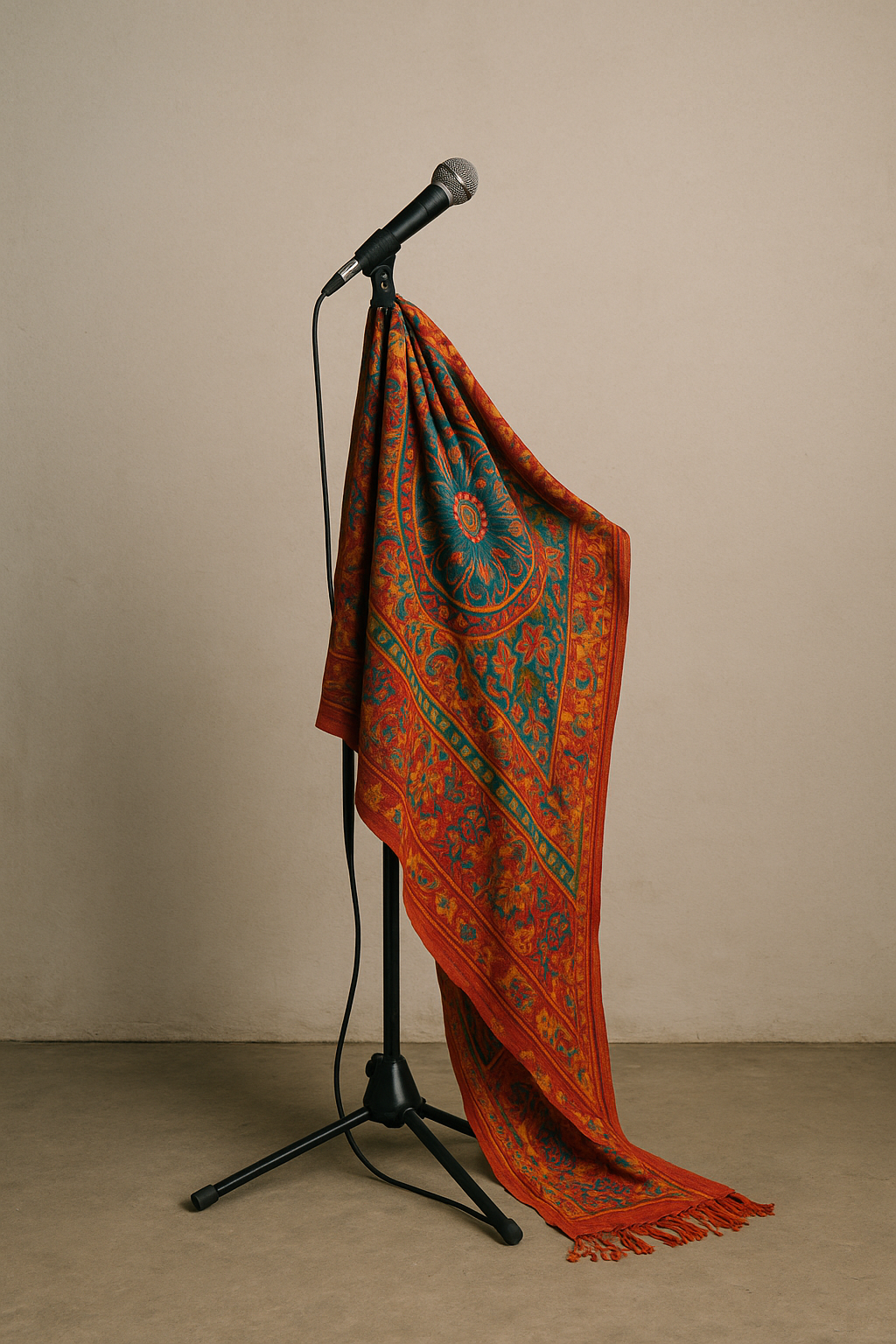
Explore Miriam Makeba's powerful legacy: how her music and activism redefined stages as sovereign territory against apartheid and injustice.
Miriam Makeba, a true legend, turned her incredible voice into a weapon against apartheid. She smartly hid political messages in her songs and used her global fame to expose the unfair regime. Her concerts and clever bartering also secretly funded efforts to free her people. Makeba's music became a powerful, hidden network for change, proving that a song can be mightier than any barrier.
How did Miriam Makeba use her music to fight apartheid?
Miriam Makeba weaponized song by embedding political messages within her music and performances. She smuggled anti-apartheid messages through seemingly innocent songs, used her international platform to expose the regime, and even funded liberation efforts through concert proceeds and a unique barter system. Her music became a covert communication network and a powerful tool for social change.
Get Cape Town news in your inbox
Stay updated with the latest stories from the Mother City.
Township Roots, Global Routes: The Early Blueprint
On a March night in 1932, Prospect Township’s black hospital delivered a baby whose first lullaby would become the soundtrack of revolutions. Ninety-two years later, city councils from Conakry to Stockholm close libraries early on 4 March - not to mourn, but to rehearse. They call the date “Makeba Day,” yet no one waves flags of nostalgia; instead they practice turning any raised platform - lectern, tavern piano, or classroom ledge - into a pocket republic where conscience, not citizenship, decides admission.
Long before passports and paparazzi, the curriculum formed in Johannesburg’s crumbling suburbs. While her mother scrubbed floors, she traded domestic shifts for vocal drills, learning that a three-part harmony could buy groceries. At Kilnerton mission, Anglican hymns smuggled political verses past censors; by twenty-two she had perfected a dramaturgical sleight-of-hand: begin with bedtime song, escalate to field holler, climax with freedom cry, all in the same key. Contemporary acts still clone the sequence, opening concerts in isiXhosa and closing in Wolof, Arabic or Portuguese, depending on whichever border they must cross that night.
The blueprint was never purely artistic; it was a freight system. When Lionel Rogosin’s anti-apartheid film needed a star, he packed Makeba and ANC letters inside the same diplomatic pouch. Shellac discs labelled “Chopin Nocturnes” sailed through Jan Smuts airport, yet township gramophones spun “Siyavuma’ iAfrica.” Customs heard European classicism; activists heard the first playlist they could call their own. Alf Kumalo risked arrest just possessing the contraband, while Dollar Brand - later Abdullah Ibrahim - hid stacks beneath piano lids. Makeba missed the jail time; she was already gone, but the grooves kept circling for fifteen clandestine years.
Exile as Export: Turning Melody into Testimony
Overseas, the task was translation: clicks, ululations and polyrhythms had to pass congressional scrutiny. Harry Belafonte coached her to condemn apartheid without uttering socialism, yet the sharper tutorial came from SNCC volunteers who showed how a spotlight could double as voter-registration desk. At the Bitter End in 1963, engineers panned “The Click Song” so that the left speaker carried tune while the right whispered names of Mississippians barred from ballots. DJs chasing exotic sounds got politics free of charge, whether they read the label or not.
The much-cited 1976 oration was neither improvised nor solitary; it was the tenth iteration of this acoustic guerrilla warfare. She began in French, pivoted to English, detoured into Xhosa, closed in Swahili, leaving interpreters panting. Stenographers captured only the English fragments, yet restored 24-bit audio reveals that each code-switch rides a new rhythmic pulse. Columbia linguists discovered the Xhosa praise-poem tapped out “AMANDLA” in Morse, repeating 27 times - once for every exile year - unnoticed by apartheid spooks who couldn’t decode the tongue. Eleven minutes of speech, twenty-seven covert battle-cries.
The Portable Republic: Tent Circuit and Barter Economy
While UN speeches harvested headlines, a quieter economy fed the supply lines. The collapsible “Mama Africa Tent” - an 800-seat canvas theatre - followed her to every festival: FESTAC in Lagos, the Cultural Congress in Havana. Tickets were purchased in local cash, yet backstage entry cost goods the ANC could use: blank passport booklets, reams of paper, shortwave radios. By 1977 the tent had funnelled 3.2 tonnes of stationery, 400 radios and 200 kg of medical gauze, all logged by Hugh Masekela and now shelved at Wits University. Promoters thought they subsidised world music; in truth they financed a roaming liberation warehouse.
Inside the canvas walls, new weapons were forged. “Soweto Blues” was sketched at 2 a.m. in a New York parking lot, rehearsed under canvas because she wanted to learn how a Xhosa lament felt after an audience had grooved to Gil Scott-Heron. She matched Scott-Heron’s ii-V-I progression but draped over it a tsaba-tsaba groove, birthing trans-Atlantic blues-fusion. Radio Bantu banned the single, yet returning miners smuggled cassettes from Botswana; within weeks the tune mutated into four Sotho dialects, each insert naming local schools and burial societies.
Her 1990 home-coming did not shelve the model; it rebuilt it brick by brick. Fort Hare awarded an honorary doctorate; she used the stage to unveil a breakfast scheme that would feed 14 000 rural pupils for three years, financed by quarterly royalties of a German remake of “Pata Pata.” At eleven cents a plate - cheaper than the state’s own scheme - hunger became a ledger entry she could out-perform. When reporters asked why not a lump donation, she quipped, “Hunger returns every term, so my cash flow should too.”
Open-Source Anthem: From Heartbeat to Deep Space
The 2003 Miriam Makeba Centre for Girls is architecture as ideology: a drum-shell courtyard where a whisper travels thirty metres yet no bed owns the sweet spot. Every Monday, residents rehearse in 32 tongues - mirroring Makeba’s own polyglot discography - while foreign language tutors pay rent with Afrikaans or Norwegian conversation, replicating the 1959 barter of music for materiel. The building is a cemented version of the canvas lab, enforcing collectivist acoustics.
Contemporary disciples copy more than chords. Kidjo’s Batonga schools mirror the royalty-to-meal ratio; Thandiswa Mazwai refuses cabinet gigs just as Makeba bailed on the Kennedy Center when apartheid envoys appeared. Even streaming algorithms echo her set-lists, smuggling protest between love songs, engineering emotional whiplash once produced by live bands.
Technology now stretches her tactics into dimensions she could only imagine. A 2024 binaural file of the 1976 UN speech lets users swivel a virtual mic, isolating Swahili “Haki yetu” underscored by her own heartbeat sampled through a podium stethoscope. A Nairobi producer stretched that pulse to 60 bpm - resting rate of an eight-year-old - turning justice into an anatomical metronome that now soundtracks Chinese 短视频, translating “haki” as “gongzuo,” a slip that would have delighted her pragmatic Marxist ear.
Academia has modularised the method. São Paulo law students must translate the speech then argue “cultural genocide” in moot court; Beijing post-docs analyse spectral breaks on the word “bantustan,” treating vocal tremor as trauma biometrics. The professor’s own scholarship was bankrolled by profits from her 1998 Shanghai concert, completing a circle of cash and cognition.
Beyond headlines, the code keeps forking. In Fiji, climate activists chant sea-level data to the chord grid of “Soweto Blues.” Astronomers lodged her 1963 whistle register with NASA so aliens can reverse-engineer Soweto’s coordinates from overtone maths. In Rustenburg’s platinum shafts, drill crews retune “The Click Song” to fit 30-second compressor intervals, embedding serial numbers that secretly commemorate 34 Marikana dead. No phones, no leaders, no recordings - just an acoustic ledger that keeps accounts in the dark.
The Foundation’s Creative Commons licence forbids “heritage” branding, forcing function over nostalgia. A German brewery discovered this when it tried to trade on “Pata Pata”; the settlement yielded 1 200 laptops for the Centre, proving barter still beats euros. Tonight in Reykjavík, an indie trio will pitch that 1976 heartbeat against volcanic tremors while reciting Danish asylum statistics; dancers will move to a bass line born in a stethoscope clipped to a woman once banished from her birthplace. The wave she surfed still rolls, platform to platform, border to border, as long as someone needs to sneak justice past a checkpoint that never quite closes.
How did Miriam Makeba use her music to fight apartheid?
Miriam Makeba masterfully integrated political messages into her songs and performances, using her global platform to expose the injustices of apartheid. She leveraged her international concerts and a unique barter system to secretly fund efforts to liberate her people, making her music a powerful, hidden network for social and political change.
What was "Makeba Day" and how is it observed?
"Makeba Day," observed on March 4th, commemorates Miriam Makeba's birthday. City councils globally mark this day not with traditional mourning, but by rehearsing her methods. They transform any available platform - be it a lectern, a tavern piano, or a classroom ledge - into a "pocket republic" where conscience, rather than citizenship, dictates inclusion, echoing Makeba's own use of performance spaces for activism.
How did Makeba's early life influence her activism?
Growing up in Johannesburg's townships, Makeba's early experiences shaped her unique approach. Even as a child, she learned that harmony could sustain life, trading domestic work for vocal drills. Her time at Kilnerton mission exposed her to Anglican hymns, which she cleverly adapted to smuggle political verses past censors. This early training refined her skill in escalating from simple tunes to powerful freedom cries, a technique still emulated by contemporary artists to cross cultural and political borders.
How did Miriam Makeba use her exile to further her cause?
During her exile, Makeba transformed her musical talent into a potent testimony against apartheid. She received coaching from figures like Harry Belafonte on how to articulate her condemnation without alienating audiences, and learned from SNCC volunteers how to use her spotlight for activism, even turning concert venues into voter-registration sites. Her performances, like the one at The Bitter End in 1963, cleverly embedded political messages within her music, often reaching audiences who were simply seeking exotic sounds, thereby delivering politics "free of charge."
What was the "Mama Africa Tent" and its significance?
The "Mama Africa Tent" was an 800-seat collapsible canvas theatre that accompanied Miriam Makeba to various international festivals. While tickets were sold for local currency, backstage entry often required goods that the African National Congress (ANC) could utilize, such as blank passport booklets, paper, and shortwave radios. This ingenious system effectively created a "roaming liberation warehouse," funneling essential resources to the anti-apartheid movement under the guise of promoting world music.
How is Miriam Makeba's legacy continued and adapted today?
Miriam Makeba's legacy is actively continued through various contemporary initiatives. The Miriam Makeba Centre for Girls, for instance, serves as an architectural embodiment of her ideology, fostering collectivism and multilingualism. Disciples like Angélique Kidjo and Thandiswa Mazwai mirror her refusal to compromise artistic integrity for political appeasement. Her methods are even adapted by modern technology, with streaming algorithms subtly smuggling protest songs and binaural audio experiences allowing users to dissect her historic speeches, revealing hidden messages. Her influence also extends to academia, art, and even scientific fields, demonstrating how her "open-source" blueprint for activism continues to evolve across diverse platforms and causes.

Isabella Schmidt is a Cape Town journalist who chronicles the city’s evolving food culture, from Bo-Kaap spice merchants to Khayelitsha microbreweries. Raised hiking the trails that link Table Mountain to the Cape Flats, she brings the flavours and voices of her hometown to global readers with equal parts rigour and heart.
View all articles →