
Retail rivals react as McDonald’s CEO burger video goes viral
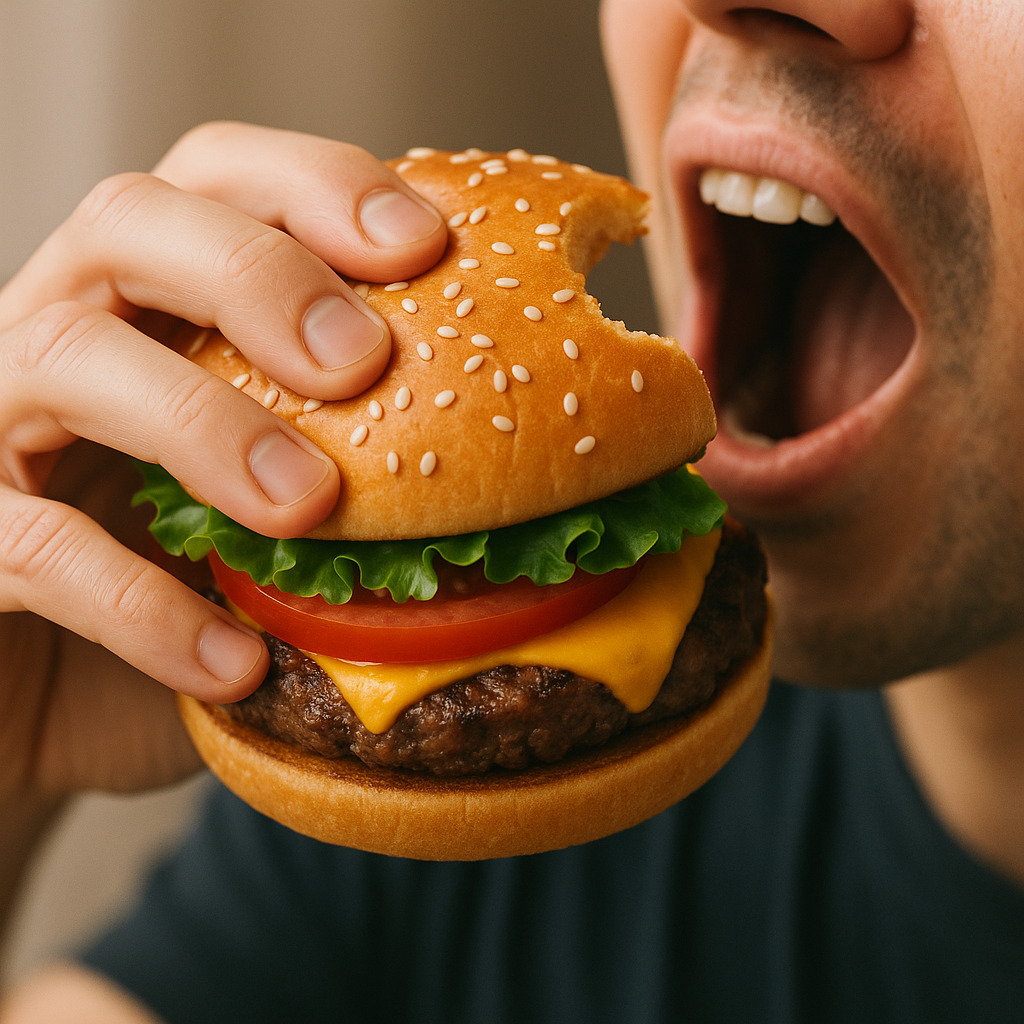
How a CEO's tiny bite sparked a marketing war between Woolworths, Burger King, and McDonald's. Discover the "Kempczinski chew" phenomenon.
A timid nibble of a burger by McDonald's CEO Chris Kempczinski went viral, sparking a hilarious online challenge. Rival fast-food brands, Woolworths Food and Burger King, quickly jumped in. Their CEOs enthusiastically devoured their own burgers, creating a social media showdown. This 'chew' incident became a funny competition, showing how even a small bite can impact a brand's image and sales, proving that how a boss eats their food can really matter.
What was the "Kempczinski chew" incident?
The "Kempczinski chew" was a viral seven-second GIF of McDonald's CEO Chris Kempczinski tentatively nibbling a Big Arch burger during its launch. This hesitant bite became a social media phenomenon, leading to widespread mockery and prompting rival brands like Woolworths Food and Burger King to release their own CEOs enthusiastically eating their burgers.
Get Cape Town news in your inbox
Stay updated with the latest stories from the Mother City.
The Seven-Second Shrug That Broke the Internet
March 1, 2026 started like any other product-launch Saturday for McDonald’s: a 28-second vertical reel, 8.7 million Instagram followers, and a brand-new double-patty monster called the Big Arch. The goal was to reverse half a year of foot-traffic slumps in U.S. restaurants. The result was a seven-second gif in which CEO Chris Kempczinski lifts the burger, leans forward, freezes, backs away, then nibbles like a shy hamster.
Twitter user @BladeoftheS trimmed the cringe into a 12-second loop that hit 42 million views before Monday. TikTok sound jockeys slapped the Jaws theme, the Curb bass drop, and the “oh-no-no-no” earworm underneath the fail-face. By sunrise the next day “Kempczinski chew” out-trended the Oscars in the United States.
What should have been a juicy patty promo turned into a 4K reminder of an unspoken rule: if the boss won’t scarf the product with gusto, why should anyone else? The clip became a social Rorschach test: half the audience felt second-hand embarrassment, the other half smelled blood in the fryer.
The Premium Supermarket That Never Sleeps
Woolworths Food, the up-market grocery arm of Cape Town-based Woolworths Holdings, runs 1,035 stores across four African countries. Inside 78 of its flagship branches you’ll find “Now Now,” a made-to-order burger counter whose name borrows township slang for “right this minute.” Dry-aged Free-State Wagyu, turmeric aioli, charcoal brioche - every ingredient is engineered for the ‘gram.
Heading the always-on social desk is 29-year-old Sinesipho Manqele. Her Slack-bot scours global burger chatter 24/7; any rival fumble triggers an alert. At 03:42 CAT on 2 March the Kempczinski gif lit the board red. Manqele woke her five-person crew on Zoom, mission brief already clear: beat the joke to death before it died on its own.
Budget: zero. Gear: two iPhone 15s and a lav mic snatched from internal comms. Location: the Nicolway flagship in Johannesburg’s Bryanston suburb. Script: one self-aware line written in the Uber. Six takes, one perfect drip of juice on wax paper, 45 minutes of curb-side editing, and the 18-second post went live at 09:17 CAT tagged #NowNowBurger.
The Apron-Clad Counterpunch From Miami
Restaurant Brands International, parent of Burger King, keeps a shadow war-room of ex-campaign spinners in Miami. When the Woolworths clip surfaced at 05:12 EST, they knew the window for a dog-pile would slam shut by lunch. Strategy: let the South Africans own “effortless cool”; Burger King would reclaim “messy joy.”
CEO Tom Curtis was dragged off a supply-chain call, handed a broiler-fresh Whopper, and shoved into the cramped test kitchen. Wearing a company apron and zero vanity, he chomped a quarter of the burger in one go, cheeks ballooning like a chipmunk. “That’s how it’s done,” he growled, mouth still full. The 11-second video dropped at 11:03 EST, clocking 10.4 million views before happy hour.
Meme economists on TikTok immediately rated the trio on a 10-point “Kempczinski scale” of edible confidence. Curtis scored a swaggering 9; Bagattini landed an easy 8; the original McDonald’s clip limped in at 2. The mouth had become a corporate battlefield, and viewers were the referees.
Stocks, Sales and Psy-Ops: Who Really Won
Brandwatch counted 1.9 million Big Arch mentions between 1-5 March, but sentiment nosedived from 62 % positive to 71 % negative after the nibble. McDonald’s U.S. app downloads slid 8 %, foot traffic dipped 3.4 %, and one Illinois franchisee complained to trade mag Restaurant Business that “a single chew just cost me ten grand.”
Woolworths enjoyed a 430 % spike in global brand chatter; Burger King saw 210 %. Purchase-intent surveys showed a 19 % jump in Americans “likely” to grab a Whopper within seven days, the brand’s best reading since 2019’s “Moldy Whopper” experiment. Meanwhile Woolies’ Johannesburg-listed stock popped 2.7 %, and Now Now burger sales leapt 312 %, adding 28 million rand in five days - enough to fund its social team for a year.
The long game may be even more valuable. Kantar reports that C-suite “authentic bite” training workshops - priced at $75 k per half-day - now carry waiting lists. Omnicom is advising clients to bank pre-filmed “enjoyment B-roll,” while a TikTok micro-genre called #CEOeatChallenge has already amassed 480 million views.
In short, a 12-second wince reminded marketers that supply-chain bragging rights, share-price bumps, and cultural cachet can all hinge on how convincingly the boss opens wide.
[{"question": "
What was the 'Kempczinski chew' incident?
", "answer": "The 'Kempczinski chew' was a seven-second viral GIF of McDonald's CEO Chris Kempczinski tentatively nibbling a Big Arch burger during its launch. This hesitant bite sparked widespread mockery and prompted rival fast-food brands to showcase their CEOs enthusiastically eating their own burgers, turning it into a social media phenomenon."}, {"question": "How did Woolworths Food and Burger King respond to the 'Kempczinski chew'?
", "answer": "Woolworths Food, through its 'Now Now' burger counter, and Burger King both saw an opportunity to capitalize on the McDonald's CEO's hesitant bite. Their CEOs enthusiastically devoured their own burgers on video, creating a social media counter-campaign that highlighted their products' appeal and their leaders' confidence."}, {"question": "What was the impact of the 'Kempczinski chew' on McDonald's?
", "answer": "The 'Kempczinski chew' had a significant negative impact on McDonald's. Sentiment for the Big Arch burger nosedived, U.S. app downloads slid 8%, and foot traffic dipped 3.4%. One franchisee even estimated a single chew cost them ten thousand dollars."}, {"question": "How did Woolworths Food benefit from its response?
", "answer": "Woolworths Food saw a massive 430% spike in global brand chatter. Its Johannesburg-listed stock popped 2.7%, and 'Now Now' burger sales leapt 312%, adding 28 million rand in five days. This success was attributed to its swift and self-aware social media counter-campaign."}, {"question": "What was the outcome for Burger King after its CEO's 'messy joy' video?
", "answer": "Burger King experienced a 210% increase in global brand chatter. Purchase-intent surveys showed a 19% jump in Americans 'likely' to grab a Whopper within seven days, marking the brand's best reading since its 2019 'Moldy Whopper' experiment. Their CEO's enthusiastic bite resonated well with consumers, emphasizing 'messy joy' over 'effortless cool'."}, {"question": "What broader lessons did marketers learn from this 'chew' incident?
", "answer": "The 'chew' incident became a powerful lesson for marketers, highlighting that a CEO's authentic and enthusiastic consumption of their product can significantly impact brand image and sales. It led to the emergence of 'authentic bite' training workshops for C-suite executives, a demand for pre-filmed 'enjoyment B-roll', and a new TikTok micro-genre called #CEOeatChallenge, proving that perceived confidence in a product can be a major factor in its success."}]
Tumi Makgale is a Cape Town-based journalist whose crisp reportage on the city’s booming green-tech scene is regularly featured in the Mail & Guardian and Daily Maverick. Born and raised in Gugulethu, she still spends Saturdays bargaining for snoek at the harbour with her gogo, a ritual that keeps her rooted in the rhythms of the Cape while she tracks the continent’s next clean-energy breakthroughs.
View all articles →