
SIGNS AND LATIN GUESTS
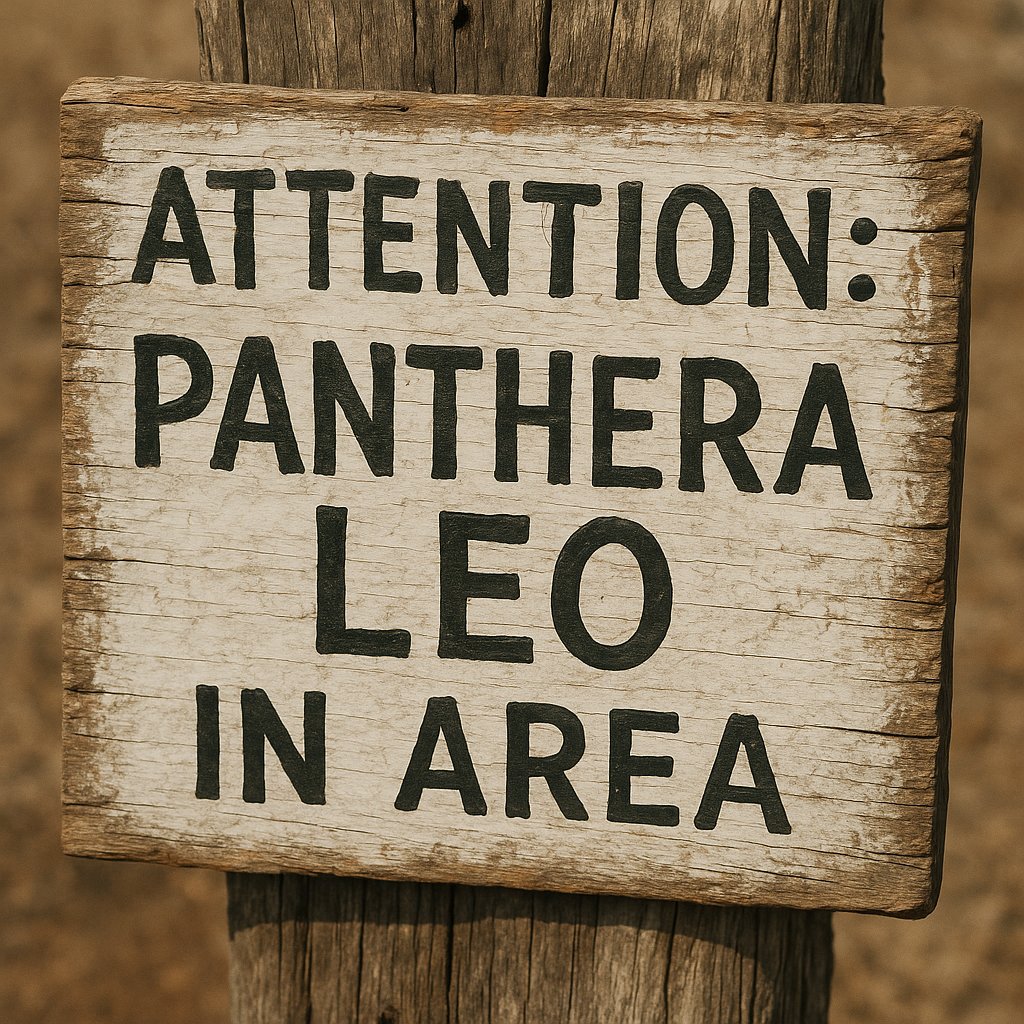
Explore South Africa's unique warning signs: from "Panthera leo" to "Cave Electricitus," these witty placards are a national art form.
South Africa has a unique, humorous tradition of using Latin on warning signs, turning everyday threats into a "comic warning-sign theatre." This started from old Latin education and 1890s mining signs, mixed with a love for parody. It makes normal warnings sound fancy and a bit over-the-top, creating a funny, local art form you see everywhere, from wild areas to suburbs. This quirky habit transforms simple safety messages into clever, amusing puzzles for everyone to enjoy.
Why do South Africans use Latin on warning signs?
South Africans use Latin on warning signs as a form of comic warning-sign theater, blending formal language with everyday threats. This tradition stems from historical Latin education, 1890s mining proclamations, and a cultural love for parody. It transforms mundane warnings into a unique, humorous, and sometimes pompous, local art form, often seen in wildlife and suburban contexts across the country.
Get Cape Town news in your inbox
Stay updated with the latest stories from the Mother City.
Sunset, Signboards and the Birth of a Private Joke
The Lowveld sun is bleeding out behind a frieze of fever trees when a pale plank appears at the roadside. Gumwood, hand-brushed ox-blood red, the letters crisp enough to look whittled.
“ATTENTION: PANTHERA LEO IN AREA.”
No snarling clip-art, no pawprint clipart - just two words freighted with courtroom gravity. The hire-bakkie idles; a hadeda heckles from a thatch roof. In the passenger seat a Gauteng accountant on his first wildlife pilgrimage lowers his voice: “Who on earth is Leo? Did the lodge hire some Italian contractor they forgot to brief us on?”
Before the ranger arrives - khaki uniform smelling of engine oil and rooibos - the visitor has already drafted a mental lawsuit against this “Leo” for reckless endangerment. The ranger reads the board aloud, grins, jerks a thumb at the wall of thornveld: “Lions. Only lions. Saves paint, bru.” He drives off, leaving the accountant the exact colour of the lettering.
That is the instant the penny drops: here a warning plank is never a mere legal disclaimer. It is a pocket-sized playbill - part Shakespeare, part police gazette - demanding audience participation, suspending disbelief, and offering an optional laugh track. South Africa has hijacked the safety sign and turned it into stand-up with footnotes.
Field Guide to a Home-Grown Genre
First come the straight-faced pranksters: the “Beware the Agapanthus” school. From Constantia to Cresta the violet pom-poms bob like teenage cheerleaders, yet post the right placard and every guest imagines triffid tendrils ready to throttle an ankle. The gag works because the Latin sounds like a side-effect you might read on a headache tablet - botanical ridiculousness dressed in a graduation gown.
Then arrives the “respectable predator” clique, technically truthful but verbally overdressed. Panthera pardus does not loaf outside your chalet; it drifts between rock figs, a rumour wearing spots. Advertising its full handle on a gatepost is like addressing your gran by her maiden name and matric year - formally correct, faintly absurd, wonderfully pompous. Rangers swear the more syllables a beast owns, the farther away tourists picture it. Acinonyx jubatus might as well be an imperial decree; “cheetah” is merely a cat late for an appointment.
The third tribe is the suburban wolf-whistle. In Randburg you may confront “CANIS LUPUS FAMILIARIS ON DUTY” in reflective vinyl. Behind the palisade snoozes Pickles the dachshund whose fiercest habit is shredding Woolies packets. The notice is not for burglars; it is a calling card for neighbours that says, “We also skimmed a wildlife guide, but we’re in on the joke.” The same family will, come December, send out a card of Pickles wearing antlers labelled “Rangifer tarandus”.
Roots, Revenge and Evolutionary Pay-Off
Where did the country pick up this habit of swaddling everyday threats - or non-threats - in dead Roman wool? Part of the blame rests with school syllabi that rammed Latin down generations of law, medicine and pulpit candidates. When the final bell rang, the vocabulary lingered like brandy in a coffee tin. What sweeter revenge on Caesar than to turn his tongue into a whoopee cushion outside a farm gate?
Another ancestor is the 1890s mining-proclamation board on the Witwatersrand goldfields. Notices that began “BE IT KNOWN TO ALL MEN…” warned about dynamite shifts and cyanide ponds. Miners - mostly isiZulu, seSotho or Fanakalo speakers - learnt to parse the tone if not the text. The cadence of authority stuck; when they headed home they mimicked the style to tease goats, in-laws and magistrates. Parody became folk art, later absorbed into the braai-side repartee that passes for national scripture.
Today the gag has slipped the farm gate and gone feral. Cape Town trail runners tag Skeleton Gorge with “SERPENTES CAERULEUS” where the only hazard is a thirsty American. Durban surf clubs stencil “CHONDRICHTHYES CARCHARHINUS” on bins, convincing cousins from the Highveld that every ripple hosts a committee of ragged-tooth sharks. Even the state played along: when load-shedding began, a parastatal hung “CAVE ELECTRICITUS” outside a Johannesburg substation. Twitter applauded; Eskom’s lawyers scowled.
DIY Guide and the Future of the Punch-Line
For DIY converts the recipe is child’s-play. One: pick an ordinary nuisance - hadeda bombing raid, jacaranda blossom slime, a teenager’s drum kit. Two: hit Wikipedia for the scientific tag. Three: choose a font that implies gravitas - Trajan or Times New Roman bold. Four: add a heraldic doodle (secateurs, a mouse silhouette) to class up the joint. Five: varnish with yacht sealant so summer storms can’t erode the pedantry. Screw it at eye-level and watch the neighbourhood WhatsApp group spontaneously combust.
Enthusiasts maintain private leaderboards. Current champions include:
- “Caution: Citrus × sinensis peel hazard” outside a Montagu guesthouse where the only risk is hydroplaning on a naartjie rind near the honesty-bar.
- “Beware Papio ursinus - likes beer” on a Kogelberg cooler, a lifesaver for campers who otherwise discover baboons drunker than Rag Day students.
- “Vespidae afrikanus eviction notice” nailed to a Bloemfontein gutter, converting a routine wasp nest into a formal legal dispute.
Corporate parks now gate-crash the party. A Gauteng tech campus worried about coders wandering into manicured wetlands posted: “CROCODILUS NILOTICUS - DO NOT FEED THE CODE.” The programmers love it; HR swears sick leave dropped because geeks sprint indoors to debug instead of loitering with vape pens.
Night folds over the bushveld. Cicadas creak like un-oiled playground swings. Outside your rondavel an oil-lamp licks across a final board nailed to a leadwood: “MELLIVORA CAPENSIS - TRESPASS AT OWN RISK.” You know zoology well enough to grin: the honey badger is pound-for-pound the planet’s most savage brawler, yet right now it is probably miles off, burgling a beehive, not your snack tin. Still, the words glow crimson - half liturgy, half leg-pull. You double-check the latch anyway.
Down the access road a new arrival rehearses tomorrow’s boast: “We slept where leopards speak Latin.” The tale will swell, the syllables will fracture, the peril will inflate like a safari balloon. And so the nation keeps spinning its roadside mythology, one painted plank at a time - careful never to let fact stand in the way of a memorable warning.
{"faq": [{"question": "
Why do South Africans use Latin on warning signs?
", "answer": "South Africans use Latin on warning signs as a form of comic warning-sign theater, blending formal language with everyday threats. This tradition stems from historical Latin education, 1890s mining proclamations, and a cultural love for parody. It transforms mundane warnings into a unique, humorous, and sometimes pompous, local art form, often seen in wildlife and suburban contexts across the country."}, {"question": "What are some examples of Latin warning signs in South Africa?
", "answer": "Examples range from the genuinely intimidating to the comically absurd. You might see 'ATTENTION: PANTHERA LEO IN AREA' for lions, 'CANIS LUPUS FAMILIARIS ON DUTY' for a pet dog, 'SERPENTES CAERULEUS' for snakes, or even 'CAVE ELECTRICITUS' during load-shedding. There are also humorous signs like 'Caution: Citrus × sinensis peel hazard' for orange peels or 'Vespidae afrikanus eviction notice' for a wasp nest."}, {"question": "Where did this tradition of using Latin on signs come from?
", "answer": "This unique tradition has several roots. Part of it is attributed to historical school syllabi that heavily emphasized Latin education, especially for those entering law, medicine, or clergy. Another significant influence comes from 1890s mining proclamation boards on the Witwatersrand goldfields, which used formal, authoritative language to warn about dangers like dynamite. Over time, this authoritative style was parodied and absorbed into folk art and everyday humor."}, {"question": "Is this practice limited to wild areas, or can it be found elsewhere?
", "answer": "While it has strong roots in wildlife areas and game reserves, this practice has spread far beyond. You can find these humorous Latin warning signs in suburban gardens, corporate parks, and even on bins at Durban surf clubs. It has become a widespread, local art form that transcends specific locations."}, {"question": "How do people react to these Latin warning signs?
", "answer": "Reactions vary, often depending on familiarity with the tradition. Tourists might initially be confused or even alarmed, as seen with the 'Panthera Leo' example, before realizing the humorous intent. Locals, however, are typically 'in on the joke,' appreciating the cleverness, parody, and underlying humor. It often sparks conversation and amusement, fostering a sense of shared cultural understanding."}, {"question": "Can anyone create their own Latin warning sign?
", "answer": "Absolutely! The 'DIY' recipe involves identifying an everyday nuisance, finding its scientific name (often via Wikipedia), choosing a formal font like Trajan or Times New Roman bold, adding a simple heraldic doodle, and then varnishing it for durability. This allows anyone to participate in this unique South African tradition, turning mundane warnings into personalized, witty statements."}], "title": "FAQ: When Latin Roams the Bushveld: South Africa’s Comic Warning-Sign Theatre"}
Zola Naidoo is a Cape Town journalist who chronicles the city’s shifting politics and the lived realities behind the headlines. A weekend trail-runner on Table Mountain’s lower contour paths, she still swops stories in her grandmother’s District Six kitchen every Sunday, grounding her reporting in the cadences of the Cape.
View all articles →