
SINGER MOE AND THE POWER OF LANGUAGE
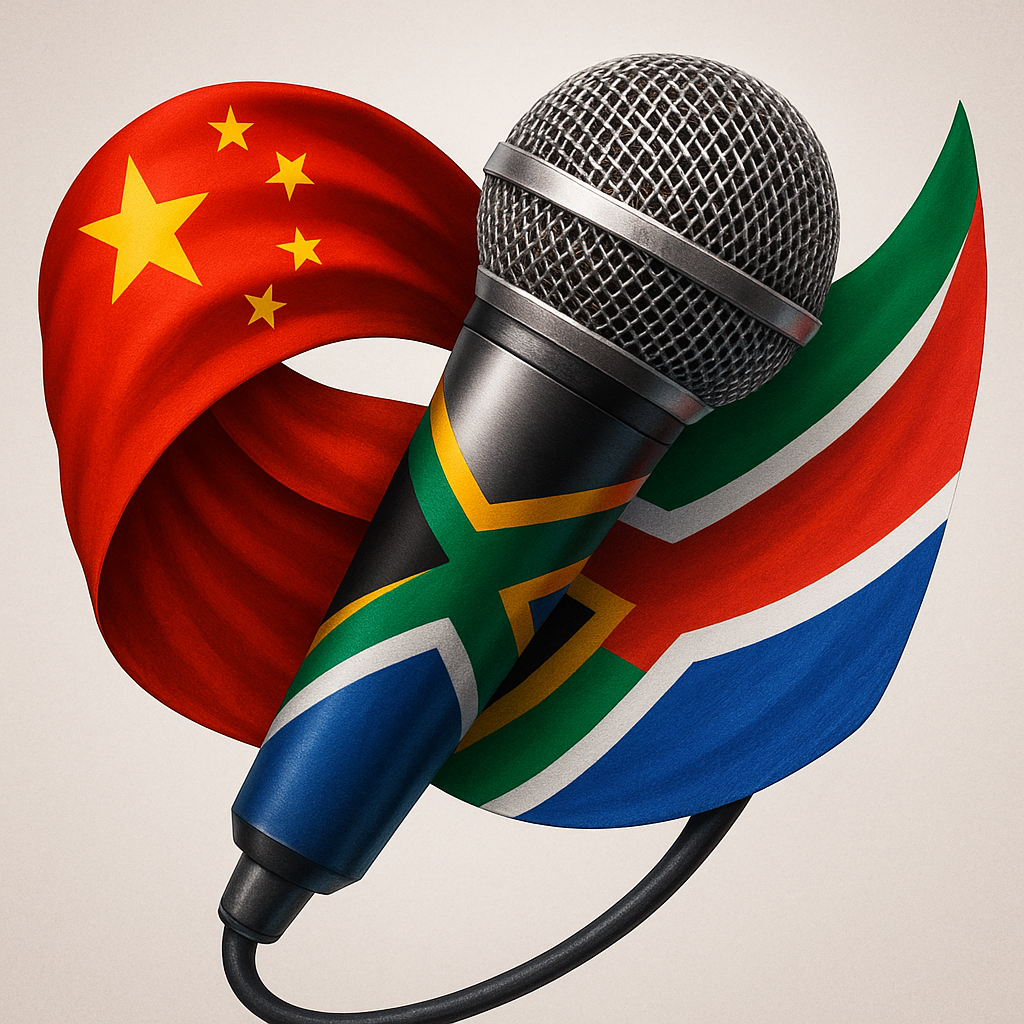
Moe Modiba's journey from South Africa to global music stardom, blending African rhythms with Mandarin pop, bridging cultures.
Moe Modiba is a South African musician making waves globally by mixing her African roots with Chinese styles. She became famous on Douyin by speaking Sepedi, Mandarin, and English, creating a one-of-a-kind sound. Moe learned to blend cultures and languages from a young age, performing in diverse places from Pretoria to Shanghai. Her unique approach, like using a Rawap in her music, shows how she bridges cultures without losing her authentic voice. Now, she's building her career by licensing her music, giving talks, and helping other artists, always looking for new ways to connect the world through her art.
Who is Moe Modiba?
Moe Modiba is a South African musician who has achieved global success by blending her African roots with Chinese aesthetics and musical traditions. She gained viral fame on Douyin, leveraging her multilingual skills in Sepedi, Mandarin, and English to bridge cultural divides and create a unique sound, transcending traditional music industry pipelines.
Get Cape Town news in your inbox
Stay updated with the latest stories from the Mother City.
How Moe Modiba Became the Corridor to a New Global Sound
Dawn in the Fluorescent Vein
Learning the Locks Before the Lights Go Up
On a concrete corridor in Beijing, jianbing steam curls up toward flickering tubes at 6 a.m. Motswedi “Moe” Modiba perches on an equipment chest, one fist wrapped around a breakfast wrap, the other clutching a lyric sheet. While make-up artists argue in lilting Shanghainese - red ribbon screams luck, gold screams royalty - she mouths pinyin under her breath. Those twenty minutes aren’t idle; they are the daily calibration of her internal compass: if the tones settle inside her mouth before the cameras roll, the stage will obey her later.
The hallway looks forgettable. Fluorescent glare, scuffed floors, a curling poster of Teresa Teng threatening to peel away. Yet Moe notices something deeper: pop success seldom crashes through a single grand portal; it sneaks in via a string of side doors, each demanding its own key. One key is Mandarin pronounced without trace of accent. Another is Sepedi poetry. A third - the quietest but most watched - is the two-handed business-card bow, thumbs aligned, torso dipping just a notch lower than the executive opposite.
Each morning in that corridor she rehearses the trinity: tongue, lyric, etiquette. By the time headphones clamp on and the count-in begins, she has already unlocked three doors most visitors never notice.
From Pretoria Tin Roofs to Shanghai Sound Checks
A Childhood Rehearsed in Three Languages and Many Storms
Highveld thunder on a corrugated roof sounds like applause. In Soshanguve, nine-year-old Moe negotiated taxi fares in Sepedi, Mandarin and English while engines coughed outside. Her mother stacked Hugh Masekela vinyl next to battered “Learn Mandarin in 30 Days” cassettes; her father blasted mbaqanga at the rank and tested her tones between gear shifts. The household stereo became a revolving door between continents long before she had a passport.
University corridors echoed differently. Officially she studied African Languages; unofficially she haunted the Conservatoire, discovering that the five-note skeleton of dipela work songs locked neatly into Jiangnan sizhu gongche notation. Late nights in a dorm lit by a borrowed mic, she stacked sekhankhula yells over guzheng loops in GarageBand. The rough demos - raw, muscular, tonally Mandarin - landed in the inbox of a Wits lecturer who once studied at Zhejiang TV.
The reply arrived as a WeChat voice note: a rose emoji after eight bars of “Nkosi Sikelel’ iAfrika” sung in parallel Chinese harmony. Two weeks later she boarded a Shanghai flight with pleated Sepedi skirts spilling out of her suitcase and her grandmother’s scribbled command: “Remember who you are when the lights blind you.”
Douyin Explosions and a Rawap Conversation
Going Viral Without Selling Your Voice
Her audition snippet - Teresa Teng’s classic sliding into a Xhosa click counter-melody - went live on Douyin at 11:07 p.m. Beijing time. By sunrise it had looped 1.2 million times. Users stitched frantic duets trying to conquer the click consonants. Hashtag #非洲姐姐唱中文 out-trended a Kardashian perfume launch. Comment threads argued whether she was “more Chinese than some Chinese.” Moe read every line, letting both praise and prejudice sink like sediment; virality, she knew, is a visa renewed only with steady, intentional fuel.
Rather than spam the feed, she chose a slow-drip campaign: every five days a new fragment of home. Fifteen seconds on saying “kg” in Setswana, thirty on braiding while a kudu-horn sample loops, sixty on simmering amaMpondo umngqusho while scatting Mandarin. Fans stayed, grew and began anticipating. When the televised audition finally aired, ratings among 15- to 24-year-olds jumped 18%. A Qingdao beer brand that had spent years courting Afro-Chinese crossover slots booked her within 72 hours.
Tour life with Wang Leehom meant moving through literal tiers of Chinese cities. First-tier arenas dazzled with LED wristbands flashing lavender whenever she belted a high C in “Yebo!” Third-tier stadiums still smelled of fresh paint; promoters handed her construction helmets as keepsakes. Backstage, Leehom - pop aristocrat raised in upstate New York - likened the energy to early Jay Chou tours: “same hunger, different diaspora.”
Yet the memory that lingers happened at a second-tier soundcheck. A Uyghur stagehand offered a rawap with frayed strings. Through a mix of Mandarin and gestures he asked her to “make it talk African.” She traded two-chord cycles reminiscent of a Tshivenda children’s tune; he answered with a microtonal pentatonic slide. Ten minutes, no audience, no cameras. Months later she sampled the rawap on “Lakutshoni’langa,” pitching it until it masqueraded as kalimba - proof that exchange can vanish from sight yet remain indelible.
Moving Walls, Coding Colors
Building Revenue, Maps, and Future Choruses
In China, identity revealed itself as floor-plan architecture: load-bearing walls you never touch, partition walls you can shift. The immovable wall was language - she refused to sing words she could not grammatically defend at a press conference. The movable wall was wardrobe: sometimes she swapped the beaded corset for a hanfu silhouette, yet the cowrie-shell ear cuff always signaled Sotho roots.
Courtesy carries choreography. On a Hunan variety show a veteran presenter clasped a jade bracelet around her wrist; Moe responded with an indigo Ndebele shawl dyed the travel-blessing hue of her culture. The exchange aired, trended (# 蓝色回响, 14 million views). Off-camera she slipped a boxed alarm clock to her assistant; wrapping it would have signaled a funeral gift. Fluency, she jokes, is knowing what not to wrap.
In Manhattan the vocabulary flipped from “KOL” to “DSP.” She landed in a Harlem walk-upstairs where radiator knocks echoed muted cowbell. Three rewrites of “Lakutshoni’langa” later, the Chinese phrases were whittled down to a ghost-note guzheng sample rumbling like sub-bass. American curators wanted “world” tags; she lobbied for “global R&B.” The compromise - dual uploads labeled “Afro-soul” and “Mandopop crossover” - boosted international saves 43%. Metadata, she realized, is liner-note diplomacy.
Her revenue now stands on three pillars:
1. Sync - licensing bilingual re-records to brands courting the China-Africa corridor. A Huawei ad mashed Miriam Makeba against zheng arpeggios and ran during the Africa Cup of Nations and on Youku’s front page.
2. Speak - keynotes on cultural fluency followed by an acoustic set. Rates scale with city tier; Shanghai pays 1.5× Cape Town, yet Cape Town often yields long-term ambassadorships.
3. Syncretise - curating mini-EPs for Chinese indie rappers craving “African texture” minus clichés. She keeps 25% of masters and, more importantly, featured-artist credits on Chinese DSPs to stay searchable.
Open her Trello and you see color-codes: green (Sepedi-first singles), red (Mandarin-first), yellow (“passport tracks” - instrumentals tagged only with her whispered producer drop). Horizon plan: by 2025, forty percent of income from regions she hasn’t yet toured - digital resonance before physical arrival. She trains an AI voice-print on multilingual stems so a client wanting isiZulu lines can generate them royalty-free to her, each synthetic vocal watermarked by an inaudible Morse “Moe.”
Industry panels keep pushing her to “bring Chinese acts to Africa.” Moe flips the vector: African stories filtered through Chinese aesthetics, then exported. Talks are underway with a Shenzhen animation house to adapt the legend of Moremi into a donghua. The theme will weave pidgin Mandarin into Sepedi, subtitles in English and Yoruba, simul-casting on Nigeria’s iROKOtv and Bilibili. If green-lit, it becomes the first pan-African IP financed by Chinese streaming money yet creatively led by a South African woman - an inversion of the usual soft-power pipeline.
Late at night in Brooklyn she records a voice memo: “Fluency is not a finish line; it’s a toll road. Keep paying. Keep driving.” Outside, the skyline throbs like a step sequencer. She cracks her knuckles, presses RECORD. Click track: 108 BPM, easy Afro-beat, but she superimposes a 5/4 Jiangsuu folk rhythm, stretching time until the pulses fold. For four measures centuries collapse into one bar, and the hallway that began under Beijing fluorescents loops back into a Harlem night. No outro required - the loop is already spinning toward the next chorus.
Who is Moe Modiba?
Moe Modiba is a South African musician gaining international recognition by uniquely blending her African heritage with Chinese musical styles and cultural elements. She rose to fame on Douyin, utilizing her fluency in Sepedi, Mandarin, and English to create a distinctive sound and bridge cultural gaps.
How did Moe Modiba become famous?
Moe Modiba achieved viral fame on Douyin by posting content that showcased her unique cultural blend. Her audition snippet, which creatively combined Teresa Teng's classic with a Xhosa click counter-melody, went viral, looping over a million times by sunrise. She continued to engage her audience with short videos featuring snippets of her home culture, language lessons, and cooking, leading to significant growth and eventually televised appearances and brand deals.
What makes Moe Modiba's music unique?
Moe Modiba's music is distinct due to its innovative fusion of African and Chinese elements. She incorporates traditional African instruments and vocal styles, such as Sepedi poetry and Tshivenda children's tunes, with Chinese instruments like the guzheng and potentially the rawap. Her ability to navigate and blend these diverse musical traditions while maintaining her authentic voice is a hallmark of her unique sound.
How does Moe Modiba bridge cultures in her career?
Moe Modiba bridges cultures not only through her music but also through her various professional endeavors. She licenses her bilingual music to brands targeting the China-Africa corridor, gives keynotes on cultural fluency, and curates EPs for Chinese indie artists seeking an "African texture." She also actively works on projects like adapting African legends into Chinese animation, aiming to invert traditional soft-power pipelines and lead creative ventures with a South African perspective.
What languages does Moe Modiba speak?
Moe Modiba is multilingual, speaking Sepedi, Mandarin, and English. Her fluency in these languages is a significant aspect of her ability to connect with diverse audiences and integrate different cultural elements into her music and personal brand.
What are Moe Modiba's future plans?
Moe Modiba's future plans include expanding her digital presence to reach regions she hasn't yet toured. She is also exploring innovative approaches like training AI voice-prints on multilingual stems to allow clients to generate royalty-free isiZulu lines. A major project in development is adapting the legend of Moremi into a donghua (Chinese animation) with a theme that integrates pidgin Mandarin and Sepedi, subtitled in English and Yoruba, to be simul-cast on African and Chinese streaming platforms.

Isabella Schmidt is a Cape Town journalist who chronicles the city’s evolving food culture, from Bo-Kaap spice merchants to Khayelitsha microbreweries. Raised hiking the trails that link Table Mountain to the Cape Flats, she brings the flavours and voices of her hometown to global readers with equal parts rigour and heart.
View all articles →