
South Africa’s hidden sleep crisis
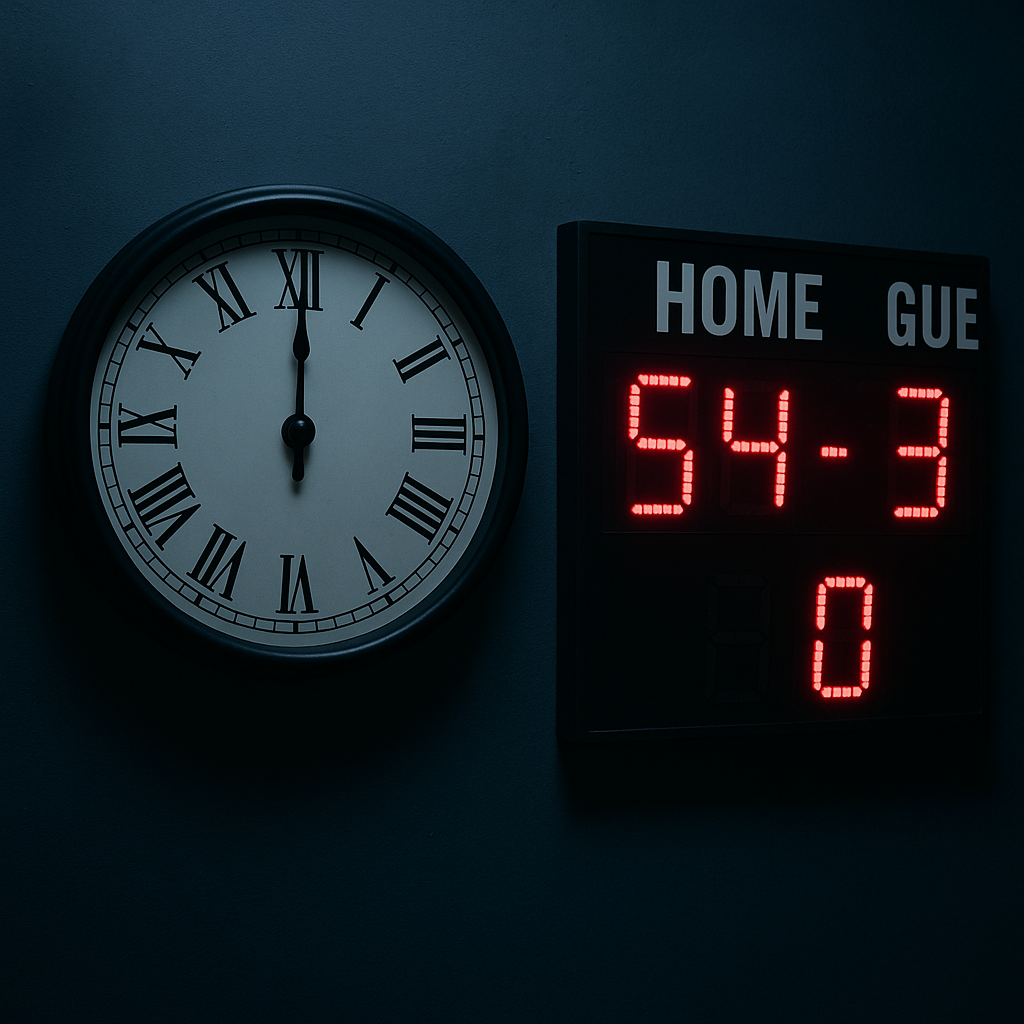
Explore South Africa's 2025 sleep paradox: a 54/100 quality score revealing a restless nation. Discover key factors & solutions.
South Africa just got a dismal score of 54 out of 100 on its new national sleep test. This 'report card' shows people are struggling to get good rest, even if they stay in bed long enough. Old mattresses, pain, stress, and noisy streets are stealing precious sleep. But there's hope! Simple changes, like better beds and quiet routines, could help the whole country sleep better.
What is the South Africa Sleep Quality Score (SSQS)?
The South Africa Sleep Quality Score (SSQS) is a new national sleep assessment that rated the country at 54 out of 100. It measures five key factors: duration (20%), night wakings (25%), morning restedness (20%), mattress comfort (20%), and routine consistency (15%), revealing challenges in maintaining sleep.
Get Cape Town news in your inbox
Stay updated with the latest stories from the Mother City.
The Moment the Counting Stopped and the Numbers Started Talking
The calendar flipped to 1 March 2026 before anyone outside the research bunker was allowed to breathe a word. Field teams had criss-crossed the country for eight months, leaving behind 5 602 completed questionnaires, 1 018 wrist-worn actigraphy traces, 312 on-the-spot blood-pressure checks and 97 high-resolution mattress-pressure maps. The first figure everyone quotes is not the average hours in bed - 57,6 % of adults already hit the 7-to-9-hour band - but the blunt overall mark: 54 out of 100 on the brand-new South Africa Sleep Quality Score. In any classroom that is a technical fail, yet in bedrooms from the Limpopo fence line to the Cape’s southern cliffs it feels eerily familiar: eyes open at dawn, body still on loan.
Behind the single number sits a five-legged stool. Duration, the headline everyone thinks they understand, carries only a 20 % weighting. Night Wakings - how often you surface and how long it takes to sink back - counts for 25 %. Morning Restedness, self-scored on a Swedish wake-up scale, is worth 20 %, while Mattress Comfort (spinal line plus skin pressure under 32 mmHg) owns another 20 %. The final 15 % is Routine Consistency: keep bedtime inside a 45-minute window for two weeks or lose points. The country excels at staying in bed (69/100) and stumbles hardest at staying asleep (42/100), proof that the clock on the wall and the clock in the brain are still arguing.
The Invisible Thieves That Steal the Night
Ask people why they feel cheated and more than half cite “physical discomfort,” a polite phrase for measurable torture. Pressure-mapping on 97 volunteers showed sacral spikes of 58 mmHg on beds older than 15 years - twice the perfusion-safe threshold. Each spike triggers 11–14-second micro-arousals the sleeper never remembers, yet the EEG sees them as graffiti on slow-wave sleep. Over eight hours you can forfeit 40–55 minutes of stage-N3, the slice that flushes cortisol and locks yesterday’s memories into long-term storage. Researchers call the process “invisible truncation,” the biological equivalent of a film with every tenth frame removed; the plot still makes sense, but the viewer leaves restless.
Mattress age is the easiest villain to calendarise. Buy a bed today and your expected SSQS is 60,5. Keep it for five to ten years and you slip to 56,2. Survive eleven to twenty and you are at 51,4. After two decades the mark is 48,1, a drop of roughly three points per ten-year sentence. To put that in perspective, sleeping beside a partner who snores at 55 dB costs you the same three points. Price still rules the showroom: six in ten shoppers refuse to look above budget imports that flatten to 45,9 on the pressure bench. A home-grown graphite-laced high-resilience foam now beats imported memory foam on redistribution by 63 % and costs 97 cents a gram versus R1,22, yet buyers in the platteland have never heard of it.
Pain climbs into bed with eight out of ten citizens. A short neuropathic-pain screener, piggy-backed onto the census, shows moderate-to-high scores leaping from 17 % in 2021 to 29 % in step with Eskom’s load-shedding escalations. Causation remains unproven, but the pattern is too tidy to ignore. Among 46- to 55-year-olds on the East Rand, first ache arrives 23 minutes after lights-off, the same cohort that logs Gauteng’s lowest provincial numbers. A tiny pilot asked 42 night-shift miners to glide their nerves through a 12-minute stretch circuit before turning in; two weeks later the group mean rose 4,8 points, the same bounce you would get by dumping a 12-year mattress for a new hybrid.
Stress, Screens and the Sound of Engines at Dawn
Stress is the second bullet. Using a standard ten-item scale, unemployed participants averaged 27,4 against a national mean of 18,9; their SSQS folded to 49,6. But even the “wired supine” tribe - employed, urban, above-median earners - stagnate at 51–53 because phones stay alive for 76 minutes after head-meets-pillow, 42 minutes above the global middle. Blue-light flux above 40 lux keeps melatonin locked up for an extra 68 minutes in darker irises, a twist Northern-Hemisphere guidelines rarely mention.
Noise is the invisible partner. Every 3 dB rise above a 35 dB(A) night-time baseline knocks 0,7 points off the index. The worst pockets are not the inner-city high-rise canyons but peri-urban townships where minibus taxis idle on the shoulder from 04:00. A R1 200 DIY laminated-glass insert buys back 1,8 points; a Wits health-economics model says the cost is repaid in 14 months through higher productivity alone.
Provincial league tables look almost flat. Gauteng leads at 54,7, Northern Cape trails at 51,9 - a 2,8-point spread dwarfed by Australia’s nine-point interstate canyon. Researchers credit two national equalisers: shared load-shedding and savannah-level sunshine. Bright noon light exceeding 100 000 lux provides a circadian anchor that partly offsets evening tech abuse, a phenomenon cheekily dubbed “photonic cushioning.”
Beds, Belonging and the Business of Tomorrow’s Rest
Women remember waking 2,3 times, men 1,7, yet actigraphy shows the real gap is a puny 0,2. The difference is memory: mothers still check toddlers or elders, encoding each stir, while fathers roll over and forget. The SSQS now bakes in a “memory-corrected” awakening metric, the first index of its kind worldwide.
Floorspace turns out to be a stealth variable. Homes offering less than 18 m² per resident correlate more strongly with broken sleep than income does. In informal settlements a mattress doubles as the family sofa, aging foam 18 % faster. A Durban NGO now sells a roll-out bamboo slat base for R199; slip it under the futon after 19:00 and spinal alignment returns 6 mm, worth 2,1 SSQS points in a month.
Separate beds, once stigmatised, are rebranded “dual-base arrangements.” In 2016 only 8 % of couples confessed to the practice; by 2025 it is 27 %. Intimacy does not wither - both camps average 2,4 weekly encounters - yet the split-bed group vaults to 58,3 on the index, adding a quarter-million hours of national recovery every single night.
Financial markets smell risk in the dark. Within 72 hours of publication two banks and an insurer asked for API access; leaked memos show that folding SSQS into credit-score models trims default-prediction error by 0,8 %. Across R4 billion in personal loans that frees up R32 million in capital relief. Activists warn of “sleep red-lining,” while statisticians promise only anonymised 5 000-person clusters; the referee is still writing the rule book.
A Toolkit for the Nation That Cannot Afford to Stay Tired
To mark World Sleep Day on 13 March, Sloom releases an open-source “54-to-64” pack. A QR library teaches nerve-glider stretches in four languages. A WhatsApp bot guesses mattress age by reading local humidity through your location pin. A dual-alarm nudges you off melatonin-killing apps 90 minutes before shut-down, then reminds you when the head should actually hit the pillow. Spaza shops will stock the bamboo slat base for R199, subsidised by a recycler that sells recovered steel springs to builders - sleep as a circular economy.
Pilot modules for the 2027 census already watch brown-fat activation at 17 °C, listen to dream-sentiment voice notes, count micro-plastics shaken from old polyester pillows and track “chrono-city” holidays that pretend to cross time-zones while staying inside South Africa’s single offset. Until then the portrait is frozen: 5 602 citizens, 54 points, one country suspended each night between simple unconsciousness and the deeper recovery it keeps promising to chase - ordinary, relentless, still counting.
What is the South Africa Sleep Quality Score (SSQS)?
The South Africa Sleep Quality Score (SSQS) is a new national sleep assessment that rated the country at 54 out of 100. It measures five key factors: duration (20%), night wakings (25%), morning restedness (20%), mattress comfort (20%), and routine consistency (15%), revealing challenges in maintaining sleep.
When was the SSQS data collected and released?
Field teams collected data for the SSQS over eight months, concluding just before the official release on March 1, 2026. The comprehensive study involved 5,602 questionnaires, 1,018 wrist-worn actigraphy traces, 312 blood-pressure checks, and 97 mattress-pressure maps.
What are the main factors contributing to South Africa's low sleep score?
Several factors are stealing precious sleep in South Africa. These include physical discomfort from old mattresses (especially those older than 15 years causing sacral spikes of 58 mmHg), chronic pain (which saw a rise from 17% in 2021 to 29% mirroring load-shedding escalations), stress (with unemployed individuals averaging a SSQS of 49.6), excessive screen time before bed (phones stay alive for 76 minutes after head-meets-pillow for employed, urban, above-median earners), and environmental noise (particularly from minibus taxis in peri-urban townships).
How does mattress age impact sleep quality?
Mattress age significantly impacts SSQS. A new bed correlates with an expected SSQS of 60.5. This score drops to 56.2 after 5-10 years, 51.4 after 11-20 years, and a dismal 48.1 after two decades. This indicates a drop of approximately three points per ten years of mattress use, highlighting the importance of regular mattress replacement for better sleep.
What are some suggested solutions to improve sleep quality in South Africa?
Simple changes can lead to significant improvements. These include investing in better beds (a new hybrid mattress can add 4.8 points), incorporating nerve-glider stretches before bed (which can also add 4.8 points), reducing screen time before sleep, and mitigating noise pollution (a R1,200 DIY laminated-glass insert can add 1.8 points). Additionally, a Durban NGO offers a roll-out bamboo slat base for R199 to improve spinal alignment, and

Liam Fortuin is a Cape Town journalist whose reporting on the city’s evolving food culture—from township kitchens to wine-land farms—captures the flavours and stories of South Africa’s many kitchens. Raised in Bo-Kaap, he still starts Saturday mornings hunting koesisters at family stalls on Wale Street, a ritual that feeds both his palate and his notebook.
View all articles →