
Stellenbosch steakhouse VUUR ranks among worlds best
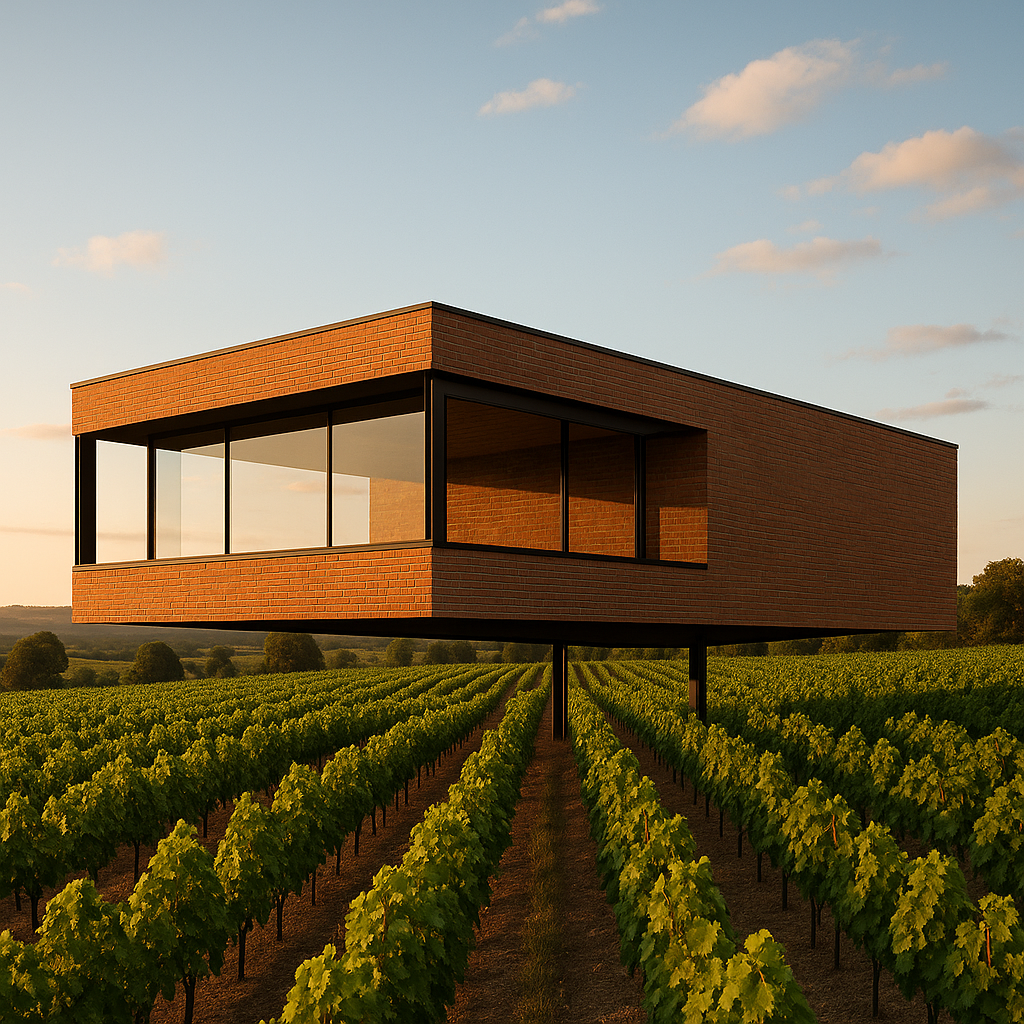
Discover VUUR, the South African steakhouse ranked among the world's best, redefining beef with unique aging, grilling, and local sourcing.
VUUR, a small restaurant in Stellenbosch, South Africa, is changing how people see steakhouses. They use a massive grill and special local beef, fed olives and grape skins for amazing taste. This unique way of cooking and sourcing has made them famous worldwide. They even got listed as one of the best steak restaurants, proving that their fire-cooked beef is a global legend.
What is VUUR and what makes it unique?
VUUR, Afrikaans for "fire," is a 42-seat South African restaurant in Stellenbosch that redefines the steakhouse experience. It features a 3.2-ton bespoke grill and a focus on locally sourced, pasture-raised Nguni, Bonsmara, or Drakensberger beef, finished on olives and grape skins for distinct flavor. Its unique approach to fire, aging, and sourcing has earned it global recognition.
Get Cape Town news in your inbox
Stay updated with the latest stories from the Mother City.
1. A Vineyard Canvas and a Steel Altar
From the crest of the Helderberg the Remhoogte valley looks like wet paint still drying: vine rows ironed into green corduroy, orange pincushion proteas throwing sparks along the ridges, dusk shadows sliding toward False Bay. Right there, hovering above the corduroy, squats a low, single-storey shell of raw brick, charred steel and glass - no logo, no neon, only the ghost of vine-smoke riding the southeaster.
The place is called VUUR - Afrikaans for “fire” - and for the last two-and-a-half years it has been muttering a new definition of “steakhouse” into South African night air. February 2023 saw the doors open while the pandemic still exhaled through empty barrels and dog-eared QR codes that no-one remembered to bin. Shaun Scrooby - ex-head grillista at The Test Kitchen, brief fire-tender at Spain’s Asador Etxebarri - came home with one stubborn question: what becomes of the country’s most recognisable protein when you refuse to treat it like bulk cargo?
His answer materialised as a 42-seat chamber wrapped around a 3,2-ton bespoke grill forged from discarded Kimberley mine steel. The rig is not hidden behind walls; it is the kitchen - adjustable grates, hand-cranked pulleys, fly-wheels that let Scrooby nudge steak within millimetres of a hardwood coal mattress that cycles between 280 °C and 420 °C. One match is struck at 15h45; by 18h00 the first slab lands, and for four hours the room bangs with the low artillery of dripping fat kissing white-hot metal.
2. Daily Bones, Olive-Fed DNA and the Theology of Distance
Each evening’s menu arrives on butcher paper the shade of bone marrow - never more than eight items, only three of them beef. Karoo lamb saddle, veld-reared pork collar, Kalahari game fowl rotate in and out, but the bovine lines spell out the house gospel. Scrooby buys only Nguni, Bonsmara or Drakensberger, pastured within 180 km and finished for the last four months on wet-milled olives and pressed Remhoogte grape skins.
The olives boost intramuscular oleic acid, layering nuttiness; the skins lend a Cabernet-like tannic sting. Carcasses hang at least 45 days in a salt cave built from rose-pink Himalayan bricks that wick away moisture while donating trace minerals - an idea cadged from Spanish ham cellars but recalibrated for Cape humidity. A 1902 Sheffield slicer, won on a tipsy eBay spree, carves each steak to order.
Diners pick cut, weight and, crucially, fire distance: “close” (70 mm) for carbon armour around a lactic core, “middle” (120 mm) for textbook Maillard, or “far” (180 mm) for slow, even roast. The default seasoning is coarse Velddrif sea salt and wild rosemary toasted on the access road. Pepper sits in a ramekin, but you have to ask - Scrooby insists its volatiles muffle the flavour of pure combustion.
3. Fire as Liquid, Smoke as Dictionary
Hardwoods are reduced to coals one species at a time, then matched to muscle like wine to course. Dense rooikrans escorts the rump cap; fragrant sekelbos finishes the fillet; witgat, burning with a pale-blue spirit flame, hovers over rib-eye for eight final seconds, painting a caramel smoke top-note. Between flips the bars are basted with rendered beef suet, building what Scrooby dubs “the third crust.”
When the last steak leaves the grid, lids forged from old vineyard plough discs smother the embers; the following afternoon they are revived, so yesterday’s memory becomes today’s ignition. Partner and wine curator Nadia van der Merwe - formerly of La Colombe - skips the safe Cabernet/Merlot corridor and leans on oxidative whites, skin-contact Chenin and geriatric Pinotage. No written pairings; instead you receive a doll-sized cast-iron pan containing a spoon of molten beef fat. Sip, taste, sip again - the fat exposes brett, oak or reduction the way litmus unmasks acid.
At 02h14 on a random Tuesday WhatsApp delivered news that VUUR had gate-crashed the 2026 World’s 101 Best Steak Restaurants at number 52. Scrooby, elbow-deep in forequarter, assumed the ping was an invoice. Compiled by Upper Cut Media, the list is policed by anonymous chefs and butchers who dine incognito for two years; VUUR topped the “cultural authenticity” column, the citation praising “a terroir-driven narrative that re-frames South African beef as identity rather than export tonne.”
4. Ripple Effects, Ash Spices and the Ethics of Flame
By 09h30 that morning the booking server lay in digital smithereens beneath a wave of VPN-masked requests from Germany, Japan and Texas. Nguni breeders who once shipped cattle to Gauteng feedlots now queue outside Scrooby’s office clutching handwritten pedigree scrolls. A bull nicknamed uBhejane - “black beetle” - has 34,000 Instagram followers thanks to a salt-cave selfie hashtagged #52neverlookedbetter. Supermarkets ration Velddrif salt; a Paarl carpenter can’t keep up with orders for R1,200 “VUUR boards” laser-etched with the 52 logo.
Inside the restaurant almost nothing moves: 42 covers remain the thermal-emotional ceiling, Township-Afro-tech still pulses at 73 dB, tables are held for walk-ins who start queuing at 17h00 in homage to township street braais. Micro-evolution happens in a prep-kick larder lined with thirty mason jars of ash spices - snoek vertebrae umami dust, roasted wheat coffee, desiccated sour fig leaf, a fynbos powder of buchu, erica and honeybush that ghosts a T-bone with spearmint and wild chamomile for three seconds.
A life-cycle audit by Stellenbosch University shows a 350 g VUUR rib-eye carries 34 % less embedded carbon than its feedlot cousin, thanks to pasture-raised Nguni efficiency and the olive-skin finishing loop. Grey-water from the ageing room is filtered through reed beds and returned to vineyard irrigation; bones become biochar that fuels next week’s hearth. Singapore investors circle with plans for a 24-seat “VUUR Lite,” but Scrooby hesitates to franchise flame without its cultural tinder.
Away from the spotlight he runs “side-of-fire” clinics for junior cooks where meat is banned: they char leeks, ignite orange peel, read heat through the way candlelight warps inside a water glass. Each graduate pockets a matchstick dipped in beef fat and sealed into a brass key-ring - proof that every fire begins with a conscious decision, not an accident. The grill still lights at 15h45; the queue still curls past the 1973 Cabernet block. Between position 52 and the next sulphur flare, South African beef has become a story the world wants to hear again - told not in boardroom tonne-speak but in the crackle of wild rosemary, the lowing of olive-fed cattle and the smoke that refuses to leave the Stellenbosch sky.
[{"question": "What is VUUR and what makes it unique?", "answer": "VUUR, meaning 'fire' in Afrikaans, is a 42-seat South African restaurant in Stellenbosch that redefines the steakhouse experience. Its uniqueness stems from a massive 3.2-ton bespoke grill, its exclusive use of locally sourced, pasture-raised Nguni, Bonsmara, or Drakensberger beef, and a distinctive finishing process where cattle are fed olives and grape skins for enhanced flavor. This approach to fire, aging, and sourcing has garnered global recognition, including a spot on the World's 101 Best Steak Restaurants list."}, {"question": "Where is VUUR located?", "answer": "VUUR is nestled in the Remhoogte valley of Stellenbosch, South Africa. It's situated on the crest of the Helderberg, overlooking vineyards, and is characterized by a low, single-storey building of raw brick, charred steel, and glass, designed to blend with its natural surroundings."}, {"question": "What kind of beef does VUUR serve and how is it prepared?", "answer": "VUUR exclusively serves Nguni, Bonsmara, or Drakensberger beef, all pasture-raised within 180 km of the restaurant. For the last four months of their lives, the cattle are finished on wet-milled olives and pressed Remhoogte grape skins, which impart nutty and tannic notes. The beef is dry-aged for at least 45 days in a salt cave made of Himalayan bricks. Diners can then choose their cut, weight, and the 'fire distance' (close, middle, or far) for cooking, allowing for precise control over the crust and doneness. Seasoning is typically coarse Velddrif sea salt and wild rosemary, with pepper available upon request."}, {"question": "How does VUUR utilize fire and wood in its cooking?", "answer": "VUUR's cooking revolves around a massive bespoke grill where hardwoods are reduced to coals, and specific wood species are matched to different cuts of meat. For example, dense rooikrans is used for rump cap, fragrant sekelbos for fillet, and witgat for rib-eye to add caramel smoke notes. The grill bars are basted with rendered beef suet to build a 'third crust.' The embers from one day are revived the next, creating a continuous cycle of fire."}, {"question": "What recognition has VUUR received?", "answer": "VUUR achieved significant international recognition by being listed at number 52 on the 2026 World's 101 Best Steak Restaurants. The citation specifically praised its 'terroir-driven narrative that re-frames South African beef as identity rather than export tonne,' highlighting its cultural authenticity."}, {"question": "What are some of VUUR's sustainable practices and broader impacts?", "answer": "VUUR demonstrates a strong commitment to sustainability. A life-cycle audit by Stellenbosch University revealed that a VUUR rib-eye has 34% less embedded carbon than its feedlot counterpart. This is due to the efficiency of pasture-raised Nguni and the olive-skin finishing loop. Grey-water from the aging room is filtered and used for vineyard irrigation, and bones are converted into biochar to fuel the hearth. Beyond the restaurant, VUUR has boosted local Nguni breeders and inspired a market for artisanal products like Velddrif salt and 'VUUR boards.' They also run 'side-of-fire' clinics for junior cooks, emphasizing conscious cooking with fire."}]

Amanda Wilson is a Cape Town-born journalist who covers the city’s evolving food scene for national and international outlets, tracing stories from Bo-Kaap spice shops to Khayelitsha micro-breweries. Raised on her grandmother’s Karoo lamb potjie and weekend hikes up Lion’s Head, she brings equal parts palate and pride to every assignment. Colleagues know her for the quiet warmth that turns interviews into friendships and fact-checks into shared laughter.
View all articles →