
The new Avontuur Cellar Door has opened
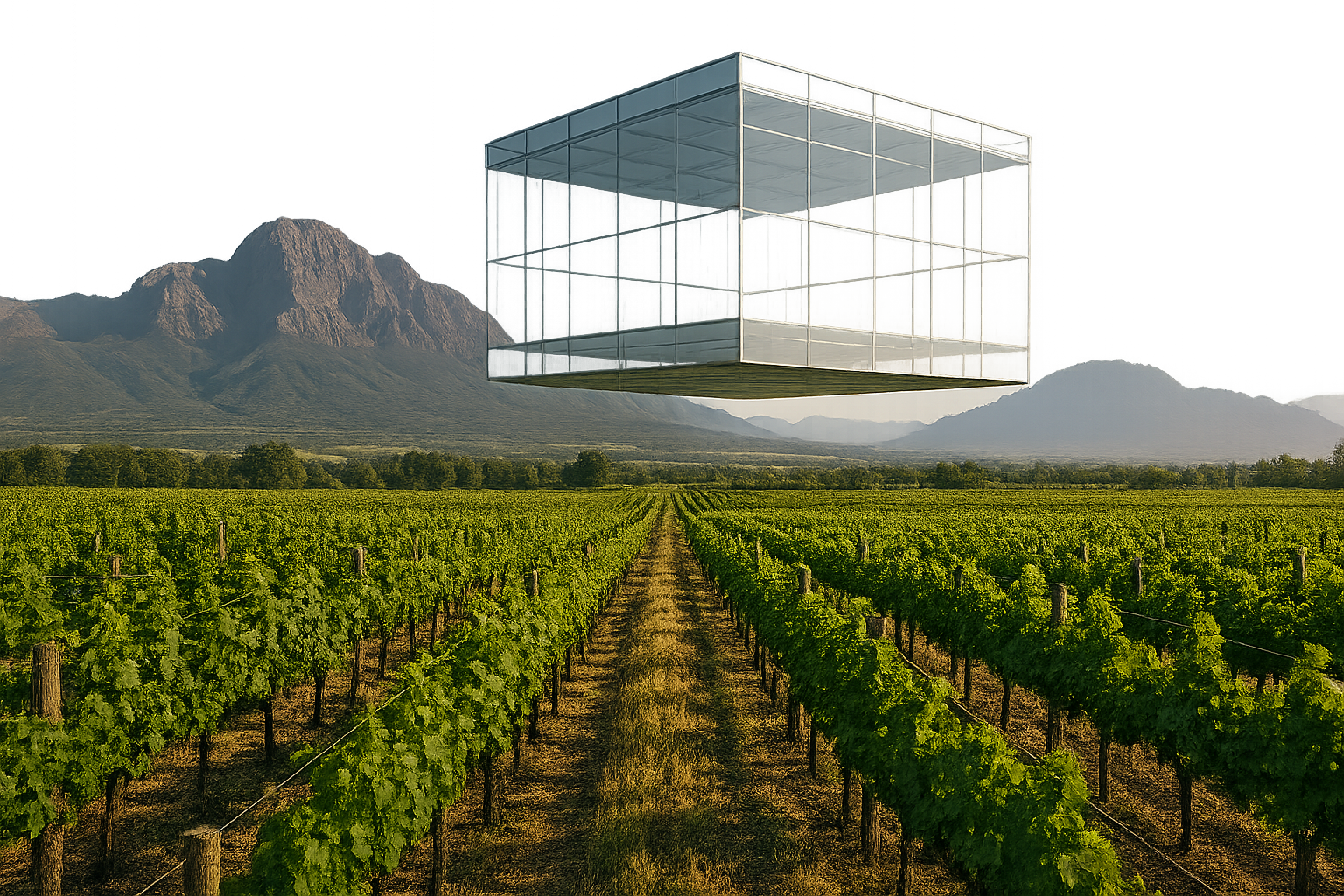
Explore Avontuur Estate's new cellar door: a 360-degree journey through architecture, vineyards, unique tastings, and equine heritage.
Avontuur Estate isn't just a wine farm; it's a wild adventure for your senses! Imagine a building that opens up to the mountains, wines sorted by the very dirt they grew in, and even labels that show a horse's heartbeat. You can taste wines under a sky of living vines, eat food so fresh it's from right there, and even discover secret spots like a vineyard deck or an underground jazz bar. It's a place where every sip tells a story, making wine tasting a truly unforgettable journey.
What makes Avontuur Estate's wine tasting experience unique?
Avontuur Estate offers a multi-sensory wine tasting unlike any other, integrating architecture that harmonizes with the landscape, living vine installations, and flights of wine organized by geological origin. The experience is further enriched by incorporating the estate's equestrian heritage, a zero-kilometre kitchen, and exclusive hidden venues like a vineyard deck and an underground barrel tunnel with jazz sessions.
Get Cape Town news in your inbox
Stay updated with the latest stories from the Mother City.
1. First Sight: A Building That Listens to the Mountain
The driveway coils upward like a slow-motion roller-coaster, tunneling through oaks that were already shading carriage rides before most of us were born. Suddenly the trees step aside and a low, glass-walled pavilion hovers between vineyard rows as if the land itself exhaled a prism. Architect Pieter Malan’s only instruction was blunt: “Let the mountain do the talking.” He answered with a 26-metre sheet of glass that erases the line between you and the Helderberg ridge; on calm afternoons the panels slide into pockets and the room becomes a porch without pillars.
Above your head a raw corten-steel lid rusts happily, its colour matched to the local soils, while the ceiling is dressed in pale blue-gum battens salvaged from decades of Avontuur crates. The floor tells its own story - 42 000 terracotta squares, every one cast by hand on the property and back-stamped with the name of a Thoroughbred that has saluted the judge since 1994. Stand dead-centre and you’ll notice the axis tilts 13° toward Table Mountain, identical to the gradient of the neighbouring colt-gallop; the nod to racing bloodlines is invisible until someone points it out, and then it is everywhere.
Even the breeze is curated. The structure is purposely skewed so prevailing south-easters slip under the roof and exit through hidden vents, creating a natural air-conditioner that smells of fynbos and wet clay. No doors slam, no perfume competes; the first sip starts before a bottle is even uncorked.
2. The Bar That Grows: Vines, Roots and a Sky-Full of Grenache
Forget the polished plank most estates call a tasting counter. Avontuur built three living rings - miniature circular gardens - right into the terrazzo. Each ring hosts a rooted cutting that matches the wine you are pouring: Cabernet Sauvignon 11R, Chardonnay 95 and the scarce Italian immigrant Vermentino 4B. Micro-jets mist the stems every few minutes; crouch and you can spy root hairs pressed against small glass portholes, a gentle reminder that wine’s first address is underground.
Hovering above like a green cloud is a 28-metre chandelier of 120 Grenache vines potted in lightweight geotextile. The rig rotates a quarter-turn every week so every grapelet soaks up the same Helderberg sunlight you are enjoying while you swirl. Between January and March the canopy exudes crushed-pepper and strawberry haze, giving you an airborne trailer of the harvest that is still hanging.
The net effect is sensory vertigo: you taste Chardonnay while its parent vine coolly regards you from the counter, and you inhale next year’s Grenache rosé with every breath. Wine tasting used to be a backward glance at last year’s vintage; here it is a simultaneous past, present and future.
3. Dirt in the Glass: Flights Sorted by Geology, Not Price
Winemaker Pierre Dower threw the classic “entry-premium-flagship” staircase into the compost. In its place he built three journeys anchored by the estate’s trio of parent rocks.
-
Granite Ride (R110)*
Three wines - Sauvignon Blanc, Grenache Noir rosé and skin-fermented Chenin - grown on 550-million-year-old decomposed granite. The glasses rest on chilled slate pads that warm slowly in your palm, echoing how those ancient sheets heat by day and cool by night. -
Table-Mountain Sandstone Trek (R145)*
Four reds birthed on the stony upper slopes: Cabernet Sauvignon, Malbec, Petit Verdot and the Bordeaux-style icon “Turf Express.” Every glass arrives with a thumb-sized sandstone pebble soaked in the same vintage; roll it around and the subtle scrape of mineral becomes tasteable. -
Ancient Clay & Tukulu Odyssey (R180)*
A vertical of Taberer Family Reserve 2016-2020 served in black Zalto stems. The 400-litre clay amphora that started the journey is wheeled table-side; guests are invited to dip a clean finger into the spontaneously fermenting must, then contrast it with the finished wine in their glass. The exercise is a handshake between vineyard, vessel and vocal cord - because someone always gasps.
4. Horses, Heartbeats and Hoof-Print Labels
Avontuur’s 300 hectares double as a working stud farm, and the cellar door refuses to let you forget it. At 11 a.m. and 3 p.m. daily a groom leads a string of Thoroughbreds up the 1 600-metre uphill turf gallop while visitors tag along. GPS monitors record each animal’s pulse; later the data is translated into a colour gradient and laser-etched onto the base of every Taberer Family Reserve bottle. Drop the glass over the bar’s LED well and the heartbeat flickers like a tiny aurora - proof that the wine once galloped.
Fridays raise the stakes. “Photo-Finish Flights” line up six wines in 30 ml measures. You have one minute to rank them by predicted alcohol level. Nail the order and you walk away with a silk rosette stitched from retired jockey colours; miss by a decimal and you still leave with grape-stained teeth and new respect for fermentation kinetics.
Even the spirits carry an equine signature. An apothecary bottle labelled “Equine Honey Spirit” holds mead distilled to 42 %, then charcoal-filtered through staves of the estate’s first-fill barrels. The charcoal itself was cooked from those same barrels, completing a closed loop of oak, horse and bee. Each 200 ml flask is hand-dipped and sealed with shredded horse-feed bags; the handwritten label bears the actual hoof-print of the draft horse that ploughed the neighbouring meadow.
5. Zero-Kilometre Kitchen: A Glass Cube Over a Trout Dam
Chef Michelle Theron works inside a transparent cube that juts six metres over the estate’s trout dam, a location that doubles as pantry and refrigerator. Her radius rule is simple: if a horse can’t trot there and back in twenty minutes, it doesn’t land on the plate.
In spring she ferments bee-bread - pollen stored by Avontuur’s own hives - then spreads it on sourdough with cultured butter. The funky, honeyed smear unlocks chamomile notes in the unwooded Chardonnay you are sipping. Summer delivers eland bresaola shaved tissue-thin and pegged to a mini washing line that stands in your glass; breeze from the dam dries the edges while you swirl, intensifying iron-rich flavours against a glass of Cabernet.
Autumn brings a blackened onion bulb roasted in the post-harvest bonfire, hollowed and refilled with Cabernet jus. Winter’s party trick is “stall-heated” Gruyère: a wheel is strapped beneath a saddle and trotted around the paddock for forty minutes. The combination of body heat and rhythm produces a texture somewhere between fondue and cloud, perfect with the estate’s fortified Muscat.
6. The Hidden Deck, Tunnel Jazz and Manor Midnight Harvests
Few visitors spot the narrow galvanised staircase that peels away from the wheelchair ramp. Climb it and you pop out on a 12 m² deck tucked among the top trellis wires, four metres above the vineyard. A single marble table and two chairs wait; an industrial crank raises or lowers the surface so your eyes line up perfectly with the setting sun as it slips behind Table Mountain. A discreet hatch delivers a pre-booked “Sundowner Capsule”: a magnum of Avontuur MCC disgorged à la volée, two crystal flutes, night-vision binoculars for spotting barn owls. Reservations are taken only by WhatsApp voice note; the number is murmured to guests who finish all three soil flights in one sitting.
Underground, a 19th-century railway tunnel - first built to shuttle naval oranges to Cape Town docks - now cradles 300 barrels. The curved brickwork gifts a seven-second echo; staff invite you to hum the vintage’s dominant chord (2019 hums F-minor, 2020 sings C-major). The resonance rouses the lees, a gentle batonage that head winemaker Pierre Dower claims speeds integration. On the last Saturday of each month the tunnel hosts “Subterra Sessions”: local jazz trios recline amid the barrels, guests sprawl on hessian sacks stuffed with vine prunings, and the ticket covers a sabrage lesson plus family-style potjie cooked on induction plates so candle sulphur never flirts with the wine.
Should you decide the evening is too good to end, nine suites await in the renovated Manor House. Each room is themed after a champion mare; the “Ilha da Vitoria” headboard is upholstered with the actual silks she wore when winning the 2018 Durban July. Compressed wine-pomace tiles line the bathrooms, releasing a faint tannic steam when the shower runs hot. Book the “Midnight Harvest” and you’ll be woken at 2 a.m., handed a head-lamp, and invited to pick a bucket of Pinot. Foot-tread it in an antique lagar on the pool deck, then fall asleep while the must cold-soaks beneath your floorboards. At breakfast you taste the juice, still fizzing with wild yeast and bragging rights.
7. How to Get In
What makes Avontuur Estate's wine tasting experience unique?
Avontuur Estate offers a multi-sensory wine tasting unlike any other, integrating architecture that harmonizes with the landscape, living vine installations, and flights of wine organized by geological origin. The experience is further enriched by incorporating the estate's equestrian heritage, a zero-kilometre kitchen, and exclusive hidden venues like a vineyard deck and an underground barrel tunnel with jazz sessions.
How does Avontuur Estate's architecture enhance the tasting experience?
The estate's tasting room, designed by Pieter Malan, features a 26-meter glass wall that seamlessly connects visitors with the Helderberg mountains. On calm days, the panels can slide away, creating an open-air porch. The building's materials, such as corten-steel matching local soils and ceiling battens from recycled wine crates, tell a story. The floor is made of 42,000 hand-cast terracotta squares, each back-stamped with a Thoroughbred's name. The structure is also strategically skewed to allow Fynbos-scented breezes to naturally air-condition the space, making the first sip begin even before a bottle is uncorked.
What are 'living rings' and how do they contribute to the wine tasting?
Avontuur Estate features three 'living rings' built directly into the tasting counter. These miniature circular gardens host rooted cuttings of the specific grape varietals being poured, such as Cabernet Sauvignon, Chardonnay, and Vermentino. Micro-jets mist the stems, and visitors can observe root hairs through glass portholes, visually connecting the wine in their glass to its origins in the soil. This unique feature, along with a rotating chandelier of 120 Grenache vines overhead, provides a 'sensory vertigo' experience, allowing guests to taste the past vintage while observing the future harvest.
How does Avontuur Estate incorporate its equestrian heritage into the wine experience?
Avontuur Estate, also a working stud farm, deeply integrates its equestrian heritage. Daily, Thoroughbreds are led up an uphill turf gallop, and visitors can observe. GPS-recorded heartbeats of these horses are laser-etched onto the base of Taberer Family Reserve bottles, which can be seen flickering like an aurora when placed over an LED well. Special 'Photo-Finish Flights' challenge guests to rank wines by predicted alcohol level, with prizes of silk rosettes made from retired jockey colours. Even spirits, like the 'Equine Honey Spirit', are infused with this theme, featuring labels with actual hoof-prints of the draft horses that plough the meadows.
What is the concept behind Avontuur's 'Zero-Kilometre Kitchen'?
Chef Michelle Theron's kitchen is a transparent cube jutting over the estate's trout dam, acting as both pantry and refrigerator. Her 'radius rule' dictates that ingredients must be sourced within a distance a horse can trot to and back in twenty minutes, ensuring extreme freshness and local provenance. This results in dishes like fermented bee-bread, eland bresaola served on a mini washing line in your glass, and 'stall-heated' Gruyère cheese, all designed to complement the estate's wines and provide an unparalleled farm-to-table experience.
Are there any hidden or exclusive experiences at Avontuur Estate?
Yes, Avontuur boasts several exclusive and hidden experiences. Guests who complete all three soil flights can learn about a secret vineyard deck, accessed via a narrow staircase, offering panoramic views and a 'Sundowner Capsule' with a magnum of MCC and night-vision binoculars. Underground, a renovated 19th-century railway tunnel, now housing 300 barrels, hosts 'Subterra Sessions' with jazz trios and sabrage lessons. For an overnight adventure, the renovated Manor House offers themed suites, including a 'Midnight Harvest' experience where guests pick and foot-tread their own Pinot Noir grapes.

Oliver Daniels is a Cape Town journalist who chronicles the intersection of food, migration and identity in South Africa's kitchens—from wood-fired Gugulethu braai spots to Constantia vineyards. Born and raised on the slopes of Devil’s Peak, he still starts each week with a dawn walk across Table Mountain to catch the first Atlantic light before filing copy.
View all articles →