
Stellenbosch’s VUUR climbs global rankings
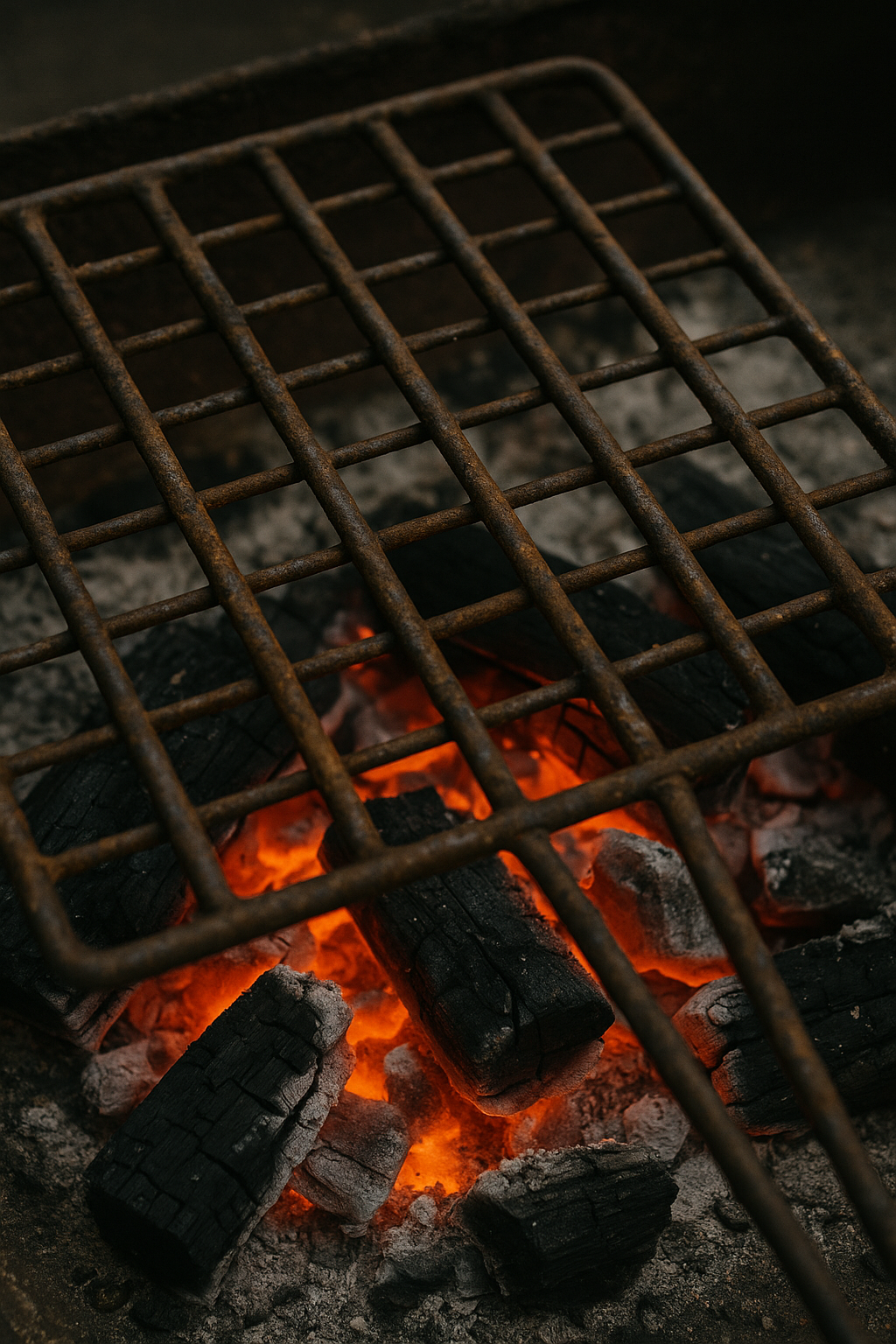
South Africa's steakhouses, VUUR & The Blockman, are redefining carnivory with regenerative grazing, hyper-local sourcing & fire artistry.
South African steakhouses are sizzling onto the global stage, reinventing the steak experience! They're not just about delicious meat anymore; think ethical farming, solar-powered kitchens, and fancy tech showing your steak's whole life story. From fiery cooking zones to personalized dining, these places are serving up more than just a meal - they're serving a whole adventure, blending tradition with super modern twists. It's a taste of the future, one perfectly cooked steak at a time!
What makes South African steakhouses stand out globally?
South African steakhouses are gaining global recognition by integrating sustainable practices, advanced technology, and unique culinary approaches. They focus on ethical sourcing, employing solar power and battery banks for operations, and using detailed data to trace meat provenance. Innovative fire-focused kitchens, personalized dining experiences, and comprehensive staff training further elevate their distinction.
Get Cape Town news in your inbox
Stay updated with the latest stories from the Mother City.
The Quiet Climb in Global Rankings
Cobblestone lanes in Stellenbosch and the mirrored cliffs of Sandton now share a single headline - the country’s meat temples are rocketing up the World Steakhouse Rankings. Auditors visited 1,200 restaurants across six continents, and two South African names elbowed their way into the elite pantheon. VUUR, the glass-walled fire lab overlooking Blaauwklippen Valley, soared thirty-five spots in one cycle to secure the fifty-second seat for 2026. Two hours north-east, The Blockman clung to ninety-eighth place, proof that Gauteng’s carnivore reputation is no accident. These numbers, however, merely scratch the surface. Behind the climb stand rotational pastures, barrels shaped from local oaks, pruning-fire science borrowed from vineyards and the easy banter of a Saturday-night braai translated into white-tablecloth theatre.
The audit looks at marbling scores and Maillard depth, yet inspectors also whisper about load-shedding work-arounds, methane-light herds and village-scale supply loops. VUUR’s leap owes as much to its 120 kWh battery bank as to its rib-eye crust. The Blockman keeps its slot because a rooftop solar rig and neighbour-recycled biodiesel keep the ageing rooms at a laser-steady 0–1 °C. In short, the global lens is now wide enough to capture carbon counts alongside crust colour.
For diners, the shift means a steak is no longer just dinner; it is a ledger entry tracing rainfall patterns, enzymatic clocks and childhood paddocks. A brass tag clipped to the platter replaces the velvet-tray parade, and a QR code sings the song of sire, soil and smoke.
Designing the Fire-Focused Kitchen
The Basson Spark
In 2014 chef Bertus Basson tore the circuit boards out of a fine-dining kitchen and jammed a three-metre wood hearth into the gap. His goal was microscopic control - direct heat, real smoke and the certainty of provenance. Week-night patrons recognised the tongue of flame from countless back-yard braais and voted with full houses. By the time VUUR opened in late-to-2022, Basson’s crew had solved two riddles: showcase every indigenous beef breed without drowning the guest in jargon, and translate the loose warmth of a family cook-out into a 120-seat gastronomic ritual.
The hearth zones read like a topographical map: 550 °C for the first blister, 250 °C for fat rendering, 90 °C for a coal-cradled rest. Knives sleep in a drawer beneath the firebox so metal meets meat at equal temperatures. A Himalayan-salt room waits behind the dining room; slabs of beef tagged by sire, paddock and birth date age anywhere from twenty-one to fifty-five days, shifting flavour from bright yoghurt tang to long-brooded umami.
A staffer’s side hustle is trimming invasive rooikrans acacia from the Kogelberg biosphere; the logs burn liquorice-bitter and hot, a botanical bridge between vineyard and veld.
The Sandton Workshop
The Blockman squats in a 1930s motor garage; soot still clings to the rafters like a stubborn memory. Here the mantra is compression: half carcasses only, sourced from a Heidelberg abattoir barely forty minutes away. Thirty-five days at 85 % humidity shave off 30 % moisture and 12 % mass, leaving a raisiny concentration that tastes like distilled Sunday roast. Tallow rendered from the trim becomes the base of pastry dough and candle wax; marrow ash is stirred into plate-glaze and postcard seals.
Where VUUR is cathedral-quiet, The Blockman is rock-concert loud: induction hobs hiss beside offset smokers, corn cobs pre-soak in buttermilk, bespoke 300 °C black-mild-steel platters arrive glowing. Guests wield suede gloves, scan NFC hooks, pocket brass tokens stamped with slaughter dates.
Side dishes are no longer edible scenery; they are plot twists. Sour-corn soufflé baked inside its own cob arrives atop a wooden board so hot it continues to rise at table. Compressed watermelon, injected with boerewors-spice hydrosol, resets the palate mid-meal.
Herds, Pastures & Data Streams
Rûens Ridge Discipline
Most of VUUR’s cattle graze Rûens Ridge, 120 kilometres south-east on limestone laced with de Wetshof DNA. Pieter de Klerk, fifth-generation steward, keeps a closed herd of Bonsmara, Nguni and Sussex crosses. The final ninety days unfold not in a feed lot but on lucerne, chicory and sun-drenched fynbos, gifting the fat a whisper of wild rosemary. Drone fly-overs track dry-matter intake in real time; paddocks are shuffled weekly so the sweetest grass is always first. An smartphone app pings the procurement team when subcutaneous coverage peaks, triggering transport to the on-site butchery.
Researchers at Stellenbosch sneak seaweed pellets into the feed trough; early trials cut methane by a fifth without denting marbling. Next year, semen from Australia’s Mayura Wagyu will meet Bonsmara dams, aiming for 50 % Wagyu genetics that still thrive on Karoo scrub.
City Loop Logistics
Markus Holiasmenos, Blockman co-founder, calls his model “condensed territory.” Half-carcass delivery reduces road miles, and rooftop panels sip sunshine while neighbour cafés pour used cooking oil into the biodiesel tank. Spent coffee grounds migrate to Soweto where oyster mushrooms fruit in printed bags labelled with the restaurant’s own logo. After harvest, the blocks return as shiitake powder for umami rubs.
Both restaurants track every gram. VUUR’s egg farmer feeds hens on sterilised steak trim; the shells come back as calcium-rich plate glaze. The Blockman’s leftover bones become knife sheaths sold at the exit, their edges still smelling faintly of smoke.
Service as Theatre, Data as Dessert
VUUR After Dark
Guests arrive at 19:00 to a tableside rooibos-gin shot vaporised in a mini rotary evaporator. A 450 g sirloin kisses the 550 °C coals; fat crackles like applause. A cell-phone thermometer chirps when the core reaches 52 °C, then the steak rests on a heated Himalayan salt slab. Glenelly Syrah is poured against a cello-violin riff on Miriam Makeba. Finally, the carving ritual: a laser-etched brass tag, clipped to the platter, lists paddock ID and sweet-grass arrival date. Dessert is buffalo-milk ice cream smoked over the same rooikrans, crowned with candied Karoo sour fig.
The Blockman Counter-Narrative
At 18:30 sharp, the door opens to happy-hour beef-fat Martinis chilled by skyline-shaped ice sculptures. A slab of rib-eye - tyrosine crystals glittering - appears with an NFC tag linking to forty-seven days of ageing graphs. The steak lands on a 315 °C plancha, basted with marrow butter that lacquers like shellac. Between bites, a palate cleanser of boerewors-spice watermelon resets the senses. The evening ends with a postcard ritual: diners pick an image of one of South Africa’s nine provinces, watch staff press the marrow-ash wax seal, and leave knowing the card will reach their mailbox stamped with yesterday’s smoke.
Training Tomorrow’s Flame-Keepers
Each restaurant now breeds its own talent. Twice a year four apprentices rotate through pasture, salt room and hearth for eighteen weeks before they are allowed to serve paying guests. Graduation gifts: cleavers forged from recycled leaf-spring steel, numbered and registered like works of art. The class of 2024 already captains satellite kitchens along the Garden Route, seeding a national cadre fluent in both data sets and campfire lore.
Projections show VUUR will open a 20-seat “charcoal larder” in 2027, a four-course ember-only pop-up that ends when the coals gutter. The Blockman has franchised micro-ageing cupboards - walk-in fridges capable of thirty covers a night - tethered to the mother plant like craft-beer taprooms.
The auditors can’t score a postcard’s perfume or a mushroom bag’s logo, yet these invisible loops keep the rank-and-file steady when the grid stumbles or the rains delay. Steak, once a simple slab on a hot plate, has become a time capsule of veld, breed, fire and story - etched not in ink but in collagen melted, marrow rendered, and a brass tag that still smells of last night’s coals.
What makes South African steakhouses stand out globally?
South African steakhouses are gaining global recognition by integrating sustainable practices, advanced technology, and unique culinary approaches. They focus on ethical sourcing, employing solar power and battery banks for operations, and using detailed data to trace meat provenance. Innovative fire-focused kitchens, personalized dining experiences, and comprehensive staff training further elevate their distinction.
How are South African steakhouses incorporating sustainability into their operations?
South African steakhouses are at the forefront of sustainable practices. VUUR, for instance, utilizes a 120 kWh battery bank, while The Blockman employs a rooftop solar rig and recycles biodiesel. They also focus on ethical farming practices, such as rotational pastures and researching methods to reduce methane emissions in cattle, like feeding them seaweed pellets. Even waste products are repurposed, with tallow becoming pastry dough, marrow ash used in glazes, and spent coffee grounds used for growing mushrooms.
What advanced technologies are being used in these steakhouses?
Technology plays a significant role in enhancing the dining experience and operational efficiency. Diners can scan QR codes or NFC tags to access detailed information about their steak's provenance, including its sire, soil, and smoke history. Drones are used for real-time tracking of dry-matter intake in pastures, and smartphone apps notify procurement teams when meat is optimally ready. Cell-phone thermometers ensure precise cooking temperatures, and mini rotary evaporators are used for unique serving experiences like vaporized gin shots.
How do these steakhouses offer a unique dining experience?
South African steakhouses transform dining into an immersive event. VUUR offers a "ritual" with fire-focused cooking zones, specific temperatures for blistering, rendering, and resting, and a carving ceremony with brass tags detailing the meat's origin. The Blockman, with its "rock-concert loud" atmosphere, uses bespoke glowing platters, allows guests to wear suede gloves, and presents side dishes as "plot twists." Both offer unique rituals, from rooibos-gin shots to beef-fat Martinis and postcard rituals with marrow-ash wax seals.
What is the role of fire and cooking techniques in these establishments?
Fire is central to the culinary identity of these steakhouses. Chef Bertus Basson at VUUR pioneered a three-meter wood hearth for microscopic control, direct heat, and real smoke. Their hearth zones are meticulously mapped for different temperatures (550 °C for blistering, 250 °C for fat rendering, 90 °C for resting). The Blockman uses induction hobs alongside offset smokers and serves meat on 300 °C black-mild-steel platters, emphasizing intense heat and precise application of cooking methods to achieve specific textures and flavors.
How are South African steakhouses addressing staff training and future growth?
These steakhouses are actively investing in developing future talent. They have established apprentice programs where individuals rotate through different aspects of the business, from pasture to salt room and hearth, before serving guests. Graduates receive uniquely forged cleavers and are becoming leaders in satellite kitchens across the country. There are also plans for expansion, with VUUR envisioning a "charcoal larder" pop-up and The Blockman franchising micro-ageing cupboards, indicating a strong focus on scaling their innovative model.

Emma Botha is a Cape Town-based journalist who chronicles the city’s shifting social-justice landscape for the Mail & Guardian, tracing stories from Parliament floor to Khayelitsha kitchen tables. Born and raised on the slopes of Devil’s Peak, she still hikes Lion’s Head before deadline days to remind herself why the mountain and the Mother City will always be her compass.
View all articles →