
The winners and highlights of the 2026 Oscars Awards
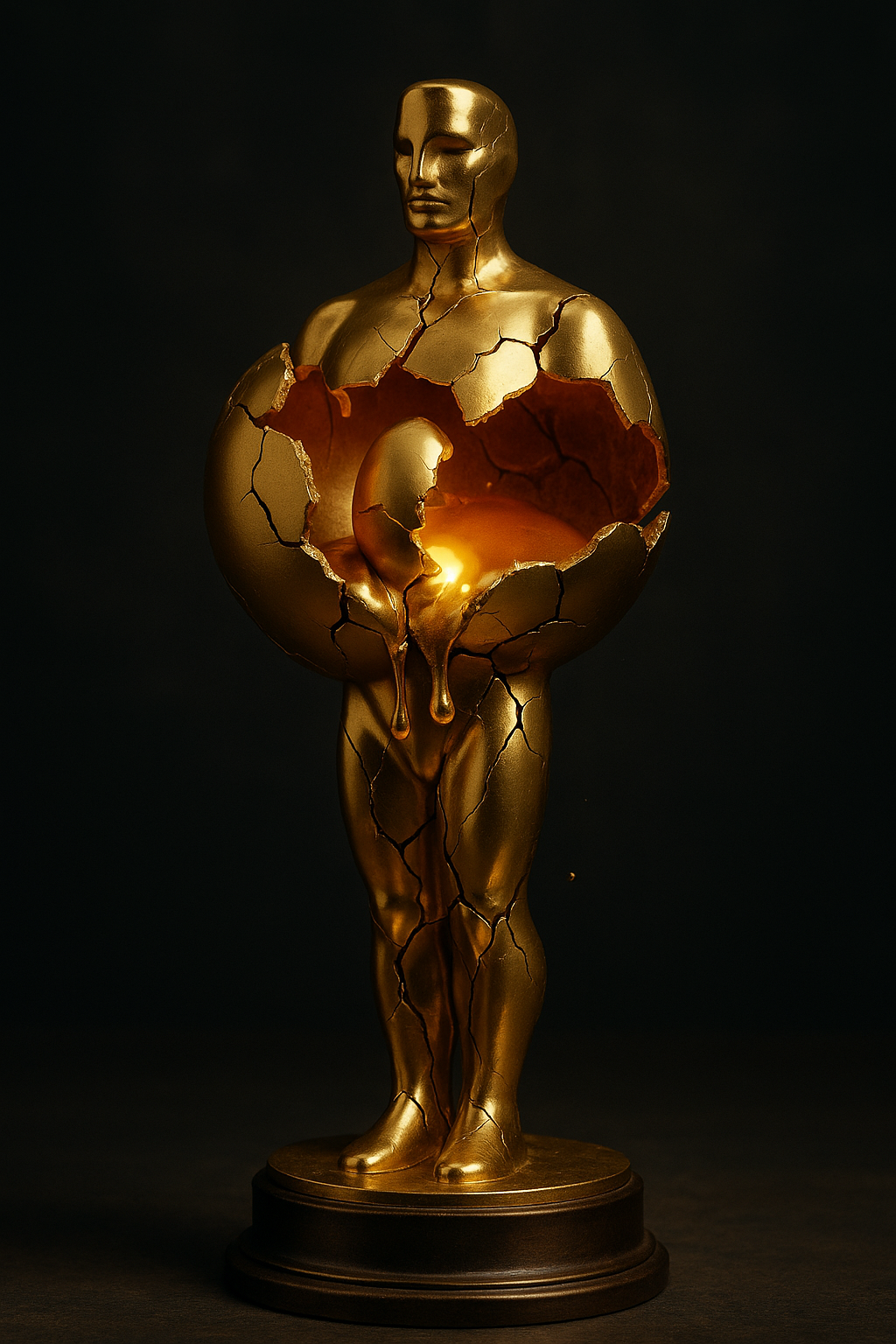
Oscars 2026: The Dolby Theatre became a battleground of cinema's fiercest rivalries, ending in shocking wins & backstage drama.
The 2026 Oscars turned into a wild "gladiator match" with fierce competition and surprising wins. Paul Thomas Anderson's 'One Battle After Another' took home Best Picture and many others, while the underdog 'Sinners' snagged four awards including Best Actor for Michael B. Jordan. The night was packed with drama, from the infamous 'elevator incident' between two actresses to Amy Madigan's unexpected win with a rat in her purse. Even dessert had a bang, with exploding white-chocolate Oscar effigies adding to the chaotic fun.
What were the major highlights and unexpected moments of the 2026 Oscars?
The 2026 Oscars featured fierce competition, dubbed a "gladiator match," with Paul Thomas Anderson's "One Battle After Another" winning Best Picture and six awards overall. Underdog "Sinners" secured four Oscars, including Best Actor for Michael B. Jordan. Memorable moments included the "elevator incident" between two actresses, Amy Madigan's surprising Supporting Actress win with a rat in her purse, and the exploding white-chocolate Oscar effigies at dessert.
Get Cape Town news in your inbox
Stay updated with the latest stories from the Mother City.
The Dolby’s Red Carpet: Where Feuds Were Born Before the Show Began
The 98th Academy Awards kicked off on 15 March 2026 with a red carpet the length of a city block, but the smiles were already strained. Netflix and Apple Originals parked their star wagons on opposite sides of the velvet rope, each with a dozen publicists whispering streaming numbers into nominees’ ears. Old-school studio veterans in tuxedos sized up TikTok-famous newcomers who had never shot on 35 mm yet arrived with 50 million followers and personal lighting rigs. Every step toward the Dolby Theatre felt like a chess move in a game that had started months earlier in festival screening rooms and board-room spreadsheets.
Inside the lobby, the temperature rose as rival publicists elbowed for photo-line real estate. A-listers clutched their plus-ones like human shields while reporters fired questions about box-office totals and day-and-date release strategies. The phrase “prestige flop” floated in the air like cheap perfume, aimed at any film that had grossed under $200 million worldwide. Security guards wore earpieces tuned to social-media sentiment dashboards; when a joke about a studio flopped on Twitter, they knew which aisle to clear first. By the time the orchestra struck the opening chord, the audience had already chosen sides, and the envelopes felt more like verdicts than prizes.
The first audible gasp came before a single statue was handed out: a camera caught two leading actresses refusing to share the same elevator, forcing a 90-second delay that rippled through the schedule. Producers cut to a pre-roll montage while the pair rode separately, their expressions captured in split screen. Viewers at home called it “the elevator incident,” and within minutes meme pages had turned the footage into a boxing promo. The Dolby had morphed from a theatre into an arena, and the lights had not even dimmed yet.
Sinners: The Underdog That Refused to Die
Ryan Coogler’s Sinners arrived as the season’s wildest card, a 1930s spiritual noir that chased twin brothers through chain gangs and juke joints in a single, hypnotic 40-minute tracking shot. Cinematographer Bradford Young revealed that Kodak revived a dead emulsion line in Rochester, then froze the negatives at minus-18 °C because the silver halide crystals “bred like furious yeast.” The anecdote became cocktail-party gold, repeated from Telluride to Taormina until the film felt legendary before anyone bought a ticket. Warner Bros. marketing chief J.J. Millstein booked Sinners against The Avengers: Eternity Crusade and watched it open to $28 million domestic, a figure that looked soft next to superhero grosses yet strong enough to keep the film on screens.
Michael B. Jordan’s dual performance as Smoke and Stack anchored the buzz. In a six-minute unbroken monologue, he confronted a mirror spider-webbed by a police bullet while a second camera hid behind the cracked glass, capturing dozens of miniature Jordans, each shard a different focal length. The clip played on every awards-show package because it guaranteed goose-bumps. Jordan credited a 1993 Artaud workshop in Newark where a teacher told him to “speak through the fracture in your own mask”; he simply never imagined the mask would literally shatter on screen. When his name was read for Best Actor, he sprinted in from the Atlanta set of Creed IV so late that seat-fillers had polished the floor where his chair belonged.
Terence Blanchard’s brass-heavy séance of a score won Original Score, and Young took Cinematography, while Coogler claimed Screenplay. Four Oscars felt like revenge against the “prestigious flop” label that had stuck since summer. Warner’s Millstein stood during the ovation, clapping with the enthusiasm of a man who had just realized prestige can, in fact, be monetized. Backstage, Jordan flipped his statuette upside-down, cradling it like a newborn, and told reporters, “Agnes Shakespeare might lose her kids, but tonight Smoke and Stack made it home.”
One Battle After Another: The Powerhouse That Rolled Over Everything
Paul Thomas Anderson’s One Battle After Another entered as the evening’s armored tank. The director optioned an 800-page unpublished Black Panther memoir for a dollar, then spent three years carving a 188-minute kaleidoscope that hopped between 35 mm, 16 mm, and early digital video depending on which decade the narrator misremembered. The film followed a 1970s revolutionary turned suburban dad who storms a privatized prison pipeline to find his missing daughter. Anderson’s team campaigned on the slogan “Remember when movies mattered?” and Academy voters answered with six Oscars, including Best Picture, Director, Adapted Screenplay, Editing, Casting and Supporting Actor.
Editor Leslie Jones bought a 1970 Steenbeck flatbed on eBay, then fed the trimmed-out strips through a motel ice-machine to warp the celluloid. “I wanted the splice scars to smell like trauma,” she told IndieWire. AMPAS rewarded her with the first editing Oscar ever given to a film proud of its vinegar-syndrome bubbles. Sean Penn won Supporting Actor as Colonel Steven J. Lockjaw, a part-Kissinger, part-Kurtz megalomaniac who delivers a campfire rant about napalm-testing on Labradors that ends, “We melted the dogs to save the children.” Penn stayed in character throughout production, demanding crew call him “Sir Bite,” and quoted obscure 1975 Senate MK-Ultra testimony in his acceptance speech, earning a standing ovation equal parts awe and fear.
The win triggered instant think-pieces arguing whether the film lionized or indicted American pathology. TikTok split into duets: half called the performance fascist camp, the other half hailed it the bravest acting since Colonel Jessup. Either way, Netflix’s algorithm noted a 400-percent spike in Anderson back-catalogue streams before the Governor’s Ball dessert was served. One Battle had proven that, in 2026, a prestige film could still bulldoze the season if it arrived with enough muscle and myth-making.
Chaos After Dark: Songs, Rats, Blockchain and Chocolate Gold
KPop Demon Hunters turned the red carpet into a rave by parking a 40-foot inflatable demon that exhaled pink smoke over Al Pacino’s shoes. Maggie Kang’s Seoul-set tale of weaponized high notes won Best Original Song for “Golden,” co-written by BTS rapper RM and Nigerian alté star Tems after a 4 a.m. Lagos studio binge on 1997 anime Neo Ranga. Their live Oscar performance featured Tems rising from a levitating hanbok the size of a city bus while RM wore LED battle armor, flanked by twelve taekwondo dancers forming a human bass-line. TikTok replays topped a billion views and Netflix reported 800,000 new subscriptions that weekend, proving animated demon idols can move the needle faster than any marketing deck.
Jessie Buckley made Irish history by winning Best Actress for Hamnet, the first actress from the island to do so since Brenda Fricker in 1990. Director Chloé Zhao insisted Buckley learn Tudor lace-making, 16th-century midwifery, and how to charm badgers with Sylvia Plath verses. On screen she aged from 19 to 53 without prosthetics, using only candlelight, posture and grief. When she curtsied so low that her Alexander McQueen beads scraped the stage, then hoisted her Oscar upside-down like a baby, the moment became the night’s most GIF-able beat.
Supporting Actress delivered the biggest shock. Amy Madigan, 75, won for Weapons, an indie horror that earned $4.7 million and shot its child-devouring-witch scenes inside a crumbling Detroit Masonic temple alongside 200 trained rats. She modeled the witch’s limp on a coyote she once saw gnawing off its own leg in New Mexico. Backstage she quipped, “The Academy just rewarded a lady who snacks on children - progress!” while holding a rat named Oscar in her purse.
Poland’s Bugonia thought it had International Feature locked until a dawn recount flipped the prize to Mongolia’s yak-surrogacy tone poem The Silent Herd, shot in vertical 8 mm. The Polish delegation stormed out, upending a chocolate fondue that drowned a Netflix VP. Technical buzz fixated on a piracy scandal: 27 screeners leaked in 12K thanks to a Burbank night janitor who flew hard-drives out the window with a shoe-box drone. The Academy vowed that 2027 voting will happen inside blockchain-VR bunkers demanding retinal scans every 12 minutes.
Dessert became a secondary show when Kristen Kish’s gold-leaf white-chocolate Oscar effigies - filled with persimmon crème and popping candy - started exploding in guests’ mouths. RM and Tems autographed the molds for charity until security shut the stand at $38,000. As sunrise painted the Dolby apricot, vacuum trucks inhaled last night’s glitter so tourists could snap photos and restart the myth machine. One unopened envelope lies sealed beside Douglas Fairbanks’ 1929 statuette, its loser’s name scheduled for revelation at the 2028 centennial - Hollywood’s next promise of drama, already loading into the chamber.
{
"faq": [
{
"question": "What were the major highlights and unexpected moments of the 2026 Oscars?",
"answer": "The 2026 Oscars, dubbed a \"gladiator match,\" saw Paul Thomas Anderson's 'One Battle After Another' win Best Picture and six awards. The underdog 'Sinners' secured four Oscars, including Best Actor for Michael B. Jordan. Unexpected moments included the 'elevator incident' between two actresses, Amy Madigan's surprising Supporting Actress win with a rat in her purse, and exploding white-chocolate Oscar effigies at dessert."
},
{
"question": "Which films were the big winners at the 2026 Oscars?",
"answer": "Paul Thomas Anderson's 'One Battle After Another' was the night's biggest winner, taking home six awards, including Best Picture, Director, Adapted Screenplay, Editing, Casting, and Supporting Actor for Sean Penn. Ryan Coogler's 'Sinners' was also a significant winner, securing four Oscars, including Best Actor for Michael B. Jordan, Original Score for Terence Blanchard, Cinematography for Bradford Young, and Screenplay for Coogler."
},
{
"question": "Who won the major acting awards at the 2026 Oscars?",
"answer": "Michael B. Jordan won Best Actor for his dual role in 'Sinners.' Jessie Buckley made history by winning Best Actress for 'Hamnet,' becoming the first Irish actress to do so since 1990. Sean Penn took home Best Supporting Actor for his role as Colonel Steven J. Lockjaw in 'One Battle After Another,' and Amy Madigan surprisingly won Best Supporting Actress for 'Weapons,' even bringing a rat named Oscar in her purse to the ceremony."
},
{
"question": "What was the 'elevator incident' at the 2026 Oscars?",
"answer": "The 'elevator incident' occurred on the red carpet before the ceremony officially began. Two leading actresses refused to share the same elevator, causing a 90-second delay and forcing producers to cut to a pre-roll montage. Their separate rides and expressions were captured in split-screen, quickly becoming a viral meme and setting a tense tone for the evening."
},
{
"question": "Were there any notable technical or international film awards?",
"answer": "Yes, Terence Blanchard won Best Original Score for 'Sinners,' and Bradford Young took home Best Cinematography for the same film. In a controversial turn, Mongolia’s yak-surrogacy tone poem 'The Silent Herd' unexpectedly won Best International Feature over Poland’s 'Bugonia' after a dawn recount, leading to the Polish delegation storming out. Technical discussions also included a 12K screener piracy scandal, prompting the Academy to vow for blockchain-VR voting in 2027."
},
{
"question": "What were some of the most unusual moments from the 2026 Oscars?",
"answer": "The 2026 Oscars were filled with unusual moments. KPop Demon Hunters turned the red carpet into a rave with a 40-foot inflatable demon. Amy Madigan accepted her Supporting Actress award with a live rat named Oscar in her purse. During dessert, Kristen Kish’s white-chocolate Oscar effigies, filled with persimmon crème and popping candy, surprisingly exploded in guests' mouths, adding a chaotic yet fun element to the post-ceremony celebration."
}
]
}

Isabella Schmidt is a Cape Town journalist who chronicles the city’s evolving food culture, from Bo-Kaap spice merchants to Khayelitsha microbreweries. Raised hiking the trails that link Table Mountain to the Cape Flats, she brings the flavours and voices of her hometown to global readers with equal parts rigour and heart.
View all articles →