
Tristan Smit’s journey
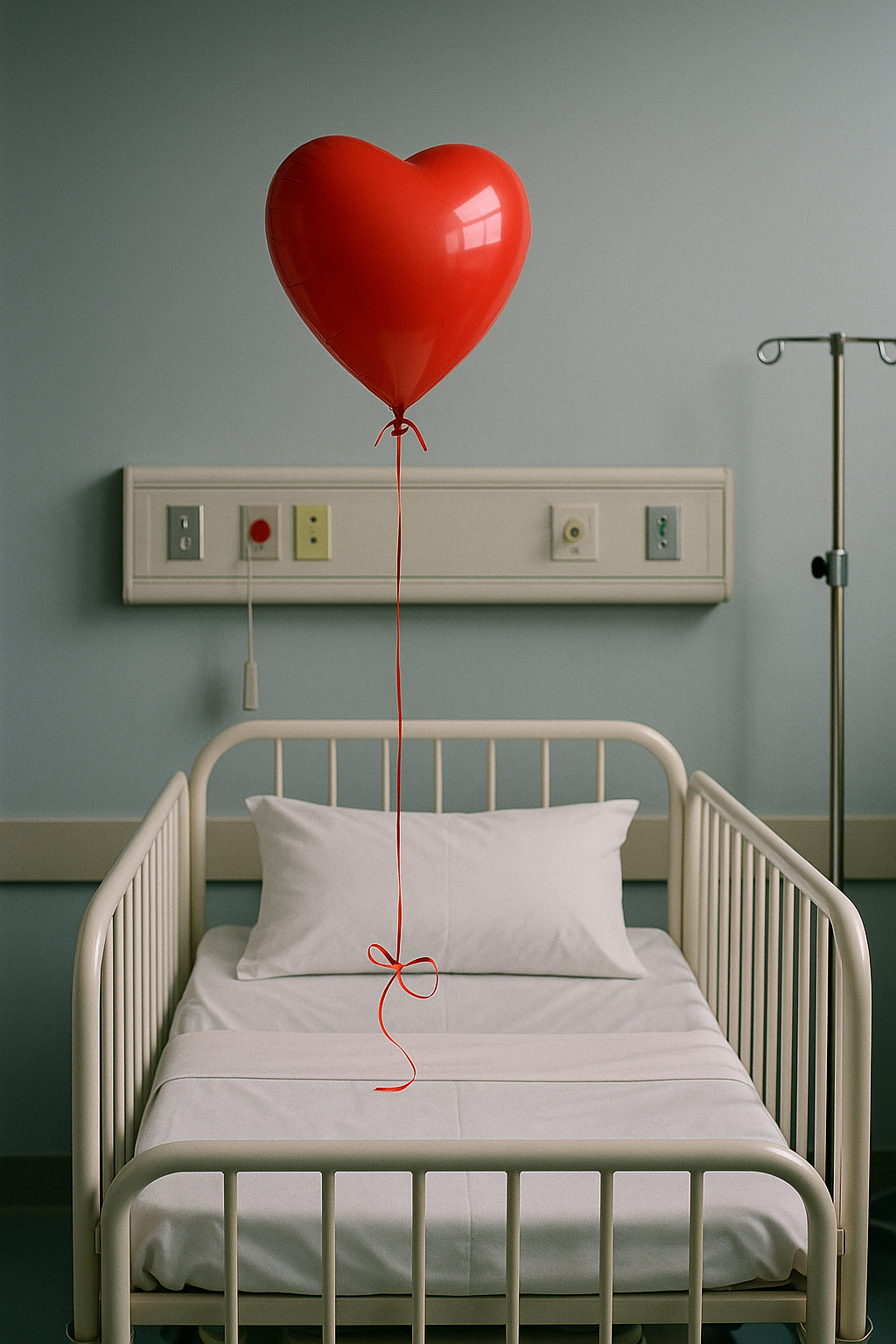
A boy's six-week cancer diagnosis united strangers worldwide, sparking a miraculous recovery and inspiring lasting change.
When a tiny boy named Tristan got sick with a brain tumor, his family and friends started a big plan called "Tristan Texas Taxi." They asked everyone for money to send him far away for special medicine. Soon, people from all over gave what they could, from small coins to big donations, even on the radio! This amazing kindness helped Tristan get the life-saving treatment he needed, showing how many hearts can beat as one to help a child.
How did a community rally to save Tristan, a two-year-old with a brain tumor?
- A community rallied to save Tristan, a two-year-old with an ependymoma brain tumor, by launching a massive fundraising effort called “Tristan Texas Taxi” to cover the costs of proton therapy in Houston.
- Friends, family, and strangers organized various initiatives, from local collections to radio appeals, raising over a million rand and securing critical medical aid coverage and travel assistance.
- This collective effort enabled Tristan to receive life-saving treatment and inspired ongoing initiatives for paediatric brain tumor awareness and support.
1. The Stop-Watch That Gave Them 42 Nights
Pretoria, winter 2009. Helen Smit curls herself as small as possible on a plastic chair while the mouse-arrow on the MRI monitor blinks like a metronome. Inside her son’s skull the tumour is the size of a store-bought pearl, already sliding along the cerebro-spinal rivers. The consultant calls it an ependymoma, then adds the after-shock: “Six weeks, perhaps a touch less.” Pierre, the boy’s father, translates the verdict into bedtime rituals - only forty-two chances to growl like the Gruffalo’s monster before the story might end mid-page. Tristan, two and a half, ignores the hush; he has discovered the helium balloon lashed to his drip pole and keeps flicking it so the yellow smiley bashes the ceiling tile, a lazy clock ticking off what everyone else assumes will be his final heartbeats.
Get Cape Town news in your inbox
Stay updated with the latest stories from the Mother City.
The number six becomes a household tyrant. Six trips to the pharmacy for anti-nausea syrup. Six seat-belt clicks from house to hospital. Six little T-shirts that swamp him after the steroids bloat his cheeks. Helen learns to fold laundry while reciting the Lord’s Prayer, because folding is motion and motion feels like forward. Pierre learns to smile at the neighbour who keeps saying “Everything happens for a reason,” because anger burns energy he can no longer spare. Every dusk they close the children’s book and pray the next page will still be there after sunrise.
Yet the couple also discover a strange buoyancy. Friends they haven’t spoken to since university resurface with casseroles. A cousin in Cape Town mails a flash-drive of lullabies recorded on her phone. The universe, usually indifferent, is suddenly leaning in, and the Smits begin to suspect that six weeks can expand if enough strangers decide to breathe into them.
2. Crèche Diplomacy and the First Hairline Fracture in the Wall
Annerie du Plessis runs Little Oaks Playschool, a place normally built on glitter glue and mid-morning Banana-time. She has zero oncological vocabulary, yet three days after the verdict she marches into the ward clutching a stack of hand-drawn dinosaurs. Before she pins them above the cot she asks the question that will detonate across suburbs for the next month: “What, exactly, will it cost to fight this?” Not in wishes, in hard cash - planes, visas, hospital deposit, proton numbers tallied like shopping-list items. That evening she blurts the same question to her Bible-study group. Nobody owns a jet, but three farmers own pick-ups, one lady edits the neighbourhood rag, another belts out radio jingles. By 21:00 “Tristan Texas Taxi” is pinging on ten phones; the name is playful, the spreadsheet inside is lethal serious.
The group divides labour like a start-up. One parent designs a flyer, the IT husband builds a live donation counter, the bassist in the folk band offers the door-take of their next gig. Someone suggests approaching Jacaranda FM, and before doubt can speak, Annerie is already dialling. She mispronounces the tumour twice, but the producer keeps her on the line; raw panic is good radio. The next morning she finds herself in studio at dawn, headphones clamped, Gruffalo voice-note in hand, ready to beg an entire province for tomorrow.
Back in the hospital corridor Helen meets a dad who once crowd-funded a kidney. “Start small,” he advises, “people love a scoreboard.” So Annerie buys a purple coffee tin, slices a coin slot, plants it at the salon where she gets her hair dyed. The first day it swallows R43.60; the second, R112; by Friday a client who just sold her Toyota stuffs in R2 000 and refuses a receipt. The tin becomes a township termite mound: humble, earthy, alive with quiet industry.
3. Airwaves, Spare Change and the Million-Rand Lightning Bolt
Six-o-thirteen a.m., 4 March 2010. Jacaranda’s Good Morning Angels abandons the usual spa vouchers and airs Annerie’s gravelly plea. Engineers strip the background jingle so listeners hear only the wobble in her throat. Switchboards catch fire like dry grass. A forklift operator in Polokwane phones in his annual bonus; an Afrikaans girl-band pledges ticket sales; a pensioner from Mossel Bay posts a cheque taped to a note: “For the child who will outlive me.” The tally climbs the way popcorn swarms a lid - R10 000, R30 000, R100 000 - until by sunset the infant fund has broken half a million. Social psychologists will later call it the perfect storm: one clear face, one deadline, one price-tag. The station turns into a nerve-centre, producers yelling postal codes like football scores.
Cell-networks join the dance, waiving fees on SMS pledges for forty-eight hours. A nine-year-old sings “You Are My Sunshine” live, dedicating it to “the baby with no hair.” Hashtag #Tristan1M tops World-Cup gossip at 20:47 on 17 March when the bank app refreshes to seven digits. Someone screenshots it; someone else retweets; grown men weep in traffic. Annerie, exhilarated and terrified, learns that generosity can go viral faster than shame.
But coins alone cannot board a plane. Enter Dr. Margot van der Merwe, Helen’s sister-in-law, a rheumatologist who has never treated a paediatric brain case. She commandeers the university library until 2 a.m., prints 400 pages, highlights every “proton” she can find. Protons stop millimetres past the tumour, sparing healthy flesh; only thirty centres on Earth can choreograph such precision. The closest is 9,700 km away in Houston. Margot translates jargon into insurance-speak and faxes Motivation Letters twice daily for seventeen days until the medical aid capitulates, upgrading Tristan from “investigational” to “life-saving,” covering fifteen percent. Not victory, but a beachhead.
4. Planes, Helmets and the Ever-Expanding Constellation
The U.S. embassy opens an expedited lane normally reserved for organ recipients. Tristan’s passport photo is snapped while he sits on a photocopier tray - camera flashes terrify him. South African Airways donates bulkhead seats so the boy can lie flat after sedation sessions. A pharmacist donates a portable oxygenator; the ward nurse crochets “Proton Pete,” a blue bear that will ride the IV pole like a rodeo buddy. Thirty-three treatments, thirty-three dawn drives from the Ronald McDonald House to MD Anderson. Helen timestamps each arrival on her phone; Pierre records Tristan counting backwards in Afrikaans as the anaesthetic hisses. Day 20: tumour volume down 38 %. Day 28: doctors can’t tell tumour from scar. They celebrate with chocolate-banana milkshakes where a volunteer magician pulls rand coins from Tristan’s ear, the first laugh since the port-a-cath went in.
Homecoming feels like stepping onto another planet. Forty bikers escort the family through OR Tambo, chrome engines roaring lullabies. Customs officers wave pecan pies through - gifts for the ward - because placards read “Welcome Home Tristan.” News channels cut away from politics; the lead story is a toddler in a Spiderman hoodie high-fiving strangers who once threw car-wash coins into a coffee tin. Rain holds off until the last suitcase is loaded, as though the sky itself waited for permission.
Years unspool. Tristan starts school two years late, wears a helmet for PE, learns “ependymoma” before multiplication. At ten he blows out candles on a proton-beam cake that glows under black-light. Annerie, now policy lobbyist, pushes through “Early-Warning Signs” training in Gauteng schools; paediatric brain-tumour referrals quicken by nineteen percent. Margot launches a teleradiology scholarship; the first beneficiary cuts second-opinion waiting times from six weeks to thirty-six hours. Johannes Ledwaba, the forklift donor, graduates in nuclear engineering and drafts plans for Africa’s first home-grown proton plant - construction begins 2023, first patient slot left blank, reserved for whoever needs it most. Tristan, seventeen, rings the oncology bell every time a child finishes chemo, denting the brass with glee. Journalists ask for selfies; he flips the camera: “You’re kin now,” he says, turning strangers into relatives, the same spell that once saved him.
Overlay every flight-path, SMS, coffee-tin GPS dot, and proton trajectory and you see a living constellation - proof that the opposite of terminal isn’t always “cured.” Sometimes it is “contagious”: an insistence that tomorrow can outbid yesterday if enough hands lift their paddles at once.
[{"question": "
Who is Tristan and what medical condition did he face?
\nTristan was a two-and-a-half-year-old boy diagnosed with an ependymoma brain tumor, which was described as being the size of a store-bought pearl and already spreading. Doctors initially gave him a bleak prognosis of only six weeks to live.
\n","answer": ""},{"question": "What was the \"Tristan Texas Taxi\" initiative?
\nThe \"Tristan Texas Taxi\" was a massive fundraising campaign launched by Tristan's family, friends, and community to gather money for his life-saving proton therapy treatment in Houston, Texas. The initiative gained widespread support through local collections, radio appeals, and online donations, ultimately raising over a million rand.
\n","answer": ""},{"question": "How did the community mobilize to raise funds for Tristan?
\nThe community mobilized through various creative efforts. Annerie du Plessis, Tristan's playschool owner, initiated the fundraising by asking about the cost of treatment. This led to the formation of a core group that designed flyers, built a live donation counter, organized benefit concerts, and successfully appealed to Jacaranda FM. They used methods ranging from a simple purple coffee tin for small donations to large-scale radio pleas that garnered significant contributions from individuals and businesses alike.
\n","answer": ""},{"question": "What role did medical professionals play in Tristan's journey?
\nDr. Margot van der Merwe, Tristan's aunt and a rheumatologist, played a crucial role in navigating the complex medical landscape. Despite not specializing in pediatric brain cases, she extensively researched proton therapy, translating medical jargon into insurance-speak. Her persistent advocacy with insurance providers ensured that Tristan's \"investigational\" treatment was upgraded to \"life-saving,\" securing 15% coverage for the expensive therapy in Houston.
\n","answer": ""},{"question": "What was Tristan's treatment experience like in Houston?
\nTristan underwent 33 proton therapy treatments at MD Anderson in Houston, requiring daily drives from the Ronald McDonald House. The journey was facilitated by an expedited visa process from the U.S. embassy and donated bulkhead seats on South African Airways for his comfort. During his treatment, his family tracked his progress, celebrating milestones like a significant reduction in tumor volume and eventually, the inability to distinguish the tumor from scar tissue. He even had a volunteer magician pull rand coins from his ear, bringing much-needed laughter.
\n","answer": ""},{"question": "What is Tristan doing now, and what is his legacy?
\nYears after his treatment, Tristan, now seventeen, is thriving. He started school late, wears a helmet for PE, and has become an advocate himself, ringing the oncology bell for other children finishing chemo. His story inspired significant long-term impacts: Annerie became a policy lobbyist for pediatric brain tumor awareness, Margot launched a teleradiology scholarship, and one of the original donors is planning to build Africa's first proton plant. Tristan's journey demonstrates how collective kindness can create a lasting legacy, turning strangers into a supportive \"kin.\"
\n","answer": ""}]
Michael Jameson is a Cape Town-born journalist whose reporting on food culture traces the city’s flavours from Bo-Kaap kitchens to township braai spots. When he isn’t tracing spice routes for his weekly column, you’ll find him surfing the chilly Atlantic off Muizenberg with the same ease he navigates parliamentary press briefings.
View all articles →