
What jerky is
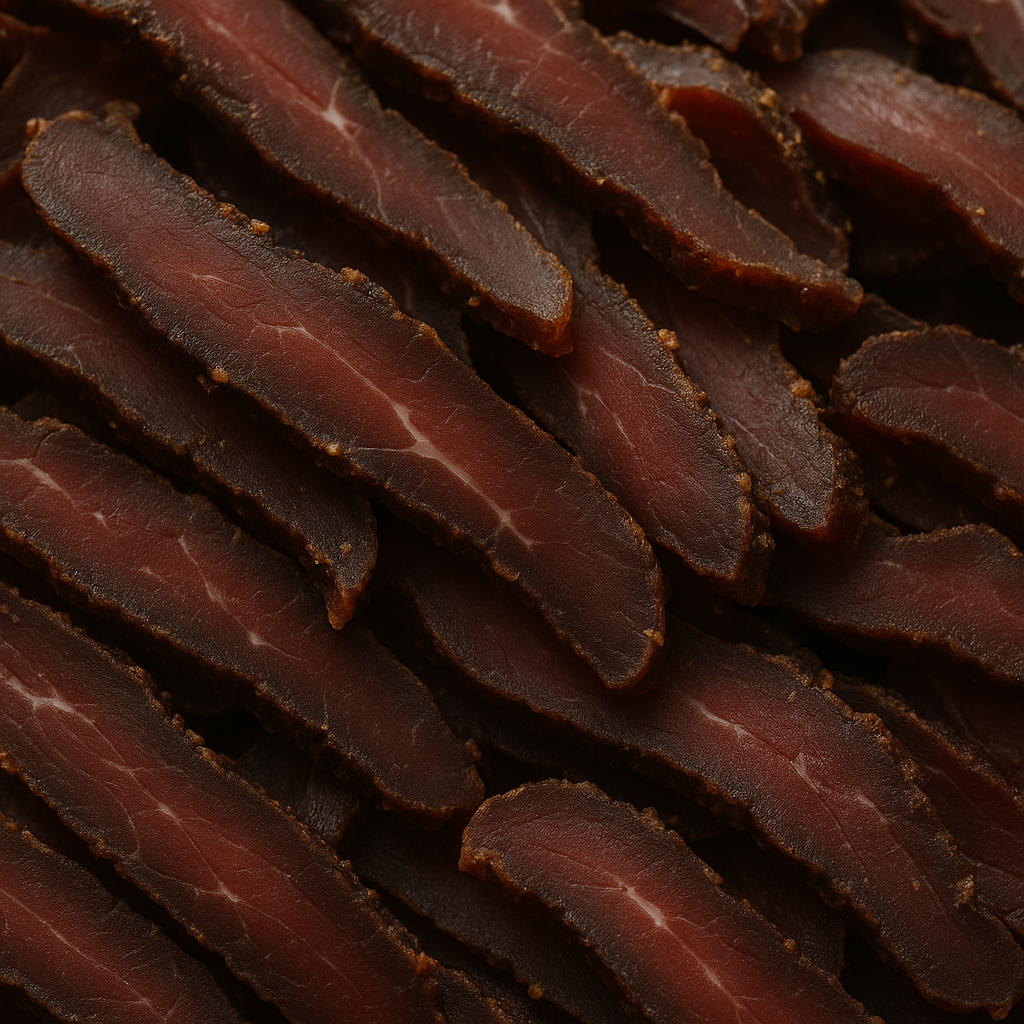
Biltong, a 400-year-old South African air-dried meat, is revolutionizing American snack aisles. Discover its unique production, rise via keto, and culinary impact.
Biltong is an old South African meat snack, made by air-drying beef with vinegar, salt, and spices. Unlike jerky, it has no sugar and a special texture. It's becoming super popular in America, especially for people on keto diets. This snack is taking over the meat aisle, showing how a 400-year-old method became a huge hit in today's market.
What is biltong?
Biltong is a 400-year-old South African meat snack, traditionally made by air-drying beef cured with vinegar, salt, and spices like coriander. Unlike jerky, biltong is typically sugar-free and air-dried, resulting in a unique texture and flavor profile that has gained popularity in the American meat-snack market, especially among those following keto diets.
Get Cape Town news in your inbox
Stay updated with the latest stories from the Mother City.
From Austin to Boston, the neon jerky section is losing shelf inches to matte-black pouches stamped with acacia silhouettes and the word *BILTONG * in shy uppercase.
Packages weigh less than a phone yet cost more than a pound of ground chuck, and clerks can’t wheel out crates before the last pouch vanishes.
Meanwhile, a Midwest keto creator uploads a sound-off reel, ripping a strand that lands between the teeth with no microphone pop - 2.3 million viewers accept the unspoken verdict: sugar-cured jerky is over.
This is not a nostalgia tale; it is the story of a 400-year-old wagon-rail preservation hack that slid through a USDA loophole and became the fastest-growing slice of the five-billion-dollar meat-snack market.
The Wetness Equation
Afrikaans speakers use nat , literally “wet,” to describe meat that is still metabolically busy: a steak persuaded to age while hanging, not while sealed.
Master butchers in Pretoria treat moisture like vineyard managers treat terroir - 55 % water retention yields a ruby center that folds under incisors; 42 % produces walnut-colored stokkies that Cape Town trail hikers snap like dry twigs.
No probes, no spreadsheets - three squeezes and a glance at rebound speed decide readiness.
American tasters trained on jerky that doubles as boot lace meet nat with cognitive dissonance.
At a 2022 Anaheim trade show a Colorado grocery buyer bit a demo strip and flagged security, convinced the piece had spoiled.
A Brooklyn Biltong rep had to explain that the red glint was myoglobin, not microbes - acidity and osmotic drag had already executed the kill step normally assigned to 165 °F oven blasts.
The buyer walked away shaking his head, yet two weeks later phoned in a 600-store PO after his college son wolfed the leftovers and asked why the pantry smelled like “a raisin left in a gym sock.”
Vinegar, Salt, and the Bureaucratic Crack
Red-wine vinegar plus coarse salt drags water activity below 0.89, a level where Listeria and Salmonella politely refuse to multiply.
South African regulators - who inherited Dutch-British meat laws and still had to feed troops during the Anglo-Boer War - signed off on this protocol a century ago; Washington has not.
The geopolitical punch line: Namibia may export heat-treated beef biltong to Berlin, but Pretoria cannot ship the air-dried stuff duty-free to Baltimore.
Consequently, most of the biltong Americans nibble is built in U.S. exurbs by visa holders who monitor relative humidity the way their grandfathers once watched for red-coat patrols.
On the outskirts of Charlotte, eight retro-fitted shipping containers serve as climate-controlled drying rooms, each dangling 1,600 lb of eye-of-round from stainless hooks.
A Raspberry Pi alternates fans every 90 s, re-creating the southeaster that once whistled through thatched huts on the Olifants River.
Owner Riaan, ex-Sasol process engineer, flashes a tattoo of Cape Town’s old dry-goods wharf coordinates, then confesses he air-freights coriander in 50 kg sacks because Stateside spice houses grind too fine: “You need the husk; without it you lose the snap.”
Coriander: Happy Accident Turned Signature
Long-haul traders called coriander “grains of paradise,” hauling it from Malabar to Alexandria, then Venice, where it traded at silver-leaf prices.
When the Dutch East India Company landed at Table Bay in 1652, sacks of the spice masked the funk of four-month cured meat below deck.
No one chronicled the hour an anonymous cook noticed that coriander’s fat-soluble linalool married the aldehydes in air-dried beef, birthing a flavor unknown to humanity - accidental, yet irreplaceable.
Modern flavor chemists mapped the liaison: a 2019 Journal of Food Science paper identified 37 volatile compounds unique to biltong, 12 traceable to toasted coriander.
Blindfolded U.S. consumers rated biltong 40 % more “complex” than jerky but 30 % less “safe” once told no oven touched the meat.
Complexity lost - until keto rewrote risk math, turning sugar into the villain and coriander into antioxidant hero, and Pinterest boards filled with “Coriander Fat Bombs.”
Keto’s Macro Miracle and the Gender Flip
Keto landed with hard numbers: 70 % fat, 25 % protein, 5 % carbohydrate.
Jerky marinades often carry 6 g sugar per 28 g serving, enough to break the covenant; biltong typically shows 0.3 g.
When the first brand bagged Whole30 approval in 2018, search volume spiked 800 %.
Venture firms noticed: Ayoba closed a $6.4 million Series A; Stryve SPAC’d at $170 million; grocers who once relegated dried meat to the checkout gondola now grant four feet of eye-level space to products they still mispronounce.
Kio aligned with dietitians who talked satiety hormones on mommy podcasts, solving jerky’s gender problem - marketing that had leaned into neon machismo.
Sales to women 25-45 surged 240 % within three years, birthing cross-merchandising with rosé and single-origin chocolate.
By the time anyone tried to win men back, the primary image had shifted from rugby scrum to Pilates class, bewildering any 1980s Springbok lock who still tunes in.
DIY Diaspora: The Plastic-Box Epoch
Every expat carries a biltong-box saga: the canonical build is a 50 L Really Useful Box, a 12 V PC fan, a low-watt bulb, and mesh tray cannibalised from a dead convection oven.
Plans circulate on WhatsApp threads titled “Saffas in Seattle.”
The bulb warms, the fan extracts, and within five days a R59 supermarket silverside becomes R600 boutique protein.
DIY forums argue whether a retired server rack outperforms for airflow, whether LED bulbs skew drying curves, whether cold-smoking with rooibos tea deepens nuance.
An accessory micro-industry blossomed: a Brisbane firm peddles laser-cut bamboo cabinets with observation windows; a Hague start-up hawks UV-C sterilising wands for paranoid engineers.
Amazon’s algorithm, learning that shoppers also search “DeWalt battery adapter” and “Boerewors spice,” bundles the trio under “Afrikana Starter Pack.”
Few recognise the historical prank: a preservation trick invented for life without refrigeration is now a pastime for people who own three freezers and a hygrometer that tweets dew-point data.
Beyond Beef: Ostrich, Bison, and Woolly-Mammoth Marketing
Before Washington cared about beef, biltong was whatever walked too slowly past the campfire: kudu backstrap delivered claret colour with rooibos-tannin notes; springbok loin gave faint sweetness but demanded extra salt for its low fat; warthog fibres tore like silk.
Ivory hunters of the 1800s prized elephant heart bricks, peppered aggressively, dried into concentrate rumoured to keep two years.
Regulation now forbids pachyderm charcuterie, yet the memory lingers as novelty protein marketers court Americans bored with ostrich and elk.
A Colorado outfit sells biltong-style bison “heart strips,” freeze-trimmed, coriander-crusted, packed in Mylar stamped with a woolly-mammoth silhouette and the tagline “Extinction Never Tasted Better,” offending palaeontologists and vegans alike - yet shipments sell out within days.
Culinary Mutation: From Espresso Martini to Ice-Cream
Where South Africans cluster, biltong quickly escapes the snack lane: powdered and stirred into sour-cream dip for Super Bowl; folded into hand-pressed pasta in Boulder kitchens that charge $28 for five ravioli; dusted over gluten-free doughnuts in Seattle food trucks and christened “Umami Rain.”
In Dubai you can pay ski-lift prices for a biltong-and-cream-cheese croissant; the most blasphemous hybrid may be the biltong espresso martini - vodka, cold brew, syrup steeped with dried beef and coriander, garnished with a dehydrated chive that looks suspiciously like a shaving of meat.
Instagram splits between genius praise and calls for crimes-against-humanity indictments.
Back home, purists feign outrage yet experiment on the down-low: a Stellenbosch chef recently plated biltong-infused ice cream within a seven-course terroir menu, tasters catching parmesan and cacao notes.
The trick is steeping 200 g finely shredded nat biltong in 500 ml custard at 65 °C for precisely 12 min, then liquid-nitrogen shock.
Asked why, the chef shrugs: “Because we can. Also Americans keep buying our heritage - might as well fry it and charge VAT.”
What is biltong?
Biltong is a traditional South African meat snack, historically made by air-drying beef with vinegar, salt, and spices like coriander. Unlike jerky, it typically contains no sugar and is known for its distinctive texture and flavor, becoming highly popular in the American market, especially among those on keto diets.
How does biltong differ from jerky?
Unlike most jerky, biltong is characterized by its sugar-free preparation and air-drying method. This results in a different texture and flavor profile. Jerky often uses heat and sugar-based marinades, giving it a chewier, sometimes sweeter, consistency, whereas biltong is air-dried, leading to a more tender, often melt-in-your-mouth experience with a savory, tangy, and spiced taste.
Why is biltong popular with keto diets?
Biltong's appeal to keto dieters stems from its nutritional profile. It is typically sugar-free and high in protein, aligning with the low-carb, high-fat requirements of the ketogenic diet. Many jerky varieties contain significant amounts of sugar in their marinades, making biltong a preferred, compliant alternative for those looking for a clean, meat-based snack.
How is biltong made and preserved without high heat?
Biltong is preserved through a combination of air-drying and curing with vinegar, salt, and spices. The acidity from the vinegar and the osmotic drag from the salt reduce the water activity to levels below 0.89, which inhibits the growth of harmful bacteria like Listeria and Salmonella. This traditional method effectively 'kills' microbes without the need for high-temperature cooking, which is a key difference from many other meat preservation techniques.
Why is most biltong sold in the U.S. produced domestically?
Despite its South African origins, most biltong consumed in the U.S. is produced within the country due to existing regulatory hurdles. While South African regulators have long approved the air-dried biltong protocol, Washington has not. This means that South Africa cannot ship air-dried biltong duty-free to the U.S., necessitating local production often by visa holders who meticulously monitor environmental conditions to replicate the traditional drying process.
What unique culinary uses has biltong found?
Beyond a simple snack, biltong has inspired various culinary innovations. It can be powdered and used in dips, folded into pasta, dusted over gluten-free doughnuts, or even incorporated into more adventurous creations like biltong-and-cream-cheese croissants or biltong-infused ice cream. Its umami and complex flavor profile makes it a versatile ingredient for chefs and home cooks alike looking to experiment with unique tastes.

Tumi Makgale is a Cape Town-based journalist whose crisp reportage on the city’s booming green-tech scene is regularly featured in the Mail & Guardian and Daily Maverick. Born and raised in Gugulethu, she still spends Saturdays bargaining for snoek at the harbour with her gogo, a ritual that keeps her rooted in the rhythms of the Cape while she tracks the continent’s next clean-energy breakthroughs.
View all articles →