
Cape Town lands R300m international film on Graceland legacy
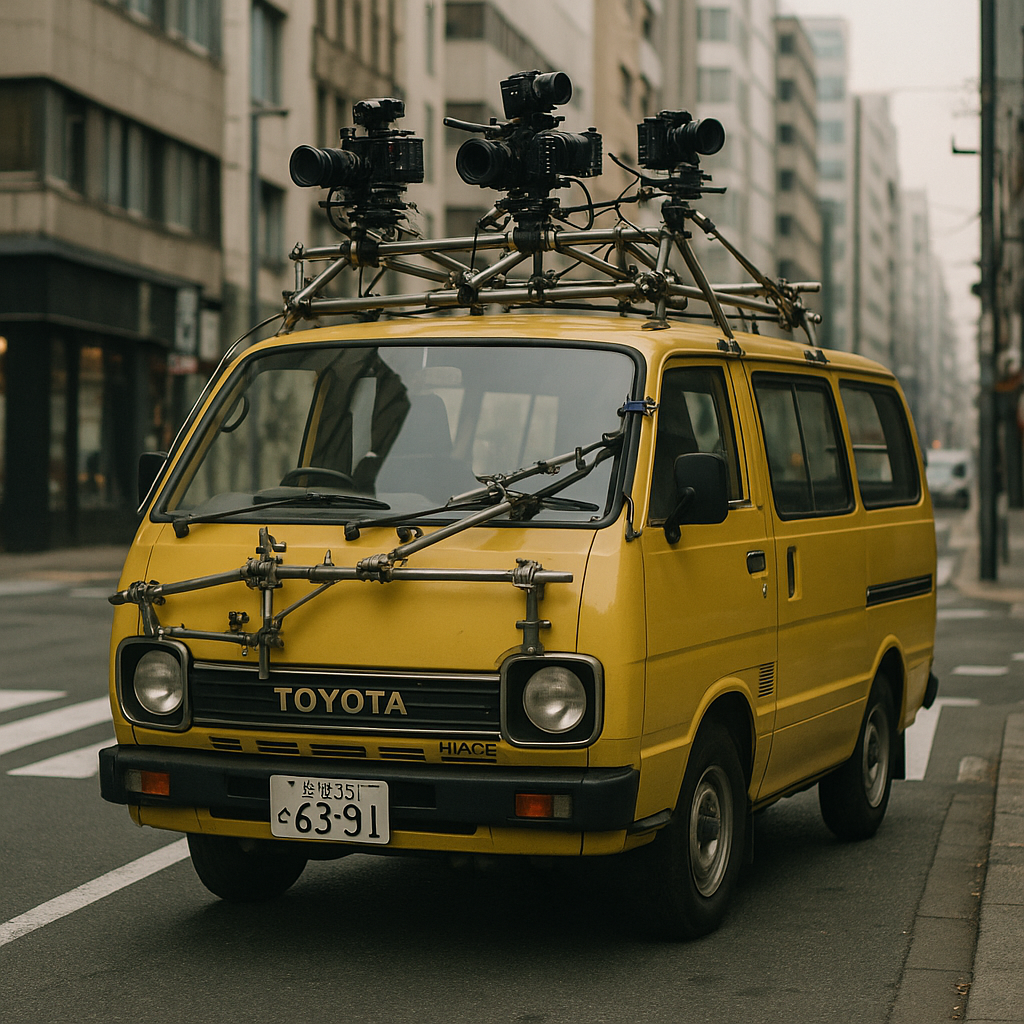
Experience "The Road Home": A R300M cinematic journey through apartheid-era South Africa, recreating the making of Graceland.
Cape Town is buzzing with the R300 million "Graceland Epic" film, bringing Paul Simon's famous 1986 album to life. This huge production is like a time machine, turning city streets into old South Africa and 1987 concert venues. They're rebuilding history with 68 actors, 3,500 extras, and a big orchestra, showing how Simon made music with South African artists during a tough time. It's a massive effort to recreate a powerful story of music, politics, and a hidden history.
What is the "Graceland Epic" production about?
The "Graceland Epic" is a STUDIOCANAL film production reenacting Paul Simon's controversial 1986 "Graceland" album, focusing on the recording sessions, the 1987 world tour, and the political climate of apartheid South Africa. It explores how Simon collaborated with South African musicians despite a cultural boycott, reconstructing a pivotal moment in music and history.
Get Cape Town news in your inbox
Stay updated with the latest stories from the Mother City.
Storm Clouds and Call Sheets
Winter’s first Atlantic squall is still sluicing the mountain when the production office starts pushing dawn memos to 300 inboxes. Within days, Sea Point’s ocean drive will be barricaded for camera moves, the tarmac rebadged as 1955 Sophiatown, 1977 Lagos or a slice of Saturday Night Live’s Rockefeller Plaza. Art-department drivers already rehearse the midnight sprint a timid Hi-Ace once made from the old airport to a Holiday Inn when Paul Simon’s caravan felt every bit like smuggled cargo.
None of this is sepia-tinted tourism. STUDIOCANAL has docked a cinematic container ship on African soil: 68 speaking roles, 3 500 extras, a 60-piece orchestra drawn from the Cape Town Philharmonic and township brass bands, plus ringers flown in to clone every squeeze-box riff. The euro-rand conversion tops any French spend on the continent, outrunning even District 9 once the CPI tables are consulted. The invisible column of the budget - the line where apartheid exchange controls once doubled the price of every can of 35 mm stock - now shows only a municipal permit stamped “same-day, no fee” and a SARS letter pledging to hand back thirty-five cents of every rand paid to South African crew.
Ledger nostalgia stops there. In 1986 a forged press card and a convoy of church vans were needed to sneak an eight-track across the border; today the only contraband is artistic. What remains is the forensic brief: reconstruct how a Brooklyn songwriter, black-listed by the UN and threatened by letter-bombs, cut ten days of music in Johannesburg and London with performers the regime called terrorists, how a between-take bass doodle became “You Can Call Me Al,” how Makeba and Masekela slipped lyrics past censors by hiding them inside Xhosa cross-rhythms that sounded like bebop to untrained ears.
Three Timelines, One City
Screenwriters Nnedi Okorafor and Koleka Putuma open the tale two years before the album, inside a Lusaka exile camp where Makeba first catches a crackling BBC relay of “Gumboots.” That short-wave interception lets the film braid three braids at once: the 1985 sessions, the 1987 world tour chased by protesters, and a speculative 1999 thread where an ageing Masekela retrieves reels he once buried in a London lock-up, terrified they would be Exhibit A in a “communist propaganda” trial.
Cape Town never hosted the 1987 tour - activists had the Good Hope Centre show cancelled - but the city’s chameleon skyline can impersonate three eras in a single day. A decommissioned power station in Athlone, still reeking of coal dust, will stand in for Orlando Towers long before bungee cords were attached. The Grain Silo’s Art Deco lifts, freshly carved into the Zeitz MOCAA, will spend six nights reborn as the control room of Radio Freedom, the ANC’s pirate transmitter that once drifted off the Angolan coast. Even the jacarandas are on retainer: Kirstenbosch horticulturists force a greenhouse hectare so that October purple can pop in June, a floral VFX trick priced at forty-five grand a day of blossom.
The yellow Hi-Ace that shuttled artists past midnight roadblocks has been raised on its suspension to match archival photos; hidden lens ports now dot the bodywork like acne scars. It will re-enact the dash from Jan Smuts to the Holiday Inn, an eight-kilometre sprint that once felt like crossing a border under fire, now mapped by GPS and choreographed down to the gear change.
Gold-Rush Gigs and Ghost Tracks
Talk on the ground slips into boom-town cadence. Best-boy sparkies who wired yoghurt ads last month now float 200 kW balloon moons above the Langa tennis court where Masekela first learnt valve positions. Hair teams import afro picks from an Atlanta collector, yet the tightest 4C coils are twisted by aunties who still use a sewing needle and Sta-Soft, know-how handed mouth-to-mouth after 1980s raids when combs were seized as stabbing tools.
Props sleuths tracked the actual Shure SM58 that captured Simon’s bite marks to a forgotten SABC cupboard; the dented mic now rides with a former MK operative hired to stare down anyone who so much as breathes on the grille. Across town, 14 000 aspirants auditioned to play a 23-year-old Bakithi Kumalo. The chosen one, jazz student Siyabulela Ngcukana, practised the bass line on a gaffer-wrapped broomstick while buffering YouTube outside a township Wi-Fi shack. Thabo Rametsi, fresh from Solomon Mahlangu’s boots, runs Sea Point’s promenade at 4 a.m. to harvest the emphysema rasp that lived in Masekela’s horn when he cut “Bring Him Back Home” on valves still sticky from tear-gas.
In a Granary loft once used for imperial wheat, 40 backing vocalists rehearse a hybrid “Nkosi Sikelel’ iAfrika,” layering the 1897 hymn over a mbaqanga groove lifted from the 1987 Harare show. Phones are sealed in Yondr pouches supervised by an ex-State Security minister; when the final cadence lands the room falls so silent you can almost hear data leak. These tapes join the miracle find of 2024: 2-inch reels presumed torched in a Burbank blaze but mis-filed beneath Red Cross casualty lists. Baked at 52 °C for three days in Cape Town’s Truth Studios, Kumalo’s isolated bass re-enters the world like a séance guest. Executive producer Hilton Rosenthal, hearing the harmonic he last touched in 1986, simply wept.
Money, Myths and a Lasting Echo
Finance architecture rivals the plot twists. A new “Section 12P” rebate hands back cash to shoots that top R100 million and run year-long township skills programmes; STUDIOCANAL’s Paris bankers wrap the loan in a green-bond jacket, offsetting every litre of generator diesel against fynbos restoration drones tracked by Deloitte. Catering is collateralised too: 30 000 vegan patties grown on brewery waste grain, each patty tagged with an NFT that brags about its carbon-fixing mycelium.
Security feels lifted from le Carré. Call sheets carry ballot-ink watermarks; a German tourist’s drone is blasted from the sky over the City Hall steps and replaced business-class-plus-NDA. Yet the tightest lockbox is the score itself. When engineers finally spin the recovered tapes, the room is swept for hidden mics; no one wants a TikTok snippet of the anthem that became a country’s lullaby and its alarm clock.
Outside the cordon, myths sprout like weeds. Taxi radios insist the coda will stage a clandestine 1991 summit where Mandela, Simon and Masekela pick hymns for the new nation; others swear the last shot is banked - a drone ascending from a flooded Robben Island quarry now serving as flamingo mirror. All anyone knows is the call-sheet caution: “Exterior – Dawn – VFX Plate – Weather Contingent.”
When October’s wrap shout fades, Cape Town keeps whatever has hammered itself into the tarmac: new callouses on trainee hands, new bass lines vibrating at 256 Hz, the exact ghost frequency apartheid never managed to gag. The yellow taxi will emigrate to a Swedish museum, the forced jacarandas will be allowed to drop, and winter storms will scrub the lead-petrol perfume back into the Atlantic. But somewhere in Langa a trumpet major will rise before sunrise, chasing a groove that was never played live yet refuses to leave the corrugated-iron walls, waiting for the next take that no director ever yells cut.
What is the "Graceland Epic" production about?
The "Graceland Epic" is a STUDIOCANAL film production reenacting Paul Simon's controversial 1986 "Graceland" album, focusing on the recording sessions, the 1987 world tour, and the political climate of apartheid South Africa. It explores how Simon collaborated with South African musicians despite a cultural boycott, reconstructing a pivotal moment in music and history.
Who are the key creative and production teams involved?
The film is being produced by STUDIOCANAL. Screenwriters Nnedi Okorafor and Koleka Putuma are crafting the narrative. The production also involves 68 speaking roles, 3,500 extras, and a 60-piece orchestra drawn from the Cape Town Philharmonic and township brass bands, alongside international musicians.
How is Cape Town being transformed for the film?
Cape Town's streets are being rebadged to represent various historical locations such as 1955 Sophiatown, 1977 Lagos, and even Rockefeller Plaza for Saturday Night Live scenes. A decommissioned power station will stand in for Orlando Towers, and the Zeitz MOCAA will be reborn as the control room of Radio Freedom. Even jacarandas are being greenhouse-forced to bloom out of season for specific shots.
What historical periods and storylines will the film cover?
The film will braid three timelines: the 1985 recording sessions, the 1987 world tour which was met with protests, and a speculative 1999 thread where an aging Hugh Masekela retrieves buried master reels. It begins two years before the album's release, with Miriam Makeba hearing "Gumboots" in a Lusaka exile camp.
What are some of the unique production challenges and details?
The production involves meticulous historical reconstruction, from sourcing the actual Shure SM58 microphone Paul Simon used to recreating the yellow Hi-Ace van that shuttled artists. They've auditioned 14,000 aspirants for roles, and a former MK operative is on security detail for historical artifacts. Master tapes, presumed lost, were recovered and baked to restore them.
How is the production contributing to the local economy and community?
The "Graceland Epic" is a significant financial investment, with the euro-rand conversion topping previous film spends in South Africa. It benefits from a new "Section 12P" rebate and a SARS letter pledging to return 35 cents of every rand paid to South African crew. The project also includes year-long township skills programs and environmentally conscious practices like green-bond financing and sustainable catering.
A Russian-Spanish journalist and Cape Town native, channels his lifelong passion for South Africa into captivating stories for his local blog. With a diverse background and 50 years of rich experiences, Serjio's unique voice resonates with readers seeking to explore Cape Town's vibrant culture. His love for the city shines through in every piece, making Serjio the go-to source for the latest in South African adventures.
View all articles →