
Crackdown leads to multiple arrests across Table Mountain National Park
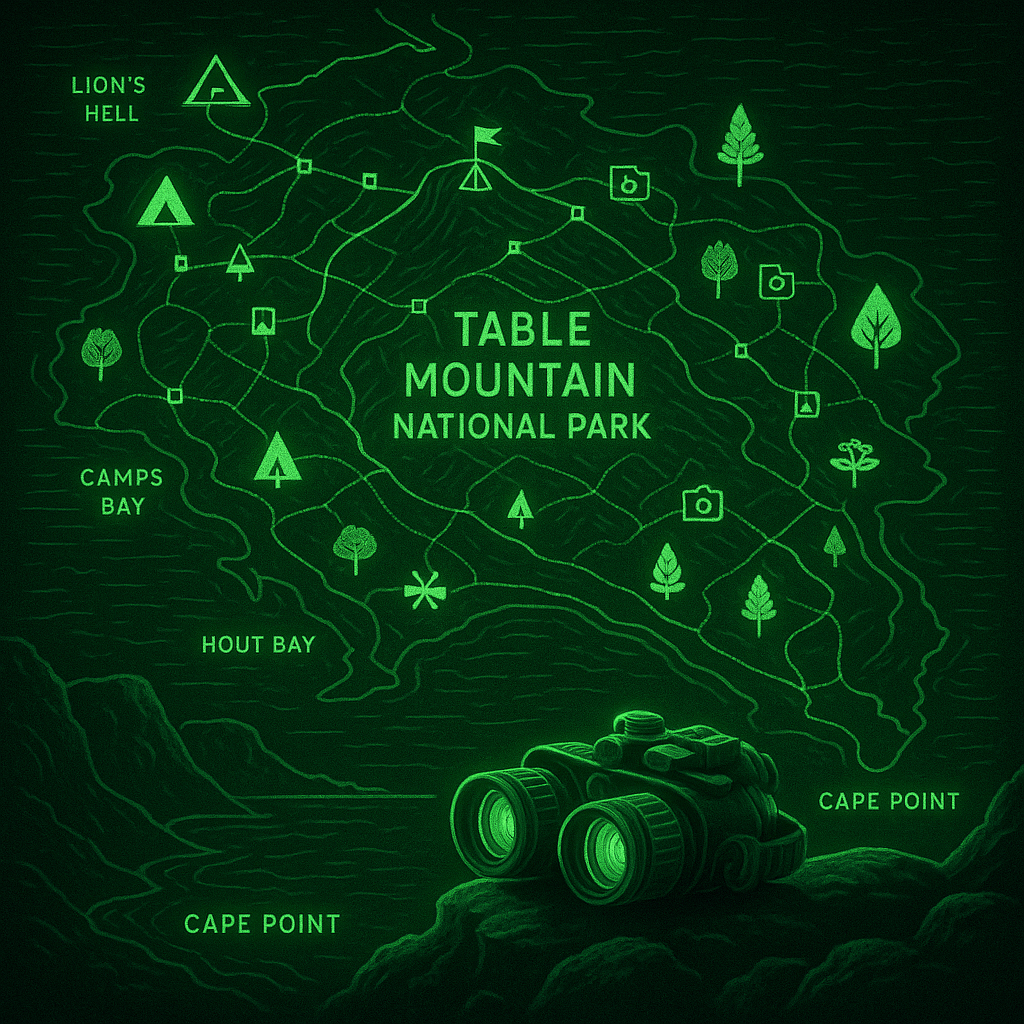
Discover Table Mountain National Park's invisible security network: K9 units, drones, radar, & analytics protect against crime.
Table Mountain National Park is guarded by a secret, round-the-clock defense system. This 'invisible shield' uses smart technology like algorithms, special dogs, radios, and radar. It helps catch poachers and thieves, making sure the mountain stays safe for everyone. The park uses predictive maps and works with many groups to protect its beauty every single day.
How is Table Mountain National Park protected from crime and poaching?
Table Mountain National Park is protected by an “invisible shield” combining algorithms, dogs, radios, and radar. This network includes night-vision lenses, scent-trained Labradors, marine radar buoys, and cell-phone triangulation towers. It uses predictive heat-maps, joint prosecution efforts, and a tiered surge response during high-risk periods like Easter to combat environmental crime and theft.
Get Cape Town news in your inbox
Stay updated with the latest stories from the Mother City.
Beneath the Postcard: A Living Security Net
From the moment the first pastel streaks of dawn brush Devil’s Peak until the last headlamp winks out on Lions Head, a silent choreography is unfolding inside Table Mountain National Park. Tourists ogle proteas for Instagram; hikers high-five at the summit. Few realise that every footstep is cushioned by an unseen lattice of algorithms, dogs, radios and radar. The 25 000-hecture ribbon of sandstone, fynbos and granite is ring-fenced by a patchwork of night-vision lenses, scent-trained Labradors, marine radar buoys, radio relays, cell-phone triangulation towers and neighbourhood-watch WhatsApp pings.
This is not one agency with one rulebook; it is a living network stitched together by shared frequencies, grant funding and an addiction to data. Over the past four weeks the park has run overlapping stings aimed at environmental crime and smash-and-grab theft, timed to coincide with the Easter surge. The headlines only capture the handcuff moment; below the waterline sit predictive heat-maps, joint prosecution memoranda and heart-rate data harvested from smart-watches strapped to ranger wrists.
April is historically the calendar’s danger node: schools empty, the first winter swell rolls in, and poachers rush to harvest abalone before rough seas shorten dive windows. The same diary logic draws light-fingered crews to trailhead parking lots swollen with rental cars. To meet that cadence, SANParks runs a “tiered surge” every Easter: two weeks of heightened readiness, daily crime dashboards, dogs on overtime rations. The recent raids at Smitswinkel Bay, Lions Head and Devil’s Peak all landed inside that 2024 surge window, validating both intelligence forecasts and the agility of the response stack.
Night Layer: How Dogs and Heat Maps Flushed Six Abalone Poachers
- Smitswinkel Bay, 23 April*
Civil twilight had barely surrendered when an Oryx helicopter left Ysterplaat Air Force Base, rotors thudding in blackout mode above 800 ft. Aboard, a Sea, Air and Mountain liaison officer beamed a live shapefile to the SANParks Ops Room: three thermal blobs hugging the dune belt between Smitswinkel and Black Rocks. By day that sand hump looks harmless; after dark it is the perfect logistics node - reachable by rubber duck, invisible from the road, muffled by coastal thicket.
At 22:13 two Land Cruisers killed their engines on the tar crest. Four Belgian Malinois - Rico, Saga, Duke, Luna - piled out, noses sifting the on-shore breeze. They had spent the afternoon imprinting on empty abalone sacks marinated in kelp and salt water. Four minutes later Rico froze: tail flat, one paw lifted, nostrils flared. Torchlight confirmed barefoot prints on shell grit; the handler whispered into his radio, “South-east footpath, heading for cave two.”
The sweep split. Alpha skirted milkwood thickets; Bravo leap-frogged along boulder scree. At 22:27 the dogs locked on again. Three suspects emerged from a net dyed midnight-black and stitched with dried kelp. A fourth bolted across granite plates. Luna, the lighter bitch, sprinted at 35 km/h down a rock ramp that would break a human ankle, collared the runner mid-air and held until rangers cuffed him. Look-outs hiding behind senecio bushes were nabbed with still-warm phones. Seized: fourteen dive bags, six modified garden rakes, a Pelican case stuffed with new SIM cards vacuum-sealed in plastic. By 01:10 all six detainees were booked into SAPS Kirstenhof under the Marine Living Resources Act. The dogs were asleep on mist-cooled sisal mattresses before 03:00.
- Hardware, Wetware and Funding*
Rico and Duke were whelped at SAPS Roodeplaat, then cross-trained at MEChem’s K9 academy in Midrand, toggling between narcotics and endangered-species scent work. Each handler must pass a 40-hour Tactical Canine module borrowed from London’s Metropolitan Police. The entire four-dog team is bank-rolled not by SANParks’ stretched operational kitty but by Global Environment Facility grants flowing through the Table Mountain Fund - a nuance that frees rangers from choosing between patrol kilometres and dog pellets.
Carpark Trap: Converting a Selfie Hot-Spot into a No-Go Zone for Smash-and-Grab Crews
- Lions Head, 27 April*
Lions Head’s upper parking lot is Cape Town’s most overcrowded vantage point. On a crisp Saturday up to three hundred cars squeeze into 120 bays while hikers fuss with headlamps and phone sticks. In 2019 the lot averaged two break-ins per weekend day. The fix was to treat the area like a nightclub district at closing time: saturate with uniforms, choke exit routes, never be predictable.
Just after dawn an undercover City Law Enforcement officer in neon lycra stretched against a rented VW Polo wired with dash-cams and an earpiece. At 07:48 METRO 1 net crackled: a silver Hyundai i20 on false plates had looped three times before backing bumper-to-bumper against a Toyota Fortuner. The passenger flicked a spark-plug chip - four seconds to spider a side window, the click lost beneath wind chatter.
What he miscalculated was the staggered response grid. The jogger-officer pivoted; a Metro van rolled uphill, high-beams blazing; two SANParks rangers dropped from the contour path above, cutting the escape line into fynbos toward Signal Hill. Window tap to cuffs: 67 seconds. Inside the Hyundai rangers found laptops, passports and a drone freshly lifted from the Fortuner. The 34-year-old repeat offender from Philippi confessed on the tar. Thanks to a 2022 MOU, property crimes inside the park are jointly prosecuted by the NPA and the City’s Environmental Compliance unit, pushing up bail thresholds and allowing location-specific exclusion orders.
- Why the Maths Works*
Data analysts call it “observable deterrence.” Since April 2022 reported break-ins at Lions Head have fallen 62 %. Arrests are nice; the real victory is when the WhatsApp group lights up with “left my laptop on the back seat and it was still there after the hike.” That zero-incident anecdote gets forwarded more often than any press release, reinforcing the perception - soon the reality - that the mountain is a bad market for car-thieves.
A Voice Note, a Heat Map and a Wedding Bouquet: Chasing Protea Rustlers off Devil’s Peak
- Devil’s Peak, 29 April*
Abalone syndicates steal headlines, but fynbos poaching quietly gnaws the ecosystem. A single king protea clump fetches R120 on the informal wedding market; rip it out and you also erase seed banks needed by Cape sugarbirds. The 29 April sting started with a 19-second voice note fired into a neighbourhood WhatsApp at 16:17: “Anyone missing proteas? Two guys with black nursery bags heading up the contour above King’s Blockhouse.” The clip was forwarded 17 times in 14 minutes.
At 16:34 it hit the SANParks duty controller who fed the phrase “above King’s Blockhouse” into EarthRanger. The platform mashed cell-tower pings against a 200 m hiking-buffer and spat out a GPS push-pin: 33.9575° S, 18.4275° E. A four-ranger standby squad at the lower cable station received the waypoint plus an intercept vector based on a 14-degree slope walking speed. They hit the ridgeline in 12 minutes, guided by ranger-only trail layers invisible to Google but refreshed each quarter by LiDAR fly-overs.
The team caught two seasonal pickers kneeling over a woven bag, secateurs in hand: 27 king protea heads, 14 spider-head serruria stems - all near-threatened - pre-lined with damp newspaper to keep blooms fresh for township stalls 15 km away. Both suspects, from Sir Lowry’s Pass, were charged under the Western Cape Nature Conservation Ordinance. Their Facebook Marketplace chats revealed a distribution ring in Bellville now under deeper investigation.
- Citizen Intelligence as Force Multiplier*
The Devil’s Peak episode illustrates the park’s third security layer - wetware. Twenty-eight registered neighbourhood-watch WhatsApp groups feed tips into a single Motorola WAVE channel. Rangers, Metro cops, Air Force 22 Squadron pilots and NSRI skippers can now push-to-talk each other without exchanging phone numbers. Tips that once vanished into digital echo chambers now end as lat-long coordinates on a ranger’s handset within minutes.
The Stack, the Surge and the Story: Keeping the Mountain a Shared Asset
- Hardware, Software, Wetware*
Inside SANParks the backbone is called the Integrated Environmental Security Stack. Tier one is hardware: thermal eyes that tell a human from an antelope at 2 km; HF repeaters on Paulsberg and Noordhoek Peak after 2020 fire torched the old mast; six LoRaWAN camera traps running on 20 W solar mats.
Tier two is software: EarthRanger and Wildlife Insights crunch nightly data - every seized abalone bag, smashed car window, twisted ankle - geo-tagged and time-stamped. Machine-learning models now forecast, with 78 % accuracy, which weekends will see crime spikes using moon phase, tide charts, weather and social-media sentiment scraped from neighbourhood groups.
Tier three is human networks. The 650-strong ranger corps is formally linked to 28 neighbourhood watches, City Metro Police, SAPS, NSRI, Air Force 22 Squadron and harbour customs, all talking over a single encrypted channel. Reaction loops that once chewed up weeks now tighten to days.
-
From Action to Adaptation in 48 Hours*
Within 48 hours of each incident, an after-action compendium lands on a Google Meet attended by dog handlers, detectives and ecologists. Notes include wind direction that fooled scent dogs, 22-knot salt-spray drone battery drain, and smart-watch heart-rate fatigue curves. Micro-lessons are baked into next week’s patrol matrix. -
Sharing the Back-Story with the Public*
Visitors may notice only a ranger and a wagging dog at a trailhead, but every vista rests on thousands of invisible micro-decisions. SANParks soft-publishes this choreography on a portal titled “Behind the Mountain,” releasing de-classified drone stills, seizure stats and short radio-traffic clips. Views hover near 30 000 a month - small by social-media standards, yet proof that Capetonians increasingly realise the mountain is not a backdrop but a shared asset under active, technologically nuanced guard.
How is Table Mountain National Park protected from crime and poaching?
Table Mountain National Park is protected by a sophisticated "invisible shield" that integrates various technologies and human networks. This includes algorithms, specialized scent-trained dogs (like Labradors and Belgian Malinois), radios, radar, night-vision lenses, marine radar buoys, and cell-phone triangulation towers. Predictive maps and data analysis also play a crucial role in anticipating and preventing incidents.
What kind of technology is used to protect the park?
The park utilizes a three-tiered security stack:
* Hardware: This includes thermal cameras capable of detecting humans from 2 km, HF repeaters, and LoRaWAN camera traps powered by solar mats.
* Software: Platforms like EarthRanger and Wildlife Insights process vast amounts of geo-tagged and time-stamped data, from seized items to incidents. Machine-learning models predict crime spikes with 78% accuracy based on factors like moon phase, tide charts, weather, and social media sentiment.
* Wetware: This refers to the human networks, including the 650-strong ranger corps, linked to 28 neighborhood watches, City Metro Police, SAPS, NSRI, Air Force 22 Squadron, and harbor customs, all communicating via a single encrypted channel.
How does the park combat abalone poaching?
Abalone poaching is tackled with a combination of advanced surveillance and K9 units. For instance, in a recent sting, an Oryx helicopter with night-vision spotted thermal signatures of poachers. Scent-trained dogs like Belgian Malinois were then deployed, tracking footprints and leading rangers to apprehend the suspects and seize their equipment, including dive bags and modified rakes. The dogs are specifically cross-trained for endangered-species scent work.
How are car smash-and-grabs prevented at popular spots like Lion's Head?
At high-risk locations like Lion's Head parking lot, a strategy of "observable deterrence" is employed. This involves saturating the area with visible and undercover law enforcement, controlling exit routes, and maintaining unpredictability. For example, an undercover officer in neon lycra, equipped with dash-cams and an earpiece, might act as a decoy. When a crime is identified, a staggered response grid, involving Metro vans and SANParks rangers, quickly intercepts suspects, often within seconds. This approach has led to a 62% reduction in reported break-ins since April 2022.
How does citizen intelligence contribute to the park's security?
Citizen intelligence is a vital

Emma Botha is a Cape Town-based journalist who chronicles the city’s shifting social-justice landscape for the Mail & Guardian, tracing stories from Parliament floor to Khayelitsha kitchen tables. Born and raised on the slopes of Devil’s Peak, she still hikes Lion’s Head before deadline days to remind herself why the mountain and the Mother City will always be her compass.
View all articles →