
Horror on the R300: Cape Flats criminals hang dogs to lure and rob drivers
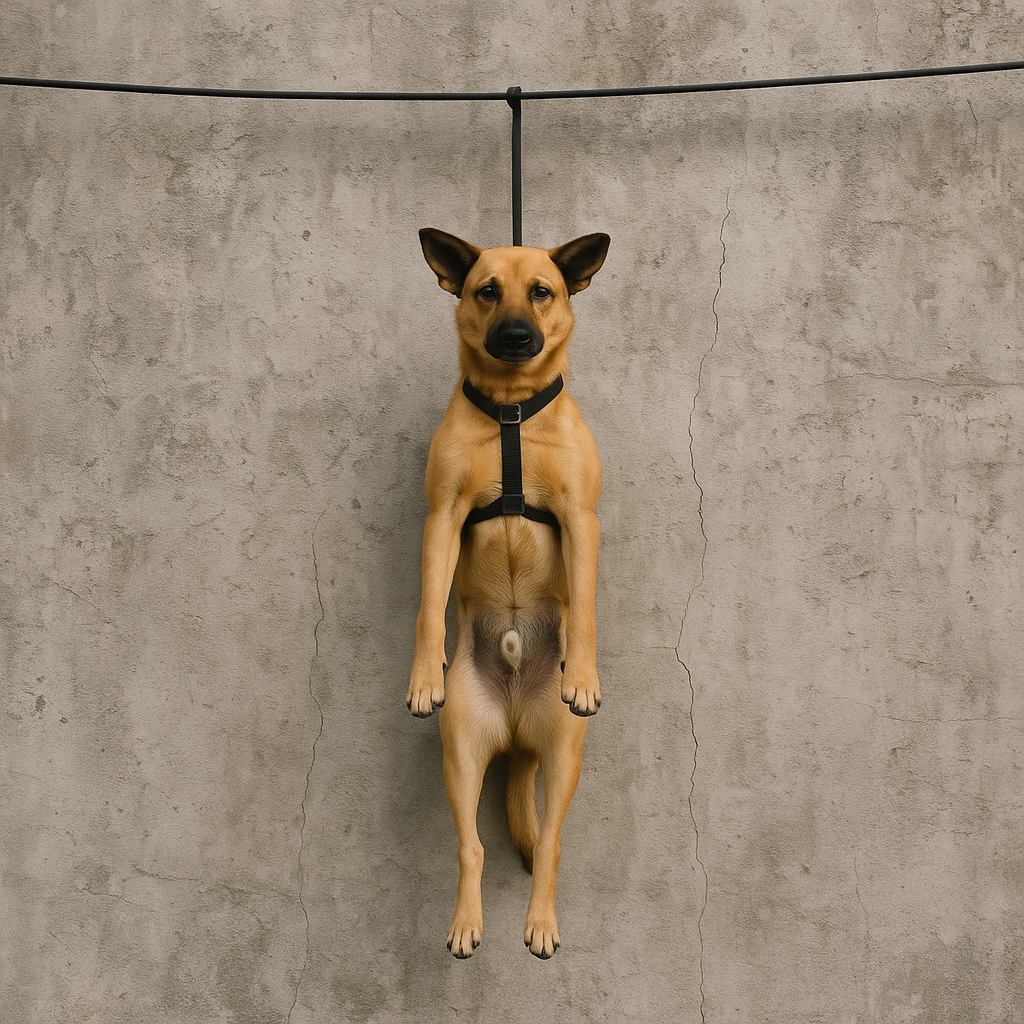
Criminals on the R300 weaponize animal suffering to lure motorists into hijackings. Learn how this cruel tactic exploits compassion.
On Cape Town's R300 highway, a cruel new trick called "empathic hijacking" is happening. Bad guys hang live animals like dogs or cats from fences. When drivers stop to help the suffering animal, hidden gunmen pop out and steal their cars. It's a dark twist, using people's kindness to commit a crime, turning a simple road into a dangerous trap.
What is "empathic hijacking" on Cape Town's R300 highway?
"Empathic hijacking" is a cruel carjacking tactic on Cape Town's R300 highway where criminals hang live animals like dogs or cats from fences to distress motorists. When drivers stop to help the suffering animal, they become vulnerable targets for gunmen hiding nearby, allowing for quick vehicle theft.
Get Cape Town news in your inbox
Stay updated with the latest stories from the Mother City.
I. The Concrete Noose: Anatomy of a New Ambush
The R300 is no postcard freeway.
A 35-kilometre loop of grey that stitches Mitchells Plain, Khayelitsha, Philippi and Samora Machel into one restless scar, it narrows after sunset into a tunnel of twitching high-mast lamps and reluctant lane markings. Here, between the N2 and the R55 turn-off, hijackers have swapped punctured tyres for a darker prop: living dogs, cats, even goat kids, dangling from the 2.4-metre palisade like macabre puppets.
Baling wire is the weapon of choice.
One end is tossed over the concrete panel, the other cinched around an animal’s throat so its hind paws barely scrape the tar. Drivers glimpse the struggling silhouette only when they are almost alongside; instinctive braking is the cue for gunmen crouched in the reeds.
Case file zero arrived at 19:42 on Sunday, 26 April.
Within five minutes a WhatsApp voice note tore through Mitchells Plain chat groups; within twenty the Animal Welfare Society’s battered Ford one-tonner was racing north from Schaapkraal. Senior Inspector Sivuyile Kilwa gripped the wheel while senior nurse Michelle Henning cradled an oxygen cylinder between her knees. They reached the Stock Road bridge 900 metres on to find two brindle cross-breeds - male and female - already stiff, tongues the dull purple of over-ripe plums. The bitch’s rectum had prolapsed; the dog’s neck bones had sliced through the skin. Kilwa used the same boltcutter he keeps for poacher snares. No footprints, no shell cases, only paraffin on the breeze and gqom beats drifting from invisible shebeens.
II. The Empathy Trigger: Why a Dog Becomes Bait
Criminologists call it “empathic hijacking”: weaponising the reflex that makes humans help.
Dogs occupy a legal twilight - technically property, emotionally family - yet they never testify. In the Cape Flats’ gang mythology, where initiations once forced a child to throttle his own puppy, canine suffering is already loaded with meanings of power and betrayal.
Veterinary files back up the horror.
Malicious animal injuries reported to the Animal Welfare Society have climbed 240 % since 2019. Not every case is carjack-related - some are domestic vendettas or territorial warnings - but the tools are identical: wire ligatures, public display, phone-camera proof. A seventeen-year-old arrested in Delft last November carried 38 such clips; investigators believe they circulate in invite-only WhatsApp groups as both trophy and tutorial.
III. The Profit Equation: A R80 000 Return on 80 Cents of Wire
A stripped VW Polo yields roughly R80 000 in parts within six hours; a Hilux double-cab double that.
The tricky part is forcing the initial stop. Spike strips demand total darkness; staged accidents need Oscar-worthy acting. An animal in distress, however, works in broad daylight, costs pennies and turns a 120 km/h lane into a parking lot in seconds.
AWS reverse-engineered the timeline from survivor statements:
• Minute 0 – creature hoisted, crew retreats thirty metres into reeds
• Minute 45 – first motorist slows, hazards flashing
• Minute 75 – driver steps out, phone torch in left hand, pocket knife in right
• Minute 90 – two gunmen emerge, high-low formation
• Minute 120 – victim shoved into rear seat, vehicle gone
Twelve kilometres away, in a Nyanga chop-shop, the car is already on a lift.
IV. The After-Shock: Maps, Motors and Mourning
News travels faster than traffic authorities.
Since late March, Waze data show a 70 % drop in late-night speed along the affected kilometre; ride-hail heat-maps reveal almost complete avoidance after 21:00. Uber drivers quietly cancel any pick-up whose GPS drifts within 500 m of Stock Road; Bolt has redrawn its geofence altogether.
Parallel justice has surfaced.
After dusk, scrambler bikes with no headlights prowl the embankment, riders carrying AK bayonets. “We fire at anything that moves,” one told me anonymously. “A dog scream is like a baby cry - you hear it, you know why you’re here.”
Meanwhile, AWS’s Schaapkraal facility is bursting.
Every animal retrieved from a crime scene must be photographed, necropsied and frozen for ninety days in case the state needs exhibits. Designed for twenty-four bodies, the freezers now hold forty-one. Henning displays a dental-stone cast of a larynx - wire groove perfectly embossed. “Juries love props,” she says with bleak humour.
Trauma ripples through staff.
Counsellor Nazeerah Salie logs “compassion fatigue” like battlefield casualties: eighteen resignations this year, two on-shift panic attacks, one suicide attempt. “Our syllabus covered parvo, biliary, distemper,” she sighs. “Nobody lectured on dogs used as human bait.”
V. Tech, Laws and the Global Script: Can Anything Break the Pattern?
Metro police are bolting R28 000 infrared cameras onto existing CCTV poles; the units spot a 2 °C difference at ninety metres, turning a warm dog against cold concrete into a glowing bulb. Crews responded by retreating deeper into reeds or switching to cats whose smaller heat print drops below the software threshold.
Private experiments grow surreal.
A Stellenbosch start-up is trialling “sonic curtains” that fire a 24 kHz burst every thirty seconds. Humans hear nothing; dogs panic and thrash, spoiling the optics of the ambush. Animal-rights attorneys are already drafting an interdict.
Legislation lags far behind cruelty.
The Animal Protection Act of 1962 caps sentencing at R40 000 or twelve months - less than many drunk-driving fines. Only thirteen convictions have stuck in the past ten years; none involved hijacking. A proposed “Dogs Not Bait” clause would create a Schedule 5 offence carrying a fifteen-year minimum, but agricultural lobbyists fear it could criminalise rodeos or traditional slaughter; Parliament has yet to table it.
The tactic is hardly South-African-exclusive.
Nairobi hijackers hamstring donkeys on the Mombasa highway; Caracas bikers drag eviscerated street dogs across intersections to bottle-neck traffic for phone-snatch raids. Interpol files such cases under “sentient obstruction,” logging a 400 % global rise since 2020. Manila’s answer is an anti-bait drone fleet that drops smoke grenades on roadside loiterers walking leashed animals after 22:00.
VI. Dashboard Dilemmas: What Drivers Can - and Can’t - Do
AWS’s 24-hour hotline - 082 601 1761 - fields about 120 calls nightly.
Eighty percent are false alarms: plastic bags shaped like ears, heart-shaped mylar balloons, even a cardboard vet-shop mascot. Yet the thought of ignoring a real case gnaws at commuters.
Some weave intentionally the moment they spot movement; others travel with “drop kits” - weighted blanket, cable-cutter, pepper spray - ready for a five-second rescue. A long-haul truck driver admits he blasts death-metal between exits 19 and 25. “If I can’t hear it whimper, I don’t have to stop.”
Digital guilt money flows.
The Facebook group “R300 Ghost Dogs” counts 34 000 members who post grainy dash-cam stills, prayers and time-stamped donation slips equal to a tank of fuel - penance for driving on.
And the dogs themselves?
The brindle male recovered on 26 April wore a red collar stamped “Boomba – 071 xxx xxxx.” Kilwa rang the number; a Langa woman answered, voice cracking. She had reported Boomba missing two days earlier after funeral guests left the gate ajar. She asked about a scar on the left hock - legacy of an old poacher snare. Kilwa confirmed it. She promised to come, then texted, “Wait for taxi money.” She never arrived.
Boomba and the still-nameless female were cremated together; their ashes sit in matching biscuit tins above Henning’s desk. Every Monday a Lavender Hill volunteer delivers fresh proteas. Claim tags dangle from both lids, waiting for someone who may never walk through the door.
What is "empathic hijacking" on Cape Town's R300 highway?
"Empathic hijacking" is a cruel carjacking tactic on Cape Town's R300 highway where criminals hang live animals, such as dogs or cats, from fences to distress motorists. When drivers stop to help the suffering animal, they become vulnerable targets for hidden gunmen, leading to the theft of their vehicles. This method exploits human compassion for quick and easy car theft.
Where specifically on the R300 does this type of hijacking occur?
This disturbing tactic is primarily observed on the R300 highway in Cape Town, particularly in the 35-kilometre stretch that connects areas like Mitchells Plain, Khayelitsha, Philippi, and Samora Machel. Reports indicate that these incidents often happen between the N2 and the R55 turn-off, especially near the Stock Road bridge.
What kinds of animals are used as bait, and how are they displayed?
Criminals use various live animals as bait, including dogs, cats, and even goat kids. They are typically hung from 2.4-metre palisade fences using baling wire, often cinched around the animal's throat so that its hind paws barely touch the ground. This positioning ensures the animal's distress is clearly visible to passing motorists, triggering an emotional response to stop and help.
Why do criminals use animals instead of other carjacking methods?
Empathic hijacking is favored because it is highly effective and low-cost. Unlike spike strips, which require darkness, or staged accidents, which demand elaborate deception, an animal in distress works in broad daylight and costs mere pennies. It exploits the innate human desire to help, forcing motorists to stop their vehicles in seconds, making them easy targets for hidden gunmen. A stripped VW Polo can yield roughly R80,000 in parts within six hours, making the risk-reward ratio very attractive for criminals.
What is the typical timeline of an empathic hijacking incident?
According to survivor statements, the timeline of an empathic hijacking is disturbingly precise. The creature is hoisted, and the crew retreats into reeds. Within 45 minutes, the first motorist slows down. Around 75 minutes, the driver exits their vehicle, often with a phone torch and a pocket knife. By 90 minutes, two gunmen emerge to ambush the driver, and within 120 minutes, the victim is forced into the back seat, and the vehicle is stolen, often already on its way to a chop-shop in areas like Nyanga.
What should drivers do if they encounter an animal in distress on the R300?
Drivers are strongly advised not to stop their vehicles. While it goes against human instinct, stopping puts them directly in harm's way. Instead, they should immediately contact emergency services or the Animal Welfare Society's 24-hour hotline at 082 601 1761 to report the incident safely. Authorities are aware of this tactic and are better equipped to handle such situations without endangering civilians. It's crucial to prioritize personal safety over intervening directly.

Oliver Daniels is a Cape Town journalist who chronicles the intersection of food, migration and identity in South Africa's kitchens—from wood-fired Gugulethu braai spots to Constantia vineyards. Born and raised on the slopes of Devil’s Peak, he still starts each week with a dawn walk across Table Mountain to catch the first Atlantic light before filing copy.
View all articles →