
Human remains found in crocodile during search for missing businessman
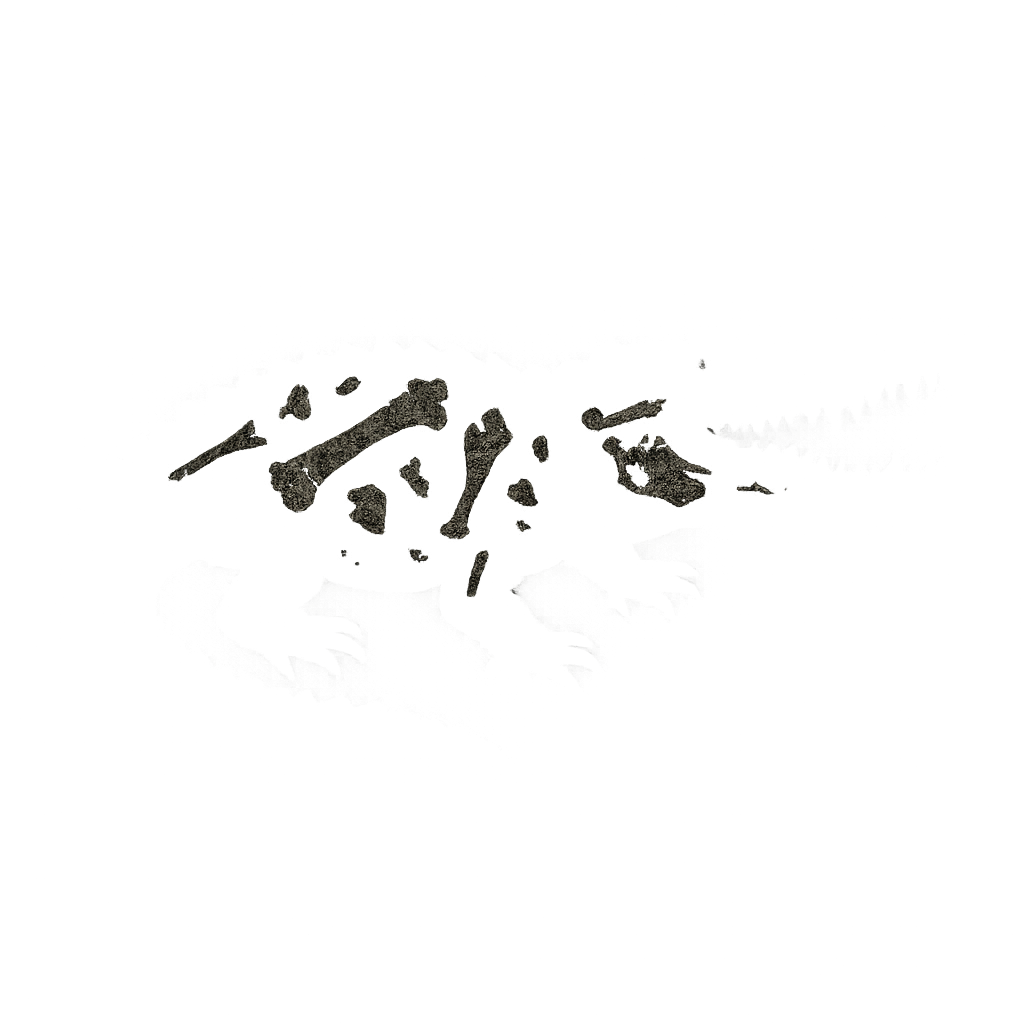
A Komati River crocodile holds the key to a missing person's last journey. Forensic science unravels a tragic flood accident.
In a thrilling case, a missing citrus grower's last journey was traced using a crocodile! After his truck was found empty in a flooded river, investigators realized a crocodile might hold the key. They caught a specific croc, Mkhondo, and found human remains in its stomach. Science proved the remains belonged to the missing man, and Mkhondo's GPS even helped show when and where the sad event likely happened, turning a reptile into a silent witness.
How can a crocodile be used as evidence in a criminal investigation?
Lawyers can argue that a specific crocodile is an "instrumentality" of an offense, similar to impounding a weapon. After securing a warrant, forensic scientists can analyze the crocodile's stomach contents for human remains, using DNA sequencing and other techniques to link it to a missing person.
Get Cape Town news in your inbox
Stay updated with the latest stories from the Mother City.
Section 1 – A Quiet Crossing That Keeps Its Secrets
The Komati River spills off the escarpment, wriggles through gum plantations and unravels across a sandy flood-plain before it slips into Mozambique. Its last South-African hurdle is a minimalist concrete shelf at Komatipoort: two parallel strips bolted to bedrock, no arch, no guardrails above the deck. When the water behaves, the crossing is a handy shortcut; when the heavens open, the river simply erases the structure and drivers must guess where the edge is.
At dawn on 17 May a citrus grower spotted a gleam mid-stream: a white Ford Ranger, bonnet wedged downstream, tail high, cabin flooded but windows shut. Plates were readable, yet the cab was empty. Phones vibrated across Mbombela WhatsApp groups; by breakfast the words “produce exporter, 42, missing” were pinned to the story. Staff at his pack-house recalled he had headed out the previous afternoon, promising to “use the back road” to inspect ripening fruit near the border.
Those twin ribbons of concrete had swallowed him without witnesses. No skid marks, no horn blast, no shattered headlight - just the vehicle acting as a silent tombstone until the river chose to give it back.
Section 2 – Why Water Wins on Low-Level Bridges
Hydrologists call these crossings “drowning machines.” Six extra centimetres of depth can triple the force shoving against a door; twelve will float a double-cab like a cork. Once the engine stalls the current spins the chassis sideways, water pressure clamps the doors, and the cabin turns into a steel coffin. Mpumalanga’s road agency has fitted sensor-booms on four comparable drifts; the Komati crossing is still waiting.
Divers located the bakkie only ten metres downstream, pinned against a fever-tree trunk. Airbags had not fired - impact speed was too low - so rescuers clung to the hope the driver had wriggled out. Tracker dogs found no scent trail on either bank, and an infrared drone revealed only waterbuck and the tell-tale V-wakes of crocodiles sliding off the sand.
By the third day the mission shifted from rescue to evidence hunt. Sonar “blobs” in the silt and a motionless four-metre heat signature suggested a large reptile sitting on something worth guarding. Investigators faced a macabre question: could one specific crocodile be treated as a mobile crime scene?
Section 3 – Turning an Apex Predator into Evidence
Getting a search warrant for wildlife usually involves rhino horn or abalone. Lawyers had to convince a magistrate that the crocodile itself was an “instrumentality” of an offence, the same way you would impound a knife. Permission granted, the next hurdle was picking the culprit. Rangers bolted four cage traps on the bank, baited them with warthog haunches and streamed live footage to a tactical tablet. Thirty-six hours later a 4.1-m male with an existing telemetry collar - call-sign “Mkhondo” - took the bait.
A wildlife vet darted the animal with etorphine and medetomidine, the same cocktail used on elephant, then rolled a portable X-ray over the sedated beast. Ghost-white chips showed up in the stomach: chunks too thick for antelope, too robust for fish. Investigators elected to euthanase with pentobarbital and trucked the carcass to a mobile abattoir to sieve the gut under full chain-of-custody lights.
They hosed the stomach across three 250-micron tarpaulins and collected every solid fragment: 28 bone splinters, a molar with an amalgam patch, a stainless watch case frozen at 02:17, and a scrap of denim sporting a brass zipper. Each item was photographed, GPS-tagged and slipped into wet paper evidence bags to stop salt crystallisation.
Section 4 – Science in the Belly of the Beast
Crocodile gastric acid clocks in below pH 2 - stronger than car-battery fluid - yet dense bone can linger for weeks. Nuclear DNA usually needs 100 nanograms; the biggest splinter offered 0.04 ng. Pretoria’s forensic lab therefore switched to mitochondrial sequencing, amplifying a 346-base-pair slice of the hypervariable HVI/II region. The sequence lined up perfectly with a swab from the businessman’s sister, delivering a maternal-match likelihood of 99.87%. Surface swabs showed zero crocodile DNA, proving the bones were swallowed whole rather than chewed on the bank - a detail consistent with post-mortem scavenging after drowning.
While the DNA dried, engineers fed drone footage and truck dash-cam data into hydraulic software. They fixed the flow at 210 cubic metres per second, 42 cm above the deck, moving at 3.1 m/s - enough to hydroplane a 2.1-ton pick-up. Once the front tyres lost grip the vehicle yawed 17°, caught the downstream kerb, and pivoted into the torrent. Cabin equalisation took roughly 45 seconds; survival horizon for an unbelted occupant was under two. The body most probably shot out the missing rear window and drifted 190 m to a root mat where Mkhondo was loafing.
The tagged crocodile’s GPS log provided an alibi of sorts: the animal had left the main river on 15 May, spent two days in an irrigation canal, and only re-entered the Komati 1.3 km below the bridge after the crash. For the first time in South African legal history, a reptile’s satellite breadcrumb trail may be tendered as a “digital witness” to the sequencing of a death.
How was a crocodile used to solve the mystery of a missing citrus grower?
A missing citrus grower's truck was found empty in a flooded river. Investigators suspected a crocodile might be involved and, after obtaining a warrant, caught a specific crocodile named Mkhondo. Human remains found in Mkhondo's stomach were scientifically linked to the missing man through DNA sequencing. Mkhondo's GPS data also helped pinpoint the approximate time and location of the incident.
Can a crocodile be considered an 'instrumentality' of a crime?
Yes, in a novel legal approach, lawyers successfully argued that a specific crocodile could be considered an "instrumentality" of an offense, similar to how a weapon might be impounded. This allowed for a search warrant to be issued, enabling forensic analysis of the crocodile's stomach contents for evidence.
What specialized forensic techniques were used to identify the human remains?
Due to the highly corrosive nature of crocodile gastric acid (below pH 2), traditional nuclear DNA sequencing was difficult as only a tiny amount of DNA was recovered. Forensic scientists utilized mitochondrial DNA sequencing, which targets a smaller, more robust part of the genome, to amplify a specific region and establish a maternal match with the missing man's sister with 99.87% certainty.
How did investigators determine the sequence of events leading to the man's death?
Engineers used drone footage and truck dash-cam data to create a hydraulic simulation of the river conditions at the time of the incident. This helped them understand how the vehicle was swept away and how quickly the cabin would have flooded. Combined with the analysis of the human remains, it was concluded that the man likely drowned and his body drifted to where Mkhondo was located for post-mortem scavenging.
How did Mkhondo's GPS data contribute to the investigation?
Mkhondo, the crocodile, had an existing telemetry collar that provided GPS logs. This data showed that Mkhondo had only re-entered the Komati River downstream from the bridge after the truck crash occurred. This effectively provided an "alibi" for the crocodile, indicating it was not involved in the initial drowning but rather scavenged the body post-mortem. This GPS data was considered a "digital witness" to the sequence of events, a first in South African legal history.
Why are low-level river crossings, like the one in this case, considered dangerous?
Hydrologists refer to these crossings as "drowning machines." Even a small increase in water depth can significantly multiply the force against a vehicle, and twelve centimeters of water can float a double-cab truck. Once the engine stalls, water pressure can clamp the doors shut, turning the cabin into a steel coffin. The lack of guardrails and the difficulty in discerning the edge during floods make these crossings particularly hazardous.

Sarah Kendricks is a Cape Town journalist who covers the city’s vibrant food scene, from township kitchens reinventing heritage dishes to sustainable fine-dining at the foot of Table Mountain. Raised between Bo-Kaap spice stalls and her grandmother’s kitchen in Khayelitsha, she brings a lived intimacy to every story, tracing how a plate of food carries the politics, migrations and memories of the Cape.
View all articles →