
Fourth vigilante killing in Philippi since 12 January
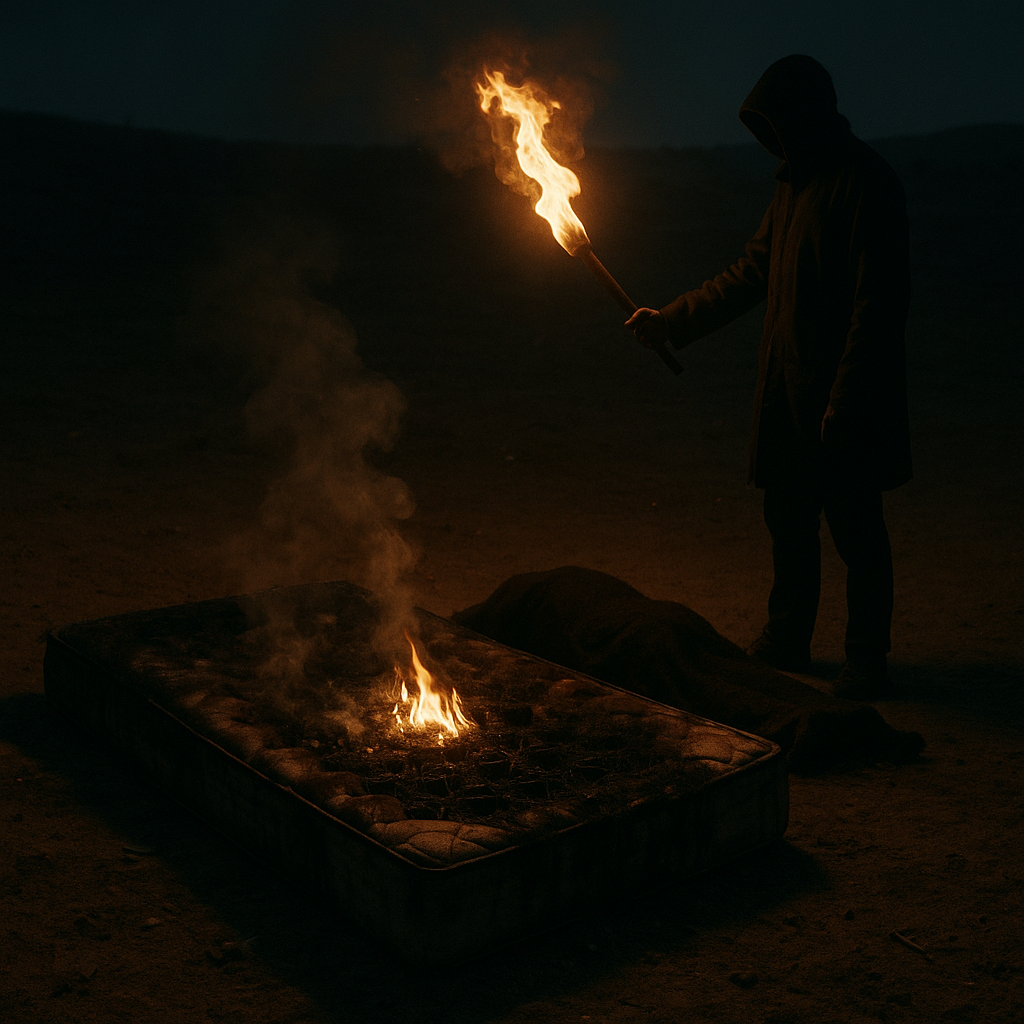
Inside Philippi's vigilante killing fields, where screams rise & justice is immediate. A harrowing look at mob rule in Cape Town's murder capital.
In Philippi, when people feel forgotten by the law, they take justice into their own hands. This often means public executions and burnings of suspected criminals, sometimes based on rumors. These 'midnight courts' happen because there's lots of crime and not enough police. People use whatever they can find, like mattresses and petrol, to carry out these brutal acts, and they even record them on their phones. It's a harsh cycle where quick, violent justice replaces slow, formal processes, leaving behind only ashes and fear.
What is "do-it-yourself justice" in Philippi?
"Do-it-yourself justice" in Philippi refers to vigilante actions, often involving public executions and burnings, carried out by residents who feel abandoned by formal law enforcement. This practice, driven by high crime rates and a lack of effective policing, involves communities taking immediate, brutal action against suspected criminals, often fueled by rumors and social media.
Get Cape Town news in your inbox
Stay updated with the latest stories from the Mother City.
1. A Moonlit Verdict
At 02:17 on a breath-frost Thursday, Mbovane Street crackles like dry kindling.
A single shriek slices the Browns Farm night; before the corner shop’s cigarette display can fog up, the accused is already stripped, motionless, anonymous.
A discarded queen-size mattress - its striped ticking scarred by years of sleepless nights - becomes judge, jury and coffin; someone thumbs a cheap lighter, polyurethane ignites, and phones record in steady landscape mode while children rub smoke from their eyes.
No sirens, no uniforms, no paperwork - only the low murmur of two-dozen neighbours who have learned that formal justice arrives even later than winter.
This was the fourth public execution here since Twelfth Night; the body tally now stands at five - four cremated past dental-ID range, one pulped so completely the mortuary used a household sponge to gather cheekbones.
Police registers insist all cases are “under investigation,” yet locals swear the dockets are already curling like old onion skins at the back of Nyanga station, unnumbered and unloved.
2. Where the Map Runs Out of Roads
Philippi stretches 32 kilometres between the N2 highway and market gardens that once fed the city.
Farmland became a dumping ground for District Six removals in the 80s, then a reception camp for amaXhosa families fleeing the Transkei’s economic collapse.
Today 1.2 million souls squeeze into a precinct built for tractors; on paper 240 officers patrol them, but subtract sick leave, funerals and court days and the real figure hovers nearer 160.
Nyanga SAPS has worn the national “murder capital” medal almost every year since 2015 - 410 killings in 2022, more than the entire state of Botswana.
Statistics, however, do not smell of cheap brandy and paraffin.
Walk the dirt arteries at dusk: every fourth shack doubles as a shebeen, every tenth teenager straps a panga to his shin with masking tape, every second gogo keeps a chipped enamel mug for the grandson who never returned from the spaza.
Streetlights arrived before the 2010 World Cup; copper thieves harvested the cabling within months, leaving darkness as the only reliable utility.
3. Anatomy of an Instant Court
Witnesses describe an almost choreographed ritual.
First, the alarm: “Amasela!” - thieves - travels faster than mobile data.
Next, the hunt: barefoot boys vault trenches, aunties block alleys with wheelie bins, taxi guards angle headlights to form a moving cordon.
Capture is clumsy but quick; clothes become trophies and shoes fly off like startled birds.
Interrogation lasts seconds.
Questions in isiXhosa, Afrikaans and tsotsitaal overlap: “Where’s the phone?” “Who sent you?”
Ntsikelelo Mkiti, a forklift driver who has watched three such scenes, says suspects talk fast - “nobody wants to be the first to leak.”
Sticks, bricks and paving stones follow; when movement stops, a mattress or cardboard box appears, doused in lawnmower petrol.
Fire erases fingerprints, faces, doubt.
By the time a police van negotiates the ruts, only smoke and small bones remain; the crowd has scattered, children ordered indoors to finish homework they will never hand in.
4. Erased Names, Endless Smoke
The Mbovane corpse carried no papers; the mortuary lists him as “Philippi Unknown 4/2024”.
Rumour offers conflicting biographies - some call him Spha the repeat burglar fresh from Pollsmoor, others say he was merely drunk and looking for a toilet.
Truth is unnecessary; ambiguity lets neighbours sleep.
Twelve nights earlier, 18-year-old Sinethemba Mxhaso died on the same gravel.
Accused of stealing a Nokia and R120 of funeral-society money, he was filmed on his knees, left eye swollen shut, whispering “ndicela uxolo”.
The clip ends with a brick; the sound continues - wet percussion, melon on concrete.
WhatsApp circulated it for four days before admins deleted it, but every teenager already stashed a copy in a hidden folder, a souvenir of civic education.
5. Economics of a Riot
Ask why residents choose fire over courts and the answer is a balance sheet.
One court date costs R44 taxi fare, a full day’s wage and often ends with the investigating officer “losing” the serial number of the stolen TV.
Vigilante justice is immediate and costs only what you already own: a discarded mattress, a cup of petrol, the emotional change you carry in your pocket.
Inequality sharpens the maths.
Ten kilometres west, Constantia’s private guards outnumber residents eight to one; here, one state officer serves 5,000 people.
When the state’s shadow shrinks, other structures stretch - gangs levy tax, prophets sell miracles, midnight courts convene at crossroads.
6. Flames That Speak
Fire is never random; it is a telegram written in smoke.
In the 1980s, comrades torched suspected informers to signal liberation; in the 1990s, hostel wars used tyres to draw ethnic borders.
Today the message is minimalist: “We can erase you.”
A mattress, the most intimate furniture of the poor - births, love, death happen upon it - becomes a portable crematorium when flipped.
By setting it alight, residents prove they can invert the world: what once gave rest now delivers annihilation.
Anthropologist Rita Segato notes that lynchings surge when communities feel “ontologically abandoned”.
Each flaming rectangle is punctuation in a long, angry sentence: “We no longer petition to be heard; we command to be feared.”
7. Survivors Who Don’t Survive
Little is said of those who live halfway.
On 13 February a man known only as Langa was stoned alongside an alleged smash-and-grabber but still breathed when paramedics arrived.
He spent 36 hours at Groote Schuur, left without protection, and was shot seven times at a spaza three weeks later.
Hospital discharge, locals shrug, equals guilt confirmed; guilt confirmed equals homework for the mob.
8. Officers without Dockets
Privately, a detective admits two vigilante files vanish every week - paper stolen for joints, cardboard repurposed for shack stencils.
Even intact dockets collapse under witness terror: a 12-year-old girl caught filming a killing was coached by her gogo, “Say nothing or you’ll go blind.”
The case closed in 30 days, tagged “undetected”.
On record, provincial spokespeople recite, “Mob justice is criminal.”
Yet Nyanga has had no permanent detective sergeant since October 2022; the post stays vacant because no cop wants to raise children who share playgrounds with tomorrow’s enforcers.
9. NGOs Outnumbered, Phones Outpacing Hope
The Institute for Security Studies runs bystander workshops - form a ring, call the sector commander, chant “the law is good”.
A typical class graduates 30 people; a typical mob recruits 200 within minutes.
Research shows one lynching raises the chance of a second by 64 percent within 90 days, a contagion curve that rivals cholera.
WhatsApp groups - “Browns Farm Crime Alert”, “Police on Duty” - double as both court and archive.
A voice note in isiXhosa can mobilise a street before data-saver mode kicks in.
Meta’s moderation misses vernacular imperatives like “Phantsa i-sparo”; by the time admins delete, the clip lives forever on Telegram’s encrypted cloud.
10. Children’s Games, Grandmothers’ Silence
The morning after the Mbovane burning, seven-year-old Aviwe wraps her Barbie in foam, labels it “skelam”, strikes a match.
Her gogo laughs, then catches herself.
Psychologists warn that witnessing extrajudicial violence installs “moral shortcuts” before conscience forms, yet Browns Farm offers no other playground; the only open field is yesterday’s scorched sand.
11. Promises That Rot Before They Sprout
In 2018 the City budgeted a police substation on Sheffield Road; the money vanished into flood repairs.
A CCTV mast erected in 2021 now stares at its own severed cables, a metal scarecrow with nothing to frighten.
Neighbourhood watches survive on R10 monthly dues, a cowbell and one rechargeable torch.
When the bell rings at 3 a.m., members choose between heroic death and strategic snoring; most choose the latter, admitting it keeps both them and the mob alive.
12. Tomorrow’s Script, Already Written
Tonight another young man will step out for electricity tokens, wearing the wrong hoodie, taking the wrong shortcut.
A WhatsApp prophecy will flare, the cowbell will stay silent, and by sunrise the sand will darken one more patch.
The city will wake to headlines, NGOs will tally grants, police will promise visible policing, and somewhere a child will practise the next burning with a matchstick and a plastic doll - because in Philippi the court is always in session, and the verdict is always ash.
{"faq": [{"question": "What is \"do-it-yourself justice\" in Philippi?", "answer": "\"Do-it-yourself justice\" in Philippi refers to vigilante actions, often involving public executions and burnings, carried out by residents who feel abandoned by formal law enforcement. This practice, driven by high crime rates and a lack of effective policing, involves communities taking immediate, brutal action against suspected criminals, often fueled by rumors and social media."},
{"question": "Why do residents of Philippi resort to \"do-it-yourself justice\"?", "answer": "Residents resort to this form of justice due to a profound lack of trust in formal police and judicial systems. High crime rates, insufficient police presence, slow legal processes, and perceived corruption or ineffectiveness of the authorities lead communities to take matters into their own hands, believing it's the only way to achieve swift justice and deter criminals."},
{"question": "What are \"midnight courts\" and how do they operate?", "answer": "\"Midnight courts\" are informal, vigilante gatherings where suspected criminals are apprehended, interrogated, and often violently punished, including public executions and burnings. These events are often spontaneous, triggered by alarms of thievery, and involve community members using readily available items like mattresses and petrol. They are typically recorded on phones and serve as a brutal form of public 'justice' in the absence of formal law enforcement."},
{"question": "What are the consequences of this vigilante justice in Philippi?", "answer": "The consequences are severe and multifaceted. They include brutal deaths, often by burning, which makes identification difficult. It perpetuates a cycle of violence and fear, with rumors often dictating verdicts. It also has psychological impacts on children who witness these acts, potentially normalizing violence. Furthermore, it undermines the rule of law and creates a climate where survivors of mob justice can be targeted again, as seen with individuals like Langa."},
{"question": "How does the lack of state presence contribute to this issue?", "answer": "The state's limited presence is a primary driver of the problem. Philippi, a densely populated area, has a significantly understaffed police force, with officers outnumbered by residents. This, coupled with poor infrastructure (e.g., non-functioning streetlights, unpaved roads), makes it difficult for formal justice to operate effectively, creating a vacuum that vigilante groups fill. The economic disparity also highlights the stark contrast in security compared to wealthier areas."},
{"question": "Are there any attempts to address the issue of vigilante justice in Philippi?", "answer": "While formal police statements condemn mob justice, the practical efforts to combat it seem overwhelmed. The lack of permanent detective staff, witness intimidation, and vanishing dockets hinder investigations. NGOs attempt to run bystander workshops to encourage legal intervention, but these efforts are often outmatched by the rapid mobilization of mobs through social media. Promises of improved infrastructure and policing, like substations and CCTV, have frequently failed to materialize or have been compromised."}]}

Kagiso Petersen is a Cape Town journalist who reports on the city’s evolving food culture—tracking everything from township braai innovators to Sea Point bistros signed up to the Ocean Wise pledge. Raised in Bo-Kaap and now cycling daily along the Atlantic Seaboard, he brings a palpable love for the city’s layered flavours and even more layered stories to every assignment.
View all articles →