
Google’s Gemini set to power Siri
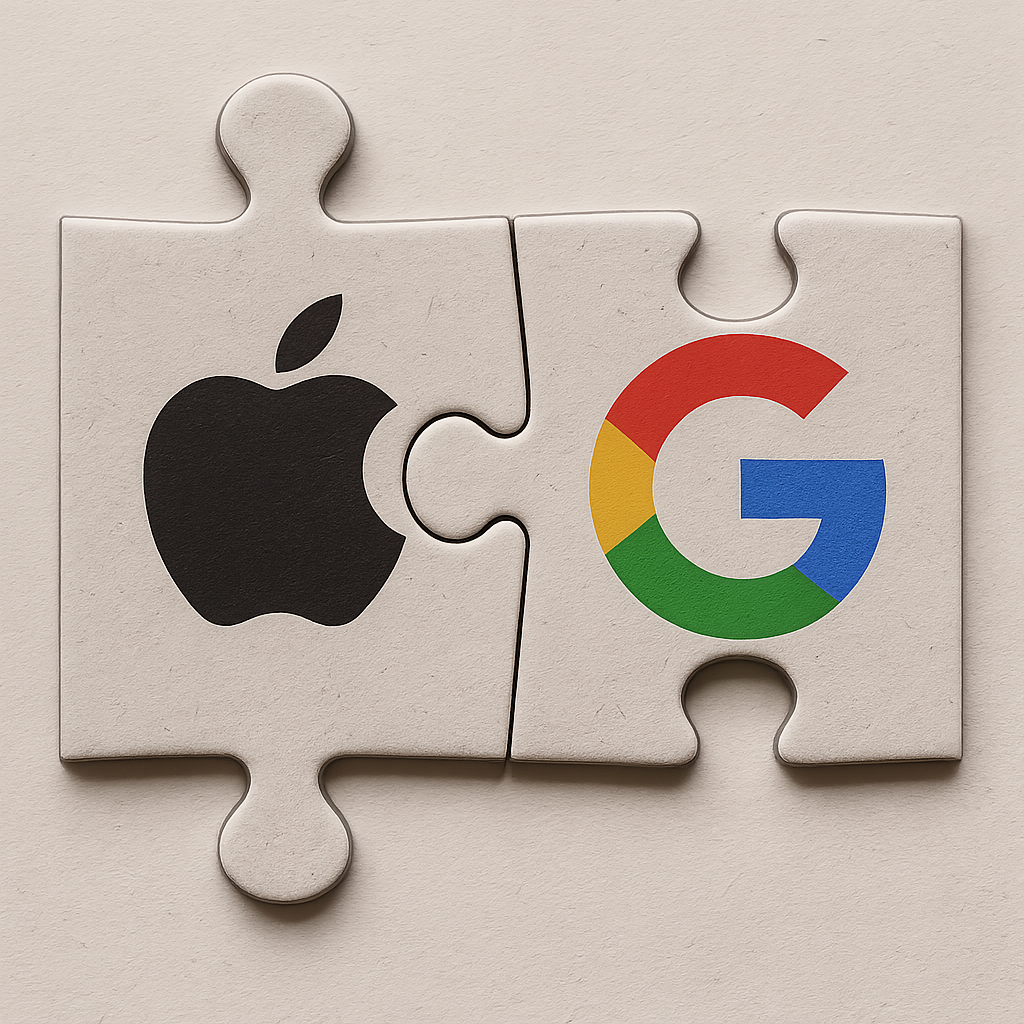
Apple and Google's AI alliance for Siri with Gemini reshapes Silicon Valley, impacting tech rivals, developers, and user privacy.
The Silicon Valley Earthquake No One Saw Coming: Apple and Google’s AI Alliance Rewrites the Rules
Apple and Google, once fierce rivals, have teamed up in a surprising AI alliance. Apple's Siri will now use Google's powerful Gemini AI, but with a clever privacy trick: requests are split, keeping sensitive bits on your device. Deloitte is checking to make sure everything stays honest. This big move shakes up the tech world, making other companies scramble and showing that even rivals can work together for a new AI future.
How will the Apple and Google AI alliance work without compromising user privacy?
Apple and Google's AI alliance, codenamed "Double-Blind Compute Mesh," protects user privacy by fracturing requests. Sensitive fragments remain on-device, while heavier tasks are encrypted and sent to Google's cloud. Data shards are split and processed across multiple locations, ensuring neither company sees the full picture. Deloitte is auditing the process to maintain honesty.
Get Cape Town news in your inbox
Stay updated with the latest stories from the Mother City.
The Monday Morning Bombshell That Shook Tech to Its Core
Fog still clung to Cupertino when Apple dropped a two-sentence notice that detonated across Silicon Valley like a stealth missile. No drumroll, no keynote applause - just a crisp post revealing that Siri’s next evolution will run on Google’s Gemini engines. In 120 matter-of-fact words, the iPhone maker admitted that its own silicon, for all its swagger, is no longer enough to power the future it keeps promising.
Behind the understated reveal lies the widest AI distribution pact ever inked. More than two billion active Apple devices - from watches to tablets - will soon tap Google’s tensor-hungry cloud whenever a question stumps the on-board chips. Legal teams who spent the last decade suing each other over swipe-to-unlock patents now share nightly conference codes; engineers who once swapped barbs on Twitter trade optimization notes under strict NDAs. The irony is audible: the two giants that turned courtroom battles into spectator sport are suddenly co-authors of the same playbook.
Inside Infinite Loop, the initiative carries the covert label “Project NorthStar,” a nod to Cold-War missile guidance that never lost its bearings. Secure rooms once reserved for Apple-only AI prototypes now house liquid-cooled TPU v5p racks trucked in from Google’s Iowa and Oregon strongholds. Former NSA bunkers and shuttered wafer fabs that Apple retrofitted for its own large-language-model racks are being rewired again, this time to greet their former rival’s hardware with open - if slightly reluctant - arms.
How the Tech Actually Works Without Blowing Up Privacy
Forget the cliché of bolting a chatbot on top of iOS. Apple distills Gemini Ultra’s 540-billion-parameter brain into a family of svelte models nicknamed “Apple Foundation.” Custom algorithms - fractional knowledge distillation married to an Apple-coined compression recipe called SliceCore - shrink memory appetite by 87 percent yet keep math-reasoning scores intact. The hand-off between pocket and cloud happens in under twelve milliseconds, faster than a blink.
Every request is fractured like a shattered mirror. Sensitive fragments - contact tokens, location crumbs - stay locked inside the Secure Enclave. Heavier chores - code generation, multilingual summaries - vault through an encrypted QUIC tunnel to a Google TPU, then boomerang home so quickly it feels like local flash storage. Apple calls the choreography Double-Blind Compute Mesh: data shards are split with Shamir secrets, processed on at least three continents, then reassembled on the handset while neither company sees the full picture.
Skeptics worry that an ad empire famous for monetizing queries might glimpse Apple users in the raw. Deloitte’s Zurich AI assurance unit was hired to keep everyone honest; its 42-page audit drops once the beta flag lifts. Meanwhile, iPhone owners must dig three menus deep to flip the “Enhanced Cloud Models” toggle. Decline and nothing changes; accept and a SceneKit animation shows candy-colored data cubes dissolving into mist, a cinematic seduction to make surrender feel like magic.
Dollars, Chips and the New Balance of Power
Talk of a flat billion-dollar yearly fee misses the twist. People near the deal say Apple will slide Google a cut only when a Gemini-powered Siri request ends in a paid transaction - an OpenTable reservation, an iCloud+ upsell, an AppleCare+ extension. The royalty escalates on a log curve, capping at eight percent after ten billion cumulative conversions. Bernstein’s back-of-the-napkin model says Google could bank $2.4 billion by 2027 if fourteen percent of Siri’s 1.3 billion active users opt in. For Apple, the upside is breathing room: it can shelve a planned seven-billion-dollar GPU farm in Arizona and Denmark, freeing cash for Vision Pro content and rumored titanium foldables.
Samsung executives felt the ground shift first. Their Galaxy AI marketing splash now collides with the awkward reality that flagship Galaxies and iPhones share the same cloud landlord. To prevent awkward hallway encounters, Google’s cloud division fabricated the “Silicon Segregation Layer,” physically isolating each company’s TPU islands so queries never mingle. Across town in Redmond, Microsoft accelerated its contingency: Azure’s OpenAI budget tripled, and a fresh “Copilot Everywhere” firmware for Dell and Lenovo laptops can hijack Siri shortcuts mid-flight, redirecting them to Windows Copilot. The new arms race is not about who sounds smarter; it is about who can steal the other’s traffic before it leaves the device.
Developers smell opportunity. A cloaked beta of SiriSDK 3, watermarked to trace leaks, unlocks forty-seven new intent domains that can summon Gemini. Flight-tracking app Flighty can forecast runway congestion at four thousand airports by mashing live NOTAM feeds against Gemini’s historical flight trajectories; journaling app Day One can spin a 3,000-word memoir in the voice of Joan Didion or Hemingway from nothing more than geo-stamped photos and voice snippets. TestFlight invitation codes already trade for fifty grand on gray-market Slack channels, says tracker Apptopia, a sign that the gold rush is officially open.
Regulators, Rival Start-ups and the User Who Still Hasn’t Noticed
Brussels is sharpening pencils again. EU watchdogs, still digesting the Digital Markets Act, opened an exploratory case asking whether pre-installing Gemini equals a self-preferencing loophole. Their dream scenario: a startup in Lisbon offers a seven-billion-parameter Portuguese model and Apple must present it on the same splash screen as the Google giant. Beijing’s stance is tougher. ByteDance and Baidu lobby for a rule forcing Apple to route Chinese Siri traffic through state-owned racks, arguing that even encrypted voice fragments must stay on sovereign silicon. Apple’s workaround is a split personality: “Siri CN” keeps chatting via a tweaked Ernie Bot on Guizhou-Cloud Big Data servers, while “Siri Global” flips to Gemini the instant an airplane-mode tile turns orange.
Inside Apple Park, emotions swing from jubilation to exodus. Three senior directors from the Ajax LLM team have quit since December, lured by Google’s promise of unlimited TPU cycles and pre-split Alphabet equity. Meanwhile, chip czar Johny Srouji’s crew is ecstatic: Gemini’s transformer layers map almost one-to-one to the new Neural Engine Ultra taped out on TSMC’s N3P node, cranking out thirty-four tokens per second while sipping only 0.3 watts - 2.7× faster than today’s A17. Srouji just approved an “AI Battery Budget” that permanently locks four percent of every iPhone’s watt-hour capacity for on-device generation, enough for an hour of continuous coding help even at thirty-five thousand feet.
Shuttle buses with tinted windows now drop mixed Apple-Google squads at an unmarked Stanford-owned bunker on Portola Road. Inside, whiteboards are erased every half hour and phones sleep in Faraday pouches while the two frenemies co-design “Pegasus,” a model that aims to fuse Gemini’s world knowledge with Apple’s intimate sensor feed: heart-rate variability, gait signature, retinal micro-saccades from Vision Pro. An early prototype reportedly predicted Lyme disease forty-eight hours before a blood test, simply by noticing fatigue-laced voice memos, a weekend hike in AllTrails, and an HRV dip smaller than a single percentile. Whether Pegasus ever ships almost doesn’t matter; the mere fact that the Montagues and Capulets of tech are sketching circuitry together has already redrawn the map everyone else must navigate.
[{"question": "How will the Apple and Google AI alliance work without compromising user privacy?", "answer": "Apple and Google's AI alliance, codenamed \"Double-Blind Compute Mesh,\" protects user privacy by fracturing requests. Sensitive fragments remain on-device within the Secure Enclave, while heavier tasks are encrypted and sent to Google's cloud via a QUIC tunnel. Data shards are split and processed across multiple locations using Shamir secrets, ensuring neither company sees the full picture. Deloitte is auditing the process to maintain honesty, with a 42-page audit to be released with the beta flag. Users also have the option to decline 'Enhanced Cloud Models' if they wish."}, {"question": "What is the significance of Apple's decision to use Google's Gemini AI for Siri?", "answer": "Apple's decision to integrate Google's Gemini AI into Siri marks a significant shift, acknowledging that its own silicon is no longer sufficient to power its future AI ambitions. This alliance, dubbed \"Project NorthStar,\" is the widest AI distribution pact ever inked, bringing Google's powerful AI to over two billion active Apple devices. It reshapes the tech landscape, forcing rivals to adapt and demonstrating that even fierce competitors can collaborate for an AI-driven future."}, {"question": "How does the technology behind this alliance ensure efficiency and performance?", "answer": "Apple distills Gemini Ultra's 540-billion-parameter brain into smaller, more efficient models called \"Apple Foundation.\" Custom algorithms, including fractional knowledge distillation and SliceCore compression, reduce memory footprint by 87% without compromising mathematical reasoning. The hand-off between the device and the cloud occurs in under twelve milliseconds, making the process feel as fast as local storage. This efficiency is further bolstered by the new Neural Engine Ultra on TSMC's N3P node, which processes 34 tokens per second while consuming only 0.3 watts."}, {"question": "What are the financial implications of this partnership for Apple and Google?", "answer": "Instead of a fixed annual fee, Apple will pay Google a royalty based on a log curve, only when a Gemini-powered Siri request leads to a paid transaction, such as an OpenTable reservation or an AppleCare+ extension. This royalty can cap at eight percent after ten billion cumulative conversions. Industry estimates suggest Google could earn up to $2.4 billion by 2027 if 14% of Siri's 1.3 billion active users opt in. For Apple, this frees up capital (estimated at $7 billion) by shelving planned GPU farms, allowing investment in Vision Pro content and other future products."}, {"question": "How are competitors and regulators reacting to this alliance?", "answer": "Samsung, which recently launched its Galaxy AI, is now in an awkward position as both its flagship phones and iPhones will share the same cloud AI provider, prompting Google to create a \"Silicon Segregation Layer\" to physically isolate their TPU islands. Microsoft has accelerated its \"Copilot Everywhere\" strategy, tripling its Azure OpenAI budget and developing firmware to redirect Siri shortcuts to Windows Copilot. Regulators in the EU are investigating potential self-preferencing loopholes, while China demands that Siri traffic in its territory be routed through state-owned servers, leading Apple to implement a \"Siri CN\" that uses a tweaked Ernie Bot."}, {"question": "What new opportunities does this alliance create for developers and future AI?", "answer": "The alliance opens up significant opportunities for developers through a cloaked beta of SiriSDK 3, which unlocks 47 new intent domains that can summon Gemini. This allows for innovative applications, such as flight-tracking apps forecasting runway congestion by combining live NOTAM feeds with Gemini's historical data, or journaling apps generating memoirs from photos and voice snippets. Furthermore, Apple and Google are co-designing \"Pegasus,\" a model aiming to fuse Gemini’s world knowledge with Apple’s intimate sensor feed (like heart-rate variability and gait signature), hinting at highly personalized and predictive AI capabilities in the future."}]

Michael Jameson is a Cape Town-born journalist whose reporting on food culture traces the city’s flavours from Bo-Kaap kitchens to township braai spots. When he isn’t tracing spice routes for his weekly column, you’ll find him surfing the chilly Atlantic off Muizenberg with the same ease he navigates parliamentary press briefings.
View all articles →