
Hikers rescued after near-death experience on Devil’s Peak
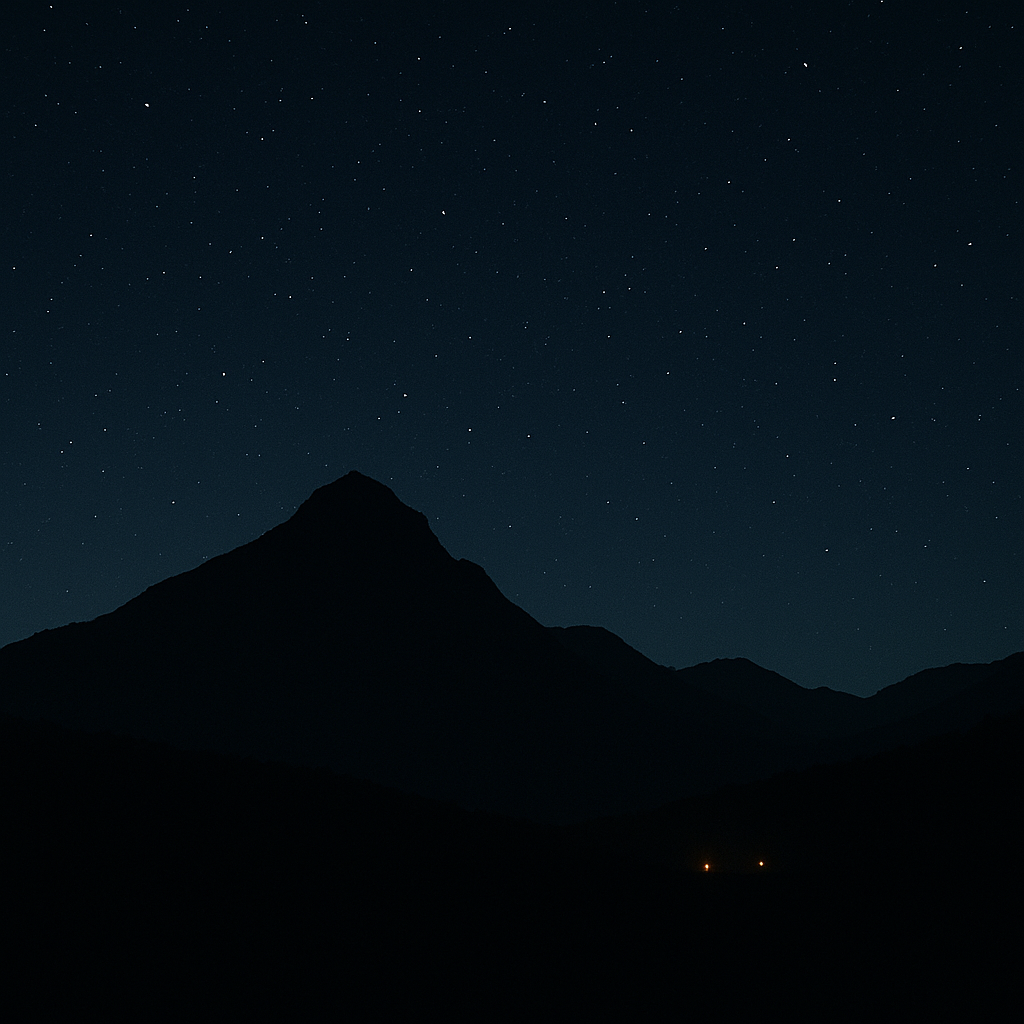
Two students get stranded on Devil's Peak, Cape Town, after a risky detour. Wilderness Search & Rescue execute a complex night-time operation.
Two young hikers thought they knew best, taking a 'shortcut' on Devil's Peak after sunset. But the mountain had other plans, trapping them on a crumbling cliff. A brave rescue team, facing darkness and dangerous terrain, worked through the night to save them. This scary adventure shows how quickly a fun hike can turn into a fight for life if you're not careful.
What can hikers do to ensure safety on Devil's Peak?
Hikers can ensure safety on Devil's Peak by checking forecasts, staying on marked paths, avoiding hiking after sunset, and carrying essential gear like sufficient water, a fully charged phone, a headlamp, a whistle, a wind-shell, and a paper map. These precautions mitigate risks on the unpredictable terrain.
Get Cape Town news in your inbox
Stay updated with the latest stories from the Mother City.
Section 1 – The Shortcut That Wasn’t
The Cape Peninsula had already slipped into darkness when a single red head-lamp blinked high on the shale ribs of Devil’s Peak. From the glowing city bowl the mountain looked tame, postcard-perfect, yet six hundred metres above the last streetlamp two frantic torch beams flashed SOS against the rock wall. A young couple - both University of Cape Town undergrads - had left Rhodes Memorial at noon beneath a flawless sky, pockets full of chocolate bars and campus-grown bravado. They chose First Waterfall Ravine, the steepest 2,2 km ladder to the thousand-metre summit, a route that crams more vertical into its short length than any other on the eastern buttress. At thirteen hundred the mercury kissed 26 °C; three and a half hours later a southeasterly cloud avalanche rammed the ramparts, shoved humidity to ninety percent and varnished every hold with a thin film of mist.
No trail register captures day-trippers at the base, so the only record of their passage was a WhatsApp live pin dropped at 15:42 with the jaunty note “Detour ;-)”. That casual emoji became the pivot on which the next eight hours would swing. Rather than retrace their steps they decided to “traverse out” toward the southern face, a ghost-line suggested by a dotted trail of zebra hoof prints yet mentioned in no reputable guidebook. Hoofed animals memorise cliff exits; sneakered humans do not. Forty metres above the contour path the slope steepened into an amphitheatre of crumbling mud-shale so soft a heel can punch through like thumb into short-crust. One slip sent the male student penduluming downward until he jarred to a halt on a ledge barely the width of a smartphone. His partner, slightly higher, folded herself onto a broader shelf; both now stood on separate stone islands with a two-hundred-metre gulf of air between them and the nearest fynbos.
The emergency call reached Cape Town’s control room at 19:03. Because that face is notorious for cellular shadows, the voice arrived as five-second shards: “…can’t move… edge crumbling…”. The dispatcher, veteran of three thousand mountain shouts, instantly activated the Wilderness Search & Rescue (WSAR) protocol - an alliance of the Mountain Club, EMS, an Airbus H120 air-ambulance crew and off-duty rock guides who keep ropes coiled in car boots. Within fourteen minutes an Oryx helicopter clawed into the sky, but the night-vision feed showed only a cataract of cloud; rotor down-wash would have pebble-bombed the casualties. Rotary plan: scrubbed. Plan B meant boots on rock - eight climbers and two paramedics shouldering sixty kilos of rope, pulleys and epoxy, marching uphill in reverse.
Section 2 – Uphill Against Gravity
The lead Land Cruiser nosed to the end of upper Tafelberg Road at 19:45. From the trailhead the team still had to climb four hundred and fifty vertical metres through knee-high protea so dense that progress is jokingly logged as “one klick per lucky hour”. Head-lamps stayed dim to spare night vision and to keep glare off belay ledges. A fingernail moon gave just enough contrast to part shale from sky. At 21:10 the point scout saw what he hoped for - two lonely green glow sticks glued to a black wall, the stranded hikers’ last-ditch signal.
What followed is textbook “pick-off” rescue, a drill rehearsed indoors at UCT’s Hangar wall but seldom staged for real. Because the bedrock is too friable for conventional camming devices, lead climber Brent Russell hammered eighteen ice-thread-style tubes, back-filled them with quick-set epoxy and tensioned them against one another to forge an artificial anchor rated to twelve kilonewtons - roughly the mass of a city bus. The technique borrows from First-War Dolomite routes where soldiers spiked iron ladders into crumbling limestone. Once the master-point passed bounce-tests, Russell donned a two-hundred-metre static line, prusiked sixty metres up, then pendulumed across the face to the colder casualty. The student’s core had slipped to 34 °C; hypothermia hovered only two degrees away. A Petzl “nest” harness was cinched over his shorts and he was lowered a hundred metres to a scree chute where a second team waited with vacuum mattress and reheated tomato soup poured from a steel flask.
While the first package rode downhill, the woman - dehydrated yet lucid - had to stand another twenty-two minutes while the rope was re-threaded. She later told nurses the scariest noise was not the wind but a metallic “tink” of micro-fractures spidering across the ledge under her soles. Both students reached the contour path at 23:15; from there a 1,8 km stretcher carry nicknamed “the horizontal Everest” delivered them to the waiting 4×4 track and, finally, to ambulances at 23:37. Core temperatures were nudging 36 °C again; apart from grazes and dented pride, no bones had broken.
Section 3 – The Silent Ledger
Before tail-lights rolled off the mountain WSAR issued the customary post-script: every extrication burns volunteer fuel, municipal overtime and - crucially - finite airborne trauma resources. Private landowners who open gates at midnight so strangers can save strangers foot the bill in goodwill. The accounting is not abstract; Western Cape rescues have jumped 42 % since 2019, fuelled partly by Instagram geotags that transform once-secret kloofs into打卡 magnets. First Waterfall Ravine now coughs up an incident every eight weeks, typically after hikers discount how fast Atlantic weather can somersault the Twelve Apostles ridge and sucker-punch the eastern face. The same topography that paints sunrise postcards also funnels wind like a blacksmith’s bellows; 70 km/h gusts have been logged at 14:00 on days that began mirror-calm.
Rescuers flag a newer trend: hikers starting trails at dusk to harvest city-light panoramas. Devil’s Peak is not tourist-buffed Platteklip; there are no railings, no Coke kiosk halfway up, and the shale exfoliates in dinner-plate scales. One veteran guide carries a “three-strike” card: ignore the forecast, leave the path, continue after sunset - trip ends, no debate. “The mountain is not a Tinder date,” he shrugs. “You can’t ghost when it turns ugly.”
Gear post-mortem underlines how thin the margin became: one 750 ml bottle between two people, a single phone at 18 % charge, and cotton hoodies that drank moisture like bath towels. Neither carried a head-lamp; they relied on the phone’s torch, a vampire that drains electrons faster than a slots app. No whistle, no wind-shell, no paper map. Salvation hinged on one bar of 3G that aligned with a cliff-gap at 19:00 - delay the call thirty minutes and reception would have vanished with the sun.
Section 4 – Indifference Set in Stone
At dawn on Saturday, while most volunteers slept, a skeleton crew hiked back to the face. They pulled the epoxy anchors, photographed the scar and logged each bolt-hole for erosion checks. If the shale keeps spalling WSAR will blacklist the line; future rescues would then require a long-line winch in daylight - assuming the weather ever cooperates. For mountaineers the episode is a refresher: “easy” scrambles can morph into no-fall terrain once dew polishes rock. British alpinist Joe Simpson, who crawled off Siula Grande with a pulverised leg, once wrote that mountains are not hostile, simply indifferent; the mud-shale bed of Devil’s Peak is geology’s clinical embodiment of that neutrality, ready to shear under the first boot that mistakes friction for trust.
Down in the city the story dissolved into weekend chatter: a thirty-second news slot, a residence Facebook post thanking “the amazing rescue guys”. Yet high above, faint rubber scuffs still darken a ledge ten centimetres wide, and a constellation of fresh bolt holes glints each sunrise - tiny medals hammered into the cliff by people who climbed through the night armed with rope, epoxy and a refusal to let two strangers slip into the void.
What critical mistakes did the hikers make that led to their dangerous situation?
Hikers made several critical mistakes, including taking an unverified "shortcut" not mentioned in reputable guidebooks, hiking after sunset into darkness, and being inadequately equipped for the conditions. They also chose a route known for its steepness and rapid weather changes, and failed to turn back when conditions deteriorated.
How did the weather conditions contribute to the perilous situation on Devil's Peak?
The weather played a significant role. A southeasterly cloud avalanche rapidly descended, increasing humidity to ninety percent and making all surfaces slippery with a thin film of mist. This drastically changed the terrain from a pleasant hike to treacherous, exacerbating the risks of their chosen shortcut.
What specific gear deficiencies were noted in the hikers' equipment?
The hikers had severe gear deficiencies. They shared only one 750 ml bottle of water, had a single phone with low battery (18% charge), and wore cotton hoodies that offered poor protection against moisture. Crucially, they lacked essential safety items like a headlamp, whistle, wind-shell, and a paper map, relying instead on the phone's torch which drains battery quickly.
What were the key challenges faced by the Wilderness Search & Rescue (WSAR) team during the rescue operation?
The WSAR team faced numerous challenges, including darkness, dangerous terrain (crumbling mud-shale), and cellular shadows that made communication difficult. Initial air-rescue attempts were scrubbed due to cloud cover and the risk of pebble-bombing the casualties. The ground team had to navigate dense protea and climb 450 vertical meters, and the friable bedrock required unconventional anchor techniques to secure the rescue lines.
What innovative technique did the lead climber use to establish an anchor in the unstable rock?
Lead climber Brent Russell used an innovative technique inspired by First-War Dolomite routes. He hammered eighteen ice-thread-style tubes into the friable bedrock, back-filled them with quick-set epoxy, and tensioned them against one another. This created an artificial anchor rated to twelve kilonewtons, capable of supporting the rescue operation where conventional camming devices would fail.
What broader trends and concerns are highlighted by this incident regarding mountain safety in the Western Cape?
This incident highlights several concerning trends: a 42% increase in Western Cape rescues since 2019, partly due to Instagram geotags making once-secret areas popular; hikers underestimating the rapid weather changes on Devil's Peak; and a newer trend of hikers starting trails at dusk for city-light panoramas. Rescuers emphasize that Devil's Peak is not a

A Russian-Spanish journalist and Cape Town native, channels his lifelong passion for South Africa into captivating stories for his local blog. With a diverse background and 50 years of rich experiences, Serjio's unique voice resonates with readers seeking to explore Cape Town's vibrant culture. His love for the city shines through in every piece, making Serjio the go-to source for the latest in South African adventures.
View all articles →