
Packed taxi horror as 49 pupils pulled from one vehicle
49 primary school children found crammed into a 16-seater taxi in Cape Town, exposing dangerous overloading and transport issues.
One morning in Mitchells Plain, South Africa, traffic police stopped a taxi and found 49 children crammed inside – way more than it was meant to hold! This showed how dangerous school transport can be, with many taxis being unsafe and breaking the rules. While authorities are trying to make things better with new plans, parents like Candice are still struggling to find safe and affordable ways for their kids to get to school.
What are the dangers of overcrowded school transport?
Overcrowded school transport poses significant risks, including increased accident rates, potential for serious injury or even fatalities, and psychological distress like claustrophobia. Many vehicles operate without proper licenses or roadworthy certifications, further endangering children. It also creates an unregulated environment where safety is often compromised for affordability.
Get Cape Town news in your inbox
Stay updated with the latest stories from the Mother City.
1. Dawn head-count: the stop that Twitter couldn’t ignore
The stake-out
Winter sun is still a violet welt over Mitchells Plain when parents begin their weekday ritual outside Lentegeur Primary. Steam curls from coffee lids, toddlers wriggle on hips, eyes sweep the street for the familiar clatter of paid rides. Two blocks away, an unmarked Hyundai holds two City of Cape Town traffic constables who have been clocking every taxi since 06:40. Sipho Mthembu and Nadia February work from a single-page “risk matrix” hot off the office printer: colour-coded plates, past impound dates, screen-grabs of moms complaining their kids “arrive squashed and crying”. By 07:22 the list is down to three repeat candidates.
The bait and the snap
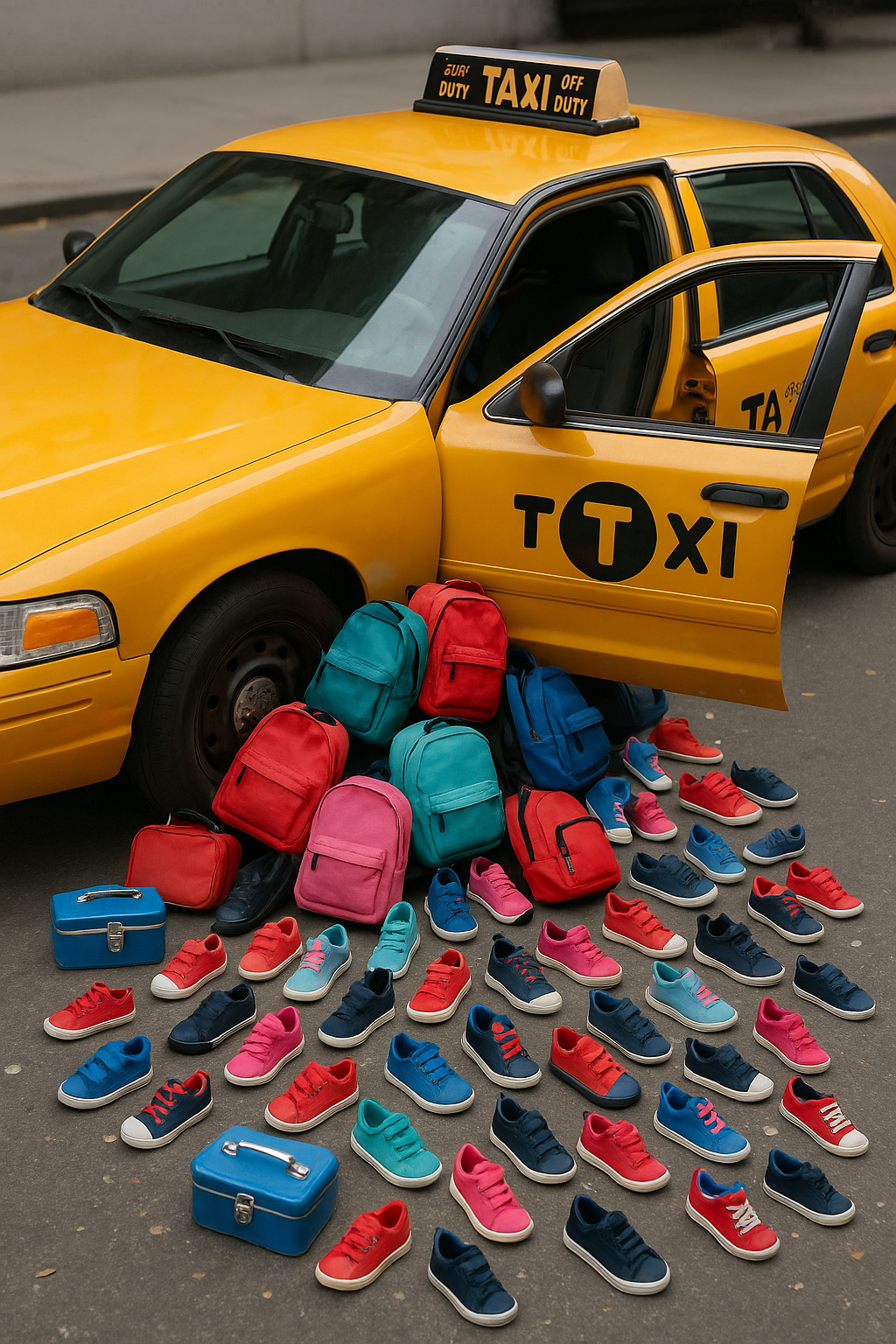
A charcoal Toyota Quantum with illegally dark glass circles the block twice, hunting an open kerb instead of the demarcated bay. February gives the pre-arranged radio nudge; the marked back-up van idling behind a fruit stand slips into position. On the third pass she steps into the road, palm raised. The driver brakes, the side door rolls back and a torrent of grey sneakers, backpacks and lunch boxes tumbles out. One after another, 49 primary-school faces emerge - more bodies than the local playhouse fits on a quiet night. Officers lose count at 37; the roadside turns into a live maths riddle: subtract one adult from a 16-seat taxi and you still have 48 kids too many.
Tagging the evidence
The youngest passenger is six, the oldest twelve. A Grade-3 girl in a Frozen II mask still clutches half a peanut-butter sandwich while the tenth row squeezes past her. None bear visible injuries, but a paramedic marks two girls for claustrophobic panic - clammy skin, racing pulses - and books follow-up sessions with the school psychologist. Every child receives a neon-yellow wristband printed with a case reference and the City’s 24-hour hotline. By 08:05 the Quantum is winched onto a flat-bed, bound for the Athlone pound and a date with a R7 000 release fee plus R250 storage for every sunset it spends behind the fence.
2. Paper trails and pound yards: the price of cramming
Licence? What licence?
Driver Ashraf “Shafie” Jacobs, 28, of neighbouring Tafelsig, surrenders without drama. His licence disc died nine months ago; the operator card in the cubby belongs to another Quantum written off in 2021. He carries no PrDP and no permit for the Lentegeur–Mitchells Plain loop. A 2017-dated front tyre and a wooden plank masquerading as a third row complete the charge sheet. Between the seats sits a crate of bottled water that doubles as ballast on the empty return leg.
The law’s abacus
Cape Town’s traffic by-law is purposely brutal: exceed 21 in a 16-seater and the vehicle disappears for 30 days, guilty plea or not. Since the clause kicked in during 2022 the Transport Enforcement Unit has locked up 1 047 public-transport vehicles; 61 percent were overloaded, averaging 22 souls. Wednesday’s 49 is the scholar-run record. City officials bet that a month without revenue hurts enough to change behaviour; operators call it municipal hijacking.
Subsidy carrot
On the same morning the Quantum was grabbed, the mayoral committee green-lit a R12 million sweetener. Operators who sign up for GPS tracking, e-ticketing and quarterly roadworthy checks can earn a per-kilometre subsidy that doubles the normal fare. The pilot will drip out 120 permits in Mitchells Plain and Khayelitsha first - areas responsible for 43 percent of school-overloading tickets. In theory the plan turns pirate taxis into a privately owned, municipally supervised micro-bus network; in practice the permit window only creaks open in September, and applicants need - irony alert - a valid operating licence, the one thing Jacobs lacks.
3. Mothers, maths and micro-economics
Candice’s balance sheet
Candice Solomons, supermarket cashier and mom to seven-year-old Jaden, watched the roadside count in silence. She parts with R180 a week for the return ride - R36 less than the sanctioned Golden Arrow fare - and clocks in at 07:00, before legal services run. Her transport budget for three children is R1 920 from a R5 400 wage. The proposed subsidised scholar ride would cost R4 per hop, saving her R560 a month, but the pilot may arrive long after the impounded taxi is free.
Structural vacuum
Mitchells Plain lies 22 kilometres from the CBD yet is served by just two rail lines and a BRT corridor that stops five kilometres short. Train sets have been cut 40 percent since 2019; scholar transport was handed to provinces in 2000, but the Western Cape Education Department only funds trips longer than five kilometres. In packed suburbs like Lentegeur almost no one qualifies. Into that vacuum step operators such as Jacobs, affordable but unregulated.
National body count
The Road Traffic Management Corporation counts 1 286 fatal crashes between 2018 and 2022 involving taxis carrying pupils; 42 percent were overloaded by more than a fifth. Gauteng traffic police now photograph chassis numbers and circulate them country-wide; one Quantum written off in KwaZulu-Natal resurfaced in Tembisa three months later wearing cloned plates.
4. Apps, axle pads and the psychology of fitting “just one more”
Gadgets on the tar
Since April every TEU officer carries a hand-held scanner that spits out ECU mileage and VIN in 30 seconds; tampering equals immediate impound. Portable axle pads weighing only a handbag can flag 3.5 tonnes on a rear axle designed for 2.1 - overload evidence before the door even slides. Deployed twice a week on a route, pads trim detected overloading by 17 percent until drivers reroute.
Start-ups step in
Stellenbosch company Lula-Bus has rolled out four 24-seat Toyota Coasters branded “school pods”: seatbelts, CCTV, panic buttons, female drivers recruited via bursaries. Fares sit 20 percent above pirate taxis but 15 percent below Uber-X, with 98 percent belt compliance. Expansion, however, crawls through an 18-month permitting maze.
Why kids climb aboard
Sociologists say overcrowded homes breed a tolerance for cramped spaces; collective punishment on the ride teaches that refusal delays everyone. In focus groups run by the University of the Western Cape, Grade-5 boys bragged of a 52-kid record “before the door slammed”. Drivers fuel the game, chalking high scores on the windscreen and awarding free trips to the head-counter. Draft amendments to the National Land Transport Act now threaten ten-year jail terms for “inducing overload”.
Global phone-booth on wheels
Nairobi matatus fitted with “standing rails” squeeze 67 children into 33-seaters; Manila jeepneys discount roof rides; Jakarta’s colour-coded stickers collapsed after forged duplicates. Brazil’s “Operação Alforria” found 83 kids in a 26-seater and now embeds social workers in schools; early numbers show a 28 percent overload drop on monitored routes, but coverage is thin.
Closure, sort of
Impound G-22-9647 squats behind Athlone mesh fencing, clamped and paper-sealed. Jacobs has 30 days to settle R13 700 in fines, produce valid papers and persuade a tribunal. A second overload within a year means permanent forfeiture; 47 minibuses were crushed into biscuit-tin sheets last year alone. Candice Solomons has already moved her son to a seven-seat Volkswagen Caddy lift club at R220 a week - two loaves of bread more, she calculates, “until the subsidised buses come.” The yellow wristband stays in her purse, she says, “so 49 stays a crime, not a boast.”
What are the dangers of overcrowded school transport?
Overcrowded school transport poses significant risks, including increased accident rates, potential for serious injury or even fatalities, and psychological distress like claustrophobia. Many vehicles operate without proper licenses or roadworthy certifications, further endangering children. It also creates an unregulated environment where safety is often compromised for affordability. In South Africa, between 2018 and 2022, 1,286 fatal crashes involving taxis carrying pupils occurred, with 42% of these linked to overloading.
What happened in Mitchells Plain with the 49 children?
Traffic police in Mitchells Plain, South Africa, stopped a Toyota Quantum taxi and discovered 49 primary school children crammed inside, far exceeding its 16-seat capacity. The driver, Ashraf Jacobs, lacked a valid license, operator card, and permit, and the vehicle itself had significant safety issues. This incident highlighted the widespread problem of unsafe and unregulated scholar transport in the region.
What are the consequences for drivers caught overloading?
In Cape Town, exceeding the capacity of a 16-seater vehicle by more than 21 passengers results in the vehicle being impounded for 30 days, regardless of a guilty plea. The driver faces substantial fines (e.g., R7,000 release fee plus R250 per day for storage), and must produce valid papers to get the vehicle back. A second overload within a year leads to permanent forfeiture of the vehicle. Drivers also face charges for operating without proper licenses or permits.
What is the City of Cape Town doing to address unsafe scholar transport?
The City of Cape Town has implemented strict traffic by-laws, impounding over 1,000 public transport vehicles since 2022, primarily for overloading. They are also piloting a R12 million subsidy program in Mitchells Plain and Khayelitsha, offering increased fares to operators who register for GPS tracking, e-ticketing, and quarterly roadworthy checks. Additionally, traffic officers use handheld scanners and portable axle pads to quickly detect vehicle tampering and overloading.
Why do parents choose unregulated and overcrowded transport options?
Parents often opt for unregulated and overcrowded transport due to a lack of safe and affordable alternatives. Public transport infrastructure in areas like Mitchells Plain is insufficient, with limited train lines and BRT services. The Western Cape Education Department only funds scholar transport for distances over five kilometers, leaving many families without support. This creates a vacuum filled by affordable, albeit unsafe, operators. For example, some parents pay R180 a week for an unregulated taxi, which is less than sanctioned public transport options.
Are there any new solutions or technologies being introduced?
Yes, new initiatives are emerging. Lula-Bus, a Stellenbosch-based company, has introduced

Thabo Sebata is a Cape Town-based journalist who covers the intersection of politics and daily life in South Africa's legislative capital, bringing grassroots perspectives to parliamentary reporting from his upbringing in Gugulethu. When not tracking policy shifts or community responses, he finds inspiration hiking Table Mountain's trails and documenting the city's evolving food scene in Khayelitsha and Bo-Kaap. His work has appeared in leading South African publications, where his distinctive voice captures the complexities of a nation rebuilding itself.
View all articles →