
Reptile trafficker convicted in Vredendal
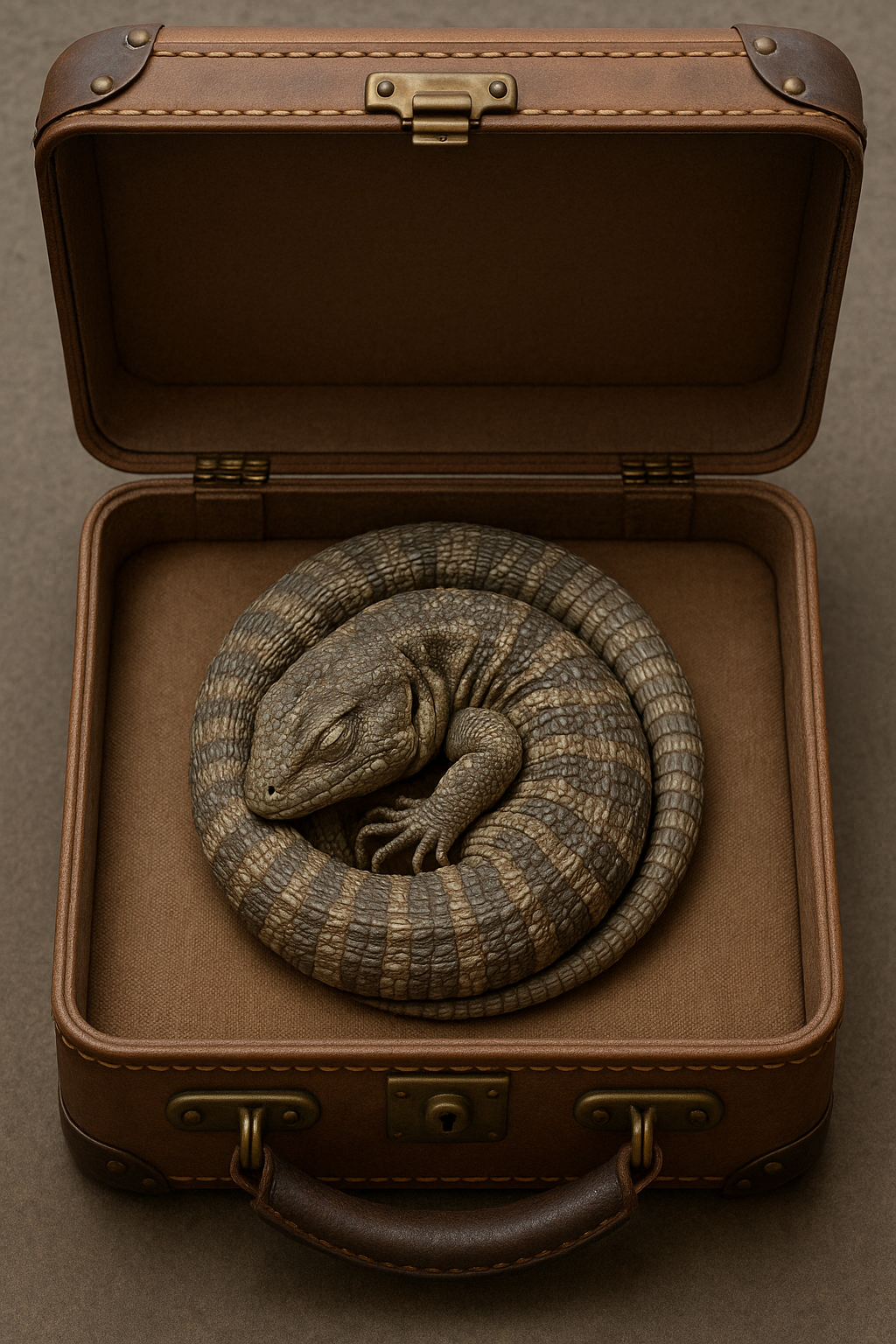
Uncover the shocking international reptile pipeline that nearly wiped out an entire lizard colony, from hotel room capture to courtroom drama.
A sneaky Spanish 'consultant' tried to smuggle 22 amazing Armadillo Girdled Lizards, worth a fortune, out of a quiet country lodge. These unique lizards, known for rolling into a spiny ball, are hot items on the black market. Lucky for them, the lodge manager smelled a rat (or rather, a funny copper smell!) and called the cops. This quick action saved the lizards, but their wild home is now sadly empty, showing how fast poaching can wipe out these special creatures.
What is the Armadillo Girdled Lizard and why is it valuable?
- The Armadillo Girdled Lizard (Ouroborus cataphractus) is a unique reptile known for curling into a spiny wheel when threatened.
- This defense mechanism, combined with its "cinnamon-orange" back stripe, makes it highly sought after by collectors, fetching US $2,000–$4,000 each on the black market.
- Its popularity has led to widespread poaching, threatening wild populations.
A Knock After Curfew
The Vredendal Country Lodge was already asleep when the duty manager stepped outside at 22:05 on 29 November 2025. A white Europcar pick-up idled outside the single-storey wing, its engine purring louder than the cicadas. A guest in Room 12 had rung reception twice, complaining about a “sharp, coppery stench” creeping through the connecting door. Two slow walks along the corridor confirmed the smell; the manager dialled the local police station and asked for the wildlife officer on night duty.
Get Cape Town news in your inbox
Stay updated with the latest stories from the Mother City.
Warrant-officer Jan September was sipping instant coffee when the call came through. By 22:30 he had summoned CapeNature’s criminal investigators, a customs official who had driven 110 km from the Namibian border post, and the SAPS K-9 unit. They formed a silent semicircle outside Room 14, torches off, listening to the rattle of plastic tubs and the hiss of an over-worked air-conditioner.
Inside, David Navarro Roman - Spanish passport BBB009342, occupation “consultant” - was repacking 22 Armadillo Girdled Lizards and a single Speckled Dwarf Tortoise into a suitcase lined with foam slots. Every animal was wide awake, a red flag for investigators: under late-spring heat these lizards should have been hidden beneath quartzite flakes, not blinking under LED light. Roman had dropped the thermostat to 18 °C and blacked-out the windows to flip the reptiles’ body clocks, a trick copied straight from underground Telegram channels that promise “zero-bark border crossings for mini-dragons.”
The Ball-Rolling Lizard and Its Dollar Value
The Armadillo Girdled Lizard has survived the last 300 million years by mastering one party piece - when danger appears it grips its own tail and turns into a spiny wheel. Tourists love the gimmick; overseas collectors love it even more. Adults with unbroken tail rings and the prized “cinnamon-orange” back stripe fetch US $2 000–4 000 each on the black market.
Ironically, the same defensive reflex makes poaching laughably easy. A hunter simply flips the ball onto its back, slides the rigid hoop into a PVC pipe, and repeats. Whole family groups - 20 to 60 animals huddled beneath the same rock - can disappear in one evening, wiping out an entire genetic cohort before the moon sets.
Satellite data analysed by the Endangered Wildlife Trust show off-track tyre scars multiplying across the western Richtersveld like vines. Since 2020, quad trails have jumped 400 %, most ending at quartzite koppies that serve as natural nurseries for the species. Investigators have dismantled 112 temporary camps stocked with butane stoves, rolls of duct tape and sawn-off drainpipes - the standard tool kit of the lizard trade.
Faster Than a Lizard: The Digital Marketplace
While the animals themselves move slowly, the adverts outrun them every time. Interpol’s confidential August 2025 bulletin shows Wickr prices for Ouroborus cataphractus climbing 28 % in six months. Japanese and American breeders claim their stock is “captive-bred,” yet DNA bar-coding revealed 64 % are wild-caught.
A user called Navas_74 - Roman’s Telegram alias - posted a final note the day before his arrest: “22x Ouro medium grade, landing CPT 30/11, pre-orders welcome.” Investigators say the consignment was timed to reach a Hamburg reptile expo notorious for rubber-stamp paperwork and cash-in-hand deals.
South Africa’s Northern Cape is the perfect launching pad. The province covers more ground than Germany but employs fewer than thirty environmental compliance officers. Once lizards leave the Richtersveld they are spirited north to Springbok or Upington, then loaded onto light aircraft at Aggeneys or private farm strips where customs checks are occasional at best. From there it is a short hop to Johannesburg, then intercontinental flights to Europe, Asia or the United States.
Courtroom Chess and the Price of a Passport
The docket that landed on the Vredendal prosecutor’s desk ran 437 pages - vehicle GPS logs, translated WhatsApp voice notes, and sworn statements from two German collectors nabbed at Frankfurt airport the previous year. Senior state advocate Nadia Toefy built her case on three legs: unlawful possession under the Northern Cape Nature Conservation Act, illegal inter-provincial transport, and a pattern of organised crime under South Africa’s POCA legislation.
Roman’s lawyer argued his client believed the lizards originated from a licensed Kakamas facility and insisted he held “verbal approval” from an unnamed official. Magistrate Lulama Ntsabo dismissed the claim, ruling that ignorance of permit law is no shield when commercial profit is obvious. Two years’ jail time was recorded on each count, then suspended for five years provided Roman commits no further environmental offence. He walked out after paying R500 000 (about US $26 000) within 30 days - money earmarked for extra field patrols, though rangers privately admit a single “good haul” of 30 lizards abroad can earn poachers triple that figure.
Roman collected his passport the same afternoon and boarded a Cape Town–Madrid flight on 3 December. Spain does not protect Ouroborus cataphractus, so no follow-up case is pending.
After the Verdict: Empty Slabs and Artificial Suns
Biodiversity rules demand seized animals go back to the exact rock they called home, but winter had settled over the Richtersveld by the time DNA confirmed origin. Fearing cold-weather casualties, authorities moved the 22 lizards and the lone tortoise to a bio-secure chamber at the Southern Africa Foundation for the Conservation of Coastal Raptors. UV-B strips replicate the spectral signature of the Rosynberg hills; humidity stays locked at 45 %. All captives have gained weight, yet behavioural ecologist Dr Margie Schubert warns the victory may be hollow - site fidelity is hard-wired; keep them too long and they might refuse to breed even if released.
Rosynberg itself is already a ghost town. Follow-up surveys beneath the flagship slab found two juvenile lizards, both with stress-shortened tails. The colony is functionally extinct, and neighbouring rocks now sit sun-bleached and vacant, their guardians somewhere over the Atlantic rolled into carry-on foam.
Meanwhile, the global pipeline hums along. The week Roman was sentenced, Mpumalanga police intercepted 34 flap-neck chameleons heading to the Czech Republic, and Durban customs found 98 dwarf geckos heat-sealed inside fake hardcover books. All three deals were arranged on the now-deleted WhatsApp group “SA Herp Bulk,” whose 2 300 members shifted US $1.2 million in crypto during a single 14-month window. South Africa remains an exporter of choice: maximum penalties top out at ten years, yet the typical sentence for non-charismatic species is still a suspended fine and a plane ticket home.
Tech vs. Traffickers: Can Data Save the Dragons?
CapeNature has begun injecting 1 mm glass RFID tags into wild lizards; each capsule broadcasts a unique 15-digit code. Handheld scanners at OR Tambo have already flagged two poached adults in an Atlanta-bound box. Engineers at Stellenbosch University are now etching QR-codes onto individual scales with 400 nm lasers - visible only under black-light - so field rangers can verify origin without touching an animal.
The arms race is far from over. A Shenzhen company already markets an “RFID-removal service” for US $40, promising “zero scarring.” For every technological hurdle, the black market designs a workaround, but each extra minute traffickers spend disabling tags is a minute they risk being caught.
Back in Vredendal, Room 14 sports a fresh coat of paint and a new number. Lavender air-freshener masks any lingering trace of reptile musk, yet the memory of what almost vanished remains. Out in the Richtersveld, dawn breaks over empty quartzite; 500 km south, 22 armoured wheels curl into perfect spheres beneath electric sunlight, waiting for scientists - and the law - to decide whether home is still a possibility.
[{"question": "What is the Armadillo Girdled Lizard and why is it so valuable?", "answer": "The Armadillo Girdled Lizard (Ouroborus cataphractus) is a unique reptile found in South Africa, known for its distinctive defense mechanism: when threatened, it curls into a tight, spiny ball, gripping its own tail. This 'spiny wheel' appearance, along with its 'cinnamon-orange' back stripe, makes it highly sought after by exotic pet collectors. On the black market, adult lizards with unbroken tail rings and the prized markings can fetch between US $2,000 and US $4,000 each. This high demand fuels widespread poaching, severely threatening wild populations, as entire family groups can be easily captured due to their defense strategy."}, {"question": "How was the attempt to smuggle the lizards discovered?", "answer": "The smuggling attempt was discovered at the Vredendal Country Lodge when the duty manager investigated a 'sharp, coppery stench' reported by a guest. The smell led the manager to Room 14, occupied by Spanish 'consultant' David Navarro Roman. The manager's quick thinking in contacting the local police, specifically the wildlife officer, led to a swift response involving CapeNature investigators, a customs official, and the SAPS K-9 unit. They found Roman repacking 22 Armadillo Girdled Lizards and a Speckled Dwarf Tortoise into a custom-lined suitcase."}, {"question": "Who is David Navarro Roman and what was his plan?", "answer": "David Navarro Roman, a Spanish 'consultant' (passport BBB009342), was the individual caught trying to smuggle the lizards. He had attempted to manipulate the lizards' body clocks by dropping the room thermostat to 18 °C and blacking out the windows, a technique copied from underground Telegram channels to facilitate 'zero-bark border crossings.' His plan was to transport the lizards to a Hamburg reptile expo, notorious for lax paperwork and cash deals, with pre-orders already being taken via his Telegram alias 'Navas_74' for the consignment timed to arrive around November 30, 2025."}, {"question": "What is the impact of poaching on Armadillo Girdled Lizard populations?", "answer": "Poaching has a devastating impact on Armadillo Girdled Lizard populations. Their unique 'ball-rolling' defense makes them ironically easy to capture, as hunters simply flip them and slide them into PVC pipes. Entire family groups, often 20 to 60 animals huddled under a single rock, can be wiped out in one evening, leading to the functional extinction of local colonies. Satellite data reveals a 400% increase in off-track quad trails in the western Richtersveld since 2020, many leading to quartzite koppies which are natural nurseries for the species. Despite efforts to dismantle temporary camps used by poachers, the digital black market continues to thrive, with prices for the lizards climbing significantly."}, {"question": "What was the outcome of David Navarro Roman's legal case?", "answer": "David Navarro Roman was charged with unlawful possession under the Northern Cape Nature Conservation Act, illegal inter-provincial transport, and organised crime under South Africa's POCA legislation. Despite his lawyer's claim that he believed the lizards were from a licensed facility, Magistrate Lulama Ntsabo dismissed it, ruling that commercial profit negated ignorance of permit law. Roman received two years' jail time on each count, suspended for five years on the condition of no further environmental offenses. He paid a fine of R500,000 (approximately US $26,000), which was earmarked for field patrols, and was allowed to collect his passport and leave South Africa on December 3, 2025, as Spain does not protect Ouroborus cataphractus."}, {"question": "What measures are being taken to combat the illegal trade in these lizards?", "answer": "Authorities are implementing various measures to combat illegal trade. The R500,000 fine paid by Roman was earmarked for extra field patrols. Technologically, CapeNature is injecting 1mm glass RFID tags into wild lizards, broadcasting unique 15-digit codes that can be scanned at airports. Stellenbosch University engineers are developing QR codes etched onto individual scales with 400nm lasers, visible only under black-light, allowing rangers to verify origin without physical contact. However, the black market quickly develops workarounds, such as RFID-removal services. Seized animals, if they cannot be immediately returned to their exact wild homes, are placed in bio-secure chambers with artificial conditions to aid recovery, though their long-term ability to re-adapt and breed in the wild remains a concern."}]

Liam Fortuin is a Cape Town journalist whose reporting on the city’s evolving food culture—from township kitchens to wine-land farms—captures the flavours and stories of South Africa’s many kitchens. Raised in Bo-Kaap, he still starts Saturday mornings hunting koesisters at family stalls on Wale Street, a ritual that feeds both his palate and his notebook.
View all articles →