
SOPHISTICATED MINING NETWORKS
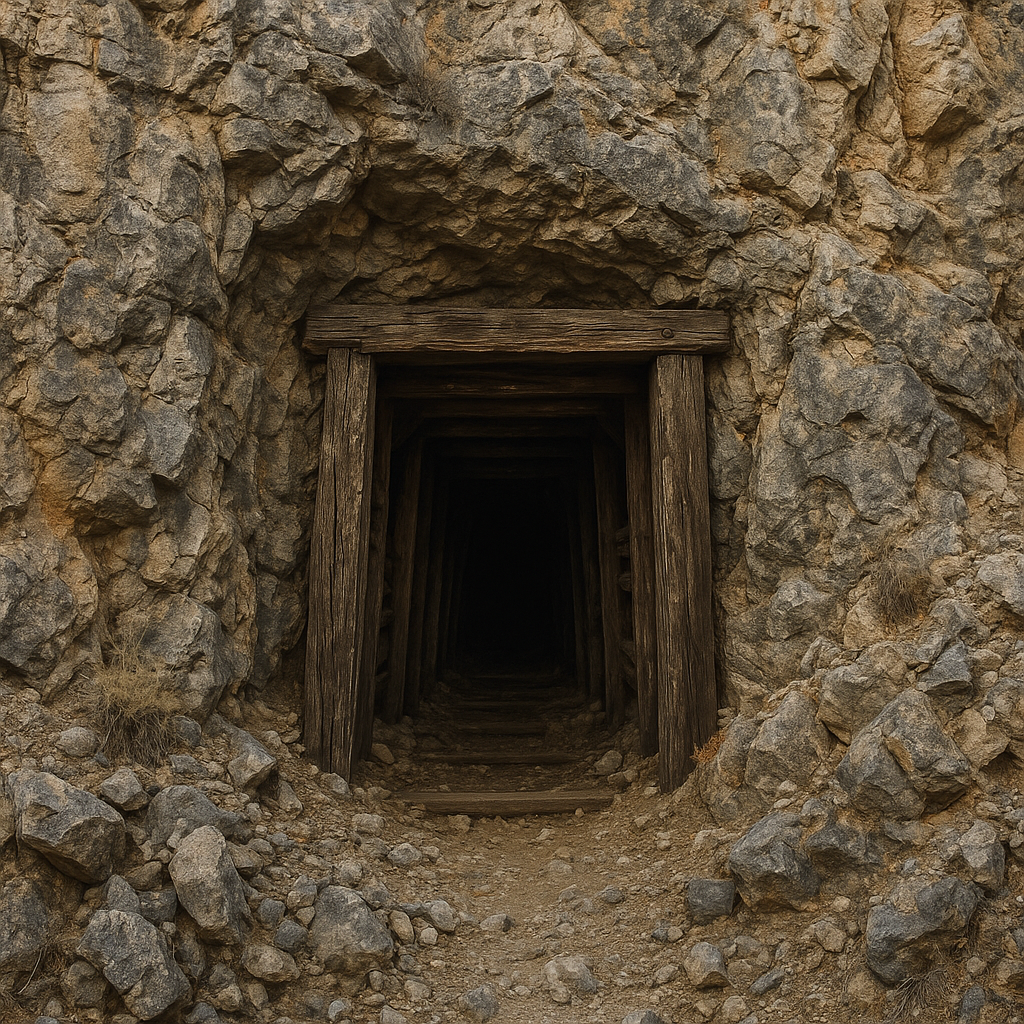
Operation Ironwood highlights the fight against illegal mining in Kaapsehoop, revealing environmental damage and organized crime.
Operation Ironwood was a huge mission where 240 people, including rangers and soldiers, went into Mpumalanga, South Africa. Their goal was to find and destroy a hidden gold mining empire that had been secretly digging for almost ten years. They found secret tunnels, dangerous chemicals, and lots of gold, stopping a big illegal business that hurt the land and made everyone unsafe. The operation showed how smart technology and even dogs can help fight crime, but there's still more work to do to offer legal jobs and stop this shadowy gold trade for good.
What is "Operation Ironwood"?
"Operation Ironwood" was a seven-day mission that deployed 240 rangers, soldiers, scientists, and dogs to map, photograph, and dismantle an illegal gold mining operation in Mpumalanga, South Africa. This large-scale operation targeted the subterranean network that had been supplying Gauteng’s grey-market gold for nearly a decade, aiming to disrupt the shadow gold empire.
Get Cape Town news in your inbox
Stay updated with the latest stories from the Mother City.
1. The postcard and its hidden basement
Kaapsehoop’s cliffs glow ochre at sunrise, mist rolls across waist-high grass, and blue swallows stitch the sky - scenes that fill a million holiday selfies. Few visitors realise the same sandstone walls hide a second, inverted world. Since 1885, when ox-wagons first rattled up the Drakensberg ridge, miners have chased the Kimberley conglomerate that bulges here like a reef of ancient river gravel.
Modern-day fortune seekers - mostly men from Mozambique, Zimbabwe and Lesotho - have reopened those Victorian tunnels with plasma cutters and generator growl. Their hand-dug holes now honeycomb the escarpment edge east of Mbombela, creating an invisible belt of shafts, crushers and mercury stills that never features on the tourism brochures.
Last week the state finally looked up from its paper trail. “Operation Ironwood” parachuted 240 rangers, soldiers, scientists and dogs into 36 000 ha of broken country between Berlin Falls plantation and the 900 m cliff that drops to the Lowveld. The mission: map, photograph and, where possible, amputate the subterranean circuit that has fed Gauteng’s grey-market gold for almost a decade.
2. Seven days of smoke, ladders and liquid mercury
Intelligence officers spent six weeks beforehand logging 78 mountain footpaths too narrow for a Land Cruiser, 19 adits glowing fresh cut-marks, and a lattice of narrow tracks that zig-zagged like ant trails across contour lines. Their work paid off before breakfast on day three, when a Mountain Ranger squad rappelled a 60 m waterfall cliff and landed on a wicket of woven wattle branches.
Behind the camouflage lay a shaft mouth humming with diesel life: aluminium ladders descended into a limestone throat where a conveyor belt dumped rock into a mobile jaw crusher. Investigators later priced the outfit at R3.4 million - capital that could only come from someone betting on volume, not a lone panner.
Eight kilometres south, near the ghost cottages of Slaaihoek, detectives stepped into what one described as “a chemistry set from hell.” Mercury retorts bubbled beside nitric-acid baths; activated-carbon columns lined a wall like oversized pool filters; a propane forge waited to pour 40 kg of concentrate a week into fake ingots. One 25 kg drum of mercury - street value R180 000 - sat beside 120 kg of carbon pregnant with fine gold.
When the sweep ended at dusk on day seven, the scoreboard showed 53 handcuffs, 14 high-wall compressors, 38 generator sets, 4 000 ℓ of diesel, 57 kg of gold-bearing concentrate, an AK-47, 14 pistols and 2 300 rounds. Eleven arrestees already decorate the Hawks’ organised-crime wall for similar gigs on the East Rand and in the Barberton greenstone belt.
3. Why the reef lures armies of diggers
Geology hands out the first invitation. The Wolkberg Group sediments kink into tight synclines that trapped coarse gold in potholes - tiny replicas of the nuggets that made Pilgrim’s Rest famous. Ore is free-milling, so a shovel, pan and water can free visible flakes; grades, however, swing like a pendulum - 40 g/t one day, 0.2 g/t the next.
To smooth the lottery, syndicate bosses chase tonnage: pumps, compressors and steel arches become mandatory. The moment they mechanise, the venture sheds its artisanal skin and turns into a capital-hungry beast - one increasingly bankrolled by the same coffers that move cigarettes, abalone and meth-precursor chemicals across the Lebombo mountains.
The Escarpment Environment & Biodiversity Alliance calculates that each processed tonne leaks 1.8 g of mercury into local streams. Water samples taken below four Ironwood sites averaged 0.42 mg/ℓ - eight times the national aquatic standard. Those streams feed the Elands and Crocodile rivers, meaning Kruger’s hippos eventually sip the same metal.
4. Poisoned streams, sinking heritage and laundered millions
A CSIR drone survey flown in April 2024 measured 11.3 ha of indigenous yellowwood and wild olive forest converted to spoil heaps in nine months; natural lightning fires claimed only 0.9 ha in the same period. Blue swallows - down to fewer than 50 Mpumalanga pairs - ingest mercury when their insect prey breathes contaminated air.
Less than 3 km from Kaapsehoop’s 1905 magistrate’s office, a warren of tunnels now undercuts the original wagon road that once hauled supplies between Pilgrim’s Rest and Maputo port. Archaeologists warn that sinkholes could propagate along the historic rut line, mirroring collapses that have already eaten chunks of the 1892 Pilgrim’s Rest main street.
Financial investigators traced R92 million moving through 78 bank accounts held by the 53 suspects between January 2023 and March 2024. Deposits arrived in hypnotic R45 000 chunks, the magic figure that keeps banks from alerting Treasury. One “construction supplier” in Mbombela declared only R1.3 million to SARS yet banked R28 million via 42 transfers. Hawks analysts say the same accounts wash cigarette proceeds and yellow metal alike, both smuggled through the Lebombo fence-line.
5. When the only pay cheque in town comes from a hole
Local unemployment sits at 42 %. A single illicit crew feeds 14 surface hands - lookouts, cooks, diesel runners - and nine men below; each earns R300–R400 a day, triple the neighbouring farm rate. Spending splashes through township taverns, pushing up grocery prices and knife-crime statistics: Kaapsehoop village recorded 3 murders in 2021, 14 in 2023, most tied to mining turf.
Ironwood’s planners therefore targeted not only shafts but the socio-economic arteries that nourish them. Teams slashed conveyor belts, disabled 34 diesel bladders and poured readymix concrete down shaft collars. Preservation Orders under the Prevention of Organised Crime Act simultaneously landed on three farm title-deeds that had been used as collateral to rent compressors; if owners cannot explain the nexus, the state will attach land, tractors and even cattle.
6. Satellites that see through fog and dogs that smell mercury
Because a 300 m fog blanket often cloaks the escarpment, Ironwood trialled synthetic-aperture radar satellites that measure 5 cm-scale ground motion. Analysts at the University of Cape Town fed 18 months of SAR data into a machine-learning model; the algorithm predicted six fresh shafts that field teams later confirmed - an 84 % hit rate. The same platform now keeps nightly watch over Pilgrim’s Rest, Barberton and Roodepoort’s western ridge.
On the ground, two Belgian Malinois imported by Afrique du Sud K9 learned to alert on elemental mercury vapour. In blind trials they found 12 of 15 concealed flasks in 40 seconds, beating handheld analysers that needed 12 minutes and coughed out three false positives. Rangers now let the dogs loose on engine bays, false fuel tanks and even horse-boxes leaving the village.
7. What still has to happen before the next cycle starts
Veterans warn the victory will be temporary unless three structural gaps close.
First, legal channels: South Africa’s 2022 artisanal mining policy has issued only 122 permits nationwide; Mpumalanga still sits at zero. Without legitimate access, diggers remain lawless by default.
Second, refinery gatekeepers: an estimated 96 % of clandestine gold still ends up inside licensed smelters that also buy legal ore. Investigators want a live, blockchain ledger that matches every purchase to a verifiable mine code, making laundered lots impossible to sell.
Third, alternative paydays: the Department of Environment is piloting fynbos and honeybush tea nurseries along the escarpment, yet each cooperative can access only R250 000 startup grants - far below irrigation and packing-shed costs.
Meanwhile, horse-trail operators report a 30 % surge in forward bookings since Ironwood hit the headlines. Travellers who cancelled after a 2022 shoot-out are returning, hopeful that orchids, wild horses and sunset cliffs will again outshine the catacombs that nearly swallowed them.
What was Operation Ironwood?
Operation Ironwood was a seven-day mission that deployed 240 rangers, soldiers, scientists, and dogs to map, photograph, and dismantle an illegal gold mining operation in Mpumalanga, South Africa. This large-scale operation targeted the subterranean network that had been supplying Gauteng’s grey-market gold for nearly a decade, aiming to disrupt the shadow gold empire.
Where was Operation Ironwood conducted?
Operation Ironwood was conducted in a 36,000-hectare area of rugged country in Mpumalanga, South Africa, specifically between the Berlin Falls plantation and the 900-meter cliff dropping to the Lowveld. This region is known for its geology, which naturally traps gold, making it attractive for mining.
What illegal activities and dangers were uncovered during Operation Ironwood?
The operation uncovered extensive illegal mining infrastructure, including secret tunnels, aluminum ladders, conveyor belts, and mobile jaw crushers. Investigators also found dangerous chemical processing sites with mercury retorts, nitric acid baths, activated-carbon columns, and propane forges. These activities led to severe environmental damage, including mercury contamination in streams (eight times the national aquatic standard), deforestation, and the risk of sinkholes near historical sites. The financial scale of the operation was significant, with R92 million traced through 78 bank accounts of 53 suspects in just over a year.
What technologies and methods were used in Operation Ironwood?
Intelligence officers spent six weeks mapping footpaths and adits. During the operation, advanced technologies were trialed, such as synthetic-aperture radar (SAR) satellites to detect ground motion and predict new shafts with an 84% accuracy rate. Additionally, specially trained Belgian Malinois dogs were used to detect elemental mercury vapor, proving more efficient than handheld analyzers.
What were the immediate outcomes of Operation Ironwood?
By the end of the seven-day sweep, 53 arrests were made. Authorities confiscated 14 high-wall compressors, 38 generator sets, 4,000 liters of diesel, 57 kg of gold-bearing concentrate, an AK-47, 14 pistols, and 2,300 rounds of ammunition. Conveyor belts were slashed, diesel bladders disabled, and concrete poured down shaft collars to incapacitate the operations. Preservation Orders were also placed on farm title deeds used to facilitate the illegal mining.
What long-term challenges remain in combating the shadow gold trade?
Experts warn that the success of Operation Ironwood will be temporary unless three structural gaps are addressed. First, there's a lack of legal channels for artisanal miners, with Mpumalanga having zero permits issued under the 2022 policy. Second, a significant portion of clandestine gold still enters licensed smelters, highlighting the need for a live, blockchain-based ledger to prevent the sale of laundered gold. Third, alternative economic opportunities are scarce, with local unemployment at 42%, making illegal mining an attractive, albeit dangerous, source of income. Efforts to pilot alternative livelihoods like fynbos and honeybush tea nurseries receive insufficient startup grants.

A Russian-Spanish journalist and Cape Town native, channels his lifelong passion for South Africa into captivating stories for his local blog. With a diverse background and 50 years of rich experiences, Serjio's unique voice resonates with readers seeking to explore Cape Town's vibrant culture. His love for the city shines through in every piece, making Serjio the go-to source for the latest in South African adventures.
View all articles →