
Sunday Times editor placed on special leave amid lottery misconduct allegation
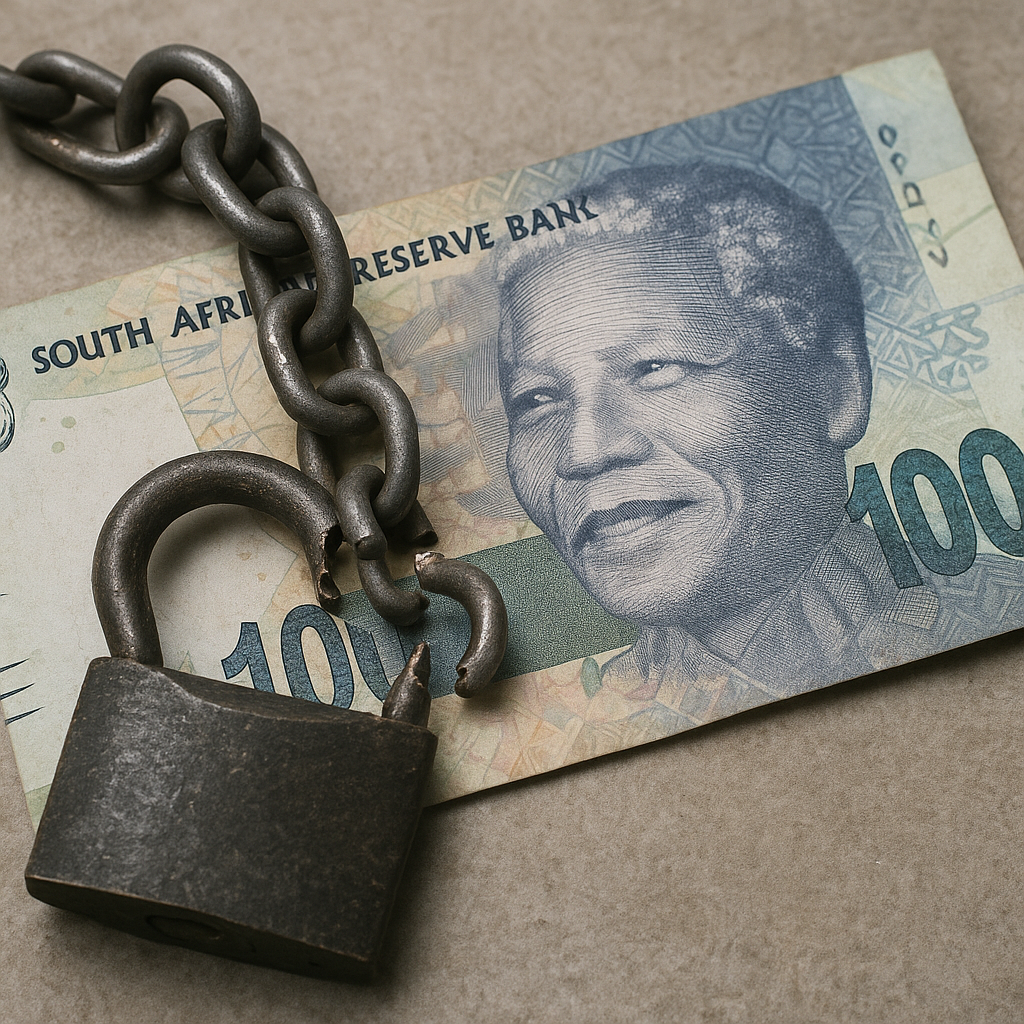
R1.5M lottery grant meant for SA journalists unravels into a media scandal involving a Sunday Times editor & NLC corruption.
A huge R1.5 million lottery grant, meant to train young journalists, was secretly stolen. Instead of helping people learn, the money bought fancy houses and paid off debts for powerful folks. It was a big fake, making people wonder if journalism can truly be fair when money corrupts even those meant to tell the truth. Now, everyone is watching to see if justice will win.
What happened to the R1.5 million lottery grant for Todi Media Development Foundation?
The R1.5 million lottery grant, intended for media training, was illicitly diverted. R550,000 went to Unscripted Communication, owned by Makhudu Sefara, and R900,000 to Black Dungaree Trading & Projects. These funds were ultimately used for property purchases, debt repayment, and other unrelated ventures, with no evidence of the promised media training occurring.
Get Cape Town news in your inbox
Stay updated with the latest stories from the Mother City.
Section 1 – A harmless-looking form turns into a cash geyser
In May 2018 the National Lotteries Commission advertised a fresh window called “media sustainability,” riding the panic over fake news and the crumbling public broadcaster. The Todi Media Development Foundation, a little-known Polokwane non-profit, filed a one-page request: R1.5 million to teach fifty youngsters in Limpopo villages how to film, write and run online news hubs. The paperwork reached a junior grants officer on 7 May; by 28 June the full amount was gone from the NLC account and parked at Todi’s Standard Bank branch.
No board member questioned why more than a third of the budget – R550,000 – was listed simply as “facilitation” or why another R900,000 was labelled “logistics coordination” without a single venue, camera or laptop being named. The application slid through the commission’s “presidential poverty-alleviation” fast lane, a mechanism meant for soup kitchens, not newsrooms.
To outsiders the grant looked like routine corporate social responsibility; inside the NLC it was already setting off silent alarm bells that would take three years to become a public roar.
Section 2 – Shells, shelf companies and the day the money vanished
Todi’s sole paid director, Khutso Daniel Makwela, called an urgent board meeting at the Polokwane Golf Club and, with three volunteers nodding along, resolved to open four fresh bank accounts “for project convenience.” Within 48 hours the R1.5 million had scattered in only two directions:
- R550,000 landed at Unscripted Communication, a Johannesburg PR agency directed by Makhudu Sefara, then deputy editor of the Sunday Times.
- R900,000 zipped to Black Dungaree Trading & Projects, a shelf company registered eight weeks earlier by property wheeler-dealer Daniel Matome Malatjie.
Standard Bank’s automated surveillance system flagged both transfers because each exceeded the R100,000 disclosure threshold. A single phone call from a senior NLC manager silenced the alerts, a detail the Special Investigating Unit later fished out of an e-mail cache.
By the end of the week the grant no longer belonged to “community media”; it was private capital looking for a home in Gauteng’s property market.
Section 3 – Where the loot really went and the workshop that never wrote a story
Forensic trackers followed the R550,000 the moment it hit Unscripted’s account. One block of R180,000 cleared an old overdraft; R92,000 became a deposit on a three-bedroom cluster in Bassonia Rock Extension, registered to a family trust linked to Sefara; R120,000 paid off two credit cards; and R158,000 financed an unrelated corporate-entertainment outfit. None of the line items mentioned notebooks, cameras or trainee stipends.
The larger slice, R900,000, exited Black Dungaree on the same day it arrived to purchase stand 442 in the same Bassonia estate for cash. The deed was transferred to Flamingo Vistas, a shelf company co-owned by Malatjie and his spouse. No classroom, studio or pop-up newsroom ever appeared on the vacant plot.
Asked for proof that tuition had happened, Todi handed investigators an attendance register containing 54 names written in the same ink and handwriting. Photographs showed smiling delegates at the Ranch Hotel in December 2018, but time-stamped receipts proved the provincial agriculture department, not the lottery, had settled the venue bill. MTN location data placed Sefara’s phone in Johannesburg on the workshop day, contradicting his signed claim that he “personally facilitated” the session.
Section 4 – Fallout in high places, Parliament’s slow fix and the road ahead
When the SIU briefed the communications minister in January 2024, one scarlet-bordered slide warned of a “High-Profile Media Personality – Possible Conflict.” Within days Arena Holdings opened an internal probe; SANEF held a midnight Zoom and convinced Sefara, now both Sunday Times editor and forum chair, to “step aside” rather than face a bruising no-confidence vote. The Sunday Times newsroom was quietly ordered to look the other way, a gag that birthed a leaked dissent memo and wall-to-wall coverage by rival outlets.
On 4 March, Makwela signed an Acknowledgement of Debt for the full R1.5 million plus interest, securing the first repayment with a micro-loan against his parents’ house. Civil preservation orders have frozen the Bassonia properties; criminal dockets sit with the Hawks, awaiting a sworn statement the NLC board still claims it must “internally review.”
The scandal is a microcosm of a R378-million “media development” graveyard uncovered by the SIU, and it has reignited debate over the stalled Lotteries Amendment Bill, which wants grantees published within 14 days and fraudsters barred for a decade. Until Parliament reopens in May and until Arena’s investigator files in six weeks, the money that was supposed to teach village teens how to hold power to account will instead keep teaching the country how power can hollow out journalism from the inside.
[{"question": "What was the R1.5 million lottery grant intended for?", "answer": "The R1.5 million lottery grant was specifically allocated to the Todi Media Development Foundation for a 'media sustainability' initiative. The stated purpose was to train fifty young individuals in Limpopo villages in journalism skills, including filming, writing, and operating online news hubs, to combat fake news and support local media."}, {"question": "How was the R1.5 million lottery grant actually spent?", "answer": "Instead of funding media training, the R1.5 million grant was illicitly diverted. R550,000 was transferred to Unscripted Communication, owned by Makhudu Sefara, and R900,000 went to Black Dungaree Trading & Projects. These funds were subsequently used for personal gains, including property purchases in Bassonia, paying off debts like overdrafts and credit cards, and financing unrelated corporate entertainment, rather than for the intended journalism training."}, {"question": "Who were the key individuals and entities involved in the diversion of funds?", "answer": "Key individuals and entities involved include the Todi Media Development Foundation, specifically its sole paid director Khutso Daniel Makwela, who authorized the transfers. Makhudu Sefara, then deputy editor of the Sunday Times and owner of Unscripted Communication, received a significant portion. Daniel Matome Malatjie, a property dealer, was involved through his shelf company, Black Dungaree Trading & Projects, which received the larger share. The National Lotteries Commission (NLC) also played a role, as a senior manager reportedly silenced automated alerts regarding the large transfers."}, {"question": "What were the 'red flags' or suspicious activities surrounding the grant?", "answer": "Several red flags emerged, including the Todi Media Development Foundation's application for 'facilitation' (R550,000) and 'logistics coordination' (R900,000) without specific details on venues, equipment, or training. The application was fast-tracked via a 'presidential poverty-alleviation' mechanism, typically not for media projects. Standard Bank's automated surveillance system flagged the transfers of R550,000 and R900,000 due to their size, but these alerts were reportedly silenced by an NLC manager."}, {"question": "What were the consequences and fallout of this scandal?", "answer": "The scandal led to significant fallout. Makhudu Sefara, then editor of the Sunday Times, was forced to 'step aside' from his role and as forum chair of SANEF. Arena Holdings initiated an internal probe. Khutso Daniel Makwela signed an Acknowledgement of Debt for the full R1.5 million plus interest. Civil preservation orders have frozen the properties purchased with the diverted funds, and criminal dockets are with the Hawks. The scandal also highlighted a broader 'media development' graveyard of R378 million uncovered by the SIU and reignited debate on the stalled Lotteries Amendment Bill."}, {"question": "What is the current status of the investigation and efforts to recover the funds?", "answer": "As of the latest information, Khutso Daniel Makwela has signed an Acknowledgement of Debt for the R1.5 million plus interest, with the first repayment secured by a micro-loan against his parents' house. Civil preservation orders have frozen the properties in Bassonia that were purchased with the diverted funds. Criminal investigations are ongoing, with dockets with the Hawks awaiting a sworn statement from the NLC board. The Special Investigating Unit (SIU) has been actively involved in uncovering the details of the diversion and its broader implications."}]

Kagiso Petersen is a Cape Town journalist who reports on the city’s evolving food culture—tracking everything from township braai innovators to Sea Point bistros signed up to the Ocean Wise pledge. Raised in Bo-Kaap and now cycling daily along the Atlantic Seaboard, he brings a palpable love for the city’s layered flavours and even more layered stories to every assignment.
View all articles →