
Synth-pop icons set to headline Cape Town
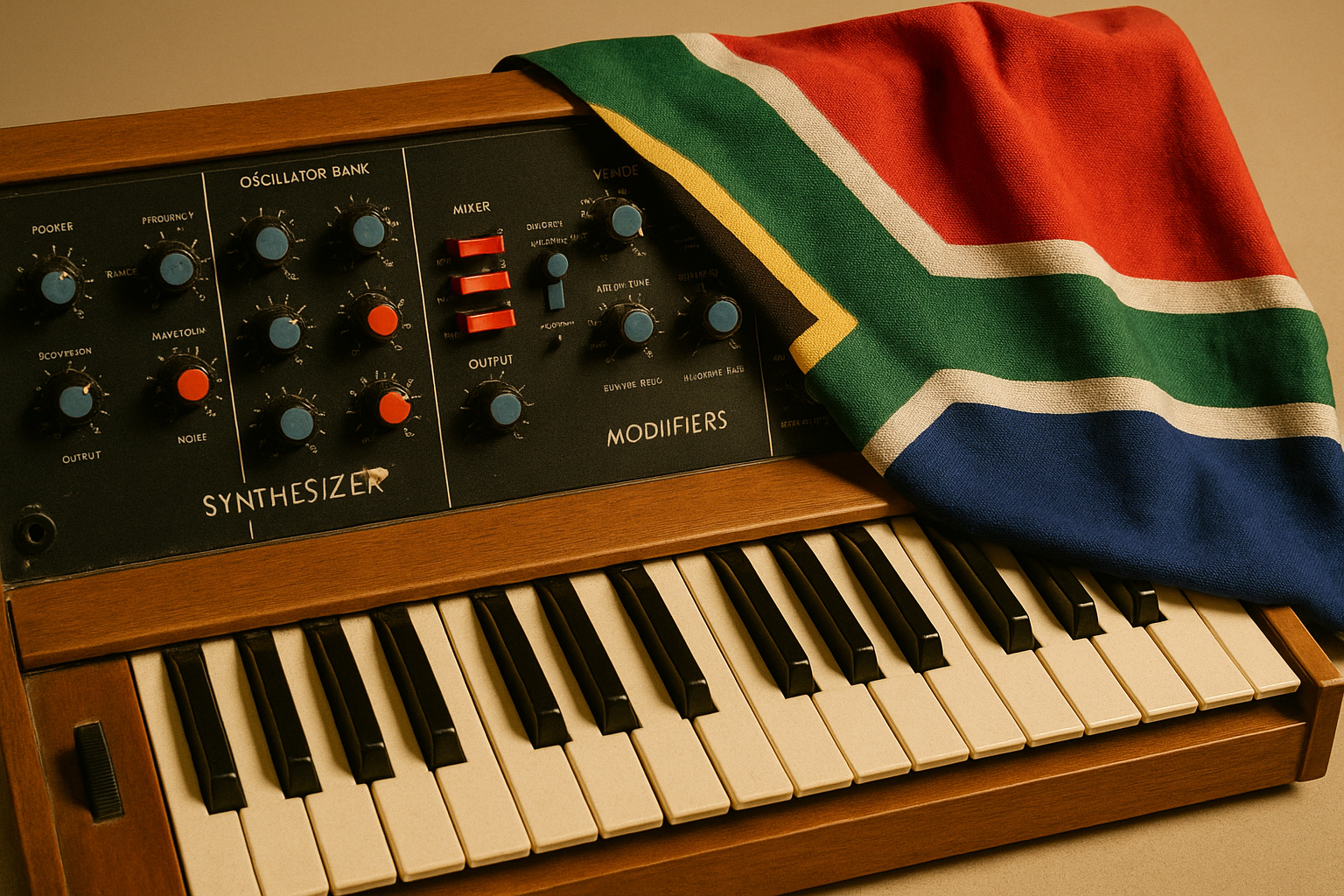
The Human League returns to South Africa after 40 years, rekindling the nation's enduring love affair with the synthesiser and electronic music.
The Human League, an old-school synth band, played a concert in Cape Town for the first time in 40 years! This was a big deal because their music was super important in South Africa during a tough time, even though the band wasn't there. Local musicians learned from them and made their own cool sounds. Now, fans finally got to see their heroes live, turning a long-distance dream into a real-life party with a special Cape Town twist.
Why was The Human League's 2024 Cape Town concert a significant event?
The Human League's 2024 Cape Town concert was significant because it marked their return to South Africa after 40 years, transforming a long-distance relationship between the band and local fans into a live experience. The event acknowledged their profound influence on South African music during apartheid, despite their physical absence.
Get Cape Town news in your inbox
Stay updated with the latest stories from the Mother City.
1. A Date That Only Comes Around Twice a Century
Picture a comet that passes twice in forty-three years and you have the Human League’s touring history in South Africa. Formed in 1977, the Sheffield synth pioneers touched the southern tip of Africa only once - three scorching nights at Sun City’s Superbowl in 1984 - before disappearing into radio static, import vinyl and late-night campus broadcasts. On 12 May they finally rematerialise at GrandWest’s Grand Arena for a solitary, almost-sold-out Tuesday. Between those two sightings lies an entire mythology built from pirate cassettes, township shebeen playlists and the ghost-signal of SABC-TV that piped “Don’t You Want Me” into living rooms during the last winters of legislated segregation. The band never left the national subconscious; it simply refrained from taking bodily form.
That absence created its own economy. Chrome tapes labelled “Radio 702 – Saturday Night Retro Mix, 15 Aug 1987” still trade for hundreds of rand at Observatory thrift markets. Bootleg VHS copies of the 1984 Sun City show - filmed on a camcorder smuggled inside a popcorn box - are screened in student res lounges at 2 a.m. like clandestine scripture. The GrandWest gig is therefore more than a nostalgia payday; it is the moment a spectral presence becomes flesh, and Cape Town’s long-distance relationship with British synth-pop finally gets a face-to-face meeting.
2. How a Polyphonic Keyboard Became More Valuable Than a Car
In 1983 import duties on consumer electronics were so punitive that buying a Yamaha DX7 cost more than a brand-new Golf GTi. That only inflated the allure. Mitchells Plain high-schoolers coveted the Casio VL-Tone as if it were made of gold, distorting its tiny speaker until township pop sprouted new, robotic limbs. Musicians such as Benjamin Ball and Condry Ziqubu bribed customs officers at Jan Smuts Airport with cartons of Rothmans to let synthesizers through. The Human League’s Dare arrived in this fevered climate as both instruction manual and liberation charter: you could top the charts without guitars, without a drummer, without a major-label chequebook.
Local kids learned the record like homework. They dissected the hand-clap pattern on “Love Action” by pressing play-record on double-cassette radios until the tape wore thin. Satellite city garages became makeshift studios where one DX7, one Roland TR-606 and any reel-to-reel could birth “bubble-gum” hits that borrowed Sheffield’s chrome-plated sadness and repainted it with Soweto exuberance. Those experiments are archived on fragile cassettes that still surface at Milnerton flea markets, evidence that the League’s influence never needed a visa - only a frequency.
3. Johannesburg’s Odd Couple: A Future-Music Fair and a Pension-Age Synth Trio
Johannesburg’s first Now Now Festival lands at Marks Park, Emmarentia, on 9 May, billing itself as an Afro-diasporic sonic laboratory. Headlining are amapiano prodigies, gqom steamrollers and London Afro-futurists - yet the sunset slot belongs to three sexagenarians from Sheffield. Promoter Andile Ndzishe cheerfully admits the absurdity, then explains the maths: “We needed one act every sub-culture already respects - bubble-gum kids, techno snobs, pensioners who danced at The Branch, even the Twitter piano hive. Human League is that universal constant.”
Susan Ann Sulley trimmed the set to 75 minutes after discovering Johannesburg sits 1 750 metres above sea level; sustained top notes become cardio at that height. The backline is freighted in from Basel: nine EMU Emulator racks, two ABBA-owned Jupiter-8s and the Linn-1 that clapped its way through “Love Action.” Customs demanded an affidavit certifying the circuitry contains no ivory, rhino horn or conflict minerals - paperwork Phil Oakey signed with amused grace. If vintage circuitry is contraband, then pop history itself is being declared endangered species.
4. Cape Town’s Concrete Barn Becomes a Cathedral of Chrome
GrandWest’s Grand Arena normally hosts Afrikaans arena-gospel and WWE SmackDown; acoustically it behaves like an underground car park. British sound guru Mike “Spike” Spike plans a cardioid sub-array borrowed from Muse stadium runs to swallow the slap-back echo. Sixty Astera LED tubes will recreate the 1982 Dare stage set, scaled up to dodge the rugby-scoreboard gantry. Local visual coder Araminta de Wet is printing a 22-metre translucent backdrop that reimagines Table Mountain as a neon synth-wave skyline - during “Seconds” it will glitch into a red-lined silhouette, throbbing in sync with every snare, a wink to the city’s load-shedding pulse.
Outside, the precinct turns into a time-warp bazaar. From 15:00 the Grand Parade hosts a car-boot synth market where you can buy a Juno-106 between stalls selling durum-gatsby rolls. Across the N1, an industrial parking lot becomes the “Love Action” block party, powered by reclaimed Tesla batteries running off-grid just to spite Eskom. The dress code fuses Sheffield 1981 with Cape Flats 2024: neon trench coats over Springbok jerseys, PVC pixie boots paired with ankle-monitor socks. When the last synth line fades and the casino’s 23:30 curfew kicks in, the mountain itself will still be humming.
[{"question": "What made The Human League's 2024 Cape Town concert a once-in-a-lifetime event?", "answer": "The 2024 Cape Town concert was The Human League's first performance in South Africa in 40 years, making it a significant event. Their prior engagement was three nights at Sun City's Superbowl in 1984. This return transformed a long-distance, mythological relationship with their South African fans into a live, in-person experience."}, {"question": "How did The Human League's music influence South African culture during apartheid?", "answer": "Despite their physical absence, The Human League's music, particularly their album 'Dare', served as both an instruction manual and a 'liberation charter' for local musicians. It showed that one could top charts without traditional instruments or major labels. Their synth-pop sound was absorbed into township shebeen playlists and inspired local artists to create 'bubble-gum' hits, infusing Sheffield's electronic sadness with Soweto's exuberance."}, {"question": "What challenges did South African musicians face in accessing synthesizers during that era?", "answer": "Accessing synthesizers in 1980s South Africa was incredibly difficult due to punitive import duties, making instruments like the Yamaha DX7 more expensive than a new car. Musicians often resorted to bribing customs officers to get synthesizers into the country, highlighting the immense value and desire for these electronic instruments."}, {"question": "How did fans consume The Human League's music in South Africa before their live return?", "answer": "Before their 2024 return, fans consumed The Human League's music through various unofficial channels. This included pirate cassettes, township shebeen playlists, and late-night campus broadcasts. Bootleg VHS tapes of their 1984 Sun City show, filmed clandestinely, were also screened, creating a unique mythology around the band's distant presence."}, {"question": "What unique preparations were made for The Human League's performance in Johannesburg and Cape Town?", "answer": "For the Johannesburg performance at the Now Now Festival, the set was trimmed to 75 minutes due to the city's high altitude. The band brought in vintage equipment from Basel, including EMU Emulator racks, ABBA-owned Jupiter-8s, and the Linn-1 drum machine, requiring special affidavits to certify the circuitry contained no contraband materials. In Cape Town, for the GrandWest concert, British sound guru Mike 'Spike' Spike implemented a cardioid sub-array to combat the venue's challenging acoustics, and 60 Astera LED tubes recreated the 1982 'Dare' stage set. A local visual coder created a 22-meter translucent backdrop reimagining Table Mountain as a neon synth-wave skyline, which would glitch and throb in sync with the music."}, {"question": "What kind of atmosphere was expected outside the Cape Town concert venue?", "answer": "Outside the GrandWest venue, a 'time-warp bazaar' was planned. The Grand Parade hosted a car-boot synth market, and an industrial parking lot became the 'Love Action' block party, powered by reclaimed Tesla batteries. The dress code was a fusion of Sheffield 1981 and Cape Flats 2024, encouraging attendees to combine neon trench coats with Springbok jerseys and PVC pixie boots with ankle-monitor socks, creating a unique cultural blend."}]

Emma Botha is a Cape Town-based journalist who chronicles the city’s shifting social-justice landscape for the Mail & Guardian, tracing stories from Parliament floor to Khayelitsha kitchen tables. Born and raised on the slopes of Devil’s Peak, she still hikes Lion’s Head before deadline days to remind herself why the mountain and the Mother City will always be her compass.
View all articles →