
Table Mountain raids lead to arrests for burglaries, poaching
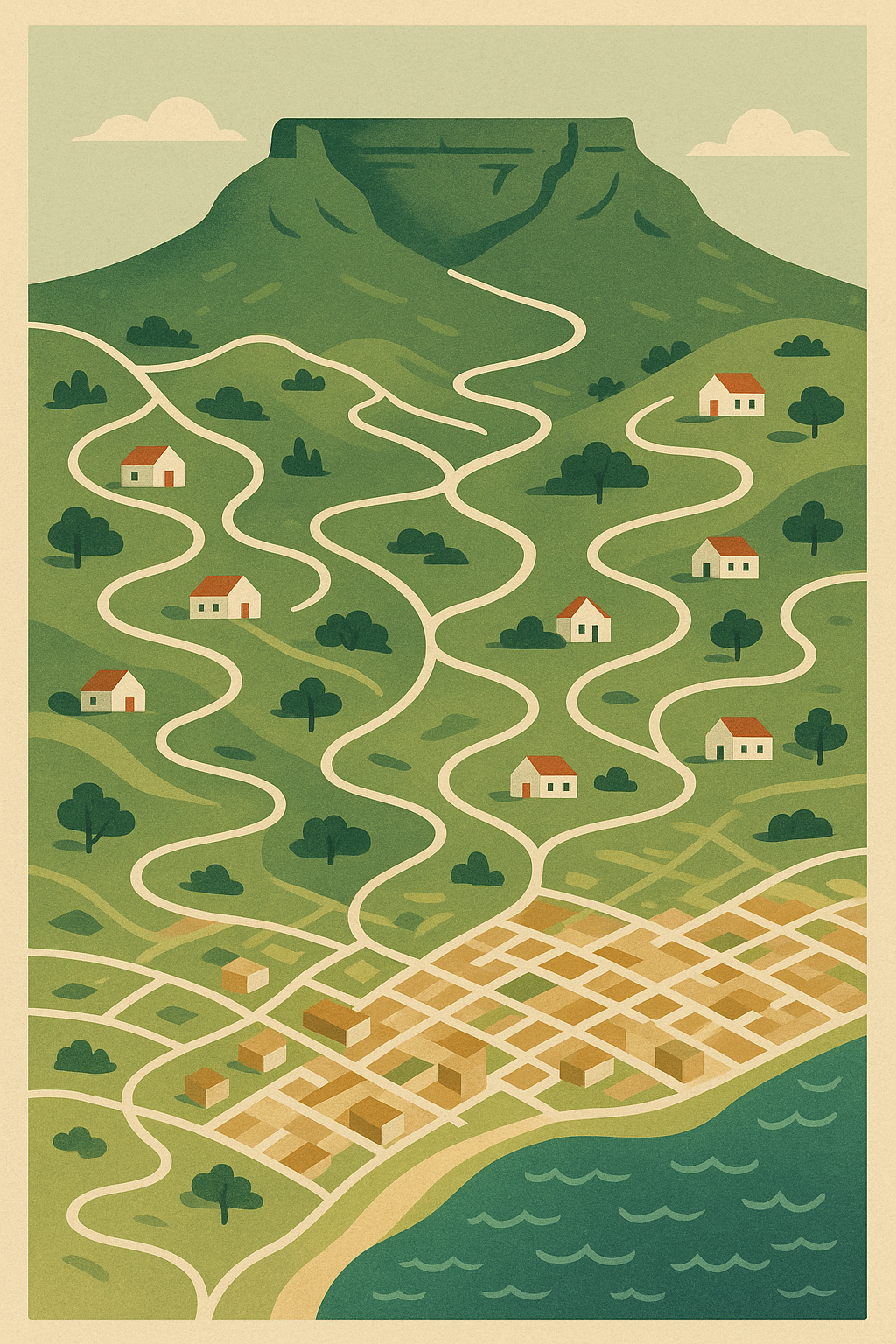
Rangers and police raid Table Mountain, busting abalone poachers and burglars using the natural landscape for crime. Operation KATAR.
In Cape Town, brave rangers and detectives launched Operation KATAR. Their mission was to catch bad guys using the mountain to sneak stolen goods and precious abalone. They used smart tactics, even K9 dogs, to stop these sneaky criminals. This bold operation shows how the mountain is a battleground against crime, protecting both homes and ocean life. It's a fight for the mountain's future, hoping for quieter nights and thriving nature.
What is Operation KATAR?
Operation KATAR (Kelp And Terrestrial Anti-poaching Raid) was a joint operation involving Table Mountain National Park rangers and SAPS detectives in Cape Town. Its objective was to disrupt abalone poaching syndicates and organized burglary crews by targeting their use of mountain trails as smuggling routes for stolen goods and illegal abalone.
Get Cape Town news in your inbox
Stay updated with the latest stories from the Mother City.
01. First Light over the Peninsula
Sun-up on 25 January arrived glass-calm; the Atlantic looked hammered into pewter beneath Table Mountain’s eastern buttress. Long before the scent of espresso drifted through city kitchens, two strike columns - Table Mountain National Park rangers and SAPS detectives - were already ghosting through afro-montane forest and pocketed ravines. Their shared mandate was brutally simple: sever the invisible foot-highways that organised burglary crews and perlemoen syndicates have treated as express lanes into Cape Town’s richest suburbs and its most delicate coastal ecosystem.
A fortnight of intelligence work had sketched the classic smuggler’s choreography: leave the townships in the charcoal hour, slip uphill on game trails or service tracks, hit houses while domestic workers arrive or owners stroll Labradors, melt back downslope with laptops, jewellery and, on lucky nights, packets of sun-cured abalone wedged between the loot. After dusk the script flips - divers duck into kelp forests, stuff mesh sacks with Haliotis midae, hand them to cliff-top look-outs who moonlight as housebreakers whenever the swell turns nasty. One gully draining into Hout Bay once ferried R 2.3 million worth of shellfish in a single tide; the mountain had become fence, accomplice and marketplace all at once.
The counter-plan, code-named Operation KATAR (Kelp And Terrestrial Anti-poaching Raid), would weaponise that same terrain. Rangers qualified in vertical ropework teamed up with detectives who could read LiDAR maps printed on waterproof sheets; a dog section versed in both rhino-horn scent and urban pursuit provided the muscle. K9 Leah - six-year-old Belgian Malinois with 38 previous abalone collars between Saldanha and Gansbaai - would spearhead the coastal pincer, while rookies Tyson and Sky locked down the upper ravines. By 04:00 the squads completed final briefings beside the old cable station, engines killed, torches doused, as meteors scratched white lines above - an accidental fireworks curtain for the drama about to unfold.
02. Vredehoek Spine - Footsteps in the Quarry
Objective one was a knife-edge ridge that funnels from the lower cable car toward the postcard cul-de-sacs of Vredehoek. CCTV twice caught a hooded silhouette pausing at a storm-water drain, caching a day-pack, then jogging toward manicured fences. Rangers cached themselves inside abandoned sandstone tunnels; a detective van sealed the only drivable exit on De Waal Drive. At 04:37 a jittery torch beam wavered upslope. The carrier crouched at the culvert, unhitched a bag - and walked into a lattice of red laser dots. K9 Leah shot forward the instant he vaulted a retaining wall; a single clamp on the ankle ended the sprint 30 m later. Inside the pillowcase: foreign passports, two laptop drives and a vintage Rolex minus its strap.
A second runner, panicked by the ruckus, bolted downslope toward Oranjezicht and clothes-lined himself on a rope net the rangers had stretched between pines at knee height. Both captives - 22 and 34, addresses listed simply as Nyanga - were out-of-breath tokens of the township that SAPS blames for a quarter of all Atlantic-seaboard break-ins. Plaster casts lifted from their boot soles matched impressions taken after a December job where intruders brewed coffee in the victim’s kitchen before cracking the safe. Among the gear: tide tables, a GPS preloaded with Smitswinkel Bay waypoints, and a scrap of cardboard pricing dried abalone at R 120 per gram, “wet” whole animals at R 45 each.
By 05:05 the ridge was secure, radios crackling with the news that Phase One had yielded both a burglary crew and fresh intelligence pointing seaward. The mountain, momentarily at least, had taken back its own.
03. Smitswinkel Amphitheatre - Sand, Kelp and Handcuffs
While Vredehoek echoed with the first success, a second convoy ghosted the blacktop to Cape Point, engines freewheeling in neutral down Redhill to save noise and headlights. Smitswinkel Bay is nature’s theatre - car-sized boulders, a sandy cove, kelp canopies thick enough to hide a snorkeler from tourists on the road 60 m above. It also sits inside a marine protected area where possession of undersized abalone (under 114 mm) or more than four per person launches criminal charges.
At 05:19 rangers with night-vision goggles caught LED blinks near the high-tide mark - divers signalling, perhaps to an unseen boat. No engine followed, hinting at a shore exit. Four heat signatures glowed: one stacking net bags at the cliff base, another sweeping the car park with an infrared torch, a trick borrowed from Garden Route cigarette smugglers. A rope team free-climbed the western buttress, crab-walked across algae-slick shelves, then dropped onto the beach from the ocean side, while constables blocked the only footpath. Leah launched at 40 m, hit the sand in 4.6 seconds and nailed the nearest diver’s wrist; instinctively he flung his loot seaward. The bag ruptured, spraying mother-of-pearl discs that skittered like oversized coins across the sand.
Tally: eleven mesh bags, 72 live animals, 1 150 shucked meats - about 212 kg in total, roughly 4 000 individuals. Street value: R 1.6 million here and now, R 5 million once dried and displayed in Hong Kong glass jars. The arrested diver, 38, from Hermanus, carried a rebreather, twin dive knives and a laminated card of “collector” numbers in Johannesburg and Port Elizabeth. He refused bail, citing fear of reprisal - a muffled testament to the layered syndicates that straddle Cape gangs and global seafood brokers.
04. Money, Fire and the Future - Why the Mountain Still Matters
-
The abalone economy*
South Africa shuttered its legal abalone fishery in 2008 after stocks collapsed and syndicates infiltrated quotas. Demand in East Asia, however, keeps ballooning; a single dried 9 cm shell sells for USD 280 in Shenzhen - an easy 5 000 % mark-up from its reef-side value of zero. Cartels run the value chain like cocaine: harvest, boil, dry, smuggle, profit. Divers earn maybe R 30 an animal, or just tik and a hot meal, while Guangzhou investors pocket six-figure dollar returns per container. Table Mountain delivers ideal logistics - steep fog-shrouded gullies, no vehicle access, and the N2 only minutes away. Once product reaches the Cape Flats it is boiled in backyard drums, sun-dried on tin roofs, vacuum-packed with coffee beans to fool airport dogs, then trucked to Zambia or Dubai where customs scrutiny softens. Interpol reckons 5 million kg have vanished since 2000 - about 45 million animals - eclipsing the entire pre-moratorium legal quota. -
Burglary’s mirror image*
The same ridges double as catwalks for housebreakers. Affluent suburbs - Camps Bay, Clifton, Fresnaye - press against the park with nothing grander than knee-high walls at their back doors. A fit intruder can jog from Tafelberg Road to a patio in twelve minutes, pop a sliding pane, and be regaining altitude before an armed-response sedan leaves the depot. Last year SAPS logged 2 900 housebreakings in the four precincts skirting the park, up 17 % on pre-pandemic stats. Detectives increasingly find empty abalone sacks beside stolen iPads, proof that crews flip between terrestrial and marine crime as weather and policing dictate. January’s captured maps even carried dual annotations - pencilled R-values beside mansion windows, GPS kelp-bed crosses offshore - one shopping list for every illicit market. -
Fire, drones and courtroom chess*
Community reaction funds private patrols and R 20 000 thermal cameras that live-stream to 3 000-member WhatsApp groups. Yet nothing disrupts smugglers like ecological shock: the 2021 Rhodes Memorial arson fire denuded 600 ha and, for five months, burglaries and abalone seizures plunged 70 % for the simple reason that cover had vanished. Scientists debate controlled burns as “green security,” though critics warn of erosion and alien plants. Trials are under way with drone-mounted multispectral cameras that pick abalone’s nacre infrared signature, cutting ranger response from 45 to 12 minutes, while marine scientists implant RFID tags in seeded abalone - any tagged shell found in a drying shed becomes a breadcrumb to the reef. Defence lawyers already cry mission creep; prosecutors counter with “victim-impact statements” co-written by marine biologists quantifying lost larvae, kelp-forest cascade effects and tourism jobs. The first such statement helped lock up a Hermanus diver for 12 years; prosecutors now test whether burglary profits bankrolled by abalone sales can be laundered under environmental proceeds, pushing potential sentences past 15 years.
Table Mountain has stood 260 million years; human footprints have graced its slopes for perhaps 50 000. It has watched Khoe signal fires, Portuguese caravels, British cannon and now black-clad poachers melting into its folds like 21st-century ghosts. Every illicit footstep fractures sandstone, every plastic bag ends in a turtle’s gut, yet the mountain also chronicles resilience - peregrines rebounding, red disas reclaiming burn scars, reformed poachers now leading schoolchildren past waterfalls where they once set snares. Whether the cuffs snapped on 25 January dent the trade for good or merely nudge it elsewhere will be told not by press-release hyperbole but by quieter metrics: fewer sirens in Vredehoek at dawn, empty tide charts on seized phones, healthier abalone counts on scientific transects - and, in the hush between breaking waves, the return of night-jar calls where mesh bags once clinked like illicit coins.
What is Operation KATAR?
Operation KATAR (Kelp And Terrestrial Anti-poaching Raid) was a joint operation launched on January 25th, involving Table Mountain National Park rangers and SAPS detectives in Cape Town. Its objective was to disrupt abalone poaching syndicates and organized burglary crews by targeting their use of mountain trails as smuggling routes for stolen goods and illegal abalone. The operation utilized smart tactics, including K9 units, to combat these criminal activities.
Why is Table Mountain considered a 'battleground against crime'?
Table Mountain has become a critical battleground because criminals, including abalone poachers and burglars, use its trails and terrain to transport stolen goods and precious abalone. The mountain's geography provides cover and routes for these illicit activities, making it central to both safeguarding homes in affluent suburbs and protecting marine life in the surrounding waters. The fight on the mountain aims to restore peace and preserve nature.
What specific criminal activities did Operation KATAR target?
Operation KATAR specifically targeted two main criminal activities: abalone poaching and organized burglaries. Poachers used the mountain to smuggle illegally harvested abalone, while burglary crews utilized the mountain's trails for quick access to and escape from wealthy suburbs with stolen items such as laptops and jewelry. Intelligence revealed criminals would often alternate between these activities based on conditions like weather and policing efforts.
How did criminals use the mountain for their activities?
Criminals leveraged the mountain's terrain in several ways. They used game trails and service tracks as 'invisible foot-highways' to access and exit affluent suburbs, often during the early morning hours. For abalone poaching, divers would harvest abalone from kelp forests and hand them to cliff-top lookouts who also acted as housebreakers. These routes facilitated the smuggling of both stolen property and abalone, with one gully reportedly ferrying R 2.3 million worth of shellfish in a single tide.
What were the immediate results of Operation KATAR on January 25th?
The operation yielded significant immediate results. In Vredehoek, two burglars were apprehended, with one caught by K9 Leah, and found with foreign passports, laptop drives, and a vintage Rolex. Their gear included tide tables, a GPS with Smitswinkel Bay waypoints, and abalone pricing. At Smitswinkel Bay, rangers intercepted four individuals, recovering eleven mesh bags containing 72 live abalone and 1,150 shucked meats, totaling approximately 212 kg with a street value of R 1.6 million locally and R 5 million once dried in Hong Kong. One arrested diver carried rebreather equipment and a list of 'collector' numbers.
What are the long-term challenges and future strategies in combating crime on Table Mountain?
The long-term challenges include the high demand for abalone in East Asia, which fuels poaching despite the closure of legal fisheries in 2008. The mountain's proximity to affluent suburbs also continues to make it a target for burglaries. Future strategies involve 'green security' like controlled burns to disrupt smuggling routes, and technological advancements such as drone-mounted multispectral cameras to detect abalone's infrared signature. Marine scientists are also implanting RFID tags in abalone to track illegal trade, and prosecutors are seeking harsher sentences by linking burglary profits to environmental proceeds.

Amanda Wilson is a Cape Town-born journalist who covers the city’s evolving food scene for national and international outlets, tracing stories from Bo-Kaap spice shops to Khayelitsha micro-breweries. Raised on her grandmother’s Karoo lamb potjie and weekend hikes up Lion’s Head, she brings equal parts palate and pride to every assignment. Colleagues know her for the quiet warmth that turns interviews into friendships and fact-checks into shared laughter.
View all articles →