
Three killed in suspected taxi-related shooting at Delft taxi rank
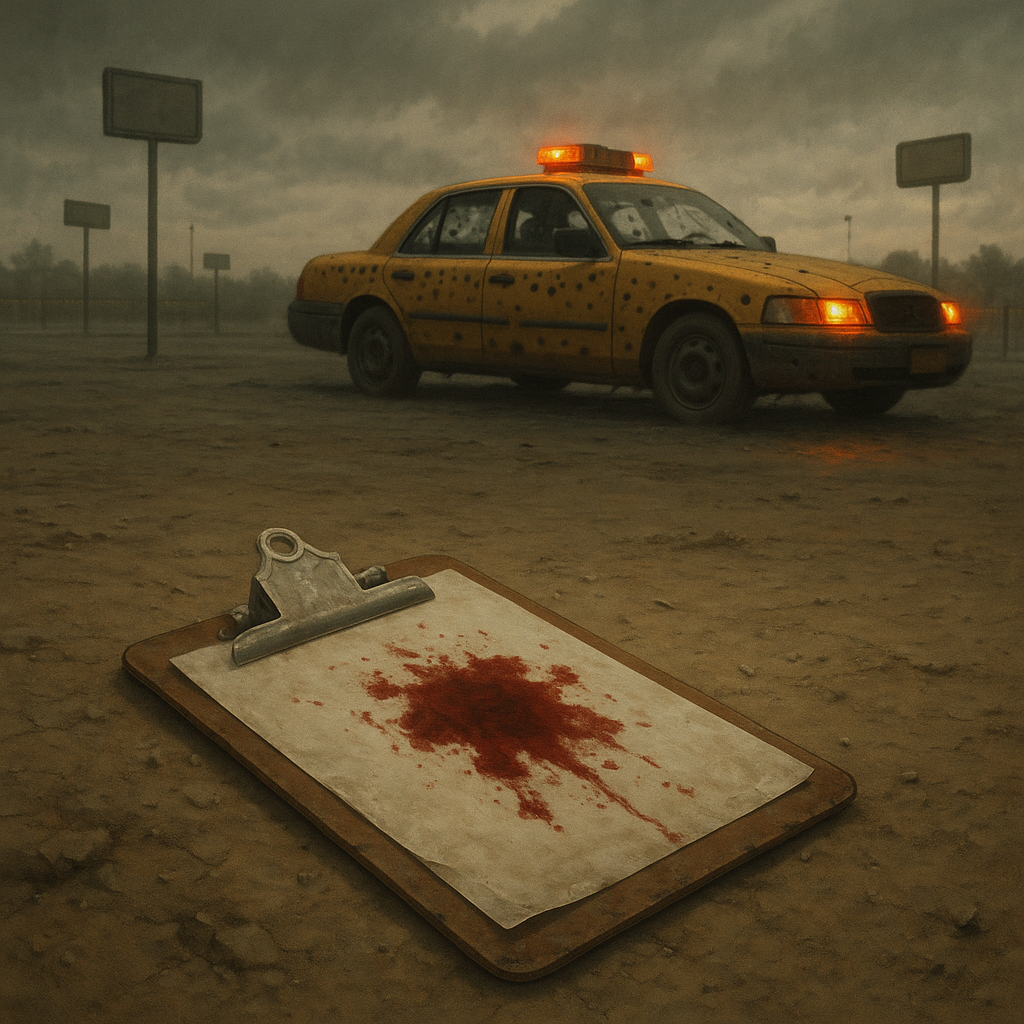
Delft taxi rank shooting: three dead in a brutal attack linked to the Western Cape's volatile taxi industry and route disputes.
In the early morning, a white taxi van pulled into a Delft taxi rank. Instead of dropping off passengers, gunmen inside opened fire, killing two men instantly and fatally wounding another. This brutal attack stemmed from a fierce fight over who controls lucrative taxi routes and operating permits, a struggle often turning violent. The victims were involved in plans to merge permits, which threatened the power of existing taxi chairmen. This taxi violence highlights a deadly competition for money and control, leaving a trail of bodies and fear in its wake.
What caused the Delft taxi-rank execution?
The Delft taxi-rank execution was primarily caused by fierce competition over lucrative taxi routes and associated operating permits. The victims were involved in association politics and a plan to merge permits, which threatened the established power and financial interests of certain chairmen within the industry. This struggle for control over routes and their substantial income often escalates to violence in the region.
Get Cape Town news in your inbox
Stay updated with the latest stories from the Mother City.
1. The Six-Fifteen Symphony of Gunfire
Thursday, 12 March 2026, 06:15 - Voorbrug taxi rank is still yawning when a bone-white Toyota Quantum rolls in, engine muttering like a hung-over diesel. Headlights stay dark, hazards blink as if the driver is merely disgorging early-shift workers. Instead, sliding doors hiss apart and the cabin becomes a firing range: three crisp bursts - pop-pop-pop, pause, pop-pop - bounce between the yellow loading lines before the van bolts for the R300 on-ramp. Two bodies fold face-first into their own blood; a third man, 38, crawls toward the hawkers’ iron shacks, hand pressed to his gut, calling for his mother. Paramedics reach the triangle of tarmac eight minutes later; the 55- and 58-year-olds are DOA, the younger victim dies at Tygerberg at 07:42. By breakfast, Delft Main Road is a crime-scene ribbon and another line is added to the Western Cape taxi-hit ledger.
The rank never really sleeps - 400 minibuses fight over 42 painted bays, pumping 18 000 souls toward Bellville, the CBD and Epping’s warehouses. Whoever grips the marshal’s clipboard squeezes real money: a fiver “admin” fee per passenger, fifty rand to skip the 05:00 queue. On a payday Friday one Quantum can rake in R9 000; control of a single loading slot is therefore worth murdering over. Association politics split along two prized route licences: the short Delft–Cape Town hop and the longer Delft–Bellville–Claremont loop that earns thicker peak-hour fares. Ambition, permits and cash converge on the same patch of oil-stained concrete every dawn.
CCTV lifted from a nearby pawnshop shows the killers knew the choreography. The Quantum never fully stops; 17 nine-millimetre casings land inside a two-metre radius, proof the gunmen fired from their seats. Sub-sonic hollow-points whispered through the air - either a suppressor muffled the report or the ammo itself was chosen to keep the concrete canyon quiet. Detectives remember identical cartridges scattered after a January drive-by on Saxdowns Road that left a Bellville Drivers’ Association treasurer with a scalp graze. Rehearsal or warning - docket minds want the answer.
2. Victims, Cash and the Currency of Routes
Names remain withheld until families view bodies, yet tongues inside the industry wag freely. The eldest casualty, 58, served as rank steward with Delft United Taxi Association; the 55-year-old recently beat the association in Labour Court, winning the right to load on the lucrative Bellville loop; the youngest doubled as queue marshal and after-hours bail surety broker, daily handling drivers’ impound fines. All three were rumoured to be courting a splinter bloc pushing “route rationalisation,” a plan that would merge overlapping permits and dilute the grip of chairmen who have held office since Nelson Mandela’s release. In this game, rearranging routes is the same as rearranging power - and power answers with bullets.
South Africa’s 15-million-a-day taxi sector still travels on an apartheid-era patchwork of permits, post-’94 subsidies and city bylaws nobody can simplify. Cape Town’s 7 500 licensed taxis share asphalt with an estimated 1 200 pirate operators. The National Taxi Alliance and Santaco wrestle over who may print an operating card, while City Hall waves the 2018 Contractual Operating Model that demands e-ticketing and route-based contracts. Each electronic ticket exposes a countable, taxable fare - an income stream owners have kept off SARS’ radar for two decades. Resistance is existential; digitisation is a death threat to off-book revenue.
Violence keeps the unofficial accounts. Between 2017 and 2022 the Western Cape logged 139 taxi-linked murders; 2023 added another 48. SAPS files them simply as “murder,” stripping out the industry context, so the true tally drifts in statistical fog. What’s clear are the methods: drive-bys at ranks, synchronised hits on highway on-ramps, and “biscuit” rentals - cheap sedans bought for cash, used once, then torched. The Quantum that visited Voorbrug had been stolen in Mfuleni forty-eight hours earlier, tracker disabled, plates swapped: textbook escrow of theft, backyard paint job, and release to a cell that pockets 60 % of the fee, facilitator 40 %. Everyone gets paid; everyone stays expendable.
3. Clues Burnt and Promises Made
Witnesses are scarce. Hawkers arranging cigarette packs and SIM-card stacks dropped instinctively; when they rose, the Quantum was gone. A vetkoek vendor remembers a rear passenger in baby-blue hoodie and surgical mask - detail repeated in three statements, now an identikit. Detectives know hitters sometimes dress alike to seed false leads, a trick borrowed from gang networks that share gun pipelines with taxi operators. The Provincial Serious and Violent Crime Unit tapes off 200 metres of Main Road, tagging 17 cones beside copper-coloured shells. Forensics lifts a palm print from the passenger-door handle of the abandoned chassis - found blazing in Samora Machel at 08:04 - and partial fingerprints from the roof gutter. Cross-checking proceeds against the 2021 Taxi Violence Task Team database that warehouses 1 800 prints lifted from impounded vehicles; convictions, however, drown in witness silence and barrels that swap firing pins like Lego.
Political microphones heat up before the bodies reach the morgue. Santaco’s provincial chair demands “a fully-resourced task team, not weekend roadblocks.” The ANC’s Delft branch asks for soldiers on the rank. City Hall counters: accept the new route contracts or face heavier impoundments. A draft by-law waits in the wings that would criminalise rank loitering after 22:00, giving Metro Police sweeping clearance powers. Critics say the plan targets the poor, not the oligarchs who steer hundreds of permits through front companies and cousin proxies.
Commuters still need rides. The morning after the shooting, Voorbrug reopens at 05:00 under pewter skies. Private guards pat down boots; a sniffer dog circles idling vans. A driver reassigned to the 05:30 Bellville slot whispers, “That’s the dead man’s slot. Means I’m next - or maybe protected. Who knows?” Pepper spray rattles beside his seat belt, toy-like against an AK’s promise. Investigators beg for dash-cam footage many taxis carry to document police bribes, but memory cards wipe every 24 hours. Homeowners’ cheap DVR cameras, angled to deter cable theft, may yet yield a reg number or silhouettes. The burnt Quantum gifts one last riddle: a half-melted orange bolekwa - traditional prayer cloth - fused to seat springs, hinting either at fingerprints shielded by fabric or a ritual meant to cloak the shooter from arrest.
4. Countdown to the Next Date
Forensic accountants mine the victims’ final moves. The 55-year-old recently insured himself for R1.2 million, beneficiary his daughter; the premium was paid in cash at a Bellville money-market counter that specialises in washing taxi revenue. The 58-year-old withdrew R15 000 at 19:03 the previous night, ATM camera showing an unidentified companion in a red Spurs jacket. Cash for bail, for bribes, or for the hit itself - night-time money often predicts morning gunfire.
Across the Cape Flats the script repeats: a Worcester driver shot while refuelling at Nyanga; a Philippi marshal murdered outside his children’s school; a Grabouw chairman surviving two bullets yet denied a state-hospital bed. Each headline erodes public trust, yet the industry’s indispensability armour-plates it against collapse. Metrorail’s copper thieves long ago killed the Delft line; MyCiTi suspended the Delft–CBD route after fleet arson in 2022. For residents the taxi rank is the only doorway to a pay cheque, and rank committees leverage that dependence like currency.
National Transport Minister Barbara Creecy has pencilled an emergency indaba for 20 March, promising premiers, mayors and both taxi federations a “stabilisation protocol.” Leaked agenda items float a dedicated Taxi Court, a witness-protection scheme modelled on anti-poaching units, and a six-month firearm amnesty at ranks. Skeptics recall three previous amnesties that harvested only rusted zip guns while working pistols slept in Langa wetlands. Junior detectives still knock on Delft doors, flyers printed in isiXhosa, Afrikaans and Somali - refugee stallholders may hold the overlooked angle. SAPS doubled the whistle-blower reward to R150 000, roughly the cost of a second-hand Quantum engine, a reminder that in this economy even justice is priced per kilowatt.
Lieutenant-Colonel Mbotho’s file now bulges to 184 pages: faded braai-day photos, ballistics maps tying seven previous scenes, a yellow sticky screaming “QUANTUM 12/03 – how many more?” The answer is not a number but an empty calendar box waiting to be circled.
What caused the Delft taxi-rank execution?
The Delft taxi-rank execution was primarily caused by fierce competition over lucrative taxi routes and associated operating permits. The victims were involved in association politics and a plan to merge permits, which threatened the established power and financial interests of certain chairmen within the industry. This struggle for control over routes and their substantial income often escalates to violence in the region.
When and where did the Delft taxi-rank execution take place?
The execution occurred on Thursday, 12 March 2026, at approximately 06:15 AM at the Voorbrug taxi rank in Delft. The attackers used a white Toyota Quantum taxi van.
Who were the victims of the attack and what was their involvement in the taxi industry?
The attack resulted in three fatalities: a 58-year-old rank steward with the Delft United Taxi Association, a 55-year-old who had recently won a Labour Court case to load on the lucrative Bellville loop, and a 38-year-old queue marshal who also acted as a bail surety broker. All three were rumored to be supporting a plan for "route rationalisation" which would merge permits and challenge the authority of long-standing chairmen.
How was the attack carried out?
The attackers drove a stolen white Toyota Quantum into the taxi rank. Instead of dropping off passengers, gunmen inside opened fire, discharging 17 nine-millimetre casings within a two-meter radius. The vehicle then fled towards the R300 on-ramp. The Quantum was later found abandoned and set ablaze in Samora Machel.
What are the broader implications of taxi violence in the Western Cape?
Taxi violence in the Western Cape is a significant issue, with 139 taxi-linked murders recorded between 2017 and 2022, and an additional 48 in 2023. This violence stems from the intense competition for control over routes and the substantial, often untaxed, income generated by the taxi industry. The industry operates with an outdated permit system, and attempts at digitisation and route rationalisation are met with resistance, as they threaten existing power structures and off-book revenue streams.
What measures are being proposed or taken to address taxi violence?
Various measures are being considered or implemented. Santaco's provincial chair has called for a dedicated task team, while the ANC's Delft branch has requested military intervention. City Hall is pushing for new route contracts and stricter impoundments. A draft by-law to criminalise rank loitering after 22:00 is also in the works. The National Transport Minister has scheduled an emergency meeting to discuss a "stabilisation protocol," potentially including a dedicated Taxi Court, a witness-protection scheme, and a firearm amnesty. Police have also increased the whistle-blower reward to R150,000.

Zola Naidoo is a Cape Town journalist who chronicles the city’s shifting politics and the lived realities behind the headlines. A weekend trail-runner on Table Mountain’s lower contour paths, she still swops stories in her grandmother’s District Six kitchen every Sunday, grounding her reporting in the cadences of the Cape.
View all articles →