
Woman breaks silence after Victoria Hospital tragedy
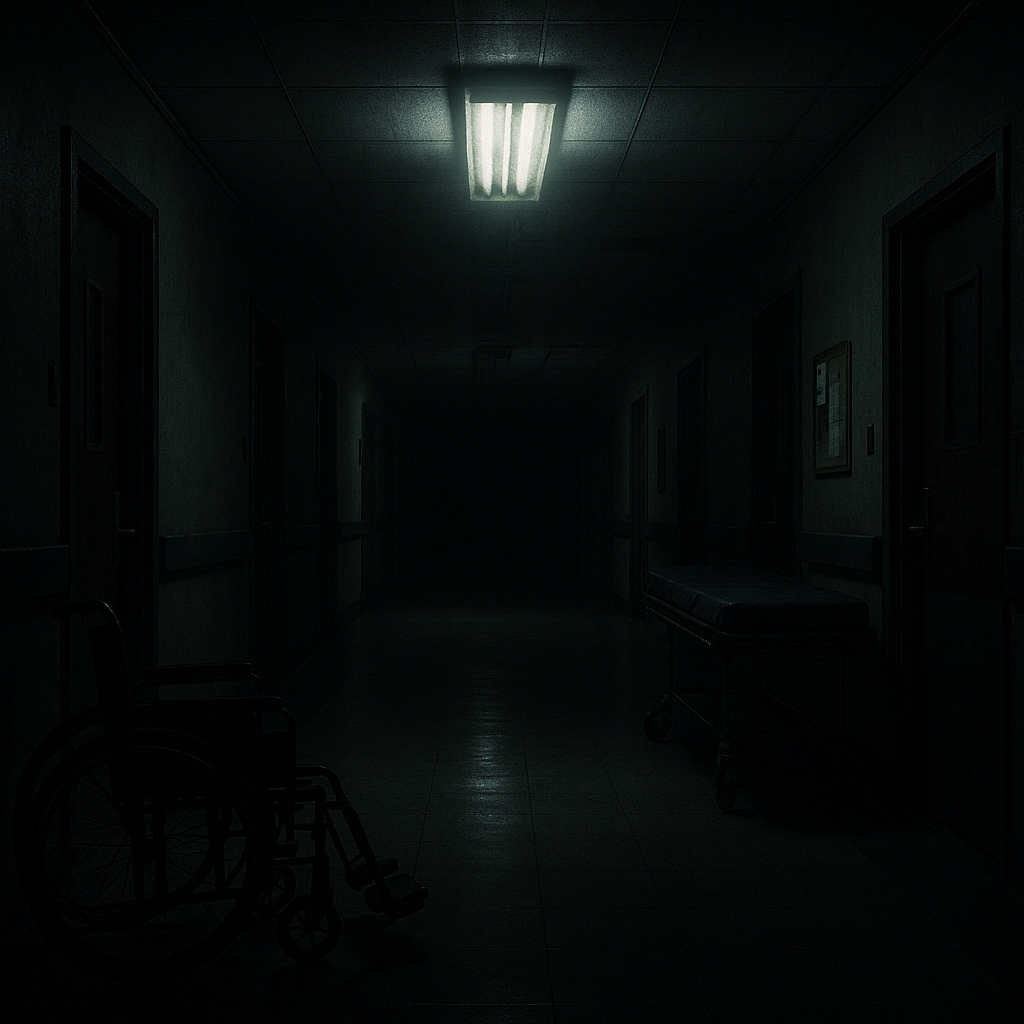
A woman's desperate 48-hour race to save her partner's limb and life exposes critical failures in Cape Town's public health system.
Philip Kruger's life hung by a thread because Victoria Hospital dropped the ball big time. Sleeping staff, wrong blood pressure readings, and no one checking his leg meant an eight-hour wait for a doctor. This huge delay turned a fixable problem into a tragedy, costing him his leg and ultimately, his life.
What were the key failures in Philip Kruger's medical care at Victoria Hospital?
Philip Kruger's initial care at Victoria Hospital suffered from several critical failures: microsleeping staff, an inaccurate blood pressure reading from a pre-existing injury, and a lack of proper examination of his leg. This led to an eight-hour delay before a doctor could see him, despite his condition being critical.
Get Cape Town news in your inbox
Stay updated with the latest stories from the Mother City.
The First Crack: A Calf Becomes a Clock
Gerda Kruger still hears the note her partner hit when his right calf seized at 22:14 on 3 March 2026 – a half-strangled sound, as though the muscle had been plugged into mains electricity. They had been half-watching rugby replays; by midnight the grunt had synced with the kitchen clock. At 01:50 Philip tried to stand and told her his foot “felt like January snow.” By 02:15 the lower leg was blotched plum-purple and the dorsalis pedis pulse – normally a flicker she could count without touching – had disappeared. They left their Bergvliet cottage at 02:27. The M5’s traffic lights blinked amber all the way to Wynberg, 11 km of empty tarmac that felt longer than any journey they had ever taken.
Victoria Hospital’s ramp shimmered with yesterday’s drizzle; Cape Town’s Level-5B water rules meant no hosing, so the concrete stayed slick. Gerda rocked the wheelchair back and forth to wake the automatic doors. Inside, a hand-written card slid across the glassed-in booth: “Security on rounds – ring bell twice.” She did. A guard appeared, belt still unbuckled, asking an outdated COVID-screening question. Clipboard chained to the counter, she wrote “Philip Kruger, 57, chestnut cutter, Bergvliet” while the stamp clocked 03:15. They were fourth in line: two croupy toddlers and a grandpa pressing a blood-soaked tea-towel to his scalp. No one behind the desk looked up.
Triage in Twilight: A Room Where Time Naps
The door marked “TRIAGE – KNOCK FIRST” stood ajar. Gerda knocked anyway, then pushed. A single desk lamp pooled light onto a nurse in marle scrubs, cheek on keyboard, empty Simba packet draped across her chest like a paper medal. A wall oximeter blinked 88 % on an unoccupied probe; policy says any saturation under 92 % earns an instant red tag. The nurse’s own saturation went unmeasured – she was simply asleep. Gerda’s polite cough jerked her upright; saliva wiped, the cuff went round Philip’s left arm despite Gerda’s warning that a welding accident years ago made that side read high. 210/110 mmHg flashed up, ECG spat out 134 beats/min. No one palpated the calf, no one lifted the foot. “?musculoskeletal pain” was typed, and the verdict delivered: “Doctor around 11:30.” That was eight hours distant – a working day compressed into the life of a dying leg.
Victoria’s waiting room is a 9 m × 14 m rectangle where forty-one plastic chairs are riveted to steel rails like seats on a grounded bus. A mute TV scrolled TB posters; an A4 sheet promised Green 4–6 hrs, Yellow 6–8, Orange 2–4, Red immediate. Philip had no colour – staff call this category “grey.” Between 03:40 and 04:00 two orange tags arrived: a fractured forearm and a woman crowning at 8 cm. Both vanished behind security doors. Philip’s calf now ballooned to rugby-ball circumference, skin dimpled like orange peel. “I’m going to faint,” he whispered, and did. Gerda caught him mid-fall, screamed for help. A cleaner shoved a yellow “Caution Wet Floor” sign toward her and muttered, “Sister’s busy.” At 04:15, afraid clot was marching upward, Gerda signed “Discharge at Own Risk” and wheeled Philip back into the dark. The odometer ticked 11 km; the leg above the knee was still warm, but the foot was already winter.
Second Door, Second Chance: The GP Who Listened with a Probe
Dr Ina Mari McAllen’s Plumstead rooms open at 08:00; she unlocks earlier on Mondays. She bought a second-hand 4 MHz Doppler in 2014 and keeps it charged like others keep cell-phones. When Philip lay on her couch at 09:40 she smeared gel and hunted for dorsalis pedis, posterior tibial – silence. She elevated the limb 30 cm; colour blanched. “Category IIb acute ischaemia,” she said. “Six-hour window, maybe less.” One phone call bypassed Groote Schuur’s casualty queue: direct to the vascular registrar, CT angio slot secured. They left Plumstead at 10:15; Gerda drove with the hazard lights on, the Doppler still on the passenger seat like a stethoscope that had already told the truth.
Groote Schuur’s doors open onto a ramp where porters know to look for pale legs. At 11:02 Philip hit the scanner; by 11:45 the images showed a popliteal artery abruptly stop-flow, distal vessels refilling via collaterals – clot, not cholesterol. The team opted for catheter-directed lysis, but on the angio-table he gasped, lungs suddenly full of migrating thrombus. Bilateral saddle emboli on CT; ICU, heparin drip, limb now officially dead at 17:00. Above-knee amputation was scheduled for the morning, but at 02:17 on 5 March a right MCA stroke struck – paradoxical embolus through a patent foramen ovale. By 03:15 on 6 March, exactly forty-eight hours after the first moan, Philip was brain-dead. Gerda signed the donor papers; the same hands that had pressed a bell twice in an empty corridor now initialled every page.
Paper and Bone: What One Complaint Can Weigh
Western Cape Health’s own targets for March 2026 read like wish-list graffiti: triage within two hours for 80 % of high-acuity patients, 95 % triage accuracy, fewer than 1 % leaving unseen. Internal figures show Victoria missed all three: median triage 3 h 46 min, accuracy 78 %, 4.2 % walked out. Twenty-seven of 220 nursing posts sat empty; night triage is meant to staff two pros and one staff nurse – only one pro showed, plus an auxiliary acting illegally. A 2023 UCT covert-video study found 38 % of triage nurses micro-sleeping between 02:00–05:00; odds tripled on shifts longer than twelve hours. The nurse Gerda discovered had worked nineteen of the previous twenty-four, covering a colleague’s day shift because COVID had thinned the roster. Hand-over happened in the car park, rain on clipboards.
The price of one above-knee amputation in the public ledger is R86 400, but the hidden invoice runs to R6 million: rehab, lifetime disability, lost tax. Catheter lysis within six hours costs R13 700 and saves the leg 78 % of the time. Gerda’s Facebook post – 1 136 words, no adjectives spared – travelled to 42 000 shares in two days; attorney Johan October filed simultaneous complaints to the Health Ombud, Nursing Council, Public Protector. PANSH’s petition demands pulse-oximeter alarms tethered to central monitors, 1 200 extra nurses, a “vascular code-red” bypass like stroke and STEMI fast-tracks. Groote Schuur already runs Code-V: door-to-reperfusion in 136 minutes, saving an estimated R55 million a year. Victoria is excluded only by geography and budget, not by possibility.
On 15 April the provincial health committee will convene. Agenda items include mandatory triage ratios, tele-link accreditation for Victoria, and a provincial limb-ischaemia registry. Activists will wheel in an amputee who waited eleven hours; economists will cite micro-sleeps and micro-costs. Whether the kite that hovered over Philip’s body bag becomes a symbol or a footnote depends less on evidence than on whether Treasury finds R324 000 for alarm panels and R2 400 for muscle-oxygen stickers already stacked on a supplier’s shelf.
Gerda has since returned to Victoria – not as patient but as witness, Philip’s donated R12 430 “Shongololo” tin now a seed fund for Doppler probes she hands to nurses in plastic sleeves. She keeps the torch by the door, loaded. When load-shedding hits, she told the friend who drove her home from the morgue, you still know exactly where the light should be.
What were the initial critical failures in Philip Kruger's care at Victoria Hospital?
Philip Kruger's care at Victoria Hospital was severely compromised by several factors. The triage nurse was found microsleeping, leading to an inadequate assessment. His blood pressure was taken on an arm with a pre-existing injury, resulting in a misleadingly high reading. Crucially, his leg was not properly examined or palpated, despite Gerda's concerns and the visible discoloration and swelling. This combination of oversights led to an eight-hour delay before a doctor was scheduled to see him, which proved fatal for his leg.
How did the hospital's triage process contribute to the tragic outcome?
The triage process at Victoria Hospital was deeply flawed and directly contributed to Philip's tragic outcome. The hospital's internal figures showed significant failures in meeting their own targets for triage time and accuracy. Philip was categorised as "grey," meaning he had no colour tag, despite his critical condition. While two "orange tag" patients (fractured forearm and a woman in labour) were seen quickly, Philip, whose leg was dying, was left to wait for eight hours. This indicates a severe misjudgment of his condition and a breakdown in the system designed to prioritise urgent cases.
What specific warnings did Gerda Kruger provide, and how were they disregarded?
Gerda Kruger provided several critical warnings that were disregarded by the staff at Victoria Hospital. She informed the nurse that Philip's left arm, where the blood pressure was taken, would read high due to a past welding accident. She also highlighted the rapidly worsening condition of his leg, which was becoming blotched plum-purple and ballooning in size. Despite her explicit concerns and the visible symptoms, no one palpated his calf or properly examined his foot. Her desperate plea for help when Philip fainted was met by a cleaner, not medical staff.
What was the turning point in Philip's care, and who provided it?
The turning point in Philip's care came when Gerda took him to Dr. Ina Mari McAllen, a GP in Plumstead. Dr. McAllen, using a second-hand 4 MHz Doppler, immediately identified the absence of a dorsalis pedis pulse and diagnosed "Category IIb acute ischaemia," identifying a critical six-hour window for intervention. She bypassed Groote Schuur's casualty queue with a single phone call, securing a CT angiogram slot and ensuring Philip received the specialised attention he desperately needed, which Victoria Hospital failed to provide.
What were the long-term consequences of the delayed diagnosis and treatment for Philip Kruger?
The delayed diagnosis and treatment at Victoria Hospital had devastating long-term consequences for Philip Kruger. The eight-hour wait turned a potentially fixable problem into an irreversible tragedy. By the time he reached Groote Schuur, catheter-directed lysis was attempted, but the limb was already dead. He underwent an above-knee amputation, but then suffered a stroke due to migrating thrombus, ultimately leading to brain death. He passed away exactly 48 hours after his first symptoms, losing both his leg and his life due to the initial medical negligence.
What systemic issues were highlighted by Philip Kruger's case, and what actions are being taken?
Philip Kruger's case highlighted severe systemic issues within Western Cape Health, including understaffing (27 of 220 nursing posts empty at Victoria), microsleeping among triage nurses (38% observed in a UCT study), and a failure to meet triage targets. Activists and Gerda Kruger herself are pushing for change, advocating for pulse-oximeter alarms, more nurses, and a "vascular code-red" bypass system similar to existing stroke protocols. The provincial health committee is set to convene to discuss mandatory triage ratios, tele-link accreditation for Victoria, and a provincial limb-ischaemia registry, aiming to prevent similar tragedies. Gerda has also started a fund to provide Doppler probes to nurses.

Emma Botha is a Cape Town-based journalist who chronicles the city’s shifting social-justice landscape for the Mail & Guardian, tracing stories from Parliament floor to Khayelitsha kitchen tables. Born and raised on the slopes of Devil’s Peak, she still hikes Lion’s Head before deadline days to remind herself why the mountain and the Mother City will always be her compass.
View all articles →