
Airlink pauses Hoedspruit flights after flooding
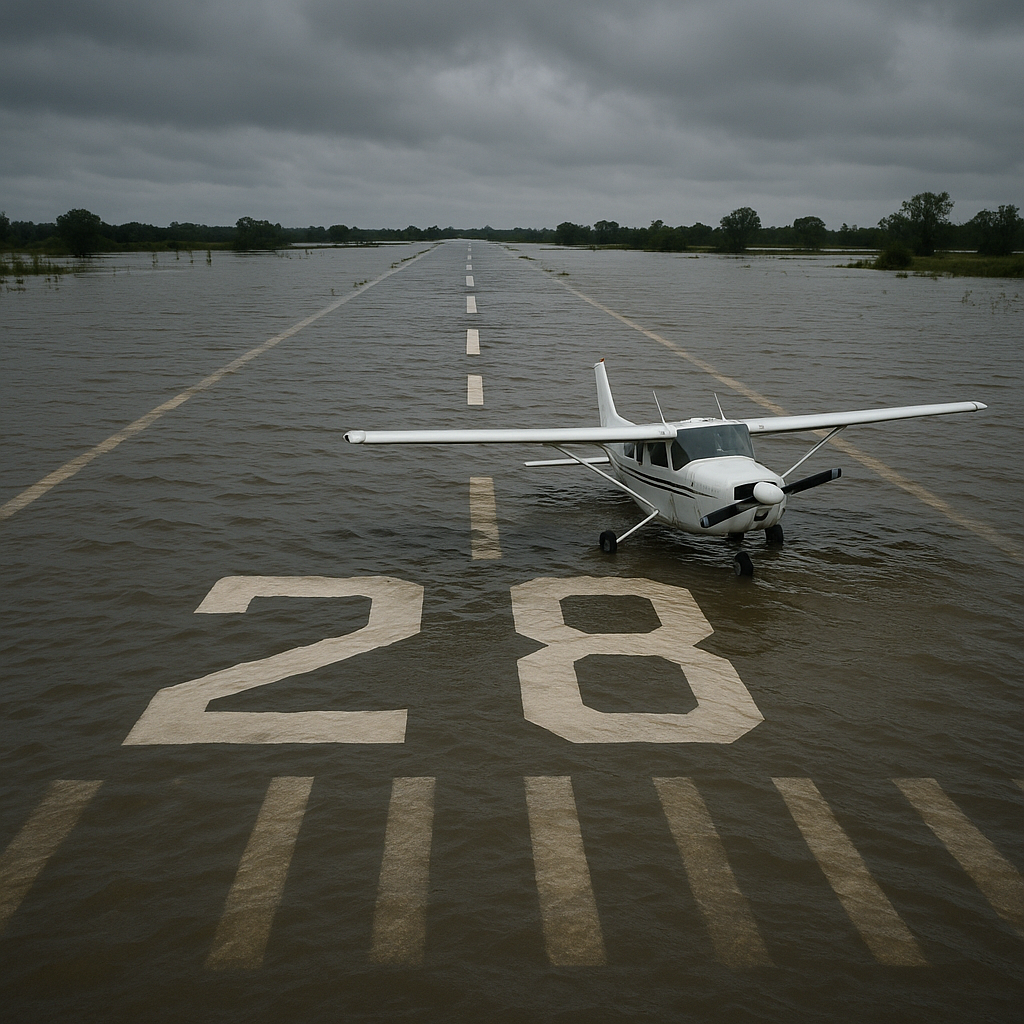
Severe flooding has suspended all flights to Hoedspruit, isolating Kruger National Park tourism and stranding visitors & staff.
Sky-High Lifeline Severed: How a Single Storm Strangled Kruger’s Gateway
A giant storm hit Hoedspruit, flooding the airport and making planes stop flying to Kruger National Park. This closure means big trouble for the local money, as thousands of tourists can't get there. It also messes up important work like saving rhinos and getting supplies to fancy lodges. Everyone is hoping the airport opens soon, but the weather is getting wilder, making us wonder how places like Kruger will keep up.
What caused the Hoedspruit airport shutdown and its impact?
A week-long cloudburst from January 9th, dropping 312 mm of rain, flooded Hoedspruit's Eastgate Airport, severing the airlink to Kruger National Park. This closure impacts 72,000 annual passengers, primarily foreign tourists, costing the local economy R1.2 billion and disrupting conservation efforts, staff logistics, and specialist supply chains for luxury eco-lodges.
Get Cape Town news in your inbox
Stay updated with the latest stories from the Mother City.
The Day the Planes Stopped
At dawn on 14 January the Lowveld woke to an announcement that froze holiday plans: every Airlink service into Hoedspruit’s Eastgate field was scratched until further notice. A week-long cloudburst had turned the western Kruger rim into a swamp, drowning run-off channels and snapping the twice-daily thread that links Africa’s flagship park with Cape Town and Johannesburg. Guides, wildlife vets, German birders and lodge chefs who rely on the 42-minute hop suddenly found themselves on the wrong side of a brand-new inland sea.
The shutdown is more than an inconvenience. Roughly 72 000 passengers ride that route each year; 83 % carry foreign passports and almost all are headed for one of the forty-five private reserves that lie within a 40-minute drive of the airstrip. With the tarmac unreachable, the local economy - population 4 700 - has lost its annual R1,2 billion injection in a single swipe.
Why a One-Runway Town Moves a Continent’s Wildlife Economy
Hoedspruit sits exactly where the Drakensberg drops into mopane savanna, a geographic hinge that puts the densest cluster of luxury eco-lodges on the planet at taxi distance. The 2 100 m asphalt ribbon is also the dispatch ramp for rhino-dehorning crews, bloodhound anti-poaching units and emergency air-ambulances that cover the northern half of Kruger. When that strip goes quiet, conservation schedules, specialist supply chains and high-end tourism all stall at once.
For overseas visitors the airport is the portal to discounted “green-season” safaris - January list prices dip 30 % and migrant birds flood the wetlands. Operators normally move 210 guests a day through the terminal; those bodies fill 4×4 transfers, curio stalls, craft breweries and community guiding schools from Kampersrus to Acornhoek. Close the sky door and every rung on that ladder wobbles.
Anatomy of a Cloudburst That Rewrote the Textbooks
The chaos began on 9 January when a cut-off low drifted in from the warm Mozambican Channel and parked above the Blyde catchment. By the time the system unravelled it had squeezed out 312 mm in thirty-six hours - above the district’s average for the entire first month of the year. Soils long since saturated turned to glass; water sheeted downhill, converting the gentle Blyde and Olifants rivers into racing canals that swallowed roads whole.
Drone clips shot by mango farmers show a 40-seater game viewer wrapped around a fever tree three kilometres downstream from where it was parked, and crocodiles cruising across what used to be the Hoedspruit traffic circle. Gauges on the Olifants recorded a peak two metres higher than the 2000 flood, the previous benchmark engineers used when they designed culverts and bridge decks.
When the Water Hit the Tarmac
Eastgate’s 543 m elevation normally keeps its lights above the hundred-year flood line, but a shallow drainage swale offered the river a back door. Water poured through the western fence, covering 1 600 m of taxiway and the entire general-aviation apron to mid-shin depth. The ILS localiser hut disappeared; copper coax lines corroded before the sun came out. Fuel farms survived, yet tankers cannot reach the pumps because the service road collapsed in two places.
Inspectors choppered in by police Huey found the runway slab intact but noticed subsidence ripples that demand ground-penetrating radar tests before anything heavier than a Cessna 208 may land again. Until engineers sign new pavement certificates, the strip is officially a very smooth pond.
The Dominoes Fall - From Rhinos to Room Nights
Tourism Revenue Evaporates Overnight
January is “go” time for budget-savvy safari lovers; lodges trim tariffs and birders chase Palaearctic waders. With the air bridge severed, operators must funnel guests through Kruger Mpumalanga International, 185 km south-east, then bounce them over potholes for four extra hours. Properties north of the Olifants face a six-hour slog - longer than the flight many clients took from Europe. One outfit lost 42 room-nights in 24 hours, erasing R1,3 million in turnover. Curio markets, micro-breweries and car-hire fleets feel the draught immediately.
Payroll Planes That Never Came
Behind the glossy brochures lodges run on six-week-on, two-week-off staff cycles. Guides, chefs and housekeepers commute from eMalahleni, Polokwane and Tzaneen; 380 employees due for change-over are marooned at home while 420 who should be going off-duty remain on site. HR managers now charter 19-seat Caravans at R48 000 a rotation - almost triple the normal fare - to keep skeleton crews alive. Overtime budgets, food stores and morale are all stretched thin.
Vets, Horns and Hounds on Hold
Rhino de-horning calendars, already pandemic-delayed, depend on a aerial relay: a helicopter vet team, a fixed-wing courier for the horn vault, and a standby medical plane. All three stages use Hoedspruit as mission control. Meanwhile, the K9 anti-poaching unit cannot collect fresh bloodhound packs; the drive to Skukuza adds four critical hours. Rangers note the full-moon window - prime time for syndicates - will slide by before dogs are back on the western fences.
Detours, Diversions and Dollar Signs
Determined travellers can still reach the bush, but every road is longer, dearer or dodgier:
- Joburg road shuttle: 440 km via the N12/R36, now seven hours after bridge approaches washed out near Ohrigstad; fares up 25 %.
- Skukuza strip: Open but seats sold out until 24 January; only one daily Cape Town and three Jo’burg flights a week.
- Kruger Mpumalanga International: R40 partially subsided; daylight convoys every two hours add unpredictable gaps.
Fresh produce trucks refuse the run after two refrigerated rigs were swept off the R531; Hoedspruit’s Spar shelves empty within days. One lodge group has resorted to parachuting diesel, eggs and lettuce from a 5-ton Slingsby - last seen during the 2000 floods.
Insurance Small Print, Climate Signals and a Town Plotting Its Comeback
Who Pays for the Lost Nights?
Standard policies class torrential floods as force majeure; airlines must re-book or refund, but no one compensates missed leopard encounters. Lodges usually issue 24-month credit notes if they cannot honour a stay, yet smaller outfits are enforcing 75 % cancellation fees tucked into online Ts & Cs. The Tourism Business Council wants government to declare a disaster zone, unlocking a R500 million relief chest and allowing business-interruption claims.
Engineers Race the Weather Forecast
Airlink’s internal memo eyes “late January” for a restart, but three gates must open first:
- SACAA must recertify the aerodrome after ILS recalibration and drainage rebuilds.
- SANRAL has to restore at least one freight corridor; Bailey bridges are en route from Durban but need two weeks to bolt together.
- Hydrologists want the Olifants below 3.5 m at the 12 km weir; if no further rain falls, that point could arrive on 25 January.
Bigger Storms on the Horizon
Since 2012 the Lowveld has tallied three separate “1-in-50-year” floods, hinting that either the statistics are obsolete or the Indian Ocean is genuinely heating up. Airport planners have dusted off a 2004 proposal to raise the entire field 1,2 m with spoil from the Blyde dam upgrade - price tag R1,8 billion, double Hoedspruit’s annual budget. Lodge owners, meanwhile, are pushing for a northern gravel link to Phalaborwa gate; the 34 km access would give future guests an escape hatch when southern arteries drown. EIA fieldwork starts in March.
Toolkit for Stranded Passengers
- Airlink is waiving date-change fees through 30 April, though fare differences apply.
- Only 17 licensed shuttle companies service the region - book road transfers early.
- Pad itineraries with an extra night in Mbombela or Hazyview to protect international connections.
- Download offline maps; diesel towers in the gorge drop signal for hours.
- Carry cash; fibre lines that run beside ruined roads leave card machines dark and ATMs empty.
Learning to Live Between Drought and Deluge
Kruger’s rainfall ledger shows a 17 % rise since 1990, yet the number of dry spells longer than fourteen days has also climbed 22 %. The paradox - flood-and-drought on repeat - fractures roads, displaces wildlife and redraws predator territories. Engineers now specify porous runway sub-layers and geo-textile road mats; conservationists count hippo carcasses in mopane glades and wonder how many more shocks the ecosystem can buffer.
For the moment the skies above Hoedspruit belong to fish eagles, not turboprops. Crocodiles cruise where Gulfstreams once taxied, and the Lowveld’s travel map has been rewritten in water - an urgent reminder that Africa’s iconic safari playground must adapt to a climate that refuses to stand still.
What caused the Hoedspruit airport shutdown?
A severe, week-long cloudburst from January 9th to 14th dropped an unprecedented 312 mm of rain, causing widespread flooding in the Hoedspruit area. This deluge overwhelmed drainage systems, leading to the Eastgate Airport becoming submerged, rendering its runway and facilities unusable.
What are the immediate impacts of the airport closure on the local economy?
The closure of Hoedspruit's Eastgate Airport has a devastating impact on the local economy, which relies heavily on tourism. With approximately 72,000 annual passengers, 83% of whom are foreign tourists, the region stands to lose an estimated R1.2 billion injection. This directly affects luxury eco-lodges, curio stalls, craft breweries, and community guiding schools, as tourists can no longer easily access the area.
How does the airport shutdown affect conservation efforts and lodge operations?
The airport is a critical hub for various essential services, including rhino de-horning crews, bloodhound anti-poaching units, and emergency air-ambulances. With the airport closed, these conservation efforts are stalled. Additionally, luxury lodges face significant logistical challenges, such as staff rotation issues (with employees stranded or unable to reach their posts), disruptions in specialist supply chains for food and other necessities, and increased operational costs due to rerouting and alternative transport methods.
What challenges do stranded passengers and tourists face, and what alternatives are available?
Stranded passengers face difficulties reaching their destinations. While alternatives exist, they are often longer, more expensive, and less convenient. These include road shuttles (now extended to 7 hours due to washed-out bridges), limited and often fully booked flights to Skukuza or Kruger Mpumalanga International airports, and potentially dangerous road conditions. Travellers are advised to book road transfers early, pad itineraries with extra nights in other towns, download offline maps, and carry cash due to unreliable payment systems.
When is the Hoedspruit airport expected to reopen, and what needs to happen before then?
Airlink's internal memo suggests a potential restart by late January, but this is contingent on several critical factors. The South African Civil Aviation Authority (SACAA) must recertify the aerodrome after ILS recalibration and drainage repairs. SANRAL needs to restore at least one freight corridor, which involves assembling Bailey bridges. Furthermore, hydrologists require the Olifants River to drop below 3.5 meters at the 12 km weir, a condition that depends on no further rainfall.
How is climate change influencing these extreme weather events in the Lowveld region?
The Lowveld has experienced three

Hannah Kriel is a Cape Town-born journalist who chronicles the city’s evolving food scene—from Bo-Kaap spice routes to Constantia vineyards—for local and international outlets. When she’s not interviewing chefs or tracking the harvest on her grandparents’ Stellenbosch farm, you’ll find her surfing the Atlantic breaks she first rode as a schoolgirl.
View all articles →