
CT court rules fixed water and sanitation charges unlawful
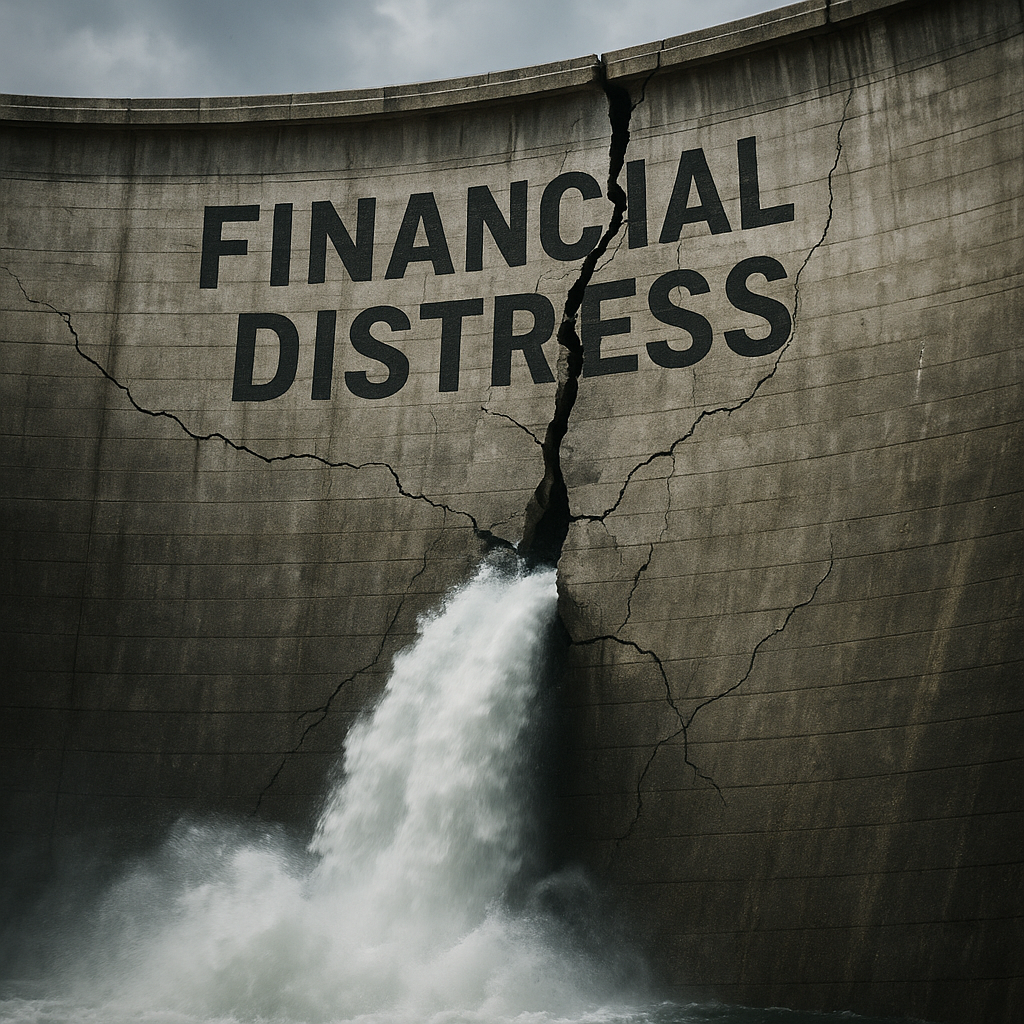
WC High Court rules Cape Town's property-linked fixed utility charges are unlawful, impacting city finances & potentially leading to refunds.
Cape Town's "fixed" water and sanitation fees, linked to property value, are now illegal! A court said these charges were actually hidden taxes and didn't follow the rules for real taxes. This means the city has to create new ways to charge for these services. They also have to figure out how to give back money that was unfairly collected. This is a big deal for everyone who pays bills in Cape Town!
What happened to Cape Town's value-linked "fixed" fees for water, sanitation, and city services?
A court ruling declared Cape Town's value-linked "fixed" fees for water, sanitation, and city services unlawful. These charges, tied to property value rather than consumption, were deemed to be an illegal property tax, bypassing required public hearings and VAT scrutiny. The city must now propose a new tariff and establish a rebate scheme for unlawfully collected funds.
Get Cape Town news in your inbox
Stay updated with the latest stories from the Mother City.
1. Court Drops a 92-Page Bomb on the City’s Revenue Machine
On the second-to-last day of the 2023 term Acting Judge Boqwana handed Cape Town a New-Year’s hangover it will nurse for years. In a single declaratory order he vaporised three golden geese of the 2022/23 budget: the water flat-fee tied to your house price, its sanitation twin, and the all-purpose “city-services” levy that appeared on every ratepayer’s bill. Overnight these charges became “unlawfully billed” because, the judge ruled, they smell, walk and quack like a property tax yet skipped the public hearings and VAT scrutiny real taxes must face. The metro now has one month to table a replacement tariff and to open a segregated bank account where every rand already pocketed under the dead charges must sit until a rebate scheme is carved in stone.
The lawsuit began in February 2022 when sixteen households - from a Delft pensioner to a Sea Point body corporate - teamed up with ratepayer associations, the Social Justice Coalition and the NGO Stop City of Cape Town (SCCT). Instead of a messy class action the parties convinced the court to run the dispute as a structured test-case: 4 000 pages of evidence, 17 agreed facts, 14 crisp legal questions. The upshot is a judgment that reads more like a financial autopsy than a routine billing quarrel, and it lands just as the metro stares at a R4 billion hole in electricity revenue caused by rooftop solar.
2. How the Disputed Charges Worked - and Why They Collapsed
Cape Town’s doomed model slapped every R1 050 000 home with R147,60 for water before anyone turned a tap, plus 70 % of that for sanitation and another R92,50 for refuse and storm-water. Grand total: R343,42 a month of “fixed” pain, regardless of consumption. Regression wizards at UCT’s Graduate School of Business ran the numbers and found a 0,97 correlation between the fee and municipal valuation - stronger than the link between valuation and actual rates. The City insisted this was an “availability tariff” meant to recoup the cost of keeping pipes ready, citing a 2018 National Treasury note that blesses fixed-variable blends. Treasury dashed into court with a clarifying slap: the note ties fixed fees to meter size or peak demand, “not a blunt proxy like property value”.
The VAT trap then snapped shut. Rates on land are tax-exempt; fees for services carry 15 %. By shuffling the identical amount from the rates column to the services column the metro added R1,34 billion of VAT-bearing income in one swoop, hiking real household cost by the full 15 % without council ever voting to “raise rates”. Judge Boqwana called the move a “fiscal mutation”: once a levy is severed from consumption or pipe diameter and nailed to valuation, it morphs into an ownership tax - and ownership taxes must follow the rigid path of the Rates Act. The ruling exposes Cape Town to a potential R3,8 billion SARS liability: treble the VAT collected plus interest if the revenue service decides the metro acted as an unregistered hawker of tax-like instruments.
3. How Other Cities Price Water - and Why Cape Town Stood Alone
Johannesburg bases its water fixed fee on meter diameter, eThekwini counts toilet pans, Ekurhuleni charges per bin size; none use house price. A 2021 World Bank survey of 41 global metros found only Athens (2012-15) and Detroit (2014-16) ever flirted with value-linked service fees; both dropped the idea after court battles and mass defaults. Melbourne charges a flat residential availability fee regardless of suburb, while Paris varies tariffs by pressure zone, not real-estate value. Cape Town’s counsel had argued the city was a vanguard; the judgment demotes it to a cautionary outlier.
4. Equity, Affordability and the Squeezed Working Poor
South African law promises indigent households 6 000 litres of free water and 50 kWh of free power each month. Cape Town honours the letter but freezes the qualifying income at R7 500 a month - untouched since 2018. Inflation has since pushed 42 % of formally employed domestic workers over the threshold, yet many still live in RDP houses whose valuations jumped thanks to nearby road upgrades. Because fixed charges bite before consumption starts, a R600 000 sectional-title flat faces R292 in water and sanitation flat fees before the first free kilolitre arrives, gnawing the subsidy in half. The court labelled this “a perverse transfer from the working poor to capital invested in pipes”.
5. Four Technical Escape Hatches - And Their Political Price
Within three days of the ruling the City’s treasury circulated an internal memo sketching four escape routes:
- Meter-Size Bands: 15 mm connections (92 % of homes) would pay R96 a month, 25 mm R320. Problem: flats sharing one 25 mm meter would hammer landlords.
- Volumetric Floor: bill everyone for 4 000 litres upfront, refund only if usage tops that. Risk: flush-to-avoid-fee behaviour.
- Rates-Offset Rebate: keep the illegal lines but grant a R350 rebate funded by a 0,2-cent bump in the general rate. Effect: shuffles the tax back where the court says it belongs.
- Lifeline Expansion: axe fixed charges, expand free water to 10 000 litres, ramp tariffs after 30 000 litres. Consequence: pool-owning suburbs face a 38 % hike - an election-year grenade.
None are painless; each merely chooses which constituency feels the burn.
6. Governance Shockwaves - Audits, Bonds and Section 139
The order is declaratory, not suspensive, so taps stay open but the metro may not cut supply for non-payment of the zapped lines. A compliance hearing looms on 21 May; if the judge dislikes the replacement tariff he can impose a structural injunction similar to the 2020 Kruger National Park ranger-finance takeover. National Treasury is drafting a circular reminding all councils that “fixed charges must correlate to a measurable engineering proxy”. Buffalo City and Mangaung, whose refuse fees already flirt with value-linking, are nervously reviewing spreadsheets.
The Auditor-General had already qualified Cape Town’s 2022 books over “material adjustments to receivables”; retroactively stripping 18 months of illegal income invites a second qualified opinion and potential breaches on the R11,5 billion water bond floated in 2021. The provincial MEC has invoked section 139 of the Constitution, demanding a forensic audit of the treasury function, while the ANC caucus has tabled a no-confidence motion against the finance mayco member - still unlikely to pass given the DA’s four-seat buffer.
7. What You Should Do Before the Next Bill Lands
Until a new tariff is blessed, the court forbids disconnection for non-payment of the outlawed items. Electronic payers can split their remittance, instructing the bank to allocate funds first to consumption and rates, leaving the fixed portion in limbo. Email the City quoting case 13852/2022 to ensure the split is honoured; 14 000 households have already created a R27 million unallocated credit pot that must be ring-fenced. Scan your next statement for a line called “adjustment credit – WCHC order”; if it is missing by April, lodge a section 18 tariff dispute - silence after 14 days earns you 9 % interest.
8. The Bigger Picture: Climate, Colonial Roots and the Utility Death-Spiral
Value-linked service tariffs are not a neoliberal novelty; they echo the 1898 Cape Colony Waterworks Act that let councils levy “a frontage or assessment rate proportionate to the benefit enjoyed”, assuming bigger homes meant more baths and servants. A century later the court uprooted this colonial fiscal weed just as cities worldwide shift to scarcity pricing. By forcing Cape Town to tie revenue to usage the judgment incidentally nudges municipal finances onto the carbon-reduction path outlined in the national water strategy, strengthening price elasticity needed for drought resilience.
The ruling also throttles the very cross-subsidy pool that was meant to stabilise volatile electricity revenues eroded by rooftop solar. Sharper hikes on high-use power users may now follow, accelerating a “utility death-spiral” already visible in California. Conversely, dumping the burden back onto property rates could clog the valuation-appeals pipeline, now 14 000 objections long and climbing.
Lawyers representing SCCT are preparing a R1,8 billion class-action summons; expect a settlement offer as a once-off account credit rather than cash, mirroring Eskom’s 2019 rebate. For now, any line reading “water fixed charge (property based)” or its sanitation sibling is legally decorative - pay the rest, log the dispute, keep the receipt. The era of stealth value-linked levies is, at least for today, officially over.
[{"question": "
What exactly happened to Cape Town's value-linked \"fixed\" fees for water, sanitation, and city services?
\nA court ruling declared Cape Town's value-linked \"fixed\" fees for water, sanitation, and city services unlawful. These charges, tied to property value rather than consumption, were deemed to be an illegal property tax. The court found that these fees bypassed required public hearings and VAT scrutiny that real taxes must face. As a result, the city must now propose a new tariff structure and establish a rebate scheme to return unlawfully collected funds.
\n","answer": ""},{"question": "Why were these charges declared illegal?
\nThe court ruled that these \"fixed\" fees, which were linked to property value, behaved like a property tax (smelled, walked, and quacked like one) but did not follow the legal process for implementing taxes. This included a lack of public hearings and proper VAT scrutiny. The judge explicitly stated that once a levy is tied to valuation rather than consumption or pipe diameter, it transforms into an ownership tax, which must adhere to the rigid path of the Rates Act. The city had also moved these amounts from the rates column (tax-exempt) to the services column (15% VAT), essentially increasing household costs without a proper council vote, which the court called a \"fiscal mutation.\"
\n","answer": ""},{"question": "How did Cape Town's approach to these fees differ from other cities?
\nCape Town's method of linking fixed water and sanitation fees to property value was unique and, as the court found, problematic. Other major South African cities, such as Johannesburg, base their water fixed fees on meter diameter; eThekwini on the number of toilet pans; and Ekurhuleni on bin size. None use house price as a basis. A 2021 World Bank survey of 41 global metros found only Athens (2012-15) and Detroit (2014-16) had previously experimented with value-linked service fees, both abandoning the approach after legal challenges and mass defaults. This highlights Cape Town as a cautionary outlier in its billing practices.
\n","answer": ""},{"question": "What are the implications for residents, especially the working poor?
\nThe ruling has significant implications for all ratepayers. For the working poor, the court highlighted that the fixed charges disproportionately affected them. While South African law promises indigent households free basic services, Cape Town's qualifying income threshold for indigency (R7,500/month) has not been updated since 2018. This means many formally employed individuals, including domestic workers, no longer qualify despite living in modest homes whose valuations have increased. The fixed charges, which bite before any consumption, halve the effective subsidy for free water, leading to what the court called a \"perverse transfer from the working poor to capital invested in pipes.\"
\n","answer": ""},{"question": "What immediate actions should residents take regarding their bills?
\nResidents should be aware that the court forbids disconnection for non-payment of the outlawed fixed charges. Electronic payers can split their payments, instructing their bank to allocate funds first to consumption and rates, leaving the fixed portion in limbo. It is advisable to email the City, quoting case 13852/2022, to ensure this split is honored. If your next statement by April does not show an \"adjustment credit – WCHC order\" for the unlawfully collected fees, you should lodge a section 18 tariff dispute. If the City remains silent after 14 days, you are entitled to 9% interest on the disputed amount. Any line on your bill labeled \"water fixed charge (property based)\" or its sanitation equivalent is now legally decorative.
\n","answer": ""},{"question": "What are the potential future impacts and challenges for Cape Town?
\nCape Town faces several challenges. It must propose a new, legally compliant tariff structure within a month and establish a rebate scheme for the unlawfully collected funds, which will be held in a segregated bank account. The City's internal memo outlined four potential escape routes (meter-size bands, volumetric floor, rates-offset rebate, or lifeline expansion), each with its own political and financial repercussions. There's also a looming compliance hearing on May 21st, where the judge could impose a structural injunction if the replacement tariff is unsatisfactory. Furthermore, the ruling exposes Cape Town to a potential R3.8 billion SARS liability for uncollected VAT and could lead to a second qualified opinion from the Auditor-General, potentially breaching conditions on its R11.5 billion water bond. The provincial MEC has invoked Section 139 of the Constitution, demanding a forensic audit of the treasury function.
\n","answer": ""}]
Michael Jameson is a Cape Town-born journalist whose reporting on food culture traces the city’s flavours from Bo-Kaap kitchens to township braai spots. When he isn’t tracing spice routes for his weekly column, you’ll find him surfing the chilly Atlantic off Muizenberg with the same ease he navigates parliamentary press briefings.
View all articles →