
US funding cuts put Cape Town users at risk of not getting vital medicine
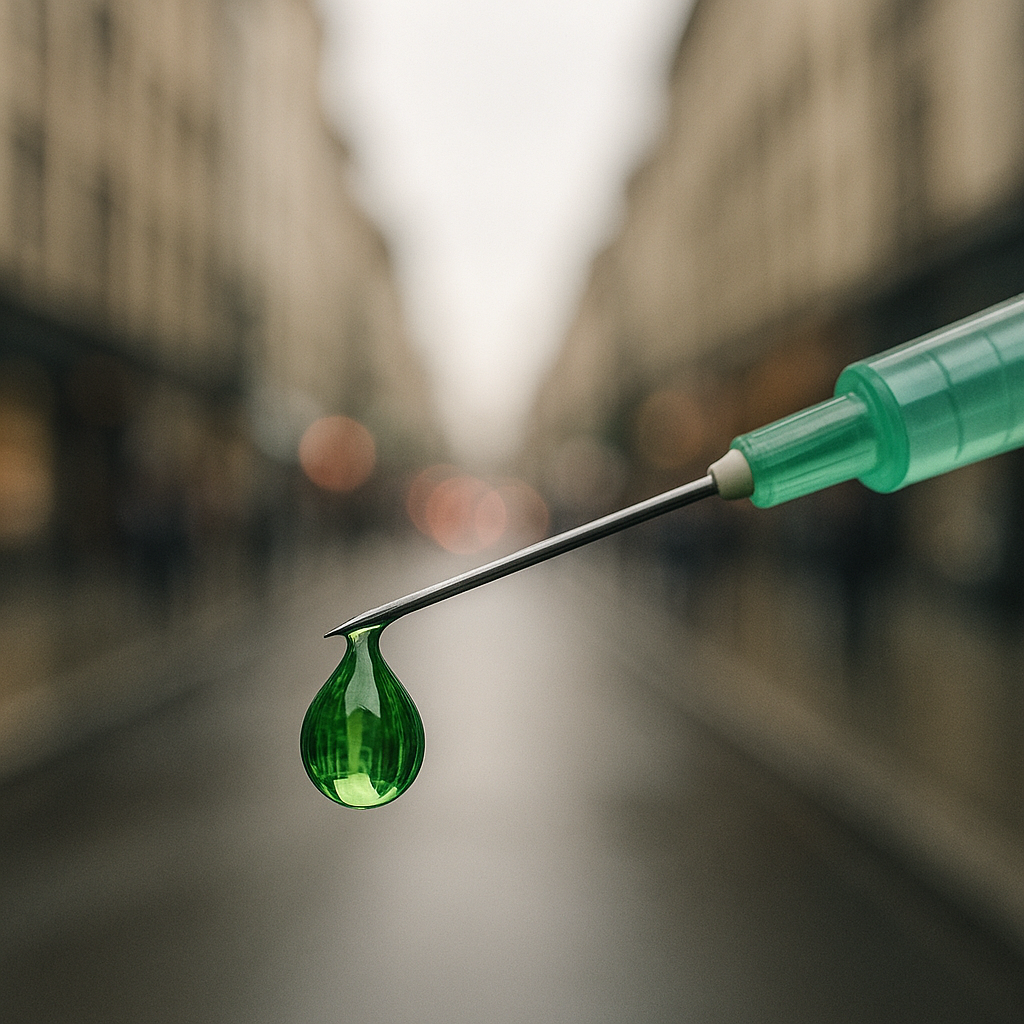
Cape Town's methadone program, a lifeline for opioid users, faces collapse due to funding cuts, leaving many in withdrawal and peril.
Cape Town faces a hidden crisis as its vital methadone supply, crucial for heroin addicts, keeps running dry. Funding cuts and import problems mean people like Jade Lewis, who rely on the green elixir to stay stable, are plunged back into agonizing withdrawal and forced to seek heroin again. This isn't just a personal tragedy; it's a city-wide emergency, highlighting how easily a life-saving medicine can become a luxury, with devastating consequences for individuals and the community.
What is methadone and why is its supply critical in Cape Town?
Methadone is a slow-release opioid agonist that stabilizes individuals by gradually occupying brain receptors, reducing cravings for heroin by approximately seventy percent and significantly lowering HIV risk. Its critical supply in Cape Town, however, is frequently disrupted due to funding cuts, currency fluctuations, and import challenges, leading to severe withdrawal symptoms and a return to illicit drug use for many.
Get Cape Town news in your inbox
Stay updated with the latest stories from the Mother City.
- A re-told portrait of lives balanced on a medicine bottle*
City Heartbeat, Hidden Need
Adderley Street buzzes with camera-toting visitors, office staff grabbing cappuccinos, and the relentless honk of minibus taxis. Hidden between a craft-coffee bar and a cellphone kiosk sits a drop-in clinic whose front door never boasts a neon sign. Inside, queues of men and women snake around plastic chairs, each person waiting for a tiny medicine cup that holds thirty millilitres of pale-green fluid. On ordinary mornings the line melts in twenty minutes; on others the process freezes, leaving people wide-eyed with dread. February and April were those mornings.
Forty-four-year-old Jade Lewis arrived on two separate days to be greeted by the words “no stock.”.” Both times he felt the chill of withdrawal crawl up his spine - the first tremor that ends in vomiting, sleeplessness, and a frantic search for heroin. The liquid he had come for is not rare; the World Health Organization lists it among essential medicines, and factories in Slovenia churn it out for cents a day. Yet in South Africa it has become a luxury, its supply yanked back whenever currency wobbles, donors blink, or policymakers dither.
Lewis’s missed doses are more than a personal setback. They are read-outs on a continent-wide public-health seismograph, warning that safety nets are shredding. In the paragraphs that follow, the story is unpacked in three strands: how one man reached the point of needing methadone, why the programme that stabilised him is starved of air, and what happens - street by street - when the green cup runs dry.
A Childhood in a Manufactured Township, A Drug Spiral in a Port City
Lewis spent his early years in Mitchells Plain, a sprawling “coloured labour preference area” erected by apartheid planners on sand dunes 25 kilometres from Cape Town’s centre. By 2001 powdered cocaine sold for less than a six-pack of beer. When that became pricey, he pivoted to crystal meth - locally called tik - moving on to heroin-brown heroin in 2005. The sequence looks textbook, yet every step was stamped by geography: cargo ships entering Table Bay offload more than containers, gangs levy taxes on every gram, and male unemployment stays stuck near forty percent.
While smoking heroin, Lewis clung to a municipal job for three years, surviving spot-check drug tests that never probed beyond a crumpled cup. Grief yanked him deeper: his sister died in 2011, his marriage dissolved in 2019. He switched to injecting, which multiplies overdose risk and drags users into the city’s cash economy - night-shift club security, wrapping luggage for commuters, occasional sex work. Between 2014 and 2023 he endured eleven detox wards, two “prayer camps,” and one private doctor who sold buprenorphine films at restaurant prices.
Everything shifted in November 2022. A Streetscapes outreach worker found Lewis on a traffic island, bagging tourists’ suitcases in cling-film for spare change. The worker carried a clipboard promising 7 ml of methadone per day, a shelter bed, and R1 200 monthly for pruning indigenous gardens on city medians. Lewis signed before the ink dried.
The Green Cup: Chemistry, Cost, and Collapse
Methadone is a slow-release opioid agonist. One measured oral dose nestles into the same brain receptors heroin storms, but it does so gradually, ironing out the spike-and-crash pattern that fuels craving. Research shows daily doses cut the urge to use by roughly seventy percent and drop arrest rates by more than half. When the drug is present, HIV risk also crashes because syringes are swapped for medicine cups.
The catch lies in half-life: thirty hours after the last sip, blood levels dip below the threshold that keeps withdrawal at bay. Skip two days and “brain zaps” - electric jolts behind the eyes - kick in, followed by relentless vomiting and bone-deep pain. In that window heroin is no longer a craving; it is a medical rescue. Lewis sums it up bluntly: “Thirty rand for a straw of heroin kills the pain in fifteen minutes. Two hundred eighty-three for five days of methadone keeps me level, but where do I find the money when the shelf is bare?”
When Money Walks: A Programme Living on Borrowed Oxygen
South Africa supplies methadone at only thirty-two hospital-based sites. TB HIV Care broke the mould by parking nurses in community centres and shipping medicine directly to streets modelled on Kyiv and Nairobi programmes. Between 2019 and 2023 they handed out 1.2 million doses to 3 400 clients in Cape Town and eThekwini, retaining ninety-three percent after twelve months - outperforming many European clinics.
Every pill and salary was bankrolled by PEPFAR, the United States’ global AIDS-battle chest, routed through the Centres for Disease Control and the Global Fund. A 2023 foreign-aid rescission sliced the programme’s opioid-agonist budget by seventy percent overnight. An already weak rand ballooned freight costs, and the Global Fund’s new package to South Africa shrank from US $660 million to US $168 million. Competing with antiretrovirals for eight million HIV-positive citizens, methadone lost.
Price Tags: Why a Drug That Saves Lives Costs More Than the Drug That Destroys Them
South Africa bans the cheapest formulation, 40 mg diskettes used across Southeast Asia. Clinics must instead buy 5 mg tablets or syrup, both routed through private wholesalers who add fifteen percent customs duty and fifteen percent VAT. A weekly 35 ml prescription clocks in at R283 - roughly fifteen US dollars - because only three importers control the pipeline. Meanwhile Afghan laboratories churn out six thousand tonnes of heroin yearly; by the time it reaches Cape Town, a R30 straw - twelve percent pure - delivers four foil hits, four hours of relief, and the option of dealer credit.
Women in the Shadows: Trading Doses for Survival
Men dominate headlines, but thirty-eight percent of the community programme’s clients are women. During stock-outs, nurses log offers of “sex-for-methadone” from clients desperate to stave off withdrawal. A 2022 Durban study found one in five women had bartered sex with stable-dose peers for spare medicine. Once supply resumes, many women vanish rather than face staff judgement, re-appearing months later pregnant or with infants battling neonatal abstinence syndrome.
Empty Shelves, Full Jargon
South Africa’s medicines regulator, SAHPRA, states no “national shortage” exists - a WHO label triggered when national inventory drops below thirty days. Yet wholesalers privately admit imports fell forty-two percent in the first quarter of 2024. Hospitals in Gauteng and KwaZulu-Natal have begun rationing morphine to pain patients in order to free up methadone for addiction care, but redistribution takes six to eight weeks. Community clinics live on week-to-week orders; one lost shipment equals two days of empty cups.
Street-Level Ingenuity: WhatsApps, Micro-dosing, Shared Jugs
Outreach worker Rudie Basson keeps a laminated list of twelve private GPs who, for R350 cash, will write a methadone script. Three WhatsApp groups - “Metha-Mamas,” “Green Light,” “Tik-Tok” - ping whenever a pharmacy restocks. Clients pool money, buy a communal 2.5 L bottle and decant it into Coke bottles. Nurses discreetly teach “micro-dosing”: dissolve 15 ml in 45 ml water, sip 10 ml every eight hours. Official guidelines never mention these hacks, yet they keep blood levels above collapse point.
Lessons from Elsewhere: Kenya, India, Ohio
- Kenya’s Malindi clinics weathered a Global Fund gap by issuing thirty-day take-home bottles to stable clients, trimming pharmacy footfall by sixty percent and freeing a quarter of stock for newcomers.
- India’s ASHA workers hand-deliver weekly methadone diskettes for a two-dollar stipend, slashing diversion and allowing women to medicate without leaving their homes.
- Ohio’s Bridge Clinics used tele-health to issue twenty-eight-day buprenorphine scripts during COVID-19. Overdose deaths in Franklin County fell fourteen percent in 2020; Cape Town’s rose twenty-six.
Opportunity Lost: One Bus Ticket, One Job, One City
The night before his promised letter of stable methadone supply, Lewis received a job offer as a baggage handler at the MyCiti airport terminus - R4 500 a month plus security-clearance training. HR required confirmation of one uninterrupted month of treatment to counter a 2021 security incident. The clinic could not provide the letter; the job evaporated. Instead Lewis returned to wrapping suitcases on the pavement for tips, earning R30 on lucky afternoons. Extrapolate across the 1 200 clients who missed doses in February and April and the city forgoes roughly R5.4 million in taxable labour annually, according to a rapid cost-benefit model by UCT’s School of Economics.
Now What?
TB HIV Care has declares “service delivery has stabilised,” pointing to a R12 million emergency grant from the national health department meant to cover “essential addiction medicines.” The small print, however, shows the grant is a six-month bridge before the next Global Fund cycle. Cape Town shelves are full today; Durban and Port Elizabeth still ration supplies to half. Outreach vehicles remain unfunded, counsellor stipends unpaid.
Lewis now downs his 7 ml every morning, poured from a jug whose expiry date - 31 August 2024 - is circled on the label. He keeps the empty bottle under his bed. On the white lid he has scrawled the same two words he repeats aloud each dawn, as the city traffic swells beyond the shelter gate: “Then what?”
What is methadone and why is its supply critical in Cape Town?
Methadone is a slow-release opioid agonist that stabilizes individuals by gradually occupying brain receptors, reducing cravings for heroin by approximately seventy percent and significantly lowering HIV risk. Its critical supply in Cape Town, however, is frequently disrupted due to funding cuts, currency fluctuations, and import challenges, leading to severe withdrawal symptoms and a return to illicit drug use for many.
Why are methadone supplies in Cape Town frequently running dry?
The methadone supply in Cape Town is frequently interrupted due to a combination of factors. These include significant funding cuts, such as a 70% reduction in the opioid-agonist budget from PEPFAR, and a shrinking Global Fund package. Additionally, a weak rand inflates freight costs, and the South African government prioritizes other health initiatives like antiretrovirals for its large HIV-positive population. Import challenges are also exacerbated by a ban on cheaper formulations and a limited number of importers, leading to higher prices and supply chain vulnerabilities.
What are the consequences for individuals like Jade Lewis when methadone supply is interrupted?
When methadone supply is interrupted, individuals like Jade Lewis face agonizing withdrawal symptoms, including 'brain zaps,' vomiting, and severe pain. This forces them to return to seeking heroin as a 'medical rescue,' undermining their recovery and increasing their risk of overdose and HIV infection. Beyond the immediate physical and psychological distress, it also leads to a loss of stability, employment opportunities, and can push them back into desperate measures for survival.
How does South Africa's methadone procurement and pricing compare to international standards?
South Africa bans the cheapest formulation of methadone, 40 mg diskettes, which are widely used elsewhere. Instead, clinics must purchase more expensive 5 mg tablets or syrup through private wholesalers, who add 15% customs duty and 15% VAT. This makes a weekly prescription significantly more costly (R283) compared to the price of illicit heroin (R30 for a straw). Globally, methadone is listed as an essential medicine by the WHO and is produced cheaply, highlighting the disproportionate cost and access issues in South Africa.
What innovative strategies are being used by outreach workers and clients to cope with supply shortages?
Despite official guidelines, outreach workers and clients have developed ingenious strategies to cope with methadone shortages. These include outreach workers maintaining lists of private GPs who can write scripts for cash, clients forming WhatsApp groups to share information on stock availability, pooling money to buy communal bottles for decanting, and nurses discreetly teaching 'micro-dosing' techniques to extend supplies. These unofficial methods are crucial for maintaining stability when formal supplies fail.
What are the broader societal and economic impacts of the methadone crisis in Cape Town?
The methadone crisis has significant societal and economic impacts. It leads to increased illicit drug use, higher rates of crime, and a greater burden on public health services due to relapses, overdoses, and HIV transmission. Economically, the instability prevents individuals from maintaining employment, as seen with Jade Lewis losing a job opportunity. A rapid cost-benefit model suggests the city forfeits approximately R5.4 million in taxable labor annually due to missed doses, highlighting a considerable loss of productive capacity for the community.

Oliver Daniels is a Cape Town journalist who chronicles the intersection of food, migration and identity in South Africa's kitchens—from wood-fired Gugulethu braai spots to Constantia vineyards. Born and raised on the slopes of Devil’s Peak, he still starts each week with a dawn walk across Table Mountain to catch the first Atlantic light before filing copy.
View all articles →