
Another Victoria Hospital care complaint emerges
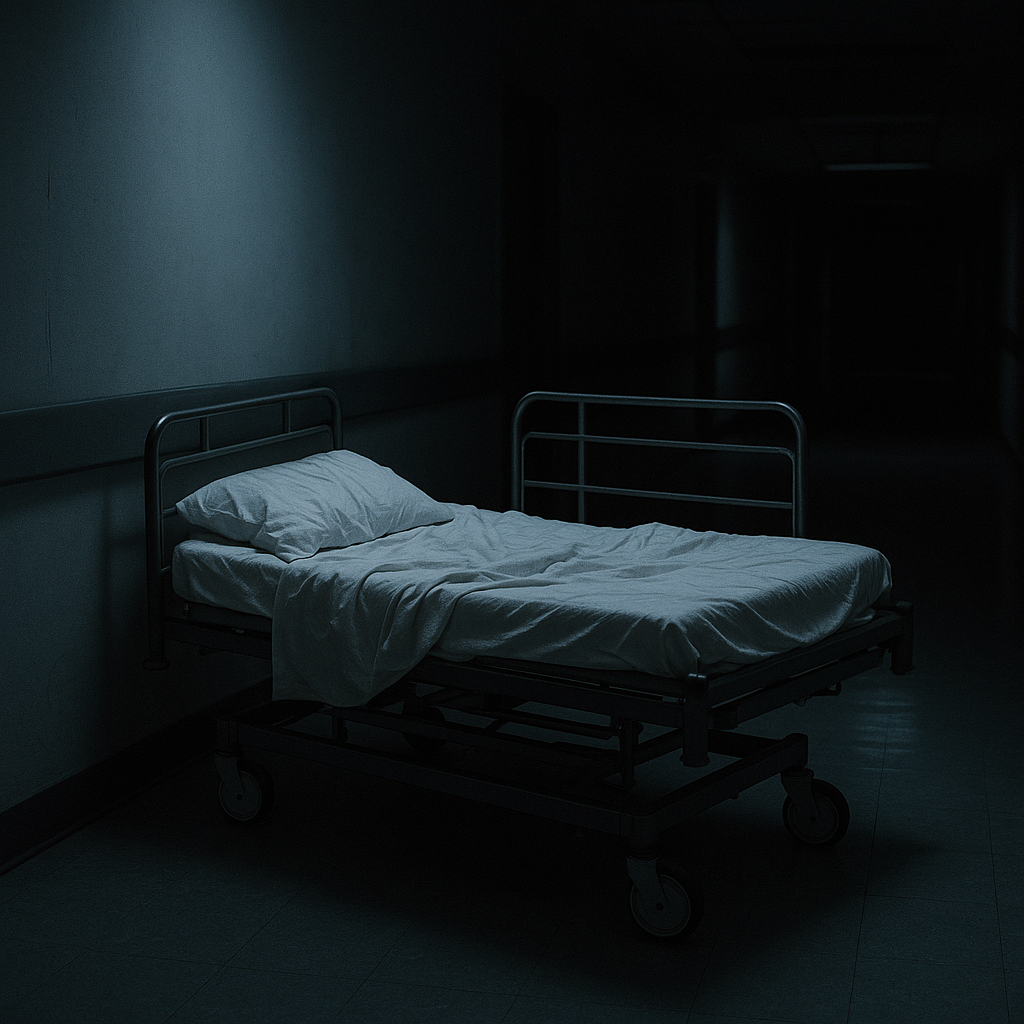
Family alleges gross negligence in 67-year-old's death at Victoria Hospital, citing systemic failures and understaffing.
This story reveals a terrible public health crisis in South Africa. Hospitals are bursting with too many patients and not enough doctors or nurses. Because of this, very sick people wait too long for help, get wrong diagnoses, and sometimes even die when they could have been saved. It's a sad picture of how far the healthcare system is from truly caring for its people.
What does the Victoria Hospital story reveal about South Africa’s public health crisis?
The Victoria Hospital story reveals a severe public health crisis in South Africa, characterized by chronic understaffing, overcrowding, and systemic failures. It highlights how resource limitations lead to critical delays in patient care, misdiagnoses, and preventable deaths, reflecting a stark disparity between patient rights and the reality of healthcare provision.
Get Cape Town news in your inbox
Stay updated with the latest stories from the Mother City.
1. The Night Everything Unravelled: A Timeline of Despair
-
13 January 2024, 19:55 – A Lonely Stretcher*
Rifqa Simpson and her younger sister pushed through the double doors of Victoria Hospital’s Emergency Centre and stopped dead. Their 67-year-old mother, Phatgeah, lay motionless, soiled by blood and stool, a single saturated pad clinging to her skin. No nurse hovered, no monitor beeped, and no chart reflected the reality they saw. -
20:04 – Vital Numbers That Didn’t Lie*
With clinical reflexes kicking in, Rifqa – herself a registered nurse – snapped photos of the observation sheet. The final staff entry had been made two and a half hours earlier. Her own quick check showed blood pressure 105/60, pulse 109, fever 38.2 °C, and capillary refill slower than four seconds. Every figure spelled early shock. -
20:10 to 21:10 – Brushed Aside*
Two doctors at the workstation glanced up just long enough to say, “We don’t have that patient,” then resumed typing. A third flicked his eyes toward a screen and muttered, “Green triage, we’ll get there.” Rifqa pleaded for intravenous fluids, suspecting either a bleeding stomach ulcer or a strangulated bowel. The answer: “No nil-per-mouth order exists; give paracetamol by mouth.” When a fresh gush of blood-tinged stool dropped the patient’s pulse to 118, the sisters begged for a surgeon. They were told, “Theatre team reviews at eight tomorrow.” -
21:40 – A Mislabelled Transfer*
Phatgeah was wheeled to Ward C with a diagnosis slip that read “gastro-enteritis.” No note mentioned unstable vitals or possible haemorrhage. At 22:05, Rifqa asked Dr Lourens for repeat bloods, lactate, and a cross-match. The alleged retort: “We don’t bleed in the ward.” Rifqa slipped out at 22:50 to fetch a phone charger, promising to return within forty minutes. -
23:37 – The Last Call*
Security rang while Rifqa was still in the car park. “Code blue in Ward C.” She sprinted back to find her mother supine, pupils fixed, monitor flat. Resuscitation efforts were abandoned at 23:44. A post-mortem form labelled the death “unanticipated – probable bowel obstruction.” No CT scan, no upright chest film, no blood gas, no lactate had ever been ordered.
2. Inside Victoria Hospital: A Building Trying to Do the Job of Two
-
More Bodies Than Beds*
Victoria was erected in 1956 for 180 beds; on any night it juggles 360 inpatients. Officially a “24-hour regional gateway,” the hospital now functions at 138 % occupancy. Internal rosters leaked last year reveal the emergency section limps along on four junior doctors from dusk to dawn, half the number the College of Emergency Medicine recommends. -
The Human Cost of Stretching Resources*
Nursing ratios hover at one caregiver for every eighteen patients at night, though policy sets the bar at one to twelve. A seasoned clinician – speaking in a shadowed doorway to avoid reprisal – calls the overflow corridor “the hall of ghosts.” Patients deemed stable sit for up to eighteen hours until a medical bed appears. By then mild dehydration can slide into septic shock, but the paper trail still lists the original, trivial triage label. -
Metrics That Shout*
The hospital’s own dashboard pegged the median boarding time in 2023 at 11 hours 4 minutes – double the national target. Those numbers translate into agony for families and moral injury for staff, a self-feeding loop of exhaustion and error.
3. A Post-Mortem Without Images: Can a Diagnosis Be Trusted?
-
The Odds for Bowel Obstruction*
Across the globe, simple bowel obstruction carries a mortality below five per cent if surgeons intervene inside the first day. Consultant colorectal surgeon Dr Lindelwa Mzamo, asked to review the time-line, spotted three missing pillars: no X-ray, no nasogastric decompression, and no serial abdominal exams. “Tachycardia over 100 combined with lactate above 2 mmol/l in a 67-year-old should light up every red flag,” she insists. “Every additional hour of delay pushes the risk of perforation upward exponentially.” -
Bleeding That Doesn’t Fit the Script*
Massive rectal bleeding rarely accompanies simple obstruction unless bowel tissue has already died. Ischaemic colitis, a diverticular bleed, or even a high duodenal ulcer mimic the vitals recorded. “To stamp ‘bowel obstruction’ on a death certificate without imaging or laparotomy is speculation, not medicine,” Dr Mzamo adds. -
Documented Gaps, Lethal Gaps*
Between 20:04 and 23:44 the pulse remained above 100 for at least three and a half hours, yet no escalation note exists. Absent lactate, absent haemoglobin trend, absent surgeon – three omissions that may together explain why a survivable condition became fatal.
4. Legal Pathways and Moral Price Tags
-
Charters Versus Reality
South Africa’s National Health Act promises “adequate care within available resources.” The Patient Rights Charter demands “prompt attention in an emergency.” The collision of these ideals with budget ceilings is why courts are increasingly asked to weigh systemic overload against individual negligence. A 2019 ruling, Mukendi v MEC Health, Gauteng*, confirmed that “resource limits do not license the State to ignore foreseeable risks.” -
Complaints and Counter-moves*
Rifqa Simpson’s fourteen-page submission invokes section 20 of the Health Professions Act, asking the HPCSA to investigate “personal and collective misconduct.” If evidence emerges, clinicians could face charges from negligence to “assault by omission.” A civil claim will pivot on a but-for argument: would standard IV access, fluid resuscitation, and surgical review have saved Phatgeah? An independent intensivist is already compiling a Rule 34 affidavit for the looming damages suit. -
Counting the Cost of a Life*
Health economist Dr Asanda Zonke calculates that keeping an on-site surgical rota at Victoria would add R38 million annually but avert an estimated 22 “avoidable” deaths. The implied cost per life-year saved sits at R340,000 – below Treasury’s threshold for approving high-cost oncology drugs. In the cold arithmetic of budgets, Phatgeah Simpson’s survival appears to have been priced out.
What is the central issue highlighted by the Victoria Hospital story?
The Victoria Hospital story vividly illustrates a profound public health crisis in South Africa. It reveals a healthcare system crippled by chronic understaffing, severe overcrowding, and systemic failures, leading to critical delays in patient care, misdiagnoses, and preventable deaths. This situation underscores a significant gap between patient rights and the actual provision of healthcare.
How did Rifqa Simpson's medical background influence her observations and actions?
As a registered nurse, Rifqa Simpson possessed the clinical knowledge to quickly assess her mother's deteriorating condition. Her ability to identify vital signs indicative of early shock (blood pressure 105/60, pulse 109, fever 38.2 °C, slow capillary refill) and her pleas for appropriate medical interventions like intravenous fluids and a surgical review highlight how her professional understanding enabled her to recognize the severity of the situation, which was unfortunately dismissed by the hospital staff.
What critical medical interventions were missing in Phatgeah Simpson's care?
Several critical medical interventions were missing, which Dr. Lindelwa Mzamo identified as essential for a patient with suspected bowel obstruction. These included the absence of an X-ray, no nasogastric decompression, and a lack of serial abdominal examinations. Furthermore, crucial diagnostic tests like a CT scan, upright chest film, blood gas analysis, and lactate levels were never ordered, despite clear indicators of a life-threatening condition.
How does Victoria Hospital’s operational capacity compare to its designed capacity and national recommendations?
Victoria Hospital, originally built for 180 beds in 1956, now operates at 138% occupancy, juggling 360 inpatients nightly. The emergency section functions with only four junior doctors from dusk to dawn, half the number recommended by the College of Emergency Medicine. Nursing ratios are also significantly strained, with one caregiver for every eighteen patients at night, far below the policy standard of one to twelve. This severe overstretch directly contributes to substandard patient care.
What legal and ethical implications does this case raise in South Africa?
The case highlights a conflict between South Africa's National Health Act, which promises "adequate care within available resources," and the Patient Rights Charter's demand for "prompt attention in an emergency." It raises questions about systemic overload versus individual negligence, especially given a 2019 ruling (Mukendi v MEC Health, Gauteng) stating that resource limits do not excuse the State from addressing foreseeable risks. Rifqa's formal complaint to the HPCSA and the impending civil claim underscore the search for accountability for both personal and collective misconduct.
What is the calculated cost-benefit of improving surgical rota at Victoria Hospital?
Health economist Dr. Asanda Zonke calculated that implementing an on-site surgical rota at Victoria Hospital would cost an additional R38 million annually. However, this investment could avert an estimated 22 "avoidable" deaths each year. The implied cost per life-year saved is R340,000, which is below Treasury’s threshold for approving high-cost oncology drugs, suggesting that Phatgeah Simpson's survival, and others like hers, was effectively

A Russian-Spanish journalist and Cape Town native, channels his lifelong passion for South Africa into captivating stories for his local blog. With a diverse background and 50 years of rich experiences, Serjio's unique voice resonates with readers seeking to explore Cape Town's vibrant culture. His love for the city shines through in every piece, making Serjio the go-to source for the latest in South African adventures.
View all articles →