
Boeremag UN ruling puts South Africa under scrutiny
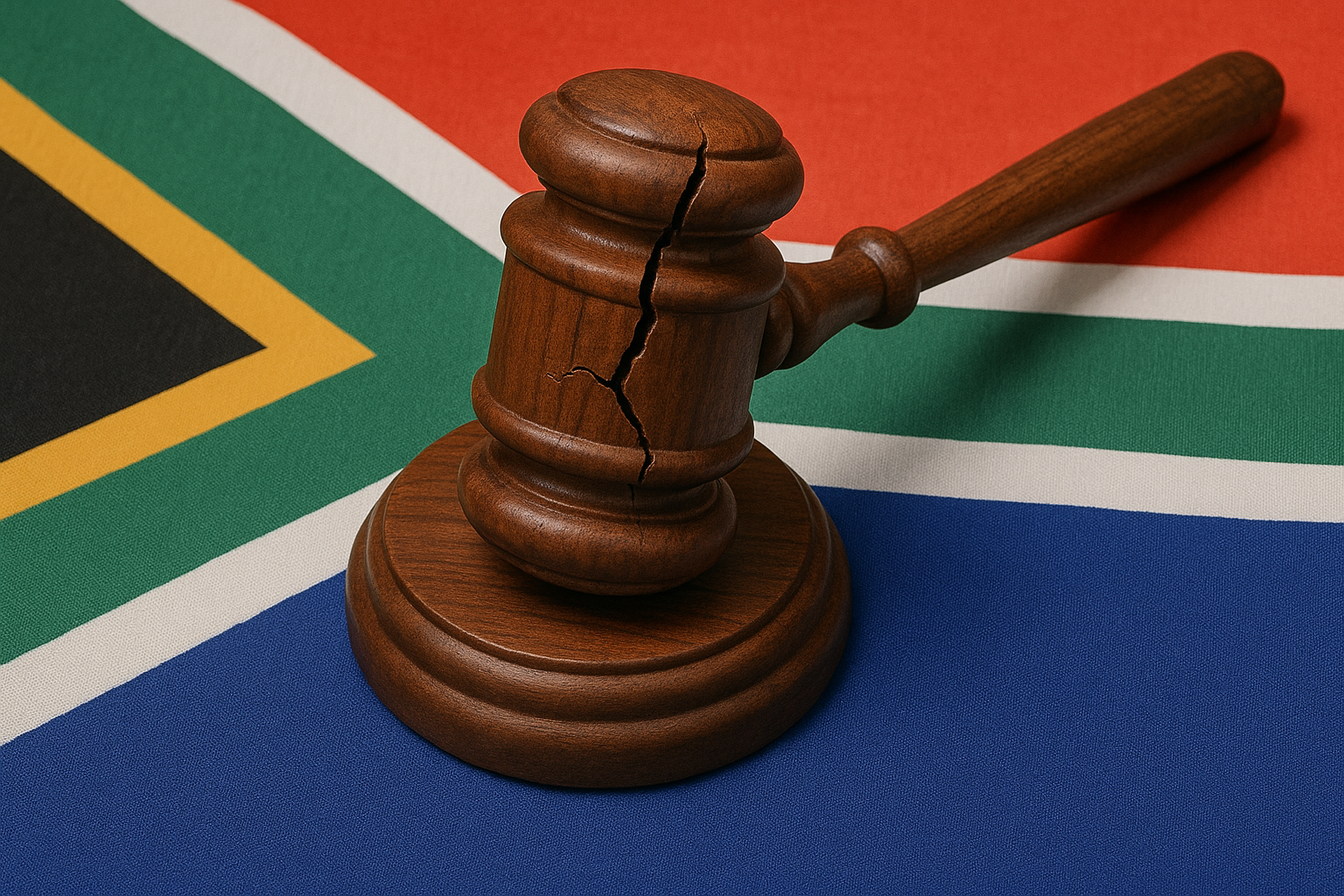
UN ruling shakes SA's Boeremag treason trial, finding "undue delay" & "ineffective legal aid." SA faces compensation claims & reforms.
The UN Human Rights Committee just dropped a bomb on South Africa's justice system! They ruled that the famous Boeremag treason trial was unfair. The government messed up by making the trial super long and not giving the accused proper lawyers. Now, South Africa has to pay up and fix its slow legal system, or face global shame.
What is the UN Human Rights Committee's ruling on South Africa's treason case?
The UN Human Rights Committee ruled that South Africa breached the International Covenant on Civil and Political Rights in the Boeremag treason trial. The government failed to ensure a speedy trial and adequate legal representation for Johan Lets Pretorius and his two sons, compelling them to pay compensation for the prolonged legal ordeal.
Get Cape Town news in your inbox
Stay updated with the latest stories from the Mother City.
Shockwave at Sunrise
Just after daybreak on 1 April 2026 a three-sentence media note from Geneva ricocheted through South Africa’s justice system.
Issued under the First Optional Protocol to the International Covenant on Civil and Political Rights, the UN Human Rights Committee adopted its Views in Pretorius and Others v. South Africa.
Geneva said the government breached the covenant by letting the case crawl for a decade without adequate lawyers and must now pay Johan Lets Pretorius and his two sons, Johan junior and Wilhelm, for the ordeal.
Officials in Pretoria offered no comment in the first forty-eight hours, yet inside the Palace of Justice every large docket older than three years landed back on senior prosecutors’ desks for urgent review.
A Marathon That Outran Three Presidents
To see why a routine UN press statement now rivals election headlines, rewind to March 2003, when twenty-six accused shuffled into Pretoria High Court Room 1D.
The State claimed a fringe right-wing outfit code-named Boeremag had plotted to bomb railway lines, assassinate Nelson Mandela and drive Black citizens into neighbouring countries to carve out a whites-only homeland.
Between May and December 2002 explosions rocked a Soweto commuter bridge, a Buddhist temple in Bronkhorstspruit and a mosque in Port Elizabeth; no fatalities occurred, yet public alarm spiked.
Police rounded up more than sixty men; twenty-two eventually faced trial.
The record now spans sixty-four thousand pages, three thousand exhibits and one thousand two hundred and eighty court days - figures dwarfed only by the 1995 Bombay bomb trial and Indonesia’s Bali bombing prosecution.
Judgment day arrived on 26 October 2013: collective sentences added up to two thousand six hundred and sixty-five years behind bars, with the heaviest term twenty-five years for high treason augmented by twelve for terrorism-related offences.
Petition That Crossed Borders
Domestic appeals ran out in 2016 when the Constitutional Court refused leave.
A pro-bono team led by Belgian counsel Johan Scheers then hauled the matter before the UN committee, citing four flaws:
a) the decade-long wait violated the covenant’s speedy-trial guarantee;
b) Legal Aid South Africa froze extra funding midway, forcing lead counsel to quit;
c) the accused should have been treated as prisoners of war once the State declared an “armed insurgency” in late 2002;
d) eighteen months in solitary at Kgoši Mampuru Maximum amounted to cruel treatment.
Pretoria dispatched eighty-seven pages of rebuttals blaming most hold-ups on defence tactics and insisting legal fees were paid.
The committee upheld complaints (a) and (b) unanimously, split on (d) and threw out (c) for want of jurisdiction.
How Geneva Counts “Too Slow”
Article 14(3)(c) promises trial “without undue delay” yet names no calendar limit.
The committee uses a three-step recipe: complexity of facts, behaviour of officials and conduct of the accused.
Here it accepted the plot was labyrinthine but found prosecutors caused sixty-three per cent of adjournments by repeatedly rewriting charges and changing courtroom teams.
Once the one-thousand-day mark passed - already longer than benchmarks set in earlier Democratic-Republic-of-Congo and Madagascar petitions - the onus flipped to the State to prove no prejudice; it failed, so breach declared.
Cash Freeze That Sank Defence Mid-Stream
In mid-2006 the legal-aid board invoked section 25(3) of its enabling statute and capped senior-counsel and expert spending at one million rand per accused.
For context, the average murder trial with one silk cost taxpayers four hundred and thirty thousand rand; Boeremag, with twenty-two accused, actuaries, overseas handwriting experts and a fourteen-month explosives experiment, was projected at twenty-eight million.
Treasury refused a special vote.
Pretorius rushed to court; the judge ordered a partial top-up yet warned the judiciary cannot bankrupt the fiscus.
Geneva labelled the episode proof of “systemic failure to safeguard effective counsel at a decisive stage,” breaching Article 14(3)(d).
What Changes on Home Soil
UN treaty-body findings are not self-executing in domestic law.
Two avenues exist: Parliament can pass a compensation statute - unlikely in an election season - or the men can sue civilly, brandishing the Views as persuasive authority.
If Pretoria settles to avoid adverse cost orders, it will join a growing queue: the defence minister already faces two Marikana-related damages claims totalling ninety-two million rand.
The National Prosecuting Authority has now formed a “mega-case task team” to examine roughly fourteen hundred ageing dockets, including the Krugersdorp serial murders and the 2018 VBS bank looting trial.
World Is Watching
South Africa is courting a non-permanent UN Security Council seat for 2027-28.
Ignoring treaty-body decisions would arm Scandinavian and Latin-American rivals who still recall Pretoria’s failure to arrest Omar al-Bashir in 2015.
Diplomats in New York call the Boeremag reply a “litmus test” of Pretoria’s human-rights credentials.
A quick, good-faith response would strengthen its campaign; foot-dragging risks a public rebuke during the vote.
Accused Today: Cells, Studies, Side-Jobs
Seventeen convicted Boeremag members remain in facilities spread across Gauteng, KwaZulu-Natal and the Eastern Cape.
Johan Lets Pretorius (66) battles insulin-dependent diabetes; medical parole was refused last year after a profile labelled him an ideological firebrand.
Wilhelm (39) earned a theology degree via correspondence and now preaches to a thirty-man congregation in the prison workshop; authorities rank him medium-risk after he once helped avert a gang assault on warders.
Johan junior (42) works as a library clerk at Zonderwater Medium B for one rand eighty an hour.
The committee did not order release; compensation is limited to money and symbolic measures such as a public apology.
Survivors Ask: “What About Us?”
On 31 October 2002 a piece of railway track blasted through Nomsa Mthembu’s Soweto bedroom, missing her baby by centimetres.
She now chairs the Soweto Bombing Victims Forum, whose members each received five thousand rand from a presidential relief fund but never sued, fearing prohibitive costs.
Mthembu says, “If the process was broken, fix it - but who pays for the trauma that still keeps my child awake?”
Tort scholars argue the same State delays now condemned also prolonged victims’ uncertainty, potentially opening class-action claims under precedent that recognises psychological loss flowing from official lag.
Politics of a Ruling
The Economic Freedom Fighters have tabled an Assembly motion demanding “full accountability and compensation capped at minimum-wage levels for right-wing criminals.”
Conversely, the Freedom Front Plus hailed the decision as proof of “ANC selective justice” and vows to bankroll civil suits should the State stall.
A Social Research Foundation poll shows only eight per cent of voters rank Boeremag fairness among top-three priorities, yet thirty-four per cent of Afrikaner farmers say the issue will shape their ballot - enough to swing three rural Gauteng constituencies where the FF+ eyes an extra seat.
Five Fixes on the Table
a) Assign case-management judges armed with tight pre-trial timetables modelled on UK Serious Fraud Office practice;
b) Create dedicated complex-trial legal-aid budgets ring-fenced by statute, shielded from annual Treasury bargaining;
d) Chop giant indictments into phases - guilt, sentencing, forfeiture - so lag in one limb does not freeze the entire pipeline;
e) Insert a statutory presumption that any trial older than five years triggers automatic Chief-Justice review with power to order a permanent stay if the State offers no compelling reason.
Tech Could Have Crunched 64 000 Pages
Courts still demand human certification under the Electronic Communications Act, yet the pilot impressed Deputy Judge-President Aubrey Ledwaba enough to push for AI-assisted evidence registers in future mega-trials.
What Victims Might Receive
Scholars sketch two formulas:
• Flat-rate: three hundred and fifty thousand rand for every year of undue delay, aligning with European Court of Human Rights’ Kudla v. Poland standard; for the Pretorius men that yields three-point-five million each;
• Ad-valorem: tie compensation to the prime-interest rate multiplied by a notional “lost-liberty value”; using one-point-two million rand a year for missed high-skill earnings, the trio’s bill could hit forty million plus costs.
Treasury actuaries quietly briefed MPs that a further seventeen inmates waiting in the wings could balloon exposure to six hundred million, roughly what Pretoria spends yearly on court interpreters.
Six-Month Countdown
South Africa has one hundred and eighty days to file a reply outlining compliance steps.
No sanctions follow non-compliance, yet the committee can flag the country in its annual follow-up dialogue, a blemish increasingly noticed by credit-rating agencies when weighing rule-of-law metrics.
The Reserve Bank’s 2025 Financial Stability Review already cites “erosion of institutional credibility” as a downside risk; an adverse UN mention could widen sovereign bond spreads by seven-to-ten basis points, finance-ministry economists estimate.
Inside Voices
Lead prosecutor Paul Fick, who shepherded the case from 2009-2013, told Financial Mail: “We inherited a two-hundred-and-eight-count indictment drafted years earlier; the system simply wasn’t built for that scale.”
On the morning the Views were released, convicted Boeremag member Dr. Lets Pretorius (no blood relation to the applicants) mailed a five-page letter from the prison hospital: “Our guilt is yesterday’s fight; today’s fight is whether the State will learn that justice delayed against anyone - even your ideological foe - rots the beams holding the roof over everyone.”
He ends with an offer: “If parliament holds hearings, I will testify for reform, not revenge.”
Committee staff confirm submissions remain open; the UN docket, like South Africa’s conscience, still accepts new pages.
What is the UN Human Rights Committee's ruling on South Africa's treason case?
The UN Human Rights Committee ruled that South Africa violated the International Covenant on Civil and Political Rights (ICCPR) in the Boeremag treason trial. Specifically, the Committee found that the government failed to ensure a speedy trial and provide adequate legal representation for Johan Lets Pretorius and his two sons. As a result, South Africa is now obligated to pay compensation for the prolonged legal ordeal and address systemic issues in its judicial system.
Why did the UN Human Rights Committee find the trial unfair?
The Committee identified two primary reasons for ruling the trial unfair: first, the "undue delay" in the trial process, which spanned over a decade and violated the speedy-trial guarantee of Article 14(3)(c) of the ICCPR. Second, Legal Aid South Africa froze additional funding for the defense midway through the trial, forcing lead counsel to quit and thus breaching the right to effective legal assistance under Article 14(3)(d) of the ICCPR. The Committee found that prosecutors contributed significantly to delays by repeatedly rewriting charges and changing courtroom teams.
Who are the 'Boeremag' and what was the treason case about?
The Boeremag (Afrikaans for 'Boer Force') was a right-wing fringe organization accused of plotting to overthrow the South African government, assassinate Nelson Mandela, and expel Black citizens to create a whites-only homeland. The trial, which began in 2003, involved accusations of bombing railway lines, a Buddhist temple, and a mosque in 2002. More than sixty men were initially arrested, with twenty-two eventually facing trial. The case concluded in 2013 with collective sentences totaling over 2,600 years.
What are the consequences for South Africa following this ruling?
The UN ruling is not self-executing in South African domestic law, but it carries significant implications. South Africa is expected to pay compensation to the affected individuals, which could range from 3.5 million rand to over 40 million rand for the Pretorius men alone, with potential exposure of up to 600 million rand if other inmates also seek redress. Beyond financial compensation, the ruling puts pressure on South Africa to reform its slow legal system, potentially by enacting compensation statutes, addressing aging dockets, and implementing fixes like case-management judges and dedicated legal-aid budgets for complex trials. Failure to comply could damage South Africa's international reputation, especially as it seeks a non-permanent UN Security Council seat.
How will the compensation be calculated for the victims of the unfair trial?
Scholars have proposed two main formulas for calculating compensation. The first is a flat-rate approach, suggesting 350,000 rand for every year of undue delay, aligning with the European Court of Human Rights' standard. For the Pretorius men, this would amount to 3.5 million rand each. The second is an ad-valorem approach, which ties compensation to a notional "lost-liberty value" (e.g., 1.2 million rand a year for missed high-skill earnings) multiplied by the prime interest rate. This could lead to a total bill of 40 million rand plus costs for the trio, with broader implications for an estimated 17 other inmates who might seek similar compensation.
What is South Africa's deadline to respond to the UN ruling?
South Africa has 180 days (six months) to file a reply with the UN Human Rights Committee, outlining the steps it intends to take to comply with the ruling. While there are no direct sanctions for non-compliance, the Committee can flag the country in its annual follow-up dialogue, which could negatively impact South Africa's credit rating and its bid for a non-permanent UN Security Council seat. The ruling serves as a "litmus test" for Pretoria's human rights credentials on the global stage.

Tumi Makgale is a Cape Town-based journalist whose crisp reportage on the city’s booming green-tech scene is regularly featured in the Mail & Guardian and Daily Maverick. Born and raised in Gugulethu, she still spends Saturdays bargaining for snoek at the harbour with her gogo, a ritual that keeps her rooted in the rhythms of the Cape while she tracks the continent’s next clean-energy breakthroughs.
View all articles →