
Child vaccinations urged as Western Cape monitors serious illnesses
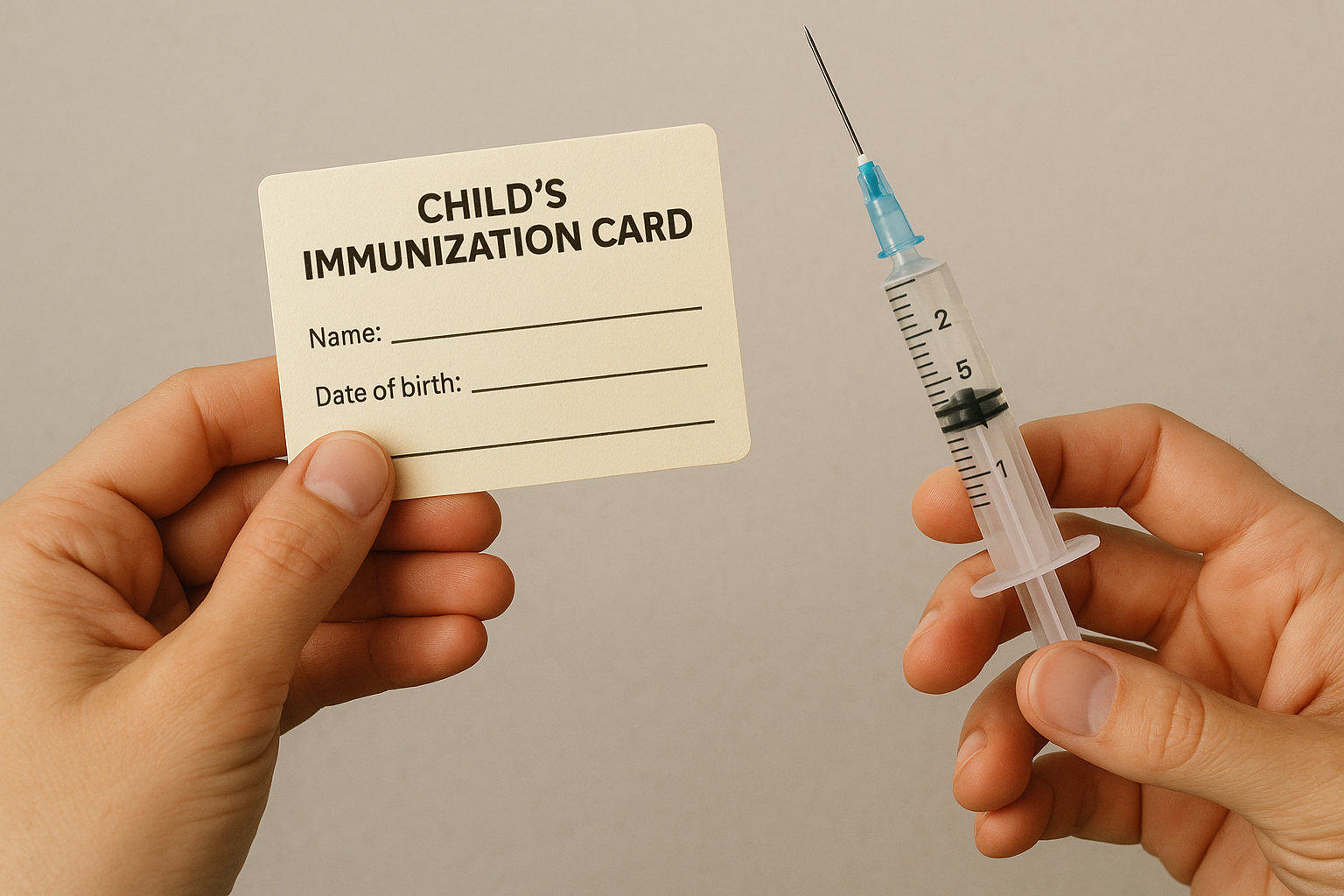
Western Cape faces rising measles, diphtheria, and meningococcal cases. Learn about causes, risks, and catch-up vaccination efforts.
The Western Cape is facing a scary comeback of old childhood diseases like meningococcal disease, measles, and diphtheria. These illnesses, once mostly gone, are now spreading because fewer kids are getting their shots. Doctors and health workers are working hard to vaccinate as many children as possible to stop these dangerous diseases from hurting more families.
What childhood diseases are re-emerging in the Western Cape?
The Western Cape is currently experiencing a re-emergence of three dangerous childhood illnesses: invasive meningococcal disease (IMD), measles, and diphtheria. These diseases, once largely controlled, are seeing an increase in cases due to factors like declining vaccination rates and public health service challenges, posing significant risks to children.
Get Cape Town news in your inbox
Stay updated with the latest stories from the Mother City.
Meningococcal Comeback – Small Numbers, Loud Alarm
Since the first sunrise of 2026, Western Cape clinics have felt busier than usual, yet the surge is not driven only by sniffles and fevers. Hidden among the usual winter crowd is a ghost from the past: invasive meningococcal disease (IMD). From 1 January to 22 February, hospital laboratories notified eleven babies and toddlers, eight inside Cape Town’s metro, two on wine-estate labour lines in the Cape Winelands, and one on an Overberg dairy farm. One six-month-old died barely thirty-six hours after stepping through the doors of Red Cross War Memorial Children’s Hospital. Only two of the eleven had ever received a meningococcal vaccine, and none of those jabs were part of the routine state schedule.
The raw count is lower than the nineteen cases logged in the same nine-week spell of 2019, yet clinicians refuse to relax. Meningococci still race from mild fever to irreversible shock faster than almost any other germ. Conversation-borne micro-droplets let one silent carrier spark dozens of secondary infections before anyone coughs. Whole-genome scans of eight available isolates reveal three unrelated fingerprints: sequence-type 11 (serogroup W), sequence-type 32 (serogroup C) and sequence-type 53 (serogroup Y). The mix tells investigators these are sporadic sparks rather than a single-strain outbreak, but serogroup W carries a sinister reputation after it fuelled hyper-virulent waves in Britain and South America following quiet circulation among university students.
Infants sit in the cross-hairs because maternal antibodies evaporate between four and twelve months – precisely the age range of every current patient. Wealthier countries plug that gap with a MenACWY shot at twelve months plus an adolescent top-up. South Africa’s Expanded Programme on Immunisation (EPI) still offers no routine meningococcal conjugate; the quadrivalent version sits in tertiary pharmacies for close-contact chemoprophylaxis or for children missing a spleen. A one-off provincial campaign would swallow roughly R 220 million, so planners wait for incidence to hit two cases per 100 000 under-fives – a threshold the January cluster nudges visibly closer.
Measles Roars Again – Mapping the 2026 Surge
While meningococci whisper, measles shouts. Between 29 December 2025 and mid-February 2026, the Metro’s virology lab confirmed 203 cases, triple the count that ignited the 2009/10 national epidemic. Du Noon, a crowded neighbourhood squeezed between Table View’s golf greens and the N7 highway, remains the epicentre, yet every sub-district except the far-south peninsula has now logged at least one IgM-positive specimen. Ninety-four percent of patients were either unvaccinated or had a single documented dose; sixty-eight percent were older than five, a cohort of missed opportunities now mixing in classrooms, churches and taxi ranks.
One measles case in a supermarket queue can seed eighteen secondary infections, making the virus the most contagious respiratory pathogen known. NICD modellers calculate that the effective reproductive number in Cape Town reached 1.7 during the second week of February, confirming the epidemic is still accelerating. To slam the brakes before the Easter travel crush, health teams opened a “mop-up” offensive on 17 February: door-to-door vaccinators in Du Noon, pop-up stations at Mitchell’s Plain taxi hubs, and weekend clinics inside Tygerberg shopping malls. The goal is ninety-five percent coverage with measles-rubella vaccine for every child aged six months to fifteen years, previous records irrelevant. By 24 February, 38 000 extra doses had landed in little arms; another 120 000 are needed to seal the gap.
Diphtheria Emerges from the Shadows – One Case, Many Carriers
On 3 February, an eight-year-old boy from Ceres arrived at Paarl Hospital with low-grade fever, stridor and a grey tonsillar membrane that bled on touch. Culture grew toxigenic Corynebacterium diphtheriae, the province’s first paediatric isolate since 2015. Contact tracing swabbed two asymptomatic siblings carrying an identical strain, indistinguishable by pulsed-field gel electrophoresis from bacteria that stalked KwaZulu-Natal’s sugar belt in 2023. Diphtheria’s basic reproductive number is modest (1.7–2.6), yet one in ten affected children may still die if a pseudomembrane blocks the airway or toxin scars the heart muscle.
The single case triggered an urgent audit of diphtheria-tetanus-pertussis coverage. District information systems show eighty-six percent of nine-year-olds received the pre-school booster, but only sixty-two percent of twelve-year-olds boast the adolescent Tdap dose, leaving a wedge of waning immunity in early high-school – the exact age of the Ceres patient. Provincial stores still hold adequate pentavalent and Tdap stock, so the shortfall lies in demand, not supply.
Why Coverage Is Slipping – Friction, Fear and Fatigue
South Africa’s public immunisation service remains free, cold-chain certified and nurse-staffed, yet DTP3 coverage in the Western Cape slipped from ninety-three percent in 2013 to eighty-two percent in 2023, while first-dose measles uptake fell from ninety-one percent to eighty-four percent. The department’s own qualitative surveys reveal a tangle of causes:
Service-side friction tops the list. COVID-era appointment systems were never fully dismantled; some facilities now cap daily throughput at thirty clients to “avoid crowds”, inadvertently turning parents away. Load-shedding cancelled 420 mobile outreach sessions in 2022 when nurses could not vaccinate in darkness or run electric breast-pumps for accompanying mothers.
Care-giver calculus shifted as well. Social-media posts claiming tetanus toxoid causes infertility in girls racked up 2.3 million South African impressions between July and December 2025. Informal backyard crèches, home to thirty-eight percent of metro children under four, rarely enforce immunisation cards because owners fear losing fees if a child is excluded.
Epidemic fatigue completes the triad. Parents who queued willingly for COVID-19 shots in 2021 now view clinics as potential infection hubs and prefer to “wait until things calm down”. The net result is an estimated 11 000 “zero-dose” children in the metro alone – invisible to official coverage statistics because they have never opened a Road-to-Health booklet.
Catch-Up, Tech and School Halls – How the Province Plans to Rebuild Walls
Provincial policy follows WHO’s “life-course” rule: any missed dose may be given at the earliest opportunity without restarting the series. A three-year-old who never saw a measles syringe therefore needs MR-1 immediately, followed by MR-2 four weeks later. Pentavalent shots can be spaced every twenty-eight days until the third dose is reached, while a single PCV13 after twenty-four months still yields eighty percent protection against invasive pneumococcal disease. Live vaccines (measles, oral typhoid, yellow fever) must either be injected together or separated by four weeks; no intermediate gap is allowed. Every vaccination room stocks anaphylaxis kits with 1:1000 adrenaline, hydrocortisone and ambu-bags; serious allergic reactions remain below one per million doses.
From 1 March, the department’s “Wellness Week” will embed teams inside 1 045 public primary schools. Parent-consent forms flow through the WCED e-Server; non-respondents receive SMS prompts in isiXhosa, Afrikaans or English, followed by voice notes in the feeder community’s dominant tongue. Nurses will offer Tdap to Grade 4 learners, HPV-2 to Grade 5 girls who began the series in 2025, and measles-rubella catch-up to anyone whose card shows gaps. Quadrivalent meningococcal conjugate will ride along for matrics heading to university residences – crowded student digs now resemble the high-risk hostels of earlier decades.
Private-sector muscle is being drafted for the first time. Medical schemes have agreed to reimburse pharmacy clinics for state-procured vaccines with zero co-payment, provided the encounter uploads to the Provincial Vaccine Data System. Dis-Chem and Clicks delivered 14 000 adult flu shots in 2025; the same aisles can now mop-up adolescent Tdap if parents prefer mall convenience to Saturday queues. The regulator has relaxed the single-dose vial rule for MenACWY, letting pharmacists split a 0.5 ml vial into two 0.25 ml paediatric doses when wastage stays below five percent, halving the cost per child from R 680 to R 340.
Hot-spot micro-planning adds precision. Epidemiologists overlay measles geocoordinates, 2022 census coverage data and the route map of 847 minibus-taxi ranks inside Q-GIS software. The resulting heat map predicts the virus will march south-east along the M5 corridor from Du Noon through Milnerton and Joe Slovo by mid-March unless 18 000 extra toddlers are vaccinated within three weeks. Pop-up tents will therefore greet dawn commuters outside Dunoon taxi terminus from 05:00 to 09:00 on Fridays. QR-code wristbands let caregivers pre-register while queuing, cutting onsite time to six minutes – short enough to catch the 06:15 ride to work.
The Final Pitch – Why Every Week Counts
Clinicians field the same anxious question daily: “Is it safe to bring my six-week-old for routine shots while measles circles?” The answer is an unequivocal yes. Clinic waiting areas are triaged: well-babies are seen first thing, sick children directed to curative corners after 10:00. All vaccinators don N-95 masks and post-session hypochlorite fogging is standard, making the risk of hospital-acquired measles lower than the risk of delaying a DTP-1 dose during pertussis season. Parents who specifically want meningococcal protection can obtain the quadrivalent conjugate on private script at travel clinics; two doses four weeks apart are recommended under the age of two, followed by a booster at twelve to twenty-four months.
Pharmacist, nurse, teacher, parent – the directive is identical: do not wait for a red-ink outbreak decree. Every extra week of lag multiplies susceptibles, enlarges the infectious pool and raises the odds that the next critically ill toddler reaches hospital too late for antibiotics, antitoxin or a ventilator. In 2026 the Western Cape still enjoys the luxury of reacting to smouldering signals; the mathematics of transmission teach that such luxuries evaporate once the doubling curve steepens.
What childhood diseases are currently re-emerging in the Western Cape?
The Western Cape is facing a resurgence of three significant childhood diseases: invasive meningococcal disease (IMD), measles, and diphtheria. These diseases, once largely under control, are seeing an increase in cases, primarily due to declining vaccination rates and other public health challenges.
Why are these diseases re-emerging now?
The re-emergence is largely attributed to a decline in childhood vaccination rates. Factors contributing to this decline include service-side friction (like COVID-era appointment systems limiting access, and load-shedding cancelling mobile outreach sessions), caregiver calculus (misinformation on social media, fear of losing fees in unregistered crèches if children are excluded), and epidemic fatigue (parents avoiding clinics due to fear of infection). This has led to an estimated 11,000 "zero-dose" children in the metro alone.
What is invasive meningococcal disease (IMD) and how is it affecting children?
Invasive Meningococcal Disease (IMD) is a severe bacterial infection that can progress rapidly from mild fever to irreversible shock. Since January 2026, eleven babies and toddlers have been affected in the Western Cape, with one fatality. The disease primarily targets infants between four and twelve months old as maternal antibodies wane. The current cases show multiple strains, indicating sporadic sparks rather than a single outbreak. The routine South African vaccination program does not include a meningococcal conjugate vaccine.
How severe is the measles outbreak in the Western Cape?
The measles outbreak is significant, with 203 confirmed cases between late December 2025 and mid-February 2026 in the Metro's virology lab, triple the count that initiated the 2009/10 national epidemic. Du Noon is the epicentre, but cases have spread across almost all sub-districts. A staggering 94% of patients were either unvaccinated or had only one dose, and 68% were over five years old. Measles is highly contagious, and the effective reproductive number in Cape Town reached 1.7 in February, indicating an accelerating epidemic.
What is diphtheria, and what steps are being taken to address its re-emergence?
Diphtheria is a serious bacterial infection that can cause breathing difficulties, heart damage, and even death, with a mortality rate of one in ten affected children. The Western Cape saw its first paediatric case since 2015 on February 3rd, 2026, in an eight-year-old boy from Ceres. Contact tracing revealed two asymptomatic siblings carrying the same strain. While provincial stores have adequate vaccine stock, the shortfall is in demand, with only 62% of twelve-year-olds having received the adolescent Tdap dose. Urgent audits and catch-up campaigns are being implemented to address this.
What is the provincial strategy to increase vaccination rates and control these outbreaks?
The province is implementing a multi-faceted approach. This includes following WHO's "life-course" rule for catch-up vaccinations (any missed dose can be given), embedding vaccination teams in 1,045 public primary schools through "Wellness Week" campaigns, and leveraging technology like WCED e-Server for consent forms and SMS/voice note reminders. They are also engaging the private sector, with medical schemes reimbursing pharmacy clinics for state-procured vaccines and pharmacists being permitted to split MenACWY vials to reduce costs. Additionally, hot-spot micro-planning uses GIS software to identify high-risk areas for targeted pop-up vaccination tents at locations like taxi termini.

Oliver Daniels is a Cape Town journalist who chronicles the intersection of food, migration and identity in South Africa's kitchens—from wood-fired Gugulethu braai spots to Constantia vineyards. Born and raised on the slopes of Devil’s Peak, he still starts each week with a dawn walk across Table Mountain to catch the first Atlantic light before filing copy.
View all articles →