
City urges residents to cut water use as Cape Town consumption rises
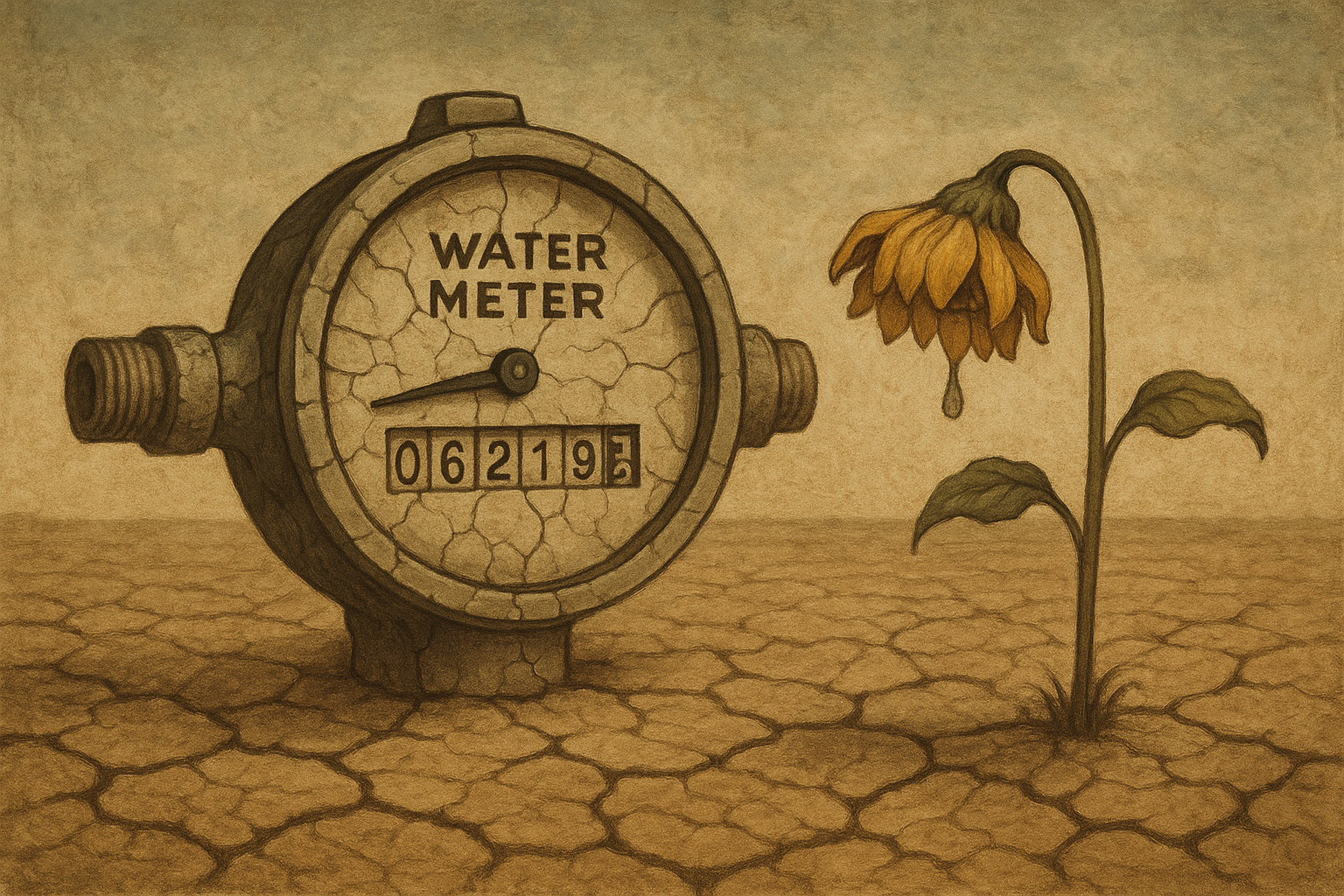
Cape Town faces a looming water crisis as consumption remains stubbornly high amid low rainfall. Learn how the city is tackling "death by a thousand drips."
Cape Town is facing a severe water crisis once again, as daily water use is far too high and rainfall has been low. Homes and businesses are guzzling water, and old pipes are leaking a shocking amount daily. Plus, sneaky things like evaporation and thirsty alien trees are stealing even more water from dams. The city is trying new tricks like smart meters and recycled water, but everyone needs to help save water quickly before things get really bad again.
What are the main reasons for Cape Town's current water crisis?
Cape Town's water crisis is driven by consistently high daily water demand exceeding one billion litres, coupled with significantly reduced rainfall over recent years. Contributing factors include substantial water consumption by suburban homes and industries, considerable water lost through leaks in an aging infrastructure, high evaporation rates from dams, and the impact of invasive alien trees on water catchment areas. The city is also grappling with slow adoption of water-saving technologies and insufficient funding for catchment restoration.
Get Cape Town news in your inbox
Stay updated with the latest stories from the Mother City.
Section 1 – Meters Whirl While Clouds Stay Away
Cape Town’s taps are gushing at a pace hydrologists hoped never to witness again in midsummer. Since mid-December, daily demand has refused to sink below the one-billion-litre mark, cresting at 1 062 million litres on 19 January 2026. That is 87 million litres beyond the internal “amber” trigger that separates comfort from concern. While the figure falls short of the 1.3 billion litres recorded during the pre-drought boom, it marks the first seven-week stretch since the 2018 crisis that consumption has remained so elevated while rainfall has stayed so scarce.
The blunt maths looks like this: 4.7 million residents, 350 000 registered businesses, 28 000 informal traders, 650 schools, 56 hospitals, three coal stations, two atomic reactors, six refineries, nine golf courses, 37 wine estates, 78 cricket ovals and 129 soccer pitches still rely on the same 1 046 km² of mountain catchment that serviced one-tenth of today’s population a hundred years ago. Each additional million litres guzzled now is a million litres that will not be there when the winter refill season begins - and winter itself has become erratic. The last three June-to-September periods delivered only 74 %, 68 % and 71 % of the historical average rainfall.
Inside the Water and Sanitation Directorate the weekly dashboard glows like an ICU heart-lonitor. The sequence since 10 December - 1 029, 1 029, 1 039, 1 010, 1 048, 1 037, 1 050 - draws a flat line rather than a neat spike, and flat lines unnerve planners more than sharp peaks because they hint at entrenched habits. Councillor Zahid Badroodien, now carrying the political risk once reserved for finance or crime portfolios, labels the trend “death by a thousand drips”. His team has run 312 demand forecasts for the 217 days remaining until the 2026 rains; 284 of those runs show dams dipping below 50 % if today’s thirst persists. Once storage slips under that psychological halfway mark, Cape Town would be rehearsing the 2018 cliffhanger - only now with a sharper global media spotlight, a tourism sector desperate for recovery and households already squeezed by two years of flat wages and 17 % electricity-price hikes.
Section 2 – Who Uses What, and Where It Vanishes
Suburban homes gulp roughly seven-tenths of everything that leaves the treatment works. Toilets alone swallow 28 % of domestic supply - about 210 million litres each day - followed by showers and baths (26 %), washing machines (17 %), gardens (12 %), cooking and drinking (8 %), and leaks (9 %). The leakage slice - 75 million litres each 24 hours - equals 30 Olympic pools and surpasses the entire daily demand of Ekurhuleni. Unlike showers or spaghetti pots, leaks deliver zero comfort, revenue or food.
Cape Town’s long, sandy layout makes pipe bursts disproportionately pricey. The metro stretches 60 km from Atlantis to Strand, much of it atop shifting Cape Flats aquifers. Over 11 000 km of mains - some cast-iron relics from the 1930s - flex daily, opening tiny fissures that stay hidden until they erupt. Pressure-management zones carved out after the drought trimmed losses from 25 % to 19 %, yet every kilopascal saved in Mitchells Plain is cancelled by fresh breaks in Kraaifontein where new estates sprout on former vegetable plots. Leak-brigade teams, 240 technicians in neon bibs, patch roughly 1 400 faults a week, but the municipal app still shows more than 6 800 open tickets.
Industry plus agriculture together account for 22 % of demand, but their draw is seasonal rather than baseload. Saldanha Steel, PetroSA’s gas-to-liquids plant and Koeberg nuclear station all hold river abstraction licences yet recycle aggressively, so their net take is modest. The single thirstiest precinct is the V&A Waterfront with its 24 000 residents, 24 million yearly visitors, two small desal units and decorative canal: 7.3 million litres a day, enough to supply Paarl. Eleven wine cellars in the Helderberg basin use direct-contact chilling, evaporating 4.2 million litres daily during the February crush. A single 18-hole golfing green can burn 0.9 million litres on a hot summer day; the metro owns nine, all but two still irrigating with drinking water because purple-pipe effluent mains have not yet reached the coastal strip.
Section 3 – The Secret Thieves: Evaporation, Alien Trees and Endless Leaks
Evaporation is Cape Town’s biggest unbilled consumer. The six large dams - Theewaterskloof, Voëlvlei, Berg River, Wemmershoek, Steenbras Upper and Lower - expose a combined 8 700 hectares to sun and south-easter winds. In January, when relative humidity plunges below 30 % and mercury brushes the mid-thirties, they shed 22 mm off the surface daily: about 190 million litres, double what all formal commerce consumes. Floating plastic balls on Steenbras Lower cut evaporation by 70 % on the pilot patch, but the price tag - R2.4 million per hectare - rules out a city-wide rollout. Monolayer lipid films were abandoned after gusts corralled the slick against the wall, forming an oily tide that alarmed anglers.
Invasive Australian wattles and eucalypts are the second silent thief. These aliens now cloak 150 000 ha of mountain catchment, breathing out 55 million litres more vapour each day than the fynbos they displaced. Working for Water teams have hacked away 48 000 ha since 1996, yet budget trims slowed the pace to 1 800 ha a year - one-twentieth of the scientifically recommended rate. A drone-guided, cable-yanker trial in Wemmershoek showed that stripping just 2 000 ha released an extra three million litres daily into the dam, enough for 20 000 households. The Directorate is pushing Treasury to earmark a sliver of the municipal water tariff for catchment restoration, echoing successful schemes in Quito and Nairobi.
Back in the streets, leaks remain the low-hanging fruit. A tap dripping once a second wastes 10 000 litres a year; a silent toilet leak can flush away 300 litres a day. Retrofitting 400 000 homes with R45 dual-flush valves would save 35 million litres daily, while a R89 low-flow showerhead trims flow from 15 litres per minute to eight. Roll these micro-fixes across 1.8 million morning showers and the metro claws back 38 million litres - half the current overshoot. The hurdle is not technology but finance: banks still refuse to recognise a R12 000–R18 000 grey-water rig in mortgage valuations. Talks are under way with Absa and Standard Bank to create a “green bond” that bundles the cost into home loans at 2 % below prime, repaid from proven utility savings.
Section 4 – Smart Meters, Purple Pipes and the Next ‘Day Zero’ Buffer
Cape Town is piloting 50 000 ultrasonic smart meters that report hourly via low-power radio. Early data from 6 300 installations in Bishop Lavis and Kensington show a 14 % demand dip once residents spot leaks and evening spikes on a free phone app. One house racked up 4 000 litres a day feeding an illicit car-wash; another flat-lined for six weeks after a DIY bypass, triggering a R25 000 fine and criminal docket. The Directorate wants 300 000 units installed by 2028, funded by a 1.2 % tariff levy that could shave 70 million litres off the daily ledger - exactly the present shortfall.
On the effluent side, the city flushes 630 million litres of treated sewage into the Atlantic daily yet reuses only 40 million litres for vineyards and sports fields. The R1.8 billion upgrade of Zandvliet works will deliver 120 million litres a day of class-A+ recycled water along a mapped 60 km purple-pipe spine that skirts 2 400 ha of grapes, 11 golf estates and three future industrial parks. Clients must surrender an equal volume of potable quota, turning the project into a net gain for the drinking-water balance rather than a new spigot.
Corporate tariffs already carry an automatic scarcity surcharge - R4.87 per kilolitre versus R3.94 - when dam levels slide under 55 %. Breweries, malls and data centres that beat their water budget by 15 % pocket a rebate; laggards pay double. Amazon’s under-construction River Club server farm will cool itself on recycled effluent piped from Green Point, repaying the R28 million purple-main cost through a 7 % electricity-tariff add-on over ten years.
Will these slices add up to a safety net? Officials flinch at the words “Day Zero”, but the revised spreadsheet is unforgiving. In 2018 the danger line was 13.5 % of usable storage; weaker rainfall and higher demand have nudged it to 45 %. If consumption stays above one billion litres for another 16 weeks, that buffer evaporates. Beyond it lie level-4 restrictions (100 litres per person), level-5 (70 litres) and level-6 (50 litres) enforced through pressure throttling and eventual zone shut-offs. The difference between 2018 and 2026 is 180 MW of standby desalination, 45 million cubic metres of banked groundwater and a population that has already queued for buckets. Whether these buffers suffice will depend less on winter storms than on the sum of millions of small choices - shorter showers, tighter taps, purple pipes and smarter meters - made between now and the first cold front of June.
[{"question": "What are the main reasons for Cape Town's current water crisis?", "answer": "Cape Town's water crisis is primarily due to persistently high daily water consumption, often exceeding one billion litres, combined with significantly lower-than-average rainfall in recent years. Other major contributing factors include high water usage in suburban homes and businesses, a substantial amount of water lost through leaks in the aging pipe infrastructure, high evaporation rates from dams, and the significant water consumption by invasive alien trees in catchment areas. Slow adoption of water-saving technologies and insufficient funding for catchment restoration also exacerbate the problem."}, {"question": "How much water is Cape Town currently consuming daily, and how does this compare to previous periods?", "answer": "Since mid-December, Cape Town's daily water demand has consistently exceeded one billion litres, peaking at 1,062 million litres on January 19, 2026. This level is 87 million litres beyond the city's internal 'amber' trigger for concern. While it is less than the 1.3 billion litres recorded during the pre-drought boom, it marks the first seven-week period since the 2018 crisis with such elevated consumption and scarce rainfall."}, {"question": "Where is most of Cape Town's water being used and lost?", "answer": "Suburban homes account for approximately 70% of the water leaving treatment works. Within homes, toilets consume 28% of domestic supply (about 210 million litres daily), followed by showers and baths (26%), washing machines (17%), gardens (12%), cooking and drinking (8%), and leaks (9%). Systemic leaks in the aging infrastructure, particularly in the 11,000 km of mains, result in a loss of 75 million litres every 24 hours, equivalent to 30 Olympic pools. Additionally, evaporation from the six large dams loses about 190 million litres daily, and invasive alien trees consume an extra 55 million litres of water each day."}, {"question": "What measures is Cape Town implementing to conserve water and increase supply?", "answer": "Cape Town is implementing several strategies including piloting 50,000 ultrasonic smart meters to encourage user awareness and detect leaks, with 6,300 installations already showing a 14% demand reduction. The city is also upgrading the Zandvliet works to produce 120 million litres per day of Class A+ recycled water for vineyards, sports fields, and industrial parks via a 60 km 'purple pipe' network. Corporate tariffs include scarcity surcharges, and incentives are offered for businesses that reduce water consumption. Discussions are also underway with banks for 'green bonds' to finance household water-saving retrofits like dual-flush valves and low-flow showerheads."}, {"question": "What are the 'secret thieves' of Cape Town's water, and what is being done about them?", "answer": "The 'secret thieves' are evaporation and invasive alien trees. Evaporation from the six large dams accounts for about 190 million litres daily, double what formal commerce consumes. Pilot projects like floating plastic balls on Steenbras Lower showed significant evaporation reduction but are too costly for widespread rollout. Invasive Australian wattles and eucalypts cover 150,000 hectares of mountain catchment, consuming 55 million litres more water daily than native fynbos. While 'Working for Water' teams have cleared 48,000 hectares, budget cuts have slowed the pace. The Directorate is advocating for a portion of the municipal water tariff to be allocated to catchment restoration."}, {"question": "What is Cape Town's current risk of reaching a 'Day Zero' scenario, and what are the potential consequences?", "answer": "Officials are wary of the term 'Day Zero,' but the current situation is concerning. The danger line for usable storage has been revised from 13.5% in 2018 to 45% due to weaker rainfall and higher demand. If consumption remains above one billion litres for another 16 weeks, this buffer could evaporate. Beyond this point, the city would face increasingly severe restrictions: Level 4 (100 litres per person), Level 5 (70 litres), and Level 6 (50 litres), enforced through pressure throttling and eventual zone shut-offs. While the city has 180 MW of standby desalination and 45 million cubic meters of banked groundwater since 2018, the outcome will largely depend on collective water-saving efforts.","additional_info": "The city's infrastructure, including 11,000 km of pipes, some dating back to the 1930s, is particularly vulnerable to leaks due to Cape Town's long, sandy layout. The city's growth, with 4.7 million residents and numerous businesses, now relies on the same mountain catchment that served a tenth of today's population a century ago."}]

Thabo Sebata is a Cape Town-based journalist who covers the intersection of politics and daily life in South Africa's legislative capital, bringing grassroots perspectives to parliamentary reporting from his upbringing in Gugulethu. When not tracking policy shifts or community responses, he finds inspiration hiking Table Mountain's trails and documenting the city's evolving food scene in Khayelitsha and Bo-Kaap. His work has appeared in leading South African publications, where his distinctive voice captures the complexities of a nation rebuilding itself.
View all articles →