
Video: Refugee mothers say SASSA grants were cut after new green ID demand
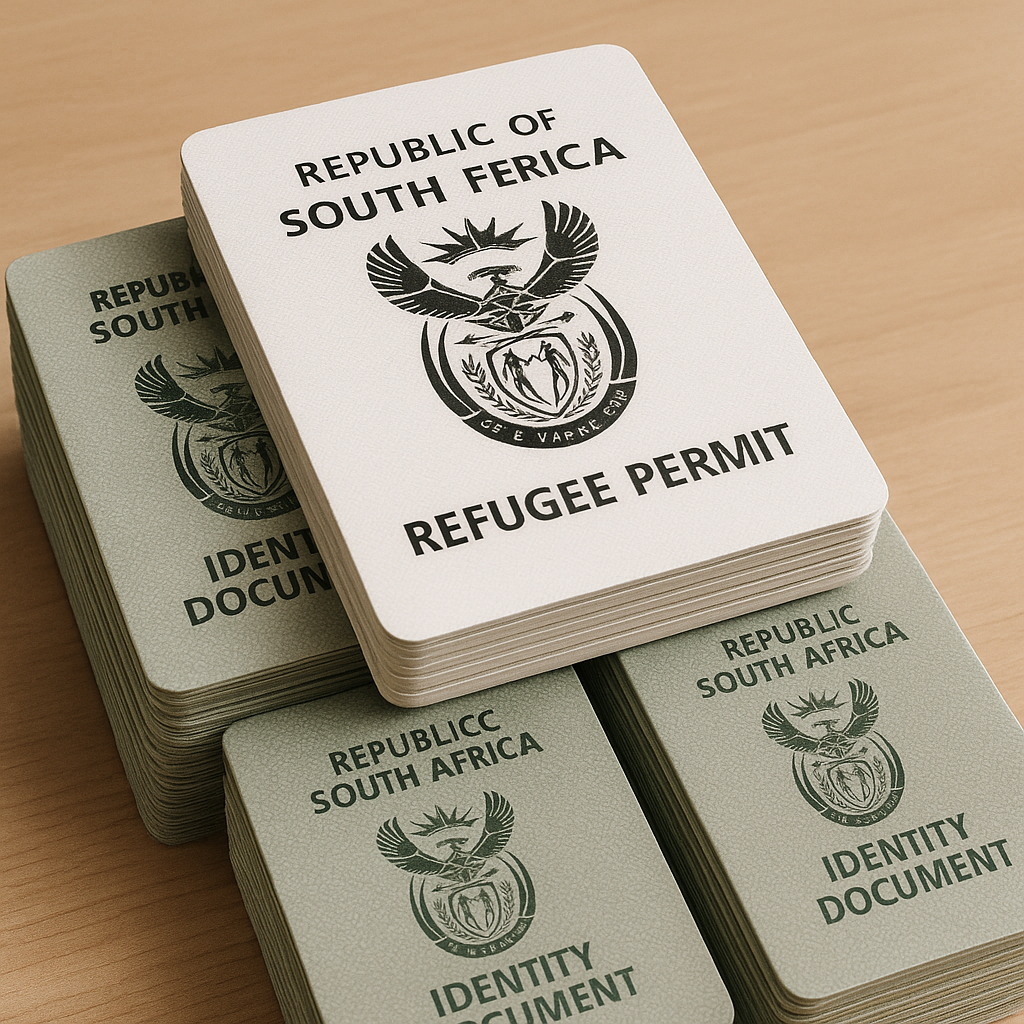
Somali refugees in South Africa face suspended social grants due to new SASSA ID requirements, causing widespread hardship.
Somali refugees in South Africa are facing immense hardship because new rules for social grants demand a green ID or smart card, which refugees don't have. Their permits aren't recognized by the new system, freezing their money and leaving families without food, medicine, or school supplies. This is happening despite laws that say refugees should get help, and now, many are struggling to survive.
Why are Somali refugees in South Africa struggling to access social grants?
Somali refugees in South Africa are struggling to access social grants due to new SASSA rules requiring a green ID book or smart ID card. Their refugee permits are not recognized by the updated biometric verification system, leading to frozen payouts and significant hardship, despite existing laws affirming their eligibility.
Get Cape Town news in your inbox
Stay updated with the latest stories from the Mother City.
I. Bellville Forecourt: Tuesday, 09:42
A cool Atlantic wind skims the Bellville forecourt where the concrete branch of the South African Social Security Agency hunches like a defunct bus terminal. Strollers, not suitcases, dominate the pavement: mothers shield infants against their chests, fathers hoist toddlers onto shoulders, teenagers scroll social media while balancing backpacks on their shoes.
Three Somali dialects - Benadir, Puntland, Jubba - spill into Afrikaans commands leaking from a crackling megaphone. A woman in emerald hijab clambers onto a plastic milk crate meant for ticket stubs. The tide of roughly one-hundred-eighty listeners bends toward her like wheat in a stiff gust. She waves a laminated sheet: the all-important refugee permit.
“Seven months, zero rands,” she reminds the crowd. “We have slips, fingerprints, case numbers. Today they demand a green ID book - something that needs five to ten years to reach your hands. Explain how I conjure one before sunset.”
II. A Social Grant That Once Worked
Between 2008 and 2016 thousands of Somali households crossed the Limpopo or touched down at OR Tambo airport, propelled by al-Shabaab land-grabs and the 2011 Horn of Africa drought.
South Africa’s 1998 Refugees Act plus its 2017 regulations promise every documented refugee “all rights in the Bill of Rights except those clearly labelled for citizens.” That wording explicitly covers social assistance.
For well over a decade SASSA recognised either a Section 24 refugee permit or a Section 22 asylum document combined with the green Home Affairs card marked “refugee ID.” With these papers, families qualified for the Child Support Grant (R510 monthly per child), Disability Grant (R2 090), Older Persons Grant (R2 090), and the emergency Social Relief of Distress (R370).
III. Treasury Orders a Clamp-Down
Quietly, late in 2023, National Treasury told SASSA to tighten identity checks across roughly nineteen million active grants. The brief pointed to biometric duplicates and “ghost recipients.”
SASSA answered with a three-stage compliance blitz:
1. November 2023–January 2024 – fingerprints were matched against the National Population Register.
3. May–August 2024 – facial-recognition kiosks are scheduled for every pay-point.
The verification engine now insists on either a smart ID card or the old green bar-coded book. Refugee numbers live on a separate Refugee Register, invisible to the main database, so the machine labels each permit “incomplete” and freezes the payout until a human overrides the decision.
IV. Bellville Branch: Where Policy Meets People
On the morning of 27 February a laminated notice appeared next to the metal detector: “GRANT RECERTIFICATION REQUIRES GREEN ID OR SMART ID CARD.” No Somali, Amharic, or French leaflet explained the change; the national SASSA helpline drops roughly seventy-two percent of calls, according to Black Sash’s 2024 tracker.
Refugees arriving that day heard their files were “under review.” Staff told them to “come back with a South African ID.”
Filsan Abdi - mother of four and volunteer paralegal for the Somali Community Board - lost her Disability Grant in September 2023 after her prints allegedly “failed liveness detection.” The same fate struck one-hundred-twelve Somali households in Bellville alone: sixty-seven lost Child Support Grants, thirty-one their Disability Grants, fourteen the Older Persons Grant.
V. The Long Road to a Green Book
The path to a green ID for a non-citizen is a bureaucratic maze. Refugees must first secure permanent residence after five continuous years of documented status - delays at Home Affairs routinely drag the timeline to eight.
Permanency is available only under narrow categories: business visa, critical skills, family of citizens, or “exceptional circumstances.” Most Somali applicants rely on the last option, but it demands proof of integration - utility bills, school reports, tax numbers - papers that many street traders simply do not have.
Once permanency is granted, naturalisation requires roughly two more years. A Somali parent whose first child was born in Cape Town in 2014 could, in the best case, expect eligibility around 2029. Until then, the refugee permit remains the only legal identity.
VI. Law on Paper, Barriers in Practice
Section 27(1)(c) of South Africa’s Constitution pledges “access to social security, including appropriate social assistance.” Regulation 3(3) of the Social Assistance Act Regulations explicitly lists “a refugee status permit” as valid proof of identity.
When the Legal Resources Centre asked the Western Cape High Court for an urgent interdict in March 2024, SASSA’s counsel called the suspensions “temporary and technical,” not a denial of rights. The judge postponed the matter, urging internal remedies. In the meantime, the queue grows.
VII. Ripple Effects in Philippi
In a shack settlement near the Philippi Horticultural Area, Filsan flips open a ruled school exercise book. The last food purchase is dated 14 October 2023, five days after her final grant. She has borrowed four thousand rand from rotating savings clubs and missed two school-fee deadlines.
Three children share one pair of black school shoes, swapping daily. A cooler box holds insulin pens; the clinic now supplies only half her diabetes dose because her medical-aid subsidy died with the Disability Grant. Her seventeen-year-old daughter skips afternoon classes to sell loose cigarettes at a taxi rank.
VIII. Kids Pay the Heaviest Price
Education NGOs calculate about twelve-hundred Somali children in the Western Cape directly feel the suspension. The Scalabrini Centre reports a twenty-three-percent rise in absenteeism during Term One 2024, linked to families unable to pay transport or buy uniforms.
At Hazendal Primary in Athlone, fourteen Somali pupils arrived barefoot in May; the principal launched a shoe drive after parents confessed that grant money had vanished.
IX. Fraud Panic or Technical Glitch?
SASSA’s own figures show that 0.4 percent of 2023 grant fraud cases implicated “non-citizens.” Fifty-eight percent involved South Africans wielding duplicate IDs.
Critics claim Somali households are convenient scapegoats in an election year yet biometric failure is real. Refugee prints captured at 500 ppi in 2014 clash with the new engine’s 1,000 ppi threshold. The mismatch causes nine-percent false rejections among citizens and twenty-two percent among refugees whose ridges are often worn by manual labour. Instead of adjusting the scanner, SASSA froze the accounts.
X. Political Drums Before the Poll
With the 29 May 2024 national election approaching, the Patriotic Alliance and ActionSA vowed to “clean” the grant list of foreign nationals. On 5 April an internal Home Affairs memo - later leaked - floated a policy redefining refugees as “temporary residents” for social-security purposes. Public outrage forced the memo offline, but the DNA of the idea survives in SASSA’s new rules.
XI. How Neighbours Handle Refugees
Kenya’s Kalobeyei settlement lets refugees withdraw cash via Safaricom’s M-Pesa using chip-enabled biometric cards. Uganda’s Bidi Bidi camp plugs refugee data straight into the national SAGE pension and grant platform. South Africa’s once-celebrated hybrid asylum model now risks sliding into administrative exile.
XII. Grassroots Lifeboats
While advocates draft affidavits, the Somali Community Board runs a soup kitchen beside the Bellville branch. A neighbouring mosque donates seventy loaves daily; a Kuils River evangelical church supplies fifty-litre pots of lentils.
A Bellville pharmacist offers free blood-glucose tests to diabetics like Filsan who lost medical aid. Shopkeepers who still make cash keep informal credit logs - R150 a week groceries on tick. None of this matches the R3 350 a combined caregiver-plus-child-plus-disability package once delivered to a single household.
XIII. Home Affairs Speaks
The Minister’s spokesperson insists that “refugee permits remain valid for all purposes envisioned in law, including social assistance.” The fault, he says, is “technical misalignment” between SASSA and the National Population Register. A joint task team supposedly gathered in April, yet the minutes have never surfaced.
New appointments at Cape Town’s Refugee Reception Centre are now scheduled for September 2024, deepening the backlog.
XIV. Locked Out of the Digital Door
Refugees cannot log into SASSA’s online portal because the form insists on an 8-digit South African ID number, not the 13-digit refugee string. When they ring the 0800 helpline, the voice prompt lists “1 for ID number” or “2 for passport number,” but never “3 for refugee permit.” Even sympathetic agents cannot unlock the biometric gate.
XV. Survival Hacks with Risk
Desperate parents sometimes rent out their children’s birth certificates to undocumented migrants who then fraudulently claim grants - trading one illegality for another. Others enrol offspring in Islamic charity schools that waive fees in exchange for janitorial shifts. Street-trader permits, once reliable income tools, are now cancelled because City officials argue that refugee papers do not prove lawful residence.
XVI. Mental Scars
A volunteer psychologist from the University of the Western Cape runs “stoep therapy” sessions on the pavement. PTSD symptoms among Somali women have spiked forty percent; husbands queue for days, sleeping on flattened cardboard. Suicide-prevention lines report Somali callers citing grant suspension as the last straw.
XVII. Foggy Numbers
Neither SASSA nor Home Affairs publishes a refugee-grant dashboard. NGOs extrapolate from ledgers like Filsan’s. The Somali Association of South Africa believes the national tally is nearer 3 800 affected households, but the fog persists.
XVIII. A Fix Already Invented
In 2022 Home Affairs piloted a chip-enabled “Refugee Card” carrying an NPR-compatible 13-digit number and Level 3 biometrics. Initial tests showed seamless integration with the National Payment System. Treasury slashed the budget by forty-six percent in the 2023 mid-year adjustment, shelving the rollout. A leaked 2024 draft revives the project - but only for 2026.
XIX. One Day, Start to Finish
05:30 – Filsan reaches the gate with her youngest on her hip.
07:00 – Security opens; 300 bodies surge; only sixty tokens exist.
09:00 – A Home Affairs van arrives promising “on-the-spot IDs,” but staff declare refugee permits ineligible.
11:15 – A SASSA supervisor proclaims that “technical teams are busy.”
13:40 – Mosque volunteers hand out sandwich-and-banana lunch packs.
15:00 – Tokens exhausted; the crowd melts; Filsan rides back to Philippi empty-handed.
XX. Silence in Pretoria
At SASSA headquarters, spokesperson Paseka Letsatsi answers emailed questions with a single line: “Refugee permit holders remain eligible. Unintended suspensions are handled case-by-case.” No schedule, no figures, no apology.
XXI. Court on the Horizon
On 12 June 2024 the Legal Resources Centre will argue that the blanket freeze breaches the Administrative Justice Act and the Promotion of Equality Act. They seek a structural interdict forcing SASSA to recalibrate the biometric engine and back-pay suspended grants. If the court agrees, payouts could restart in ten days - the same window used after the 2022 Postbank tech failure.
XXII. A Chorus Beyond the System
Each dusk, inside a tin-walled madrasah behind Philippi mosque, sixty Somali children rehearse a nasheed whose refrain translates to “Though the night is black, we bear tomorrow’s dawn.” Their teacher records on a cracked smartphone and uploads to a WhatsApp group named “Refugee Dreams.” The final message reads: “If the system omits us, we will ink ourselves into the song.”
What is the core issue facing Somali refugees in South Africa regarding social grants?
Somali refugees in South Africa are struggling to access social grants because new rules from the South African Social Security Agency (SASSA) demand a green ID book or smart ID card for identity verification. Their existing refugee permits are not recognized by this new biometric system, leading to their grant payments being frozen, despite South African law affirming their eligibility for social assistance.
Why did SASSA implement these new identity verification rules?
In late 2023, the National Treasury instructed SASSA to tighten identity checks across its approximately 19 million active grants to combat issues like biometric duplicates and "ghost recipients." This led to a three-stage compliance blitz, with the verification engine now specifically requiring a smart ID card or an old green bar-coded ID book. Unfortunately, this update did not account for the separate Refugee Register, causing refugee permits to be flagged as "incomplete."
Are refugees legally entitled to social grants in South Africa?
Yes, according to South African law, documented refugees are entitled to social assistance. The 1998 Refugees Act and its 2017 regulations promise all documented refugees "all rights in the Bill of Rights except those clearly labelled for citizens," which explicitly includes social assistance. Furthermore, Regulation 3(3) of the Social Assistance Act Regulations explicitly lists a "refugee status permit" as valid proof of identity for grant purposes.
What are the consequences of these frozen grants for refugee families?
The freezing of social grants has severe consequences, leaving refugee families without essential resources for survival. Many are unable to afford food, medicine, or school supplies for their children. Families are forced to borrow money, children miss school due to lack of transport or uniforms, and critical medical care, such as insulin for diabetics, is compromised. There's also a significant increase in mental health issues, including PTSD and suicidal ideation, among affected individuals.
What is the process for a refugee to obtain a green ID book or smart card in South Africa?
The path for a non-citizen to obtain a green ID book or smart card is a lengthy and complex bureaucratic process. Refugees must first secure permanent residence, which typically requires five continuous years of documented status. However, delays at Home Affairs often extend this to eight years or more. Permanent residence is only granted under specific categories, with most Somali applicants relying on "exceptional circumstances" which requires proof of integration that many street traders lack. After permanent residency, naturalization to obtain a full South African ID can take another two years. This means it could take well over a decade for a refugee to obtain the required ID.
What immediate solutions or actions are being pursued to address this crisis?
Advocacy groups like the Legal Resources Centre (LRC) are taking legal action. They filed for an urgent interdict in March 2024 and are scheduled to argue on June 12, 2024, that the blanket grant freeze breaches the Administrative Justice Act and the Promotion of Equality Act. They are seeking a structural interdict to force SASSA to recalibrate its biometric system and back-pay suspended grants. Additionally, grassroots organizations and community groups are providing humanitarian aid, such as soup kitchens, food donations, and informal credit, to help affected families cope in the interim.

Liam Fortuin is a Cape Town journalist whose reporting on the city’s evolving food culture—from township kitchens to wine-land farms—captures the flavours and stories of South Africa’s many kitchens. Raised in Bo-Kaap, he still starts Saturday mornings hunting koesisters at family stalls on Wale Street, a ritual that feeds both his palate and his notebook.
View all articles →