
Death of eight-year-old boy at Klapmuts Primary School sparks investigation
8-year-old Matthew Baartman died at school, sparking electrocution fears. An investigation reveals hazardous wiring and past neglect.
An eight-year-old boy named Matthew died at Klapmuts Primary School from what seems to be an electric shock in his classroom. The school had old, faulty wiring, including exposed wires and a slow safety switch. People are very upset and want answers, but there are many rumors going around. This sad event has made everyone look closely at the safety of other schools and what should be done to keep children safe.
What caused Matthew Cheswin Baartman's death at Klapmuts Primary School?
Matthew Cheswin Baartman, an eight-year-old pupil at Klapmuts Primary, died after an incident involving electrical infrastructure in his classroom. While the exact cause is still under investigation, preliminary forensic notes revealed significant electrical faults, including exposed wiring, faulty fuse holders, and a delayed earth-leakage unit trip, indicating a potential electrocution.
Get Cape Town news in your inbox
Stay updated with the latest stories from the Mother City.
The First Forty-Five Minutes
Friday, 23 January 2026, 07:45. In most corners of South Africa the kettle had just clicked off, but on the edge of the N1 the first siren of the day already tore through Klapmuts. Teachers at Klapmuts Primary were still herding stragglers across the gravel quad when a grade-three pupil, eight-year-old Matthew Cheswin Baartman, was carried out of the senior-foundation block, limbs dangling like a marionette whose strings had been slashed. The ambulance reached Karl Bremer Hospital 28 km away in record time; forty-five minutes later doctors recorded the official time of death.
By sunset the corrugated fence that separates the school from the railway line had vanished beneath a carpet of flowers, juice-box lanterns and messages scrawled in Afrikaans, isiXhosa and the salty slang of the Cape Flats. Nobody had issued an invitation; the memorial grew the way veld fires do, sparked by a single ember of grief and fanned by dry January wind.
Police spokesperson Sergeant Wesley Twigg offered the only statement the law allows at this stage: a pupil lost consciousness on the property, paramedics transported him, and he died soon after arrival. An inquest docket is open; the rest will wait for scalpels and microscopes. Provincial education MEC David Maynier, cornered beneath a jacaranda whose mauve blossoms had begun to fall, begged the internet to swallow its theories. “Rumours feel like answers,” he admitted, “but they corrode the truth and wound the family twice.”
Rumours, Cables and A Child-Sized Void
The vacuum left by official silence has been stuffed with every conceivable explanation. In one voice note a woman swears she saw a live wire hanging off the new smart-board like a black mamba. A TikTok filmed over the fence claims Matthew brushed against a homemade distribution box that powers the after-care popcorn machine. A third story insists an extension lead, stretched from the Grade-3 plug to a staff-room fridge, lay in a puddle born of a dripping air-con unit. Each version now carries its own micro-drama: the teacher who supposedly yanked the boy free with a plastic ruler, the caretaker who may have cut the mains too late, the smoke allegedly curling from a pair of small grey sneakers.
None of these scenes has been confirmed, yet they already shape how parents tuck their children in at night. They also shape the investigation; witnesses repeat what they scrolled before they ever reached the police tent. Maynier’s communications team has drafted a “rumour log” just to keep the versions straight.
While smartphones trade horror, Matthew’s parents have barricaded themselves inside their pastel-green RDP house on the lip of Bloekombos. Rochelle, his mother, has not left her nightdress since the morning; Cheswin, a forklift driver at a Stellenbosch bottling plant, was granted compassionate leave but spends most hours staring at the cracked concrete stoep. Pastor Norman Sauls fields journalists the way goalkeepers handle penalties: arms wide, voice calm, repeating the same line until it sticks - “They want answers, not microphones.”
Monday Morning: Scanners, Arc Marks and A 200-Millisecond Delay
By sunrise on 26 January the classroom had been declared an official crime scene. Royal-blue tape stamped “WCED SCENE – DO NOT ENTER” fluttered against prefab walls that still smelled of chalk dust and warm electrics. A tri-team moved in: two forensic pathologists, three municipal electrical engineers, and an occupational-health inspector carrying a dented aluminium briefcase. They brought loop-impedance testers, thermal cameras and a yellow cable tracer that squealed whenever it found live metal.
Their preliminary notes - leaked to the Daily Voice and corroborated independently - read like a checklist for catastrophe. A single 16 mm² copper feeder, installed when Jimmy Carter was still U.S. president, splits into four ceramic fuse holders bolted to a warped pine plank. Two of those holders carry the brown scabs of ancient arcing. A 2.5 mm² twin-and-earth line that once fed the “reading corner” lies naked for thirty centimetres, its red conductor shining like a raw vein. Underneath a wall-mounted socket a palm-wide puddle glints; condensation, not rain, the engineers say. The earth-leakage unit is correctly rated at 30 milliamps, but it tripped only after a 200-millisecond hesitation - long enough to turn a child’s heart into a quivering fist.
These clues do not confirm electrocution; they merely prove the building was an accident rehearsing its opening night. The Department of Labour has opened a parallel docket under section 24 of the Occupational Health and Safety Act. If institutional neglect is proven, the governing body - and by extension the province - could face criminal charges.
A Rewire That Never Came
Klapmuts Primary has been whispering Mayday for years. In May 2023 the PTA chair sent a letter to the district office complaining that boys yelped when they touched the toilet tap. An electrician’s report dated 14 June 2023 recommended a full rewire of phases A and B plus two new distribution boards priced at R486 000. The regional office replied with bureaucr courtesy: “Item prioritised for 2026/27.” Translation: scheduled to begin three months after Matthew’s death.
GOOD Party councillor Marius van Stade, megaphone in hand, calls the lag “institutional manslaughter.” He is gathering affidavits to force Premier Alan Winde into a province-wide audit of electrical compliance at all 1 519 public schools. “If the list is not on my desk within seven days,” he told parents, “we march on the legislature.” The promise drew cheers, but promises are currency Cape Town politicians mint daily; whether they survive the next news cycle is another matter.
The WCED, for its part, has dispatched a mobile unit to swap plugs, fit new earth-leakage breakers and lay rubber floor mats. Technically these are “interim life-saving measures”; emotionally they look like hasty cosmetics on a gunshot victim. Zelda Swarts, chair of the ward development forum, watched the team unbolt a socket still tagged as evidence and shook her head. “They’re scrubbing the crime scene before the corpse has cooled.”
Empty Chairs, Panic Attacks and A Bell That No Longer Rings
While electricians tighten screws, a quieter epidemic sweeps through the 786 learners who remain. Twenty-four of Matthew’s classmates are now on the WCED “vulnerability list.” Some wet their beds; others refuse to speak; one seven-year-old tells counsellors she sees “little orange sparks” whenever she blinks. Teachers, caught in the same stew of guilt, whisper questions no training module ever answered: Could I have done CPR faster? Should I have touched him instead of sprinting for the office?
Four extra counsillors and a 24-hour hotline are supposed to stitch the tear, but Dr Khaya Dlulane, child psychiatrist at Tygerberg Hospital, warns that secondary trauma mutates when facts stall. “Kids fill the blanks with magical rules,” he says. “Red socks become dangerous, Tuesday becomes fatal. Without a clear story those rules harden into anxiety disorders.”
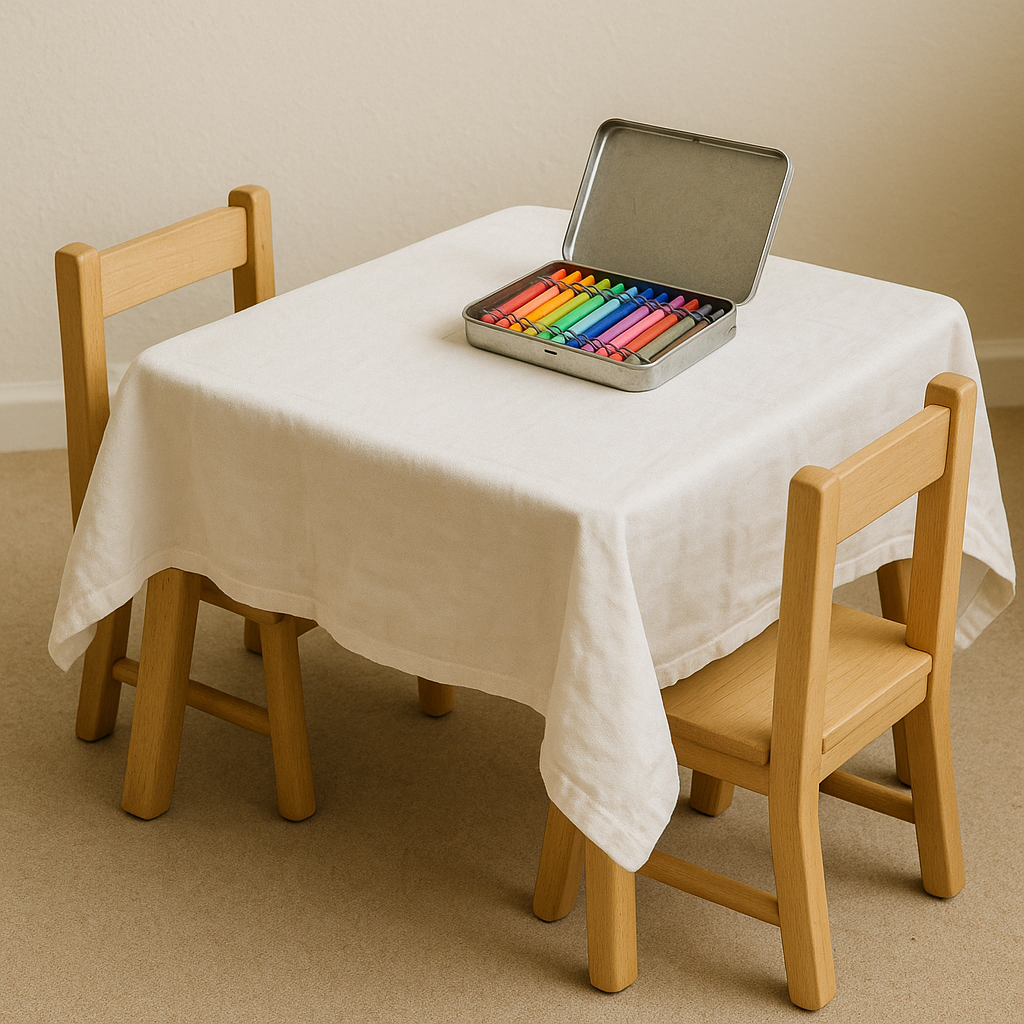
The school day now starts with a wrist-watch chime, not the brass bell that once rattled the windows. Matthew’s desk - spelling sheet half-done, crayons abandoned mid-sentence - has been draped in white linen like a miniature catafalque. Nobody has dared move it; nobody knows when someone will.
A Province Full of Schools, A Country Short of Rules
South Africa’s electrical standards for schools resemble a patchwork quilt sewn by rival grandmothers. The National Education Policy Act dumps duty of care on the state; the Occupational Health and Safety Act orders every employer (school governing bodies included) to keep the premises safe. Yet nothing demands an annual electrical inspection for public schools. Private institutions must flash a Certificate of Compliance every two years; 77 % of no-fee schools in the Western Cape have never held one, according to data pried loose last year under PAIA.
Energy analyst Chris Yelland argues that paperwork alone cannot save lives. “You can’t invoice a quintile-1 school for a R400 000 rewire and expect miracles,” he says. “Treasury needs a dedicated electrical-compliance grant - ring-fenced, audited by the Auditor-General, the way we handle the nutrition scheme.” Until that happens, parents are improvising oversight.
Parents, Hashtags and A Lagos Law That Could Have Been Ours
Out of grief, a hashtag: #SafeDesks. Launched by Klapmuts mothers on Facebook, it urges moms and dads nationwide to photograph dodgy plugs, exposed boards and rainwater dripping on breakers. Within 48 hours 18 000 followers had uploaded 400 geotagged images - from Limpopo classrooms where distribution doors hang by one screw to Eastern Cape libraries whose switches hiss when it rains. A Cape Town tech start-up is turning the uploads into an open-source hazard map, layering citizen evidence over the provincial infrastructure database.
The idea is not radical; it is imported. In 2018 a nine-year-old boy in Lagos died after grabbing a live railing energised by an illegal connection. The uproar pushed Lagos State into passing the School Safety Compliance Law, which mandates yearly electrical audits and criminal penalties for non-compliant governors. Kerala, India, went further after a 2019 electrocution: inspections plus a grade-4–7 curriculum on how electricity can love you and kill you in the same breath. South Africa’s national department has so far issued a two-line statement - “We are studying international best practice” - and promised nothing.
Ballots, Blame and A Clock That Runs Until 2026
Matthew’s death arrives at a cruel intersection: local-government elections loom in 2026, and the DA-led province has banked its campaign on “clean audits” and “delivery you can see.” Education infrastructure is the cracked pillar beneath that platform. Only last year the Public Protector ruled that the WCED committed maladministration after a Delft classroom ceiling collapsed on three learners. Opposition parties scent opportunity. The EFF has parked a red truck outside the gate, vowing to “shut down the Winelands” if MEC Maynier is still in office fourteen days from now. The ANC provincial secretary wants a full portfolio-committee hearing; inside the bureaucracy, memos already zigzag between departments, each paragraph nudging accountability one desk further away.
Brian Hlongwa, head of education infrastructure, insists Klapmuts was “on the list” and blames treasury rationing. A senior treasury official, speaking off the record, counters that provinces left R1.3 billion in school-infrastructure grants unspent last year - “money was there, absorption was the problem.” The argument will play out in headlines and committee rooms while Matthew’s classmates flinch every time a classroom light flickers.
Autopsies, Histology and The Long Wait for A Word That Rhymes With Closure
Pathologists finished the autopsy on Monday afternoon yet withheld the report; microscopic tissue slides and toxicology will take six to eight weeks. An insider says the body shows “no classic high-voltage branding,” which keeps low-voltage leakage in the running but proves nothing. Until science speaks, the death certificate reads “undetermined,” a Latin syllable that offers no lullaby for Rochelle Baartman, who still cannot change her clothes, and no reprieve for 24 eight-year-olds who have decided that silence is safer than asking why.
Klapmuts Primary drifts on, half-empty and fully haunted. Teachers mark time by the counsellor’s watch; learners glance at the sky before they touch a tap; parents photograph every wall socket as though electricity itself were a suspect lineup. Somewhere in the bureaucratic machine, files are stamped, budgets re-allocated, press statements trimmed to 280 characters. None of it moves the small white-draped desk waiting in the Grade-3 classroom for a verdict that may, or may not, explain why the first bell of a new school year now sounds like a requiem.
[{"question": "
What happened to Matthew Cheswin Baartman at Klapmuts Primary School?
", "answer": "Matthew Cheswin Baartman, an eight-year-old pupil, died at Klapmuts Primary School on January 23, 2026, from what appears to be an electric shock in his classroom. He was found unconscious and transported to Karl Bremer Hospital, where he was pronounced dead. The incident occurred around 07:45 AM."}, {"question": "What were the contributing factors to Matthew's death?
", "answer": "Preliminary investigations revealed significant electrical faults in the classroom. These included exposed wiring, faulty fuse holders, and a safety switch (earth-leakage unit) that tripped only after a dangerous 200-millisecond delay. The electrical infrastructure, including a 16 mm² copper feeder, was very old, dating back to when Jimmy Carter was U.S. president. The school had a history of electrical issues, with a recommendation for a full rewire in June 2023 that was prioritized for 2026/27, after Matthew's death."}, {"question": "What actions have been taken since the incident?
", "answer": "The classroom was declared a crime scene, and a tri-team of forensic pathologists, municipal electrical engineers, and an occupational-health inspector is investigating. The Department of Labour has opened a parallel docket under the Occupational Health and Safety Act. The WCED has dispatched a mobile unit to conduct \"interim life-saving measures\" like swapping plugs and fitting new earth-leakage breakers. Additionally, four extra counselors and a 24-hour hotline have been provided for the affected learners and staff."}, {"question": "What are the current theories and rumors surrounding Matthew's death?
", "answer": "Due to official silence, various rumors have circulated, including theories about a live wire hanging from a smart-board, contact with a homemade distribution box for an after-care popcorn machine, or an extension lead from the Grade-3 plug to a staff-room fridge lying in a puddle. None of these have been confirmed, and officials, including MEC David Maynier, have urged the public to disregard rumors as they can \"corrode the truth and wound the family twice.\""}, {"question": "What is the broader impact of this tragedy on school safety?
", "answer": "Matthew's death has brought significant attention to the electrical safety of schools across South Africa. It has highlighted a lack of mandatory annual electrical inspections for public schools, unlike private institutions. Calls have been made for a province-wide audit of electrical compliance in all public schools. Parents have also initiated a #SafeDesks hashtag campaign to document and report electrical hazards in schools nationwide."}, {"question": "What is being done to prevent similar incidents in the future?
", "answer": "While the WCED has implemented immediate measures, there's a strong push for systemic change. GOOD Party councillor Marius van Stade is gathering affidavits to force a province-wide audit of electrical compliance. Energy analyst Chris Yelland suggests a dedicated electrical-compliance grant for schools. The #SafeDesks campaign aims to create an open-source hazard map for citizen oversight. Internationally, countries like Nigeria and India have implemented laws for yearly electrical audits and even integrated electricity safety into school curricula following similar tragedies. South Africa's national department is \"studying international best practice.\""}]
Isabella Schmidt is a Cape Town journalist who chronicles the city’s evolving food culture, from Bo-Kaap spice merchants to Khayelitsha microbreweries. Raised hiking the trails that link Table Mountain to the Cape Flats, she brings the flavours and voices of her hometown to global readers with equal parts rigour and heart.
View all articles →