
Dion George resigns as DA confirms disciplinary allegations
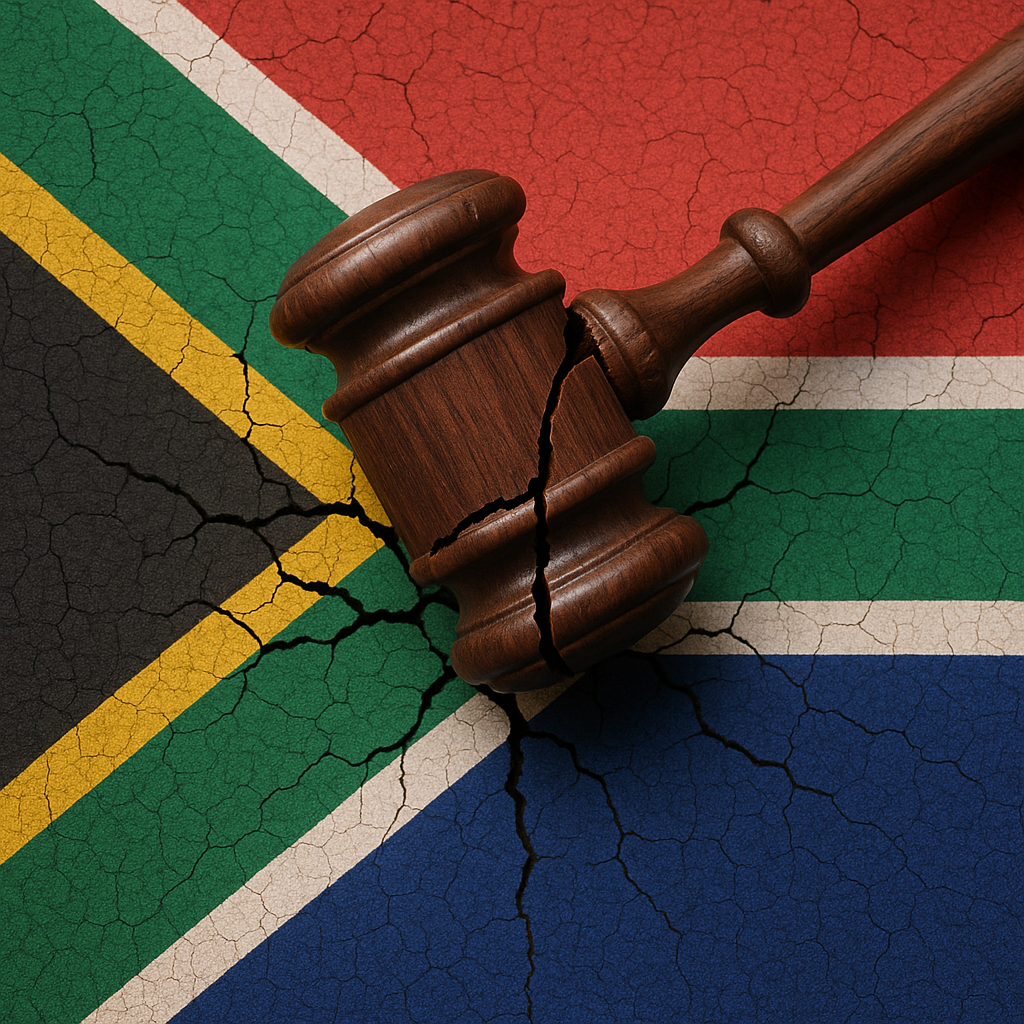
Dion George's exit exposes deep rifts in DA, raising questions about governance, coalition stability, and the weaponization of information.
Dion George, a smart guy with a big job, suddenly quit after some serious accusations. People said he gave big pay raises to his staff, leaked secret fishing info, and talked badly about his own party. His quick exit caused a huge stir, shaking up politics and even making money markets nervous. This whole mess shows how fast news travels and how a single tweet can blow up a big story.
What were the charges against Dion George that led to his resignation?
Dion George faced three main charges:
1. Inflating salaries of junior policy advisers by 55% and back-dating the increase.
2. Leaking confidential fisheries allocation data for political gain.
3. Making media statements that contradicted party lines, bringing the DA into disrepute and causing financial market instability.
Get Cape Town news in your inbox
Stay updated with the latest stories from the Mother City.
Section 1 – The Eight-Minute Shock Wave
At 08:43 on a quiet Wednesday, Dean Macpherson pressed “send” on a 42-character post.
By 08:51 “Dion George resignation” had vaulted above Eskom black-outs and Springbok selection gossip on every local trend list.
Talk-radio producers tore up their running orders; within an hour every station had a panel trying to explain why a technocrat famous only among budget nerds had detonated the biggest opposition blast since Patricia de Lille strode out of Cape Town City Hall eight years earlier.
The previous evening George had told Helen Zille he would skip the Thursday tribunal that was meant to grill him over a leaked party dossier.
At dawn he e-mailed a single-page letter to the Speaker, the party HQ and his own director-general, formally cutting his DA membership.
A 43-second cellphone clip - George in a parking garage reading a 76-word statement about “removing distraction” - hit newsroom Slack channels at breakfast; by coffee the 76 words had become wallpaper on every phone in Parliament.
The speed was not accidental.
Disciplinary files, WhatsApp voice notes and salary spreadsheets were already circulating among journalists, opposition researchers and at least two foreign diplomats before the minister’s tyres touched the N1.
What looked like a hasty personal decision had, in reality, been pre-briefed, pre-packaged and pre-leaked to ensure maximum combustibility.
Section 2 – The Charge Sheet That Landed in Everyone’s Inbox
The DA’s internal docket, never meant for daylight, is only three pages yet reads like a forensic accountant’s holiday slide-deck.
Count One: between May and September 2025 George bumped three junior policy advisers from R 736 k to R 1.14 m each - an inflation-beating 55 % - and back-dated the bonanza to 1 April, triggering an extra R 482 k in pension and bonus leakage.
National Treasury’s circular for the year capped political-staff hikes at 4.5 % unless the minister files a scarce-skills plea; no such plea exists in the departmental registry.
Count Two veers from pay slips to fishing quotas.
On 12 August the chief of staff asked the fisheries branch for a complete small-scale allocation spreadsheet that included 2 700 ID numbers, vessel IDs and 15-year catch histories.
Forty-eight hours later an anonymised copy surfaced inside a DA polling presentation that claimed the party could flip three Cape Town wards by “returning quotas to coloured traditional communities.”
Excel metadata shows the file was last saved on a laptop registered to the DA research unit - an apparent breach of both the Access to Information Act and the 2023 Cabinet ethics code.
Count Three sounds gentler - ”engaging media in a manner that brought the party into disrepute” - but it carries the biggest price tag.
During a late-September Newzroom Afrika slot George dismissed the World Bank’s USD 497 million climate facility as “debt to fix damage caused by Eskom corruption,” flatly contradicting John Steenhuisen’s celebratory tone.
The clip racked up 2.4 million TikTok views, spooked two foreign banks and widened South Africa’s sovereign spread by six basis points before lunch.
Inside the DA caucus the interview confirmed a growing fear: the finance egg-head had started to freelance for the populist gallery.
Section 3 – Why a Doctor of Public Finance Chose to Walk Rather Than Fight
George is no accidental MP.
He holds a Wits PhD in public economics, spent eight years in KPMG’s Frankfurt hub and authored the 2019 DA manifesto Bloomberg labelled “Africa’s most detailed market-friendly prospectus.”
When President Ramaphosa handed him the forestry, fisheries & environment brief in June 2024, bond traders tightened spreads by 11 basis points - the biggest one-day rally since the 2010 Soccer World Cup.
Watching the same minister explain away a 55 % staff salary spike felt, to one fund manager, “like spotting the pope in a dive bar - awkward for the man, worse for the catechism.”
The DA’s disciplinary blueprint is cloned from the British Liberal Democrats: volunteer tribunal, appeal to senior counsel, ultimate sanction expulsion.
Yet the model assumes an opposition back-bencher, not a cabinet minister who can hide behind separation-of-powers steel doors.
The Federal Legal Commission cannot subpoena the Director-General, cannot force Treasury officials to testify and cannot gag the press once leaks start flying.
Steven Budlender SC - fresh from winning Zuma’s medical-parole case - advised George that the party process was “structurally incapable of instructing a sitting cabinet member” and any adverse ruling would be “reviewable into the next decade.”
Resign first, fight in headlines, not in closed hearings, became the legal playbook.
Helen Zille’s curt statement - ”it would have been preferable for Dr George to remain in the process” - telegraphs institutional frustration.
The DA can still publish a post-exit report, as it did when former Knysna mayor Eleanore Bouw-Spies defected, but that opens the door to a defamation suit the party can ill afford in an election year.
Keep the file locked and critics cry cover-up; release it and legal bills could sail past R 3 million.
Monday’s Federal Executive must pick which poison to swallow while every reporter in town circles like a hawk.
Section 4 – Aftershocks: Coalitions, Markets and the Next Cabinet Shuffle
The tremor is already reshuffling the Government of National Unity.
ANC hardliners want President Ramaphosa to grab the climate-finance portfolio; pragmatists warn that sacking any DA minister would collapse the coalition.
The EFF has tabled an urgent question implying the World Bank loan dies with George - a populist grenade aimed at both bigger partners.
Inside the DA caucus MPs trade snake emojis on Macpherson’s timeline and whisper that the real war is the 2029 succession race, camouflaged as a misconduct saga.
Investors care less about party factions than about draw-down dates.
The World Bank facility demands “continuous ministerial oversight” by the signatory authority; replace the minister and covenants must be renegotiated.
Miss the 31 March deadline and a R 14 billion battery-storage tender slips into limbo; Eskom would then have to return to the domestic bond market, elbowing out Transnet’s infrastructure issuance plan.
What began as a salary scandal is now catalogued by the Financial Times as an under-priced sovereign-risk event; the rand shed 0.8 % against a weakening dollar within 24 hours.
Finally, the media ecosystem itself has become a protagonist.
AmaBhungane followed the resignation with a fisheries spreadsheet linking George’s brother-in-law to a 12 % minority stake in a quota-holding company - a holding the family says is non-controlling and predates his appointment.
Whether or not the stake breaches conflict-of-interest rules, the story pulsed for 36 hours, showing how PAIA leaks plus data forensics can keep any scandal on life-support indefinitely.
In the grey zone between party tribunal, parliamentary oversight and prosecutorial authority, reputations now rise and fall in the time it takes to compose 280 characters.
[{"question": "What were the charges against Dion George that led to his resignation?", "answer": "Dion George faced three main charges: 1. Inflating salaries of junior policy advisers by 55% and back-dating the increase, leading to an extra R 482k in pension and bonus leakage. 2. Leaking confidential fisheries allocation data for political gain, specifically to flip three Cape Town wards by \"returning quotas to coloured traditional communities.\" 3. Making media statements that contradicted party lines, bringing the DA into disrepute and causing financial market instability, such as dismissing the World Bank\u2019s USD 497 million climate facility as \"debt to fix damage caused by Eskom corruption.\""}, {"question": "How quickly did the news of Dion George's resignation spread?", "answer": "The news of Dion George's resignation spread with astonishing speed. Within eight minutes of Dean Macpherson's tweet at 08:43, \"Dion George resignation\" was trending locally. Within an hour, talk-radio stations had panels discussing the event, and a 43-second cellphone clip of George\u2019s statement became widespread by breakfast, turning into \"wallpaper on every phone in Parliament\" by coffee time. This rapid dissemination was aided by pre-briefed, pre-packaged, and pre-leaked disciplinary files, WhatsApp voice notes, and salary spreadsheets to journalists and other stakeholders."}, {"question": "What was the financial impact of Dion George's statements and resignation?", "answer": "Dion George's actions and resignation had significant financial repercussions. His dismissal of the World Bank\u2019s climate facility contradicted party lines, spooked two foreign banks, and widened South Africa\u2019s sovereign spread by six basis points before lunch. Following his resignation, the Financial Times cataloged it as an under-priced sovereign-risk event, and the rand shed 0.8% against a weakening dollar within 24 hours. Furthermore, the World Bank facility requires continuous ministerial oversight; a change in minister could necessitate renegotiating covenants, potentially causing a R 14 billion battery-storage tender to slip into limbo if the March 31 deadline is missed, forcing Eskom back to the domestic bond market and impacting Transnet\u2019s infrastructure issuance plan."}, {"question": "Why did Dion George choose to resign rather than face a tribunal?", "answer": "Dion George chose to resign rather than face a tribunal based on legal advice from Steven Budlender SC. The advice stated that the party\u2019s disciplinary process was \"structurally incapable of instructing a sitting cabinet member\" and any adverse ruling would be \"reviewable into the next decade.\" Given his position as a cabinet minister, he could hide behind \"separation-of-powers steel doors,\" making it difficult for the Federal Legal Commission to subpoena officials or gag the press. The legal playbook became: \"Resign first, fight in headlines, not in closed hearings,\" to ensure maximum impact and control over the narrative."}, {"question": "What are the DA's challenges and options following George's exit?", "answer": "The DA faces several challenges and difficult choices. Helen Zille expressed \"institutional frustration\" that George didn't remain in the process. The DA can publish a post-exit report, but this risks a defamation suit it can ill afford in an election year. Conversely, keeping the file locked would lead to accusations of a cover-up. The legal bills for a potential defamation suit could exceed R 3 million. The Federal Executive must decide which \"poison to swallow\" while under intense media scrutiny. The incident also highlights potential rifts within the DA, with some seeing the saga as a cover for the 2029 succession race."}, {"question": "How did the media and social media play a role in this event?", "answer": "The media and social media were central protagonists in this event. Dean Macpherson's single 42-character tweet initiated the rapid spread of news. The pre-briefing and pre-packaging of disciplinary files, WhatsApp voice notes, and salary spreadsheets to journalists ensured \"maximum combustibility.\" A 43-second cellphone clip of George's statement rapidly became ubiquitous. Later, AmaBhungane used PAIA leaks and data forensics to publish a follow-up story linking George's brother-in-law to a minority stake in a quota-holding company, keeping the scandal alive for 36 hours and demonstrating how \"reputations now rise and fall in the time it takes to compose 280 characters.\" This overall scenario exemplifies how quickly news travels and how a single tweet can \"blow up a big story.\""}]

Liam Fortuin is a Cape Town journalist whose reporting on the city’s evolving food culture—from township kitchens to wine-land farms—captures the flavours and stories of South Africa’s many kitchens. Raised in Bo-Kaap, he still starts Saturday mornings hunting koesisters at family stalls on Wale Street, a ritual that feeds both his palate and his notebook.
View all articles →