
Farm workers march to Parliament calling for land
Women on Farms Project protests land inequality, demanding redistribution and an end to evictions for farmworkers in South Africa.
The Women on Farms Project wants land reform to be fair for women. They demand that 30% of transferred farms go to women workers. They also want farms that unfairly evicted people to lose their land without pay. Plus, they're asking for a break on evictions during the school year.
What are the main demands of the Women on Farms Project (WFP) regarding land reform in South Africa?
The Women on Farms Project (WFP) demands land redistribution through a gender lens, specifically that 30% of transferred farms be registered in women workers' names. They also seek to apply the "nil compensation" trigger of the 2022 Expropriation Act against farms guilty of unlawful evictions since 2014, and a school-year moratorium on removals.
Get Cape Town news in your inbox
Stay updated with the latest stories from the Mother City.
March of the Displaced
From the fractured edge of the R44, the column looked almost celebratory: sunflower-yellow shirts of the Women on Farms Project, toddlers riding grandmothers’ backs, gogos drumming on empty paint tins. Bright colours could not drown out the cardboard testimony every third woman hoisted: “Three Generations, Zero Hectares,” “Born here, worked here, buried elsewhere.” By 09:30 the swarm - 120 after stragglers spilled from packed taxis - had bolted Parliament’s lower gates shut. Security had rehearsed “a quiet memo hand-over”; instead they stepped into an open-air court where lived experience cross-examined 27 April 1994’s unmet vows.
Inside the 14-page dossier, bound with a single scarlet ribbon, a timeline runs from the 1913 Natives Land Act to 2024 - then stops at a deliberate void. That blank line explains why Johanna August pressed her face to the fence. In 2015 she and twenty-three other families were given two days to leave the Wellington vineyards her people had pruned and harvested since the 1930s. The farmer’s letter, still folded in her purse, blamed a switch to “high-trellis export grapes needing fewer, higher-skilled hands.” Plain English: robots and migrant contractors. Each worker was offered R3 200 - one month’s pay - and a lift to the crossroads. They built New Rest on a disused dump seven kilometres away.
New Rest has since become a textbook case for urban disaster researchers. One tap serves ninety-two households; electricity is hijacked from a distant substation; a gully doubles as a communal toilet. The fire brigade has logged seventeen shack blazes in two years. August’s seventeen-year-old, Bulelani, died in one while rescuing a neighbour’s toddler. She stores his warped school ID in a rice tub; heat twisted the plastic into a silent howl. “On the farm we had clinic day, a garden, stokvel prayers,” she says. “Here we get mud when it rains, flames when it doesn’t.”
Eviction by Spreadsheet
Carmen Louw, co-director of WFP, has tracked Winelands evictions since 2004. Her spreadsheet holds 2 347 entries; sixty-two percent target homes led by women. The script is self-feeding: a death or retrenchment triggers a notice; the farm pivots to high-value export fruit or is flipped to a consortium that installs drip-lines and sensors. “Agriculture is being bundled like sub-prime debt,” Louw says. “Workers are liabilities to be deleted.”
The twist this decade is the dump-off zone. Municipalities no longer erect transit camps; families are simply “redirected” to townships already past breaking point. TB notifications in these nodes are triple the provincial mean. Last year New Rest alone recorded 1 148 cases, many of them multi-drug-resistant strains traced to overcrowded backyard shacks.
Hence the memo’s core demand: land, yes - but redistribution redrawn through a gender lens. Clause 3 insists that thirty percent of every transferred farm be registered in the names of women workers, individually or in binding co-operatives. Clause 6 asks Parliament to fire the “nil compensation” trigger of the 2022 Expropriation Act against farms guilty of unlawful evictions after 2014. Clause 9 wants a school-year moratorium on removals; WFP research shows that seventy-eight percent of evicted pupils lose an academic year to displacement.
Data, Dance and a Melted ID
At 11:00 the women formed a circle, kicked off their shoes and launched into a gumboot dance. Steel studs rattled like hail on tar; every verse ended with fists jabbed at the chamber windows: “We plant, we pick, we pack - hand over the title!” The routine was no postcard folklore. Born in the Rand mines as a coded language under white foremen, the dance here became a land claim in motion, refusing to leave policy inside boardrooms. Between songs, protesters stepped forward with pocket exhibits: a 1976 wage slip for R1.80, rusted pruning shears, a birth certificate listing “Farm 274, Portion 9” as birthplace. These artefacts will tour in WFP’s “Museum of Displacement,” a shipping container parked outside courthouses where eviction cases are heard.
South Africa’s redistribution maths is merciless. The 2018 Land Audit shows seventy-two percent of private farmland still white-owned, a meagre three-point slide since 1994. To hit the 2030 target of transferring thirty percent of agricultural land, the state must move 7.7 million hectares in six years - 3 000 hectares every calendar day. The 2024/25 budget allocates R2.3 billion, enough for 190 000 hectares if zero rand leaks. Yet the Auditor-General found thirty-four percent of redistribution funds “unaccounted or irregular,” often eaten by repeated farm valuations.
Quick global lessons: Brazil’s 1997 debt-for-land swap levered bank foreclosures to hand 3.8 million hectares to landless farmers in five years. Zimbabwe’s fast-track campaign, despite chaos, proved that tenure survives when the state backs new occupiers; South Africa chose the opposite in the 2004 Modderklip case, paying a white farmer R1.2 million for land occupied by 40 000 squatters yet refusing to expropriate the tract.
A QR-Annotated Hymn for the Cameras
Back on the pavement, activist Colette Solomon reminded officials that Section 25(5) of the Constitution obliges the state to take “reasonable measures” to foster reform. “Available resources” already include 1.8 million hectares of idle state land flagged by the Presidential Advisory Panel plus 500 000 hectares of military farms. “We’re not asking you to create new soil,” she said. “Move it from one state file to another.”
Nineteen-year-old Chante September waved a homemade placard: “Grandma picked, Mum packed, I study agri-business - give me a hectare.” She is exactly the profile policymakers claim to court: black, female, tertiary-trained, eager to farm. Yet when she applied to the Proactive Land Acquisition Strategy she was told to bring R600 000 “own equity.” “Which township child keeps that under the mattress?” she asks.
At 13:00 Cape Town’s sideways rain arrived. Protesters wrapped placards like ponchos; riot police formed a silent cordon. Instead of clashing, the women sang “Ndimthanda uYehova,” voices rising above the traffic. Tourists on the red double-decker filmed the “cultural show,” missing the micro-bureaucracy inside the fence: a clerk photocopying IDs off a car battery, a paralegal QR-coding annexures, a drone mapping crowd density for future affidavits. Protest in 2024 is indistinguishable from evidence collection.
At 14:17 Nyameko Mgoqi, acting chief director at Land Reform, accepted the dossier flanked by directors of “Equitable Access” and “Beneficiary Selection.” Solomon demanded a ministerial meeting within seven days, promising to re-occupy the pavement every Tuesday until Outlook calendars ping. The women left in song, snaking back to the District taxi rank, leaving only the tang of paraffin and a rectangle of trampled winter grass.
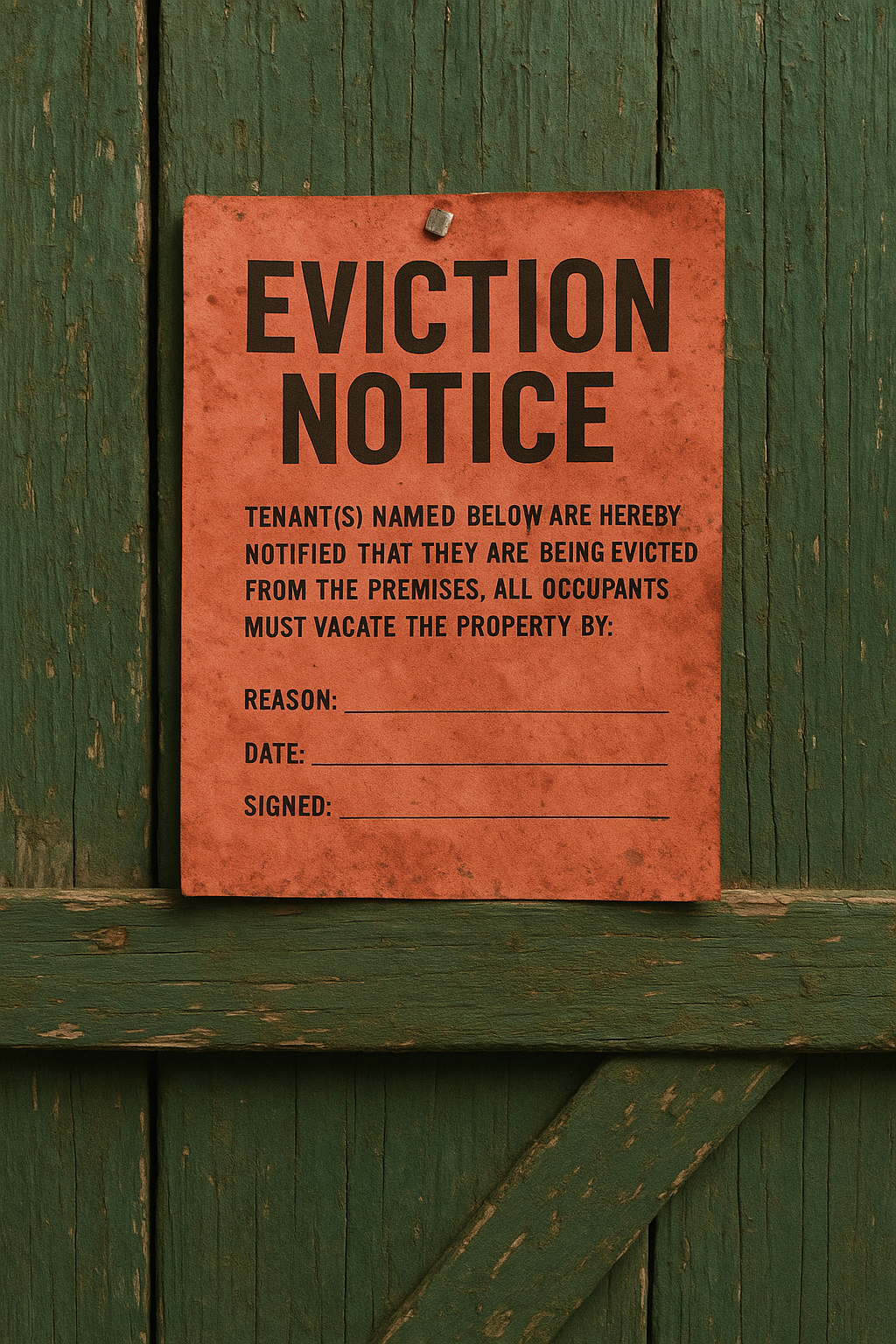
Government spokespeople will tick “stakeholder engagement completed.” For the marchers, it is one frame in a long reel. Tonight they will sleep in shacks, backyard rooms, or farm cottages still under notice. Tomorrow the vines will flower, pack-houses will roar, and another sheriff will staple red paper to a green kitchen door. The memo is in the mail; the land is still in someone else’s name.
[{"question": "
What are the core demands of the Women on Farms Project (WFP) regarding land reform in South Africa?
", "answer": "The Women on Farms Project (WFP) is advocating for significant changes in land reform. Their primary demands include: 1. Gender-focused Land Allocation: They insist that 30% of all transferred farms must be registered in the names of women workers, either individually or through binding co-operatives. 2. \'Nil Compensation\' for Unlawful Evictions: WFP calls for the application of the \"nil compensation\" clause from the 2022 Expropriation Act against farms that have been found guilty of unlawful evictions since 2014. This means such farms would lose their land without receiving financial compensation. 3. School-Year Eviction Moratorium: To prevent educational disruption, they are demanding a moratorium on evictions during the school year, as their research indicates that 78% of evicted pupils lose an academic year due to displacement."},{"question": "
Why did the Women on Farms Project specifically target Parliament with their protest?
", "answer": "The WFP targeted Parliament to directly confront lawmakers and government officials with their demands and lived experiences. Parliament is the legislative body responsible for creating and amending laws, including those pertaining to land reform and expropriation. By protesting at Parliament, they aimed to pressure decision-makers to incorporate their proposals into policy and to hold the government accountable for the unfulfilled promises of land redistribution since 1994. They delivered a detailed 14-page dossier outlining their demands and historical context directly to officials."},{"question": "
What challenges do evicted farmworkers, particularly women, face after being removed from farms?
", "answer": "Evicted farmworkers, especially women who head 62% of affected households, face severe challenges. They are often displaced to already overcrowded townships or informal settlements, which lack basic services. For instance, New Rest, a settlement for evicted workers, has one tap for 92 households, hijacked electricity, and a gully for a communal toilet. These conditions lead to health crises, such as a high incidence of multi-drug-resistant tuberculosis, and increased risks like shack fires. Children's education is also severely impacted, with many losing academic years due to displacement. The economic impact is devastating, as workers are often offered minimal severance pay and struggle to find new livelihoods."},{"question": "
How does the WFP plan to ensure their demands are heard and acted upon beyond the protest?
", "answer": "The WFP employs various strategies to ensure their demands are heard. They have compiled a detailed dossier with historical data, legal arguments, and specific policy recommendations. They use powerful visual and performative activism, such as the gumboot dance, to convey their message. They also engage in rigorous data collection, as evidenced by Carmen Louw's spreadsheet tracking evictions and the use of QR codes for annexures during the protest, turning activism into evidence collection. Furthermore, they plan to follow up with officials, demanding a ministerial meeting within seven days and threatening to re-occupy the pavement every Tuesday until their demands are addressed. They also plan a \"Museum of Displacement\" to tour artifacts, keeping the issue in the public eye."},{"question": "
What is the current state of land redistribution in South Africa, and what are the obstacles?
H3>", "answer": "South Africa's land redistribution efforts face significant obstacles. The 2018 Land Audit revealed that 72% of private farmland remains white-owned, with only a marginal 3-point slide since 1994. To meet the 2030 target of transferring 30% of agricultural land, the state needs to transfer 7.7 million hectares in six years, or 3,000 hectares daily. However, the budget allocated for this is often insufficient (R2.3 billion for 2024/25, enough for only 190,000 hectares if perfectly managed). A major hurdle is corruption and inefficiency, with the Auditor-General finding 34% of redistribution funds \"unaccounted or irregular,\" often due to repeated farm valuations. Additionally, the state has been criticized for its approach to land occupation, as seen in the Modderklip case where it compensated a white farmer for occupied land rather than expropriating it for the landless."},{"question": "
How does the WFP connect its demands to broader constitutional principles and economic realities?
", "answer": "The WFP connects its demands to Section 25(5) of the South African Constitution, which obliges the state to take \"reasonable measures\" to foster land reform. They highlight that available resources, such as 1.8 million hectares of idle state land and 500,000 hectares of military farms, are already at the state's disposal, arguing that it's a matter of political will to \"move it from one state file to another.\" Economically, they expose how agricultural practices, driven by \"high-trellis export grapes\" and corporate consortiums, increasingly view workers as \"liabilities to be deleted,\" exacerbating inequality. They also point out the hypocrisy of government campaigns to attract young, black, female agricultural graduates, like Chante September, who are then denied access to land due to prohibitive \"own equity\" requirements."}]
Hannah Kriel is a Cape Town-born journalist who chronicles the city’s evolving food scene—from Bo-Kaap spice routes to Constantia vineyards—for local and international outlets. When she’s not interviewing chefs or tracking the harvest on her grandparents’ Stellenbosch farm, you’ll find her surfing the Atlantic breaks she first rode as a schoolgirl.
View all articles →