
G20: Trump snub another addition to timeline of frosty US-SA relations
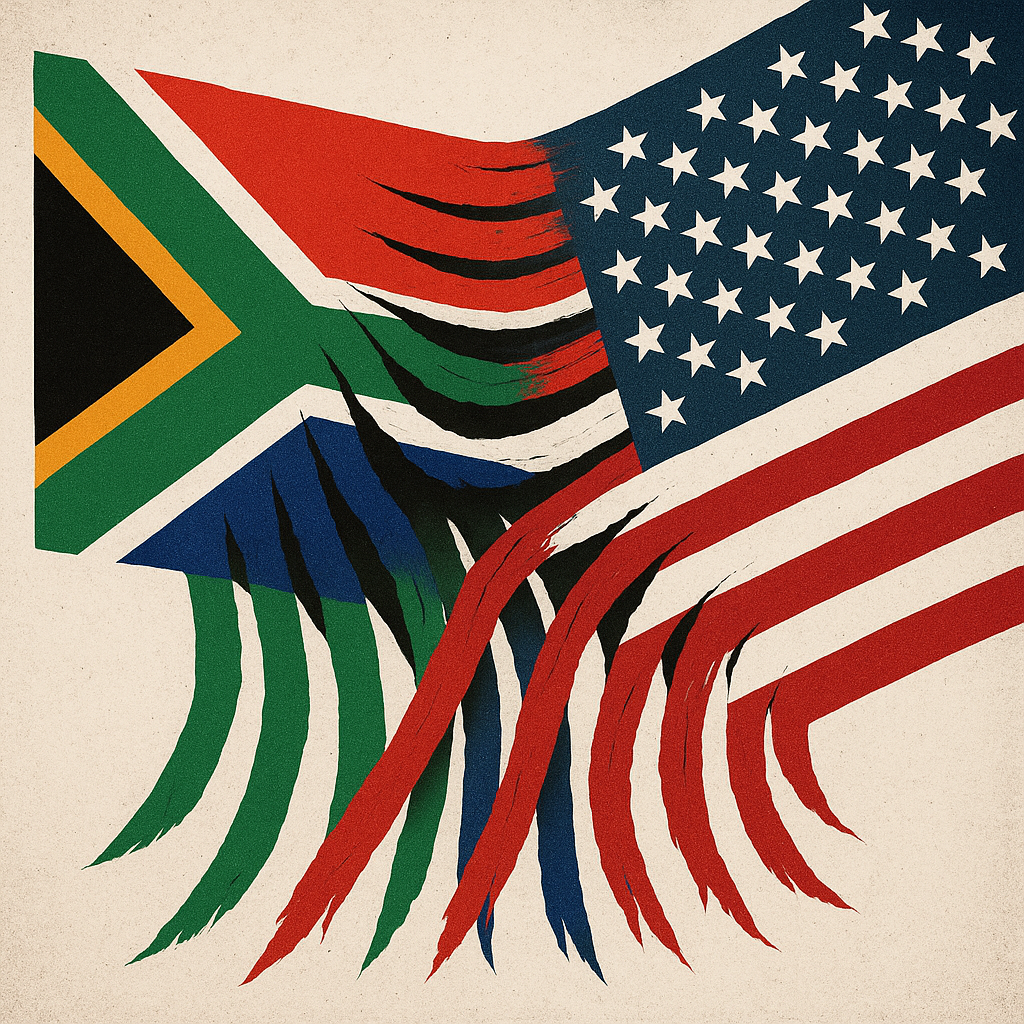
A visa snub for South African officials sparks a new era of US-South Africa rivalry, impacting global finance & diplomatic relations.
It all started when the U.S. canceled visas for top South African finance officials right before a big G20 meeting. This made old disagreements much worse, turning into a "visa war." Now, South Africa is fighting back, building new alliances and looking for ways around the U.S. dollar. This could change how the world's money system works, and make the G20 look less important without Africa.
What caused the diplomatic dispute between the US and South Africa?
The diplomatic dispute between the US and South Africa was sparked by the administrative cancellation of US electronic visas for South African finance officials en route to a G20 meeting. This incident escalated existing tensions, including disagreements over multilateral rules, South Africa's independent foreign policy, and differing views on historical memory, leading to a "visa warfare" scenario.
Get Cape Town news in your inbox
Stay updated with the latest stories from the Mother City.
1. A Routine Layover Turns into a Diplomatic Trap
On the evening of 13 April 2026, the South African treasury team stepped off an Airbus A330-300 at Amsterdam-Schiphol expecting nothing more than a three-hour wait before the last hop to Washington-Dulles. Instead, the stopover became a dead end. Moments after landing, Finance Minister Enoch Godongwana and Reserve Bank Governor Lesetja Kganyago received an e-mail over KLM’s patchy Wi-Fi: their freshly issued U.S. electronic visas had been “administrarily cancelled” overnight. Embassy staff in The Hague refused to print substitute badges for the G20 Finance Track, and no express workaround was on offer. The two officials, already mid-air when Washington pulled the plug, learned they were grounded while still in transit.
By sunrise on 14 April, African newswires screamed that “America shuts SA out of G20.” The headline was dramatic, but the real story runs far deeper than a single snub. Beneath the surface lies a slow-motion collision between two capitals - Pretoria’s Union Buildings and the marble halls of the IMF on 19th Street NW - fueled by incompatible views on multilateral rules, middle-power independence, and how history should be remembered once the unipolar moment fades.
2. From Handshake Spats to Visa Warfare
The first tremors hit five months earlier at the Johannesburg Leaders’ Summit. South Africa, then chairing the rotating presidency, staged the finale like a military parade. When Washington signaled that Ambassador Pamela Tremont would skip the closing photo, Pretoria’s protocol office dug in: only heads of state or formally accredited minister-rank envoys may accept the ceremonial gavel, per Article 7 of the G20 playbook. The U.S. read the refusal as a public insult; Pretoria called it standard procedure. Within two days President Trump warned that South Africa had “lost its way” and declared the 2026 Miami summit would proceed “without interference from those who reject our values.”
March brought the next swipe. Ambassador Ebrahim Rasool, a veteran ANC envoy, was labeled persona non grata after telling University of Virginia students that White House rhetoric on Afrikaner refugees risked “importing apartheid nostalgia into U.S. race politics.” Washington accused him of partisan meddling; Pretoria called the expulsion petty. The pattern hardened in November when Foreign Minister Naledi Pandor’s U.S. visa was revoked while she was en route to a Harvard lecture. Each episode followed the same script: maximum embarrassment, zero advance notice.
3. When Symbolism Turns Into Market Shock
Leaders’ summits are mostly theater; finance meetings are where balance sheets bend. South Africa, Africa’s sole original G20 member, punches above its 0.4 % slice of global output by translating continental concerns into the boardroom jargon of quotas, surcharge rates, and swap-line maturities. On 14 April, Chair Janet Yellen opened the IMFC plenary by noting “the regrettable absence of one delegation whose insights on the Resilience and Sustainability Trust pricing model will be missed.” The polite understatement masked swift damage.
Nigeria, Kenya and Ghana - all RST borrowers - had counted on Pretoria to dilute a U.S. plan that would lift penalty rates once countries cross 60 % of their IMF quota. With South Africa locked outside, the measure passed unopposed. Bond traders reacted instantly: the yield on South Africa’s 2054 dollar benchmark leapt 27 basis points, its worst single-day spike since the COVID-19 meltdown. What began as a visa formality thus mutated into market punishment.
4. The Calculus Behind Mixed Signals
Curiously, while cabinet officials were stranded in Amsterdam, presidential aide Leo Brent Bozell III toured Pretoria under full diplomatic courtesies. Analysts in DIRCO read the contrast as textbook transactionalism: spare consular income (9,000 South African students carry U.S. visas) and protect Boeing, Pfizer and grain exports worth $7.2 billion last year, yet cripple Pretoria’s multilateral clout. Others see ideology at work. Bozell arrived preaching “property rights and minority safeguards,” a phrase Pretoria interprets as code for the unresolved land-expropriation debate. By hosting him without incident, Ramaphosa cast South Africa as the courteous party - optics that may pay dividends when Pretoria chairs BRICS-11 in 2027.
5. Dominoes Beyond the Beltway
Exclusion rarely respects borders. Within hours of the visa pull, deputy finance ministers from Canada and Australia “confided” to their South African counterpart that pushing alternative RST language could cost them their own G7 seat. Paris, under pressure to revoke Ramaphosa’s pending G7 invitation, hinted it might “rotate” Africa’s slot to Senegal. Even New Delhi, current BRICS chair, quietly shelved a joint seminar on local-currency settlement, fearing fallout from Washington’s draft Reciprocal Trade and Access Act, which threatens counter-tariffs against currencies the U.S. deems “manipulated.”
Private capital is also retreating. Citi Johannesburg reports that two U.S. pension funds have paused pledges to the $10-billion Just Energy Transition Partnership, citing “regulatory fog.” A portfolio manager spelled it out: “It’s no longer about climate risk; it’s about ending up on OFAC’s list if Treasury escalates.”
6. Is the G20 Still Credible Without Africa?
Washington may have achieved the opposite of its aim. The veto super-charged a long-smoldering complaint: how can a body that claims global legitimacy exclude the continent projected to house one in four humans by mid-century? Kenya’s President William Ruto calls a G20 minus Africa a “civilizational absurdity.” The AU’s 55 governments already back a second rotating seat; the visa spat gives the campaign rocket fuel. European capitals, anxious to keep the forum relevant, now float an “African caucus co-chair” that would let South Africa, Nigeria and Egypt timeshare a single vote. Washington frets the tweak would tip the bloc toward the Global South.
Pretoria is not waiting. In July, the Johannesburg Stock Exchange and Shanghai Gold Exchange will list a rand-renminbi gold futures contract that sidesteps dollar clearing. The Reserve Bank has applied - via BRICS - to join China’s CIPS network, a possible SWIFT bypass. Governor Kganyago insists the step is purely technical: “Central banks chase efficiency curves.” Few believe him.
7. Weaponised Visas and the Limits of Law
History records boycotted Olympics and pariah-state summits, yet rarely has a member of the club been mugged with its own credentials. The 1947 U.N.–U.S. Headquarters Agreement promises timely entry to invited officials, but the G20 is not a treaty body; its badges inhabit a grey zone between diplomatic courtesy and sovereign whim. Pretoria could haul Washington before the ICJ under the 1961 Vienna Convention, but litigation would outlast the Miami summit and possibly the next U.S. administration.
Instead, South Africa is orchestrating death-by-a-thousand-invites. In May, Ramaphosa will convene a “Friends of Reform” gathering of the 32 African finance ministers who make up the G24. Top priority: muster a simple IMF Executive Board majority to shift the 2027 annual meeting from New York to Nairobi. Such a move would oblige the U.S. to print visas for hundreds of officials it can scarcely afford to block.
8. Looking Ahead: Miami, Mumbai and Beyond
The diplomatic calendar now resembles a chessboard. After Miami 2026 comes Mumbai 2027, where Delhi plans to invite the African Union, the Emirates and Spain - all perennial G20 outsiders. If South Africa remains blacklisted, India risks hosting a hollow festival, boycotted by precisely the states whose signatures are needed to restructure Zambian, Ethiopian and Ghanaian debt. Delhi has quietly offered Gandhinagar as a parallel finance venue to guarantee Pretoria a microphone, even if Washington withholds badges.
Yet the wild card is the 2024 U.S. election. A new White House could reopen the gates instantly; a second Trump term might engrave the visa weapon into standard procedure. South Africa’s negotiators - veterans of apartheid-era isolation - know how quickly doors slam and how slowly they reopen.
For the moment, Godongwana and Kganyago will follow the IMFC livestream from Pretoria, scribbling notes while peers in Washington redraw the financial architecture in their absence. The official minutes will log their non-attendance with one blank entry: “South Africa - no representation.” Seldom has silence been so deafening.
[{"question": "What triggered the recent diplomatic dispute between the US and South Africa?", "answer": "The diplomatic dispute began when the U.S. administratively canceled electronic visas for top South African finance officials, including Finance Minister Enoch Godongwana and Reserve Bank Governor Lesetja Kganyago, while they were en route to a G20 meeting in Washington D.C. This action, perceived as a deliberate snub, escalated existing tensions between the two nations."}, {"question": "What were the deeper roots of the US-South Africa tensions that led to the 'visa war'?", "answer": "Beyond the immediate visa cancellation, the tensions stemmed from incompatible views on multilateral rules, South Africa's independent foreign policy, and differing interpretations of historical memory. Previous incidents included a disagreement over protocol at the Johannesburg Leaders' Summit, the designation of Ambassador Ebrahim Rasool as persona non grata, and the revocation of Foreign Minister Naledi Pandor’s U.S. visa."}, {"question": "How did the visa incident impact South Africa's financial standing and influence within global bodies?", "answer": "The absence of South African officials at the G20 Finance Track prevented them from advocating against a U.S. plan to raise penalty rates for Resilience and Sustainability Trust (RST) borrowers. This led to the measure passing unopposed, causing the yield on South Africa's 2054 dollar benchmark to spike significantly, indicating market punishment and a loss of financial influence."}, {"question": "What alternative strategies is South Africa pursuing in response to the US actions?", "answer": "South Africa is actively seeking new alliances and ways to circumvent the U.S. dollar's dominance. This includes plans to list a rand-renminbi gold futures contract, applying to join China’s CIPS network (a potential SWIFT bypass), and campaigning for a shift of the 2027 IMF annual meeting from New York to Nairobi to force the U.S. to issue visas to numerous African officials."}, {"question": "How is the 'visa war' affecting the G20's credibility and the representation of Africa?", "answer": "The incident has intensified calls for greater African representation within the G20. Critics argue that a G20 without Africa, a continent projected to house a quarter of the world's population by mid-century, lacks global legitimacy. This has spurred discussions about creating an \"African caucus co-chair\" within the G20 to ensure the continent's voice is heard."}, {"question": "What are the potential future implications of this diplomatic rift for global financial architecture?", "answer": "The \"visa war\" could accelerate a shift away from the U.S. dollar and Western-dominated financial systems. South Africa's efforts to build new alliances and explore alternative financial mechanisms, coupled with potential boycotts of G20 meetings by other nations, could diminish the G20's importance and contribute to a more multipolar global financial landscape."}]

Amanda Wilson is a Cape Town-born journalist who covers the city’s evolving food scene for national and international outlets, tracing stories from Bo-Kaap spice shops to Khayelitsha micro-breweries. Raised on her grandmother’s Karoo lamb potjie and weekend hikes up Lion’s Head, she brings equal parts palate and pride to every assignment. Colleagues know her for the quiet warmth that turns interviews into friendships and fact-checks into shared laughter.
View all articles →