
Housing versus parking in Cape Town’s inner-city
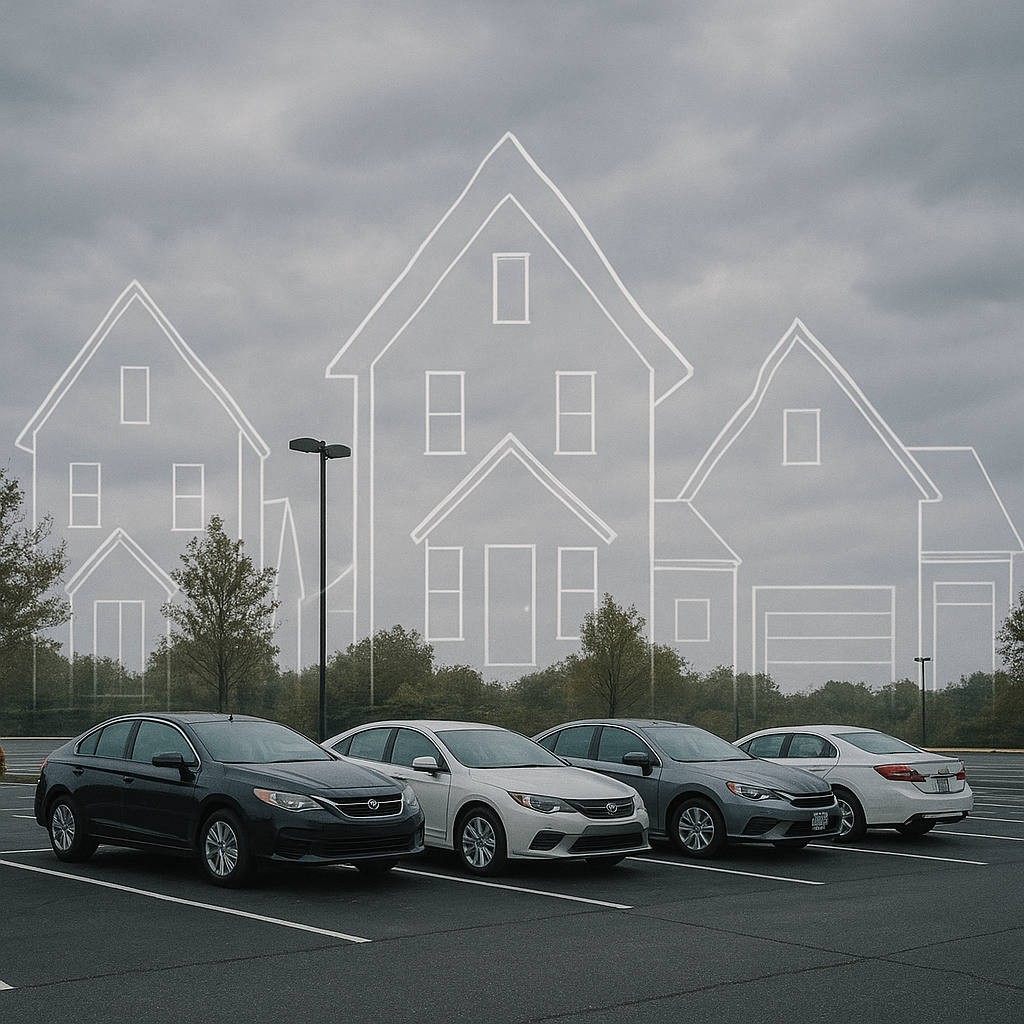
Harrington Square: Cape Town ponders turning a parking lot into housing, balancing restitution, business, and urban development.
Harrington Square, a humble parking lot in Cape Town, is at the heart of a vibrant debate. The city wants to transform this unused space, tackling a huge housing shortage and boosting businesses. But this isn't just about new buildings; it's a fight for the city's soul, with passionate voices clashing over old memories, parking spots, and dreams of a greener, fairer future for all.
What is the purpose of the Harrington Square redevelopment project?
The Harrington Square redevelopment project aims to transform an underutilized parking lot in Cape Town into a mixed-use precinct. This initiative seeks to address the city's housing backlog, revitalize commercial spaces, and contribute to the mayor's pledge of retrofitting 200 hectares of idle public land into vibrant, mixed-use developments within ten years.
Get Cape Town news in your inbox
Stay updated with the latest stories from the Mother City.
- By: Matthew Hirsch, GroundUp*
1. The View from Street, Sky and History
Stand on Caledon Street and the square looks flat and forgettable: white stripes, coin-fed meters, a shopping bag cartwheeling in the southeaster. Tilt your gaze upward to the neighbouring office’s sixth-floor balcony and the same block becomes a charcoal slab punched cleanly out of the city grid. Warehouses from the 1920s hem in three sides – today they shelter software start-ups and a gin still smelling of juniper. A monolithic brick façade belonging to the state printers seals the northern edge. Save for three thin, privately held strips on the south-east rim, the City of Cape Town owns every square metre and still lists the parcel as “utility,” a relic tag from its days as a yard for garbage trucks and water meters.
2. Cape Town’s Triple Squeeze and the 200-Hectare Promise
Three city-wide facts frame every argument that will be thrown at this patch of asphalt:
- The official housing backlog sits at 400 000 households; NGOs insist 470 000 is closer once backyard shacks are added.
- Post-COVID, 18 % of commercial space in the inner bowl is empty; landlords crave footfall.
- The Mayor signed a 2022 pledge to “retrofit 200 hectares of idle public land into mixed-use precincts within ten years.”
Harrington Square is the first site to enter open consultation under that pledge, turning the modest parking lot into a national weather-vane.
3. From Eviction to Consultation – Six Decades in Ten Minutes
1965: Evictions under the Group Areas Act erase the last mixed-race families along lower Caledon Street. The council turns the land into a vehicle depot.
1982: The depot migrates to Epping. Asphalt is poured and a private operator begins funnelling parking fees into the council’s “Special Purposes” account.
2004: The District Six claims office reopens. Lawyers rule that Harrington Square never lay within the declared District Six boundaries, a footnote that still enrages former residents.
2019: Ndifuna Ukwazi drops a report titled Parking for People. Its cover photo: the very square now under scrutiny.
3 April 2024: The City posts a call-for-comments headed “Renewal & Reshaping of Harrington Square.”
23 April 2024: An annex off City Hall fills with residents, entrepreneurs, and activists.
4. Voices, Slides and a Viral Chant – Inside the Public Meeting
-
18:00* – Deputy Mayor Eddie Andrews calls the square a “civic spine” linking District Six, the eastern bowl, and the university’s new data-science campus at the old Roeland Street prison.
-
18:13* – Joscelyn Beukes, 29, holds up her grandmother’s 1967 rate-receipt and insists descendants of evicted owners deserve first right of refusal. The hall erupts.
-
18:27* – Jasmina Salie, 68, points to the south-west corner. “Fig trees once stood there. Today bump-stops and Uber scooters.”
-
18:35* – A gym owner, a bicycle-courier manager, and a micro-roaster warn that 40 % of their paying patrons park for twenty-to-forty-minute bursts. “Lose the bays, lose the revenue,” says Ravi Pillay, clutching a takeaway flat white.
-
18:48* – UCT’s Professor Mercy Brown-Luthango flashes comparative graphs from Seattle, Vancouver and Medellín where priced curb space replaced free lots and retail turnover rose. Councillors scroll their phones.
-
18:59* – The back rows erupt: “People over cars!” A TikTok clip of the chant trends locally by nine o’clock.
5. How Many Flats Can Fit Without Digging a Hole?
Ndifuna Ukwazi’s architects have drawn a six-storey hybrid tower using cross-laminated timber. The scheme would:
- stack 340 apartments;
- ring them around a raised courtyard;
- plant micro-shops and bike workshops on the ground;
- reserve 30 % of units for social housing and 20 % for District-Six descendants;
- kill 240 parking bays while handing 1 200 m² back to pedestrians.
Price tag (Q1 2024): R260 million after the land write-down.
Solar potential: a 550 kW rooftop array able to power the Canterbury Street social-housing block next door.
Traffic engineers counter that moving 90 bays to a stacked deck on the printers’ roof at night would calm retailers’ nerves.
6. Borrowed Blueprints, Local Edits
Barcelona’s El Poblenou superblock began with a single contested car park; month-one retail sales dipped 4 %, then climbed 14 % once benches and shade arrived.
Lagos turned the Falomo forecourt from tarmac into Civic Centre; commuter idle time fell 22 % because drivers shifted to synchronised ring roads.
Plein Street in Johannesburg tried the same in 2014 but security companies quit when evening footfall thinned; lesson: rent levels must keep streets animated after sunset.
7. Hidden Forces – Water, Wind and Iron
1928 photos show open canals feeding the Liesbeeck River; those channels now flow in darkness under the lot. Uncap them and a day-lit bioswale would both slow flash floods and tick the City’s climate-adaptation box.
CSIR wind-tunnel tests reveal a winter wind cannon racing down Canterbury at 55 km/h; a six-storey edge would knock gusts down to 22 km/h, letting cafés keep tables outside year-round.
Urban archaeologists flag a rusted Victorian lamppost as the last street fitting surviving from old District Six. Activists joke it should become the gatepost of the new block - if bumper taps don’t finish it off first.
8. Four Ways to Pay for the Dream
Whiteboards in the mayoral committee already list four cash stacks:
- trim the Municipal Infrastructure Grant from National Treasury’s Urban Settlement Development Grant;
- spin a blended-finance pool: NHFC + Old Mutual impact fund + concessionary euros from the French Development Agency earmarked for climate-smart timber;
- swap air-rights: developers on two neighbouring private plots fund the affordable wing in exchange for two extra floors on theirs;
- redirect a slice of the existing district-improvement levy, presently spent on Christmas lights, into brick and mortar.
9. Jobs, Skills and a Temporary Playground
Cross-laminated timber fabrication could absorb 240 artisans trained by Harambee Youth Accelerator under a deal signed with German firm Züblin. UCT architecture students have offered a live-build studio to design and laser-cut façade panels for course credit plus a stipend.
In the meantime, the Transport Directorate proposes a six-weekend pop-up experiment: fence off 60 % of the bays, roll in shipping-container espresso bars and kids’ pump-tracks. R650 000 would cover sensors to log footfall against Saturday retail turnover, giving small firms a taste of the future before concrete is poured.
10. Who Stands Where as the Clock Ticks
- The ACDP backs housing “in principle” yet warns of “gentrification wrapped as restitution.”
- The Greater Cape Town Business Alliance wants 350 replacement bays “even if hidden behind foliage.”
- EFF councillors threaten land occupation if shovel-ready plans aren’t tabled within 90 days.
- The Mayoral Committee for Climate Change quietly cheers densification; inner-city infill is the only route to the 2035 carbon pledge that does not strangle township growth.
11. A Quiet Moment After the Storm
By 22:30 the square is almost still. A lone security guard glides a torch beam along the white stripes while an Uber driver naps in a silver Polo. Streetlights fade to eco-mode, 30 % glow. Balcony residents look down and imagine a different set of lines: a courtyard, children chasing a soccer ball under solar fairy-lights, fig leaves scenting the night breeze.
[{"question": "
What is the Harrington Square redevelopment project?
", "answer": "The Harrington Square redevelopment project aims to transform an underutilized parking lot in Cape Town into a mixed-use precinct. This initiative seeks to address the city's housing backlog, revitalize commercial spaces, and contribute to the mayor's pledge of retrofitting 200 hectares of idle public land into vibrant, mixed-use developments within ten years."}, {"question": "Why is the Harrington Square project considered a \"fight for the city's soul\"?
", "answer": "The project is seen as a 'fight for the city's soul' because it involves conflicting interests and deep-seated emotions. On one hand, there's a critical need for housing and economic revitalization. On the other, there are memories of past evictions under the Group Areas Act, concerns from current businesses about losing parking, and aspirations for a greener, more equitable future. The debate encompasses historical injustices, current economic realities, and visions for urban development."}, {"question": "What are the main challenges or 'triple squeeze' facing Cape Town that the project aims to address?
", "answer": "Cape Town faces a 'triple squeeze' which includes: 1) A severe housing backlog, officially at 400,000 households (and potentially higher). 2) A high commercial vacancy rate of 18% in the inner city post-COVID, leading landlords to desire increased footfall. 3) The Mayor's pledge to convert 200 hectares of idle public land into mixed-use precincts within ten years, making Harrington Square a test case for this broader initiative."}, {"question": "What is Ndifuna Ukwazi's proposal for Harrington Square?
", "answer": "Ndifuna Ukwazi's architects have proposed a six-storey hybrid tower constructed with cross-laminated timber. This scheme would include 340 apartments, micro-shops, and bike workshops. Critically, it reserves 30% of units for social housing and 20% for District Six descendants. It would also eliminate 240 parking bays while returning 1,200 m² to pedestrians. The estimated cost is R260 million and it includes a 550 kW rooftop solar array."}, {"question": "How is the City planning to fund the Harrington Square redevelopment?
", "answer": "The City is considering four main funding strategies: 1) Trimming the Municipal Infrastructure Grant from National Treasury's Urban Settlement Development Grant. 2) Spinning a blended-finance pool from sources like the NHFC, an Old Mutual impact fund, and concessionary euros from the French Development Agency for climate-smart timber. 3) Swapping air-rights, where developers on neighboring private plots fund the affordable housing in exchange for extra floors on their own buildings. 4) Redirecting a portion of the existing district-improvement levy, currently used for things like Christmas lights."}, {"question": "What are some of the historical and environmental considerations for the Harrington Square project?
", "answer": "Historically, the site was a vehicle depot after evictions under the Group Areas Act, and lawyers ruled it was never within District Six boundaries, which still causes anger. Environmentally, old canals feeding the Liesbeeck River run underneath the lot, and there's potential to uncap them for a day-lit bioswale to manage flash floods. Wind-tunnel tests show a six-storey building could mitigate strong winter winds. Additionally, a rusted Victorian lamppost, the last surviving street fitting from old District Six, is considered a significant artifact."}]
Michael Jameson is a Cape Town-born journalist whose reporting on food culture traces the city’s flavours from Bo-Kaap kitchens to township braai spots. When he isn’t tracing spice routes for his weekly column, you’ll find him surfing the chilly Atlantic off Muizenberg with the same ease he navigates parliamentary press briefings.
View all articles →